







Only Disconnect: Oslo festival finds beauty in musical breakdown
A woman sits alone at a desk playing cassettes from her own past. Rewinding and fast-forwarding, clicking pause and changing tapes, she travels through time in fits and starts. Chopin and Beethoven are chopped and screwed, slurred and scratched, the giants of the classical repertoire re-imagined through the lens of a culture in which the old grand narratives no longer hold and the threads of social harmony are coming apart at the seams. Musical instruments are taken apart and re-assembled into strange new mutant assemblages like Hans Bellmer dolls given voice. Sounds appear to float in the air, seemingly detached from any source, shimmering like phantoms. In 2026, Only Connect Oslo could almost have been called »Only Disconnect«. Music appears fractured and fragmented, radically estranged from itself, out of time and out of joint.
Kulturkirken Jakob is a gothic revival building with marble columns and a high vaulted ceiling, a little north of the centre of Oslo. But on the festival’s opening night it might as well have been deep underwater like a sunken fishbowl ornament or some lost relic of Atlantis. With the strings of the Norwegian Radio Orchestra (Kringkastingsorkestret or KORK) arrayed in a grid around the audience on all four sides of the nave, Justė Janulytė’s Apnea opened like a trickle of mercury. The whole band played throughout, but for a long time it scarcely rose above a delicate pianissimo: low, slow bow strokes with just the occasional ripple of tremolo here and there, sometimes in front, sometimes to the side or from behind. As the volume gently swelled, it felt like sinking, a slow descent into ever darker waters, with the music rising as conductor Ilan Volkov’s twitching fingers cajoled ever more intense tremolando from the group. After little more than ten minutes, the sound evanesced as silkily and subtly as it began – less like the music drifted away than consciousness itself losing its grip.
Chopin in shards and skewed tunings
Where Apnea sought to engulf its audience, its immediate successor on the Kulturkirken stage seemed content to surprise and confound. Jonas Lie Skaarud’s The Moon has Set, Dogs are Sleeping is a deeply odd piece of music, riffing on fragments torn from the oeuvre of Frédéric Chopin like pages from a dream diary – in particular, the Rondo à la Krakowiak, the fanfare from the First Piano Concerto and the Fantasy on Polish Airs (as well as the Polish folk songs that inspired it) – which emerge here splintered, shaken up and recontextualised. The strings are now safely back on stage, joined by the rest of the orchestra, plus soloists Sanae Yoshida (piano), and Rolf-Erik Nystrøm (saxophone), Frode Haltli (accordion), and Håkon Thelin (double bass) of the ensemble Poing, with the latter two instruments tuned a quarter-tone sharp and flat, respectively, to rather queasy effect. The orchestration is lush but erratic, amidst which themes lurch into view with the force of a bottle to the face, only to crumble to bits like theatrical sugar glass, the soloists tootling out melodies in the very attic of their range: the bass all harmonics, the sax a flutish whistle. I’m not sure the piece quite hangs together – but then perhaps it’s not really supposed to. It is at least quite a feat to make an orchestra this tight and this rich sound like a child’s recorder consort.
Braxton without a safety net
The opening night closed with a work by Anthony Braxton – or rather eight of them, all squished together ad hoc. This was music flying by the seat of its pants, fastened together by a bewildering array of cueing systems coming from both Volkov and trumpet soloist Susana Santos Silva.
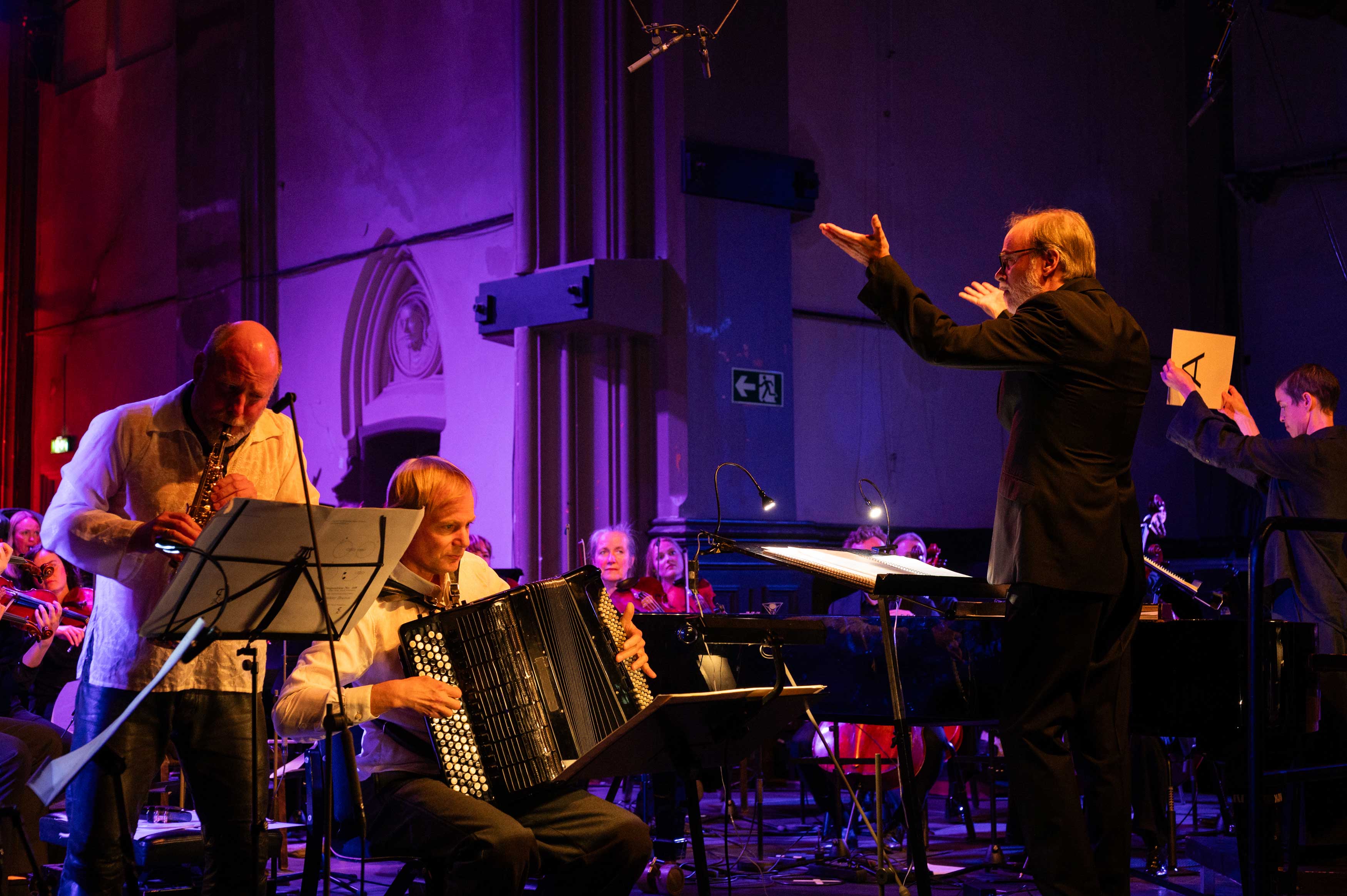
Braxton’s score becomes less a program to execute than a buffet menu which Volkov furiously rifles through at points throughout. We hear big chunky gestures from the orchestra and frenetic solos from sax and trumpet, with Silva fanning her mute to create dub-like effects and hammering on the pistons like a games console joystick. Before long, Nystrøm is sprawled on the floor in his leather trousers, surrounded by horns of different sizes and a chaos of manuscript pages. There is something thrilling about witnessing an orchestra clearly as bamboozled by what they’re playing as the audience. The cynic might have asked if anyone would dare treat the great works of Beethoven and Chopin in such a way – were it not for the fact the same orchestra more-or-less did just an hour earlier. Later in the weekend, I will hear a string trio by Christian Winter Christensen that sounded at times like the »An die Freude« chorus from the Ninth Symphony crab-scratched to oblivion by some experimental turntablist like Kid Koala or Mariam Rezaei.
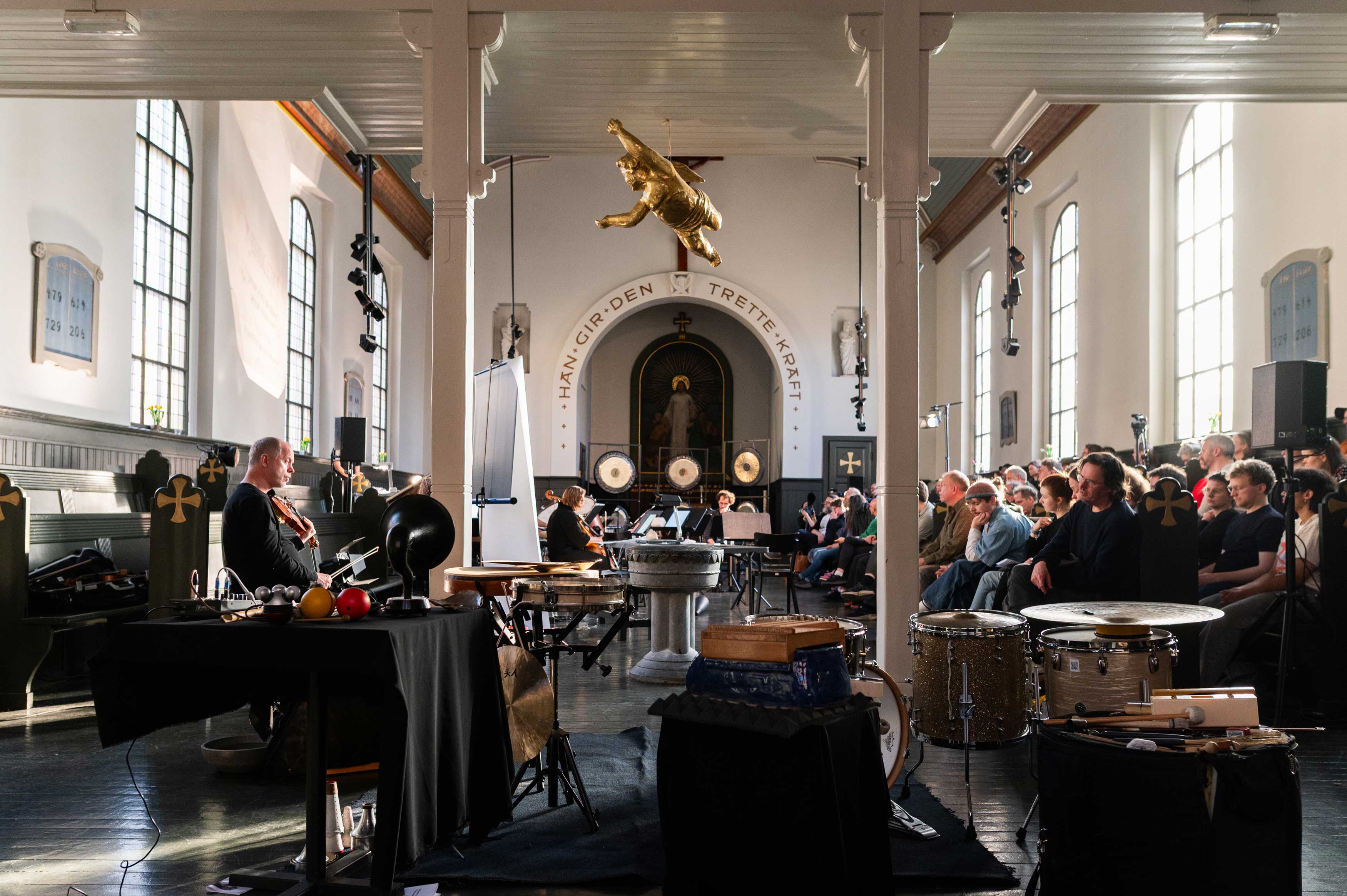
The following day we found ourselves in another church, a quarter of an hour east of the Kulturkirken, sat in wooden pews on wooden floorboards under a ceiling of wooden slats. Between a circle of musicians drawn from SiTron (Sinfonietta Trondheim), a bulbous sonic mass seemed to hover implacably: a sort of heavy sonic cloud, pregnant with rain. Bergrún Snæbjörnsdóttir’s Ecognosis is a work with a very particular atmosphere: mysterious and a little scary. I have been in buildings before which sounded like this when the wind was up: floorboards rattling and doors creaking as the violinist grinds her bow deep into the grain of the string, the percussionist bowing furiously at what looks like a length of garden twine. Each instrument is miked close with the signals activating a set of six gongs suspended behind them in the chancel, shimmering with secondhand harmonics. It is a music at once extremely physical – we hear intensely the steel of the flute, the rough texture of horse hair – and also uncannily dematerialised. The sound appears to take on a life and presence of its own, drifting in and out of the listeners’ focus like some restless spirit in a haunted mansion.
Mixtapes, mechanical Dada and musical junk art
Later that night, at the club Blå on the riverside, I will watch a trumpet blow up a balloon, which became a drum, before blowing out a succession of paper party horns. The duet between Pierre Bastien and Louis Laurain felt anarchic and slightly surreal. Madcap Meccano machines ticked and whirred eccentrically, instruments were transfigured and augmented almost beyond recognition: a cornet with added strings, an extended rubber mouthpiece, and so on.
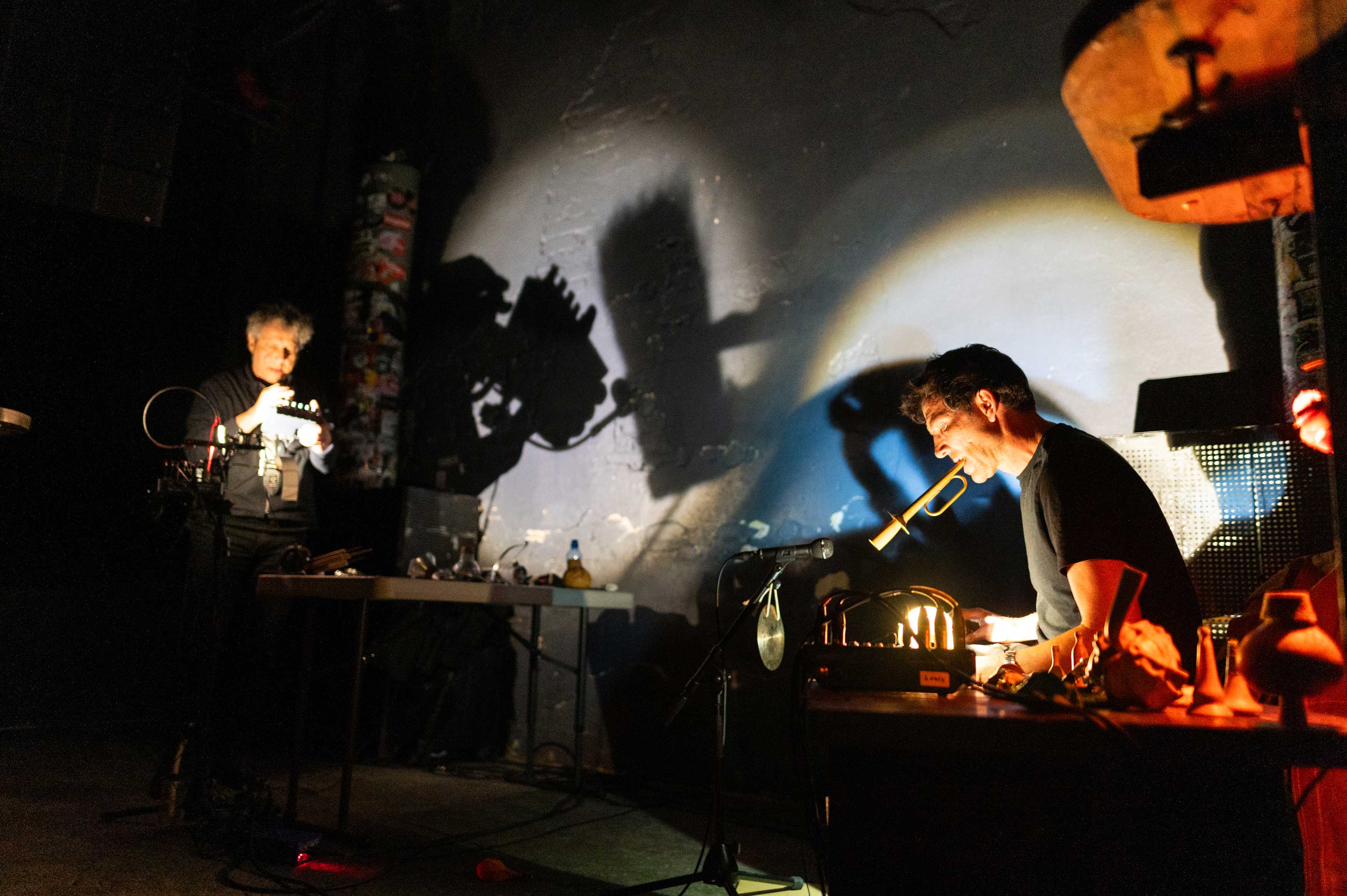
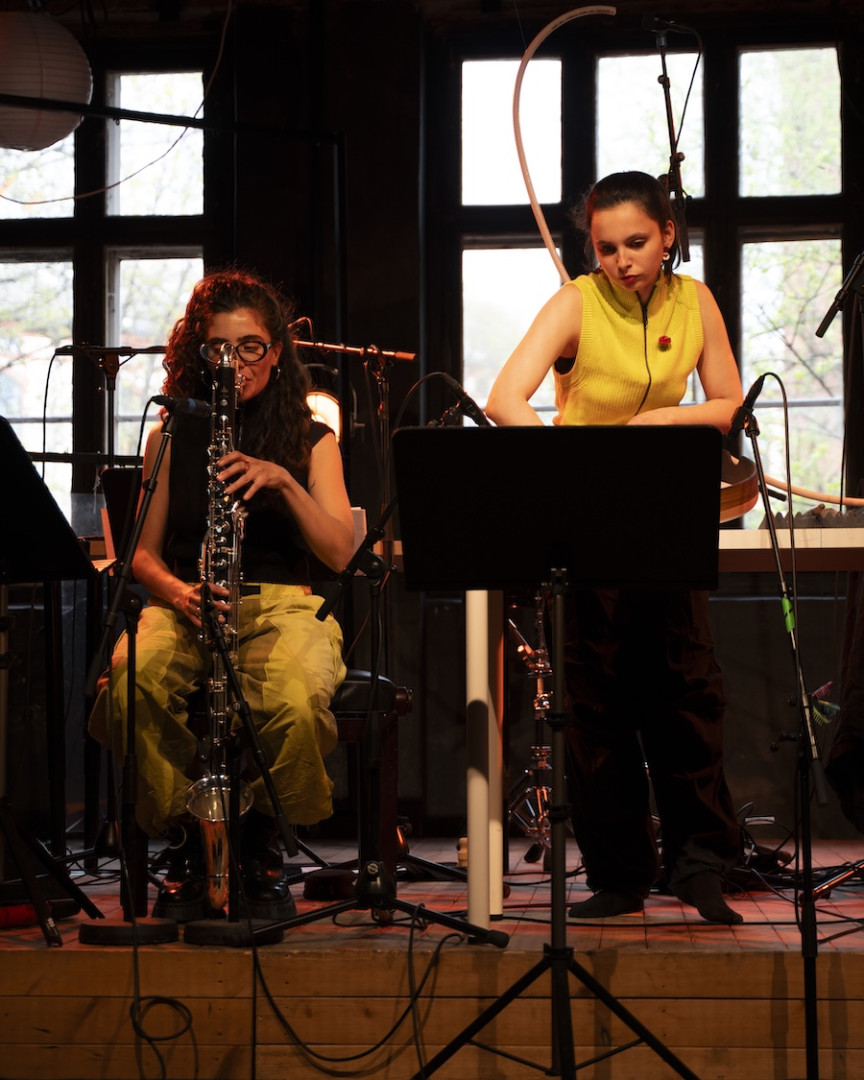
The performance was lit from below, creating a captivating shadow play on the grey walls of the venue. It’s a circus-like performance: jocose and faintly creepy. Instruments become ramshackle Dada combines, jerry-built from the scrapheap of music history. Bastien is an old hand here, but a thread of unorthodox instrumental preparations ran through the festival line-up, from Snæbjörnsdóttir’s activated tam-tams to an ingenious work for a disembodied wind instrument, performed by the duo Araia on Saturday night. Jorge Gómez Elizondo’s Clarinet without Organs II – Pulpesque (2006) was played by Elena Perales Andreu using just the mouthpiece of the instrument appended to a system of bright orange and green plastic tubes suspended over the stage like an octopus mid-autopsy. Her breath was channeled from one tube to the other, not with keys but a series of valves and taps, making the performance look more like plumbing than music, but the sound – cascades of great deep, breathy whooshes and tender whistles – was mesmerising.
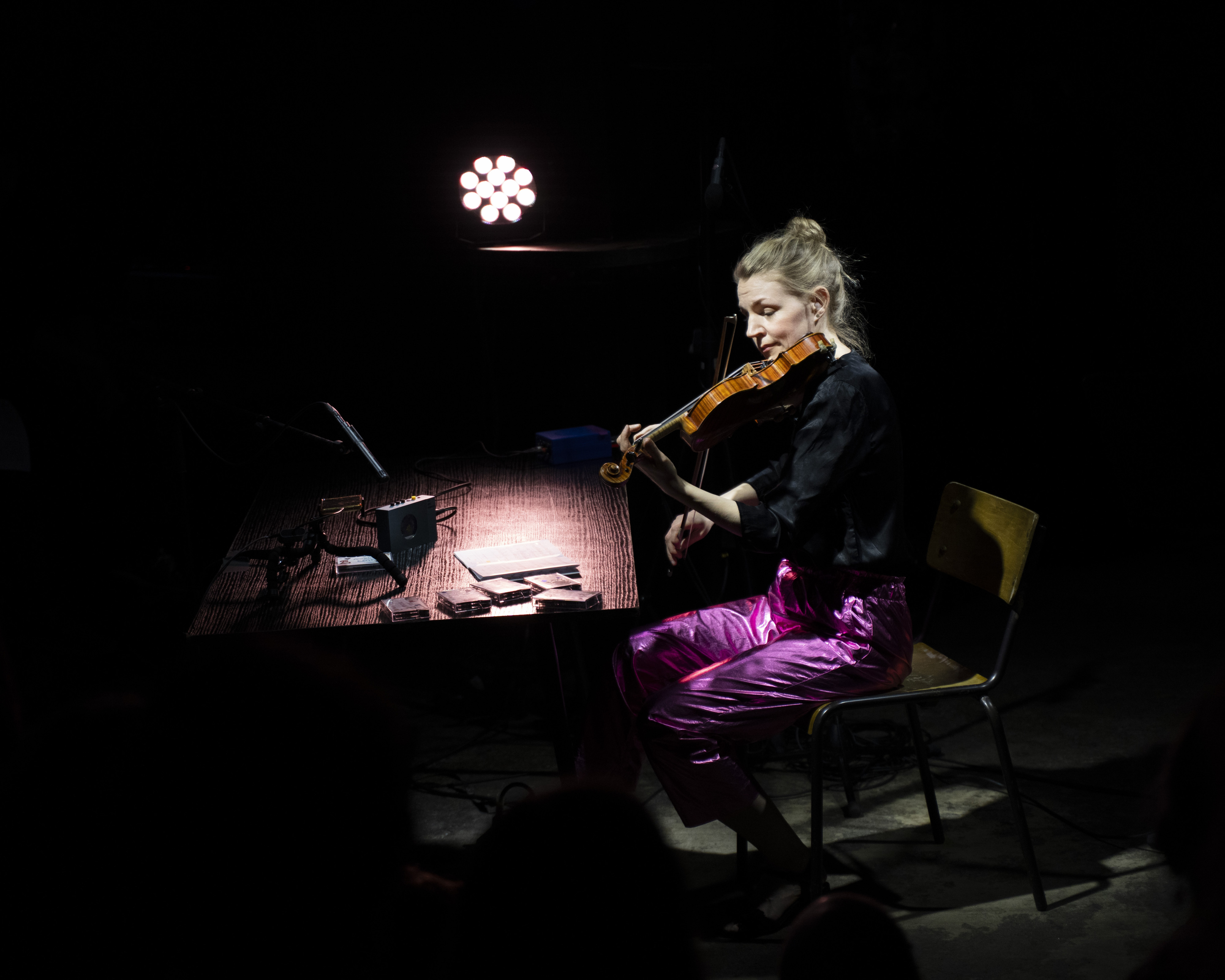
Meanwhile, Marta Forsberg’s composition Mixtapes feat. Karin Hellqvist found the eponymous Swedish violinist in reflective mode. It felt like intruding on a private moment. Hellqvist’s collection of home-dubbed cassettes stretches back to childhood practice sessions with her instrument. In preparing this work, Forsberg was given free rein with this archive.
It makes for a piece that unfolds unhurriedly, with Hellqvist sat at a table, switching between tapes, taking her time, sometimes leaving quite long gaps between, and just occasionally, picking up her violin and playing along. With each click of the »play« button we hear fragments of sound: pop songs from the 60s and 70s, bursts of news bulletins, a young girl (Hellqvist herself?) singing to her father, faltering early violin rehearsals. The sounds are often distorted, quaking and fluttering with the characteristic artefacts of aging analogue media. But also sometimes clearly cut-up and processed by Forsberg. Throughout, Hellqvist is looking not at her instrument, not at the score and not at the audience, but down and to the side, into some imponderable middle distance. It makes for a very moving work about memory (or what Bernard Stiegler calls »tertiary retention«) and the vagaries of physical media, the way we manipulate – and are manipulated in turn by – the past.
Body, voice and what almost becomes music
The final performance of the festival was also its strangest. Performed by percussionist Owen Weaver and dancer Malin Nøss Vangsnes, Declaration (Unwriting, Part II) nonetheless featured no percussion instruments, save the performers’ own bodies and some plastic sacks, nor anything much you would call a dance move. In a brief talk held the day before, composer Alwynne Pritchard had insisted the work was »definitely not a piece of music«, but I would argue it was also not not music.
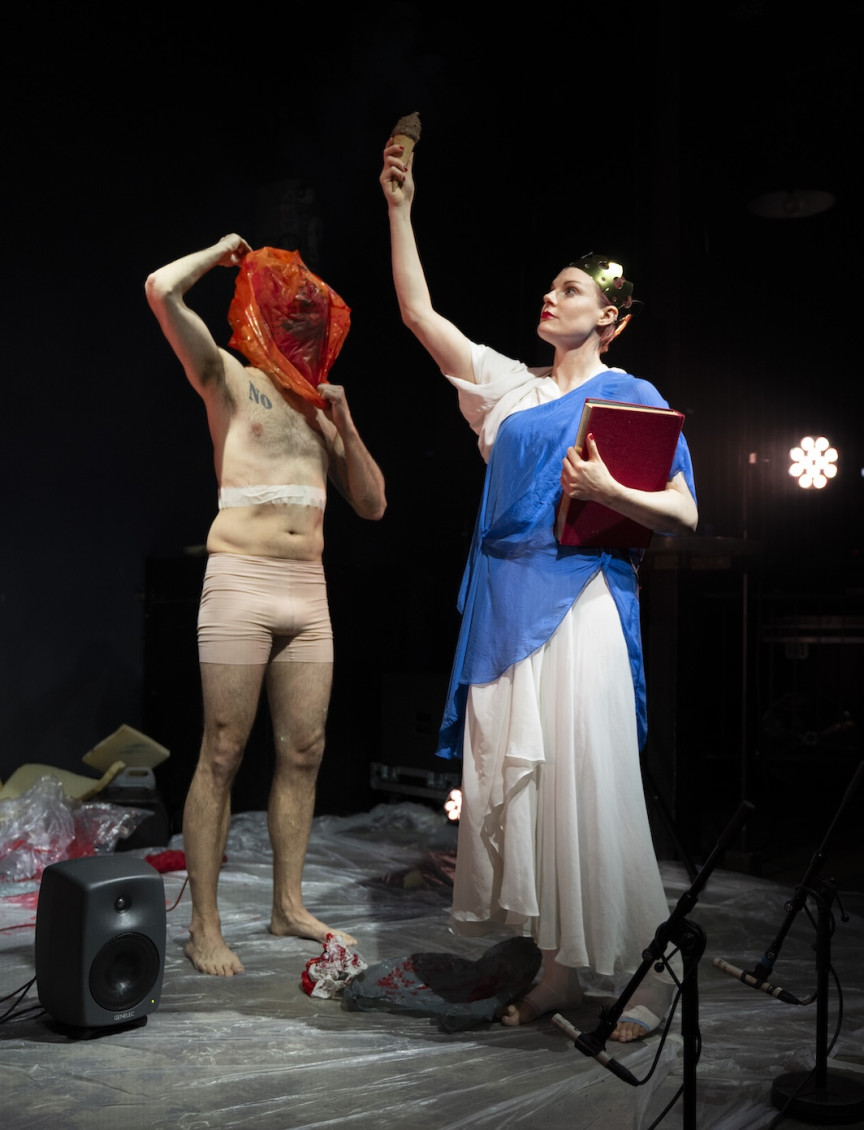
It moved in a musical space, obliquely incorporating rhythms and sounds (Weaver had a microphone taped to his head, which would crunch and roar against those plastic bags and sometimes howl with proximity to an amp on the stage floor, and there were wild, alien vocal sounds made by Pritchard herself coming from a pair of loudspeakers). Drawing on a diverse tradition, from Fluxus happenings to Expressionist and absurdist theatre, its structure felt associative in a dreamy, distinctly musical way. Though the venue did the work few favours (I suspect it needs either a black box or a white cube), it remained totally captivating. A cracked and splintered sexual psychodrama, Declaration made the perfect finish for a festival which shone the brightest in the gleams of its most fragmentary moments.
Only Connect, April, 23-25, Oslo, Norway