



Invisible citizens, sonic refugees
Abstract
Due to ongoing repressions, political and economic crises, about half a million of Belarusians have left the country since 2020, the year marked by collective sonic practices of resistance and expression. All the Belarusian music scenes were affected – becoming uprooted and turning from local into diasporic. Limited in their citizenship rights, Belarusian emigrants maintain links deepened during protests and DIY concerts back home.
Inside the country, various sonic practices aim at remaining a nation-state next to an imperialist neighbor. Some cultivate Belarusianness in folklore songs, a tolerated form of ethnic self- expression in late-Soviet period and a way to preserve anonymity after 2020. Others subtly assemble emancipatory Belarusian musicalities in pop and indie domains confronting multiple economic and political barriers.
Illustrated by recordings from music events organized by Belarusians across Europe, this paper discusses challenges in maintaining Belarusian sonic citizenship and reveals many parallels on both sides of the border.
Both authors are Belarusian citizens living in exile.
Audio paper
Credits
Speakers in order of appearance: Pavel Niakhayeu, Andrei Vazyanau.
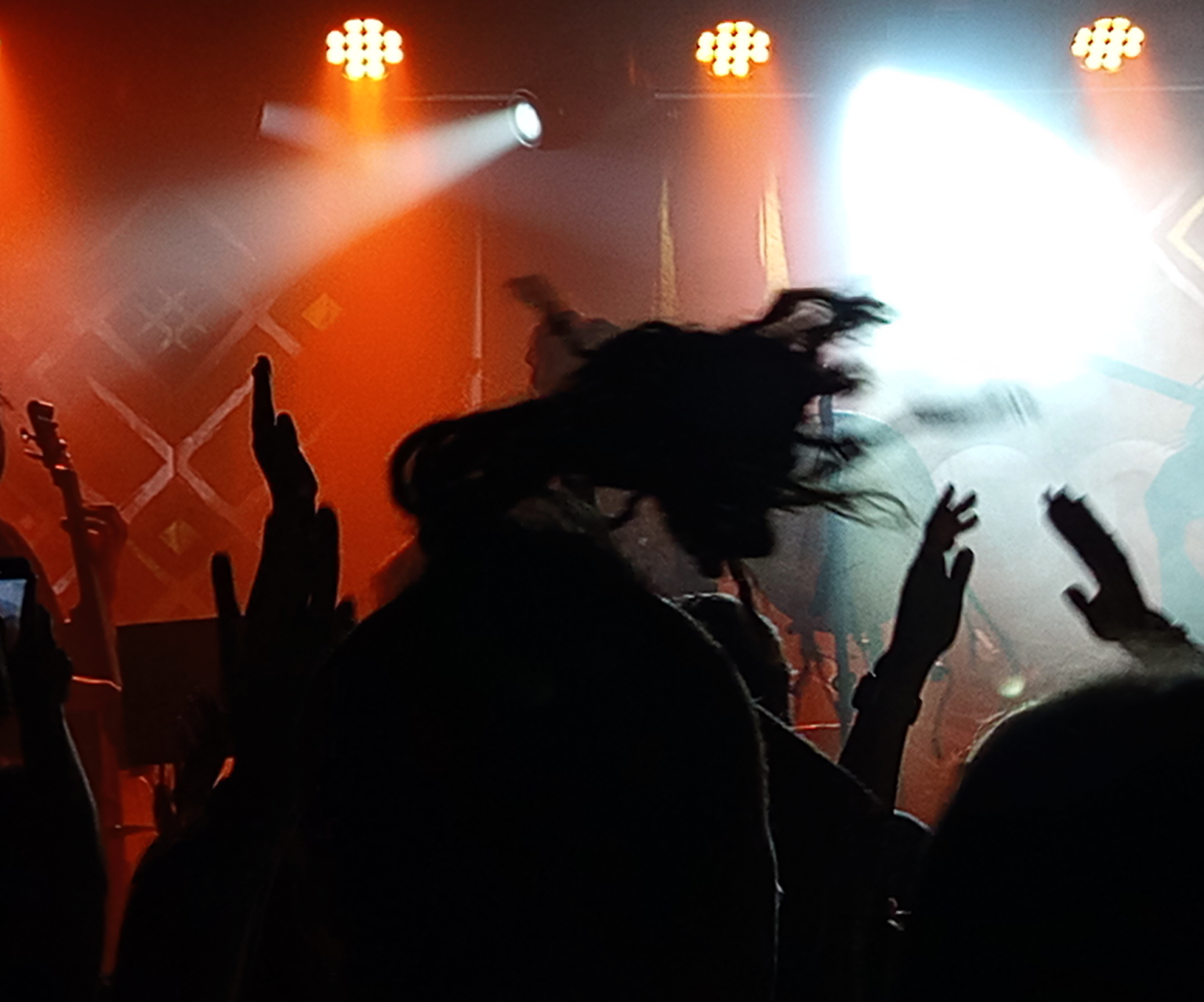
Editing, mixing, mastering, cover photo: Pavel Niakhayeu.
Audio sources
00:00 – “Kałychanka” @ Picnic Letucień – 29.07.2023, Kraków, PL
00:35 – WTBSK – Live @ Belarus Outside Sound System – 26.01.2025, Stakkato, Kraków, PL
01:10 – Protest drummers – 13.09.2020, Minsk, BY
02:40 – Protesters: “Heta naš horad! / Eto nash gorod! (This is our city!)” – 04.10.2020, Minsk, BY
03:25 – Trebuem Razoitis’! – “Uručskija Cmoki” (2021)
04:12 – Ulis – “Kali Imperyja Źniknie” (1989)
04:45 – Unknown street musicians – “Kupalinka” – 12.05.2021, Minsk, BY
05:50 – Various musicians & audience members – Hukańnie Viasny (Calling of Spring ritual) – 22.03.2024, Kraków, PL
06:30 – Iva Sativa – “Kanapel (Qrawlly DnB Version)” (2022)
07:09 – Kotki – Rock Camp Live @ Poczta Głowna club – 19.08.2023, Kraków, PL
07:53 – WTBSK – Soundcheck @ Belarus Outside Sound System – 26.01.2025, Stakkato, Kraków, PL
08:15 – Vapna – “1000 Krain” (2025)
08:40 – Anastasia Rydlevskaya – “Mugwort (Palyn)” (2023)
09:05 – SOYUZ – “Krok” (2025)
09:35 – Intelligency – “Travmy” (2024)
10:05 – Nobel – Live @ Pravda – March 2024, Kraków, PL
12:10 – Nieviadomy Artyst – “2021-04-17 033706” (2021), Minsk, BY
13:25 – Unnamed tribute band @ Picnic Letucień – 26.07.2025, Kraków, PL
14:57 – Lightowy, nadzeyea, Andrei Kurs – Chavanki (2025)
Keywords
Bibliography
Andrisani, V. (2017) Inventing Havana in Thin Air: Sound, Space, and the Making of Sonic Citizenship, Doctoral dissertation. Vancouver: Simon Fraser University, Available at: https://www.sfu.ca/sonic-studio-webdav/srs/Andrisani%20thesis.pdf (Accessed 20 December 2025)
Bekus, N. (2010) "Independent Rock Music: Critical Reflection and Protest". In Struggle over Identity: the Official and the Alternative Belarusianness, CEU Press, Available at: https://books.openedition.org/ceup/629 (Accessed 20 December 2025)
Cunningham, M., Robinson, D., Stover, C., Tilley, L. and Yu Wang, A. (2022) "Introduction: Beyond Western Musicalities". In Engaging Students: Essays in Music Pedagogy, Vol.8. Available at: doi: doi.org/10.18061/es.v8i0.8653. (Accessed 20 December 2025)
Katsev, L. (2025) "Courtyard Unities: Musical Curation, Production, and Collective Action During the 2020–2021 Protests in Belarus". In The Journal of Belarusian Studies, 14(1-2), pp.63–104. Available at: doi: doi.org/10.30965/20526512-12350032. (Accessed 20 December 2025)
Kingsbury, H. (1997) "Situations, Representations, and Musicalities: An Anthropological Perspective". In Philosophy of Music Education Review, 5(2), 86–91. Available at: https://www.jstor.org/stable/40495429 (Accessed 20 December 2025)
Kryzhanouski, Y. (2022a) Contester par la musique sous régime autoritaire. La politisation du rock au Bélarus. Editions Croquant.
Kryzhanouski, Y. (2022b) "Managing Dissent in Post-Soviet Authoritarianism. New Censorship of Protest Music in Belarus and Russia, 2000–2018". In Europe-Asia Studies, 74(5), pp.760–788. Available at: doi: doi.org/10.1080/09668136.2022.2032605. (Accessed 20 December 2025)
Kun, J. (2005) Audiotopia: Music, Race, and America. University of California Press, Available at: http://www.jstor.org/stable/10.1525/j.ctt1pps5v (Accessed 20 December 2025)
LaBelle, B. (2019) Acoustic Territories: Sound Culture and Everyday Life. London: Bloomsbury Academic.
Niakhayeu, P. (2025) "Handling (the) Noise". In Glissando, Vol.46: The Political.
Niakhayeu, P. (2025) "Voices, Noises, and Silence in the Political Soundscape of Belarus". In Journal of Sonic Studies, Vol.27, Available at: doi: doi.org/10.22501/JSS.3261897 (Accessed 20 December 2025)
Niakhayeu, P. (2022) "Schweigen die Häuser?’ Kulturaustausch". In Magazin für internationale Perspektiven, Available at:https://kulturaustausch.de/artikel/an-den-ufern-der-freiheit/schweigen-die-haeuser/ (Accessed 20 December 2025)
Niakhayeu, P. (2021) "Political Soundwalks: listening to the political protests in Minsk, Belarus." In walk · listen · create, Available at: https://walklistencreate.org/walkingpiece/political-soundwalks-listening-to-the-political-protests-in-minsk-belarus-2020-2021/ (Accessed 20 December 2025)
O’Toole, M.F. (2014) Sonic citizenship: Music, migration, and transnationalism in Berlin’s Turkish and Anatolian diasporas. Doctoral dissertation.The University of Chicago.
Small, C. (1998) Musicking: the meanings of performing and listening. University Press of New England.
Survilla, M. P. (2002) Of Mermaids and Rock Singers: Placing the Self and Constructing the Nation Through Belarusan Contemporary Music, Routledge.
Vazyanau, A. (2024) "Belarusians are the early witnesses of the re-emerging Iron Curtain". In New Eastern Europe, Available at: https://neweasterneurope.eu/2024/09/26/belarusians-are-the-early-witnesses-of-the-re-emerging-iron-curtain/ (Accessed 20 December 2025)
Vazyanau, A. (2023) "Emotional Splits and Psychologization: Popular Responses to Mass Repressions in Belarus". In Communist and Post-Communist Studies, 56 (3): 72–97. Available at: doi: doi.org/10.1525/cpcs.2023.1997969 (Accessed 20 December 2025)