


Longing for Plural Listening
During the first minutes of Gérard Grisey’s Vortex Temporum, one can feel that a portal to another world is about to open. The landmark work by the French master of spectralism demands great dexterity from its performers. Every element must be carefully weighted to create a kind of vertigo in which time loosens its grip, pulling the listener towards what Grisey described as the »time of birds, humans, and whales« – his metaphor for different modes of perception.
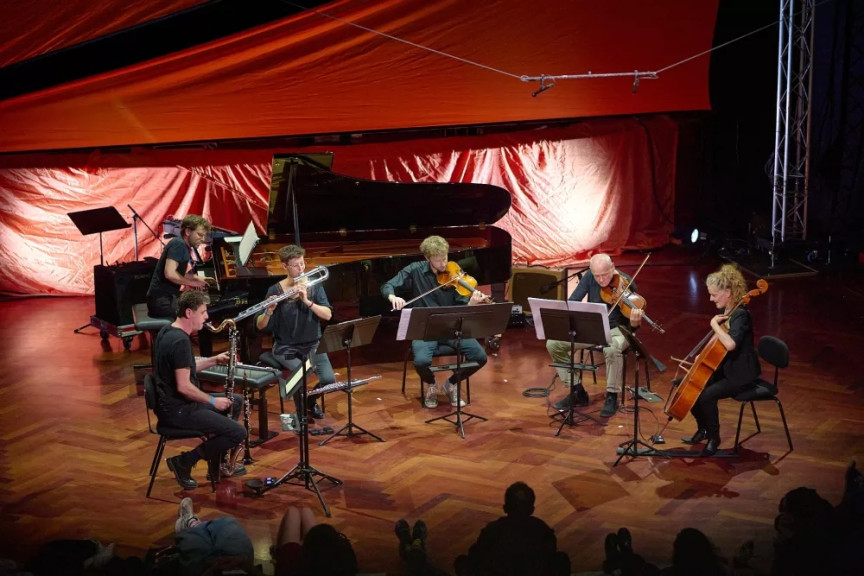
There was something nostalgic about Ensemble Contrechamps’ interpretation of the piece, presented during the opening weekend of the Archipel Festival. Programmed on a Saturday night in the large hall of the Maison communale de Plainpalais – the festival’s home – the performance recalled an older, slightly dusty kind of craftsmanship in new music: one rooted in the material properties of sound. The ensemble approached Grisey’s score with both delicacy and theatrical intensity. Bows brushed softly against the strings, dazzling microtonal colours emerged from the retuned piano, and sudden cluster chords cut through the texture.
Time itself began to feel like another material in the festival’s orbit. Walking through Geneva in spring, its streets flooded with banners of lavish wristwatches
This focus on sound as something tangible, almost graspable, echoed the festival’s broader emphasis this year on materiality and tactility, explored through sound installations as well as a wide range of concerts. Across three days I spent there, Archipel unfolded beyond the headline events through numerous smaller formats that revealed the scope of its interests.
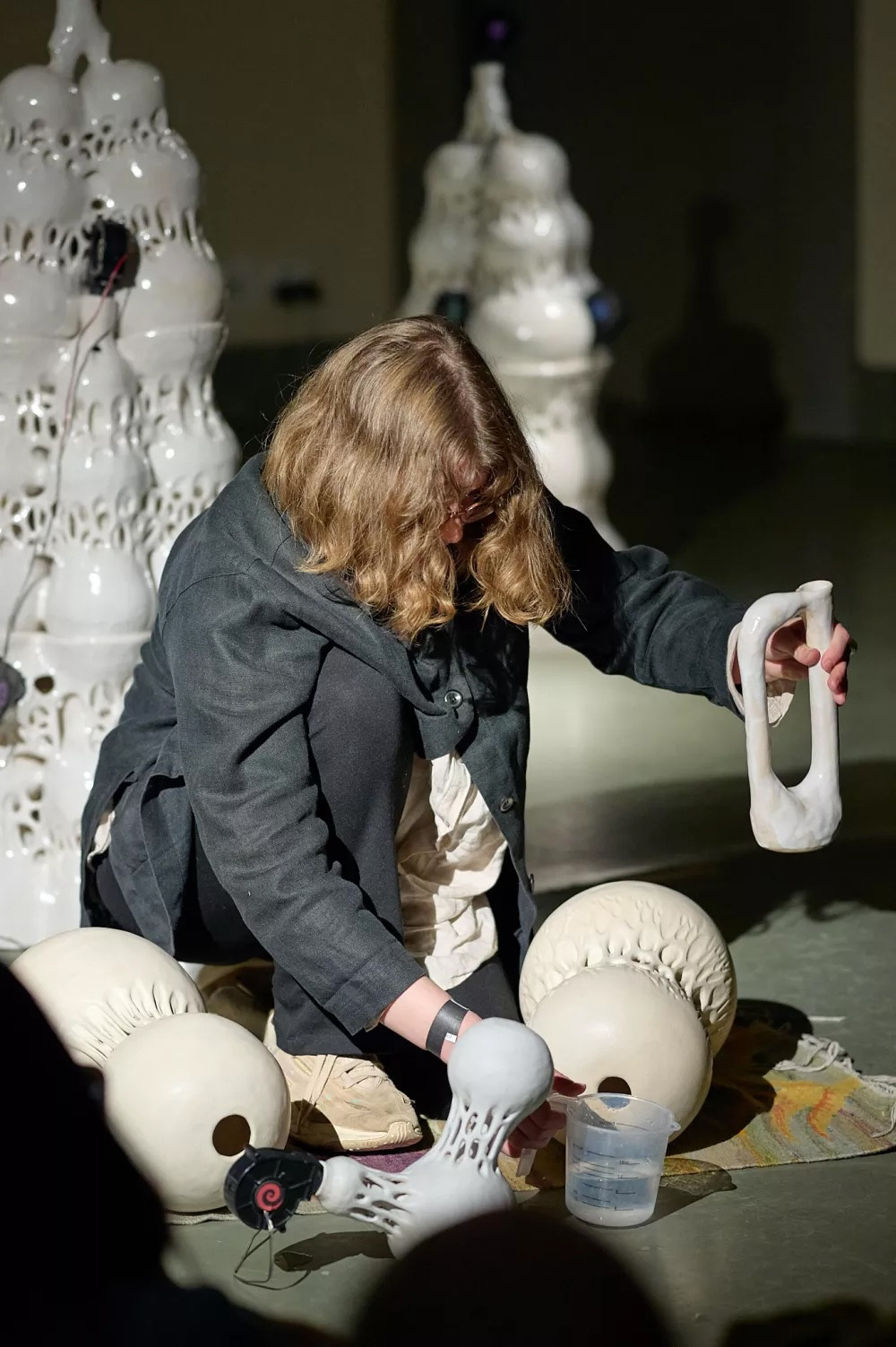
Lithuanian artist Elena Laurinavičiūtė, for instance, presented hand-moulded ceramic sculptures filled with water and air, generating sound through subtle shifts in pressure. In Ancestral Drones, she activated these objects so they slowly responded to changes in movement, unfolding into a meditative sonic landscape of low hums and delicate vibrations.
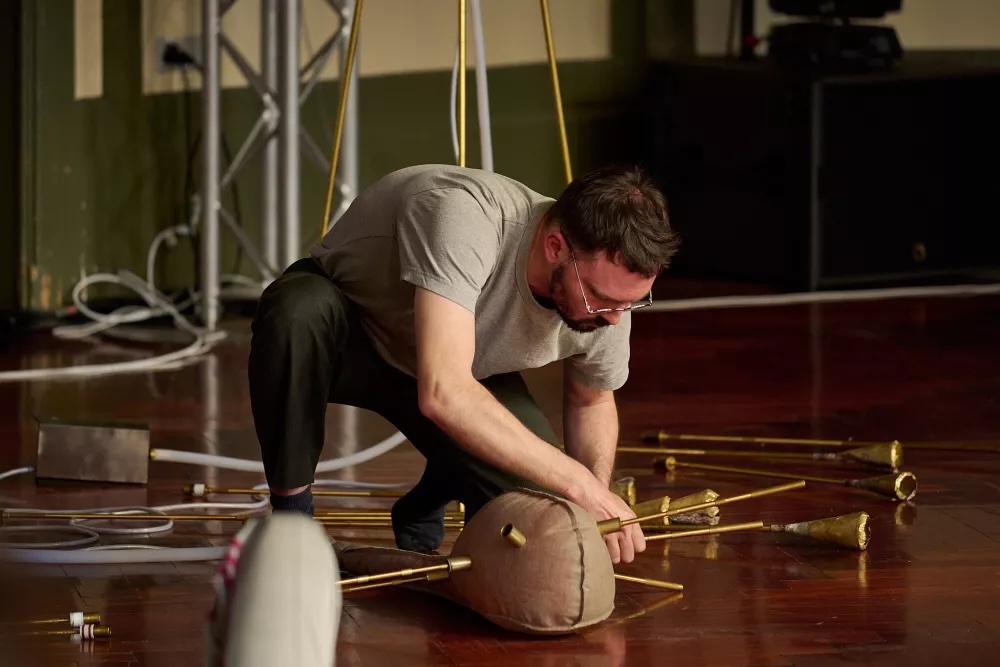
Then came a different, more playful approach to material sound. French artist Octave Courtin – who builds his own instruments from raw materials and augments them with electromechanical elements – explored the plasticity of sound in Les Concertantes, Prélude. Inflating bagpipes with air, he shaped them into whimsical, gravity-defying forms whose contours shifted with pressure. The performance moved fluidly between bagpipe polyphony and bursts of 8-bit textures.
Time itself began to feel like another material in the festival’s orbit. Walking through Geneva in spring, its streets flooded with banners of lavish wristwatches. I kept returning to this sense temporality. The annual watchmaking fair reshaped both the city’s rhythm and the mix of people on the streets. Time is not only the measure of existence, it is also something to be marketed.
Shrinking budgets, shifting priorities, and political pressure, were present in many conversations. Yet the Archipel Festival invited its audience into a space of joyful exploration without ignoring the broader social context. With more than 30 years of history, it holds fast to the idea of a playground for experimentation, embracing the often uncomfortable process of trying things out – allowing for errors, detours, and surprises. Rather than placing pressure on premieres and exclusivity, the festival lets works linger a little longer.
The directors, Marie Jeanson and Denis Schuler, steer the festival with a clear sense of what community can mean. One of its greatest strengths lies in its openness: no prior musical knowledge is required, and space is made for everyone to feel welcome. Cushions laid out in front of the rows of chairs and mattresses quickly filled with festival-goers, who settled in – lying down rather than sitting still.
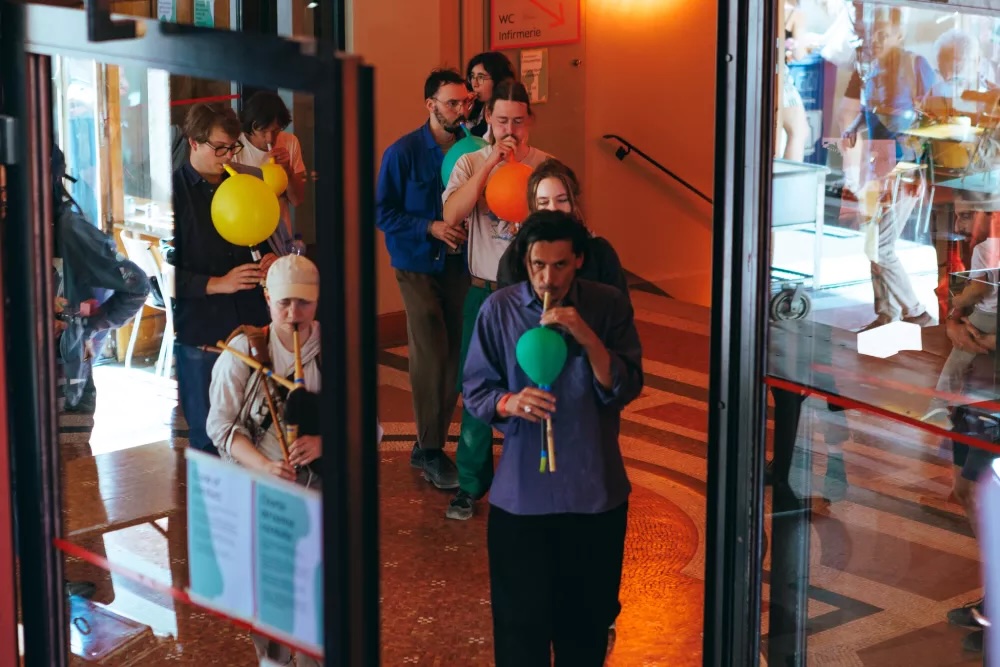
»Community is crucial here«, Marie told me over lunch. »I’ve always wanted to create a shared space with food – to make one house for the festival.« Moving from one concert to another with her recording device, she captures fragments of the sonic landscape. The festival’s social dimension does not sit alongside the music as listeners gather in the backyard and bar-canteen, and somewhere between talks and toasts, they explore the sound installations placed in and around the venue. Even the risotto dinner finds its place on equal footing with the concerts and performances.
Later that evening, the duo of Lukas De Clerck and Marcin Pietruszewski opened yet another portal to the distant past
Ancient instruments, future ears
The surreal aura of Saturday evening, introduced by Grisey’s masterpiece, carried over into the second work on the programme. Ensemble Contrechamps premiered a new piece by Zeynep Toraman, Sometimes at Night the Far Away Stars, for ensemble and electronics, developed at the legendary IRCAM studios in Paris.
Drawing on ancient Greek vocal expression, traditionally performed by women poised between cry and lament, Toraman turned inward. Working from her own recorded vocals, she constructed a »song without a voice« for ensemble. What initially appeared paradoxical became a subversive gesture: the prerecorded material is electronically distorted and fragmented, reduced to an airy echo that dissolves into the ensemble’s long, sustained tones. The result, however, feels like an aftermath of Grisey – less a fully formed piece than a study in the deconstruction of timbres, with the source material hovering just beneath the surface, as if the composer hesitates to fully shape it
Later that evening, the duo of Lukas De Clerck and Marcin Pietruszewski opened yet another portal to the distant past. In the intimate Salon d’écoute, equipped with an acousmonium – an orchestra of 80 speakers – they claimed the space and evoked the elusive sound world of the ancient aulos, a double-reed instrument with two pipes played simultaneously, once central to Greek musical life and closely tied to the Dionysian culture.
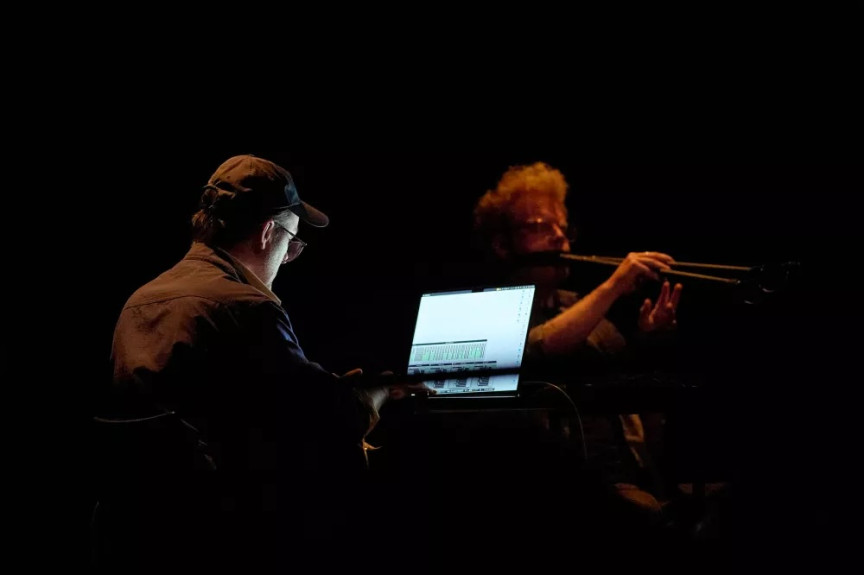
What emerged, however, was less a reconstruction than a critical reimagining of a sound world no longer existing. With no surviving instruments or continuous performance tradition, the aulos persists only in fragments and projections. De Clerck’s telescopic aulos is an invention of his own, based on historical sources yet shaped through contemporary ears.
What exactly am I hearing, and what is lost in the act of technological mediation?
Their project Oto Aulos unfolded as a study in tension between the bodily and the electronic. The multichannel composition moved across the speakers – penetrating, immersive, and piercing in the high registers. De Clerck’s impressive technical control, with its special breathing techniques and intricate fingering, gave the instrument a striking sense of grandeur.
Pietruszewski, meanwhile, fed the sound of the instrument into the machine, where custom software allowed him to break down, analyse, and reconfigure the input into a psychoacoustic experience. During the performance, questions continually surfaced: what exactly am I hearing, and what is lost in the act of technological mediation?
La Nòvia captured the spirit of the music without sacrificing its mechanical drive
Repetition, trance and friction
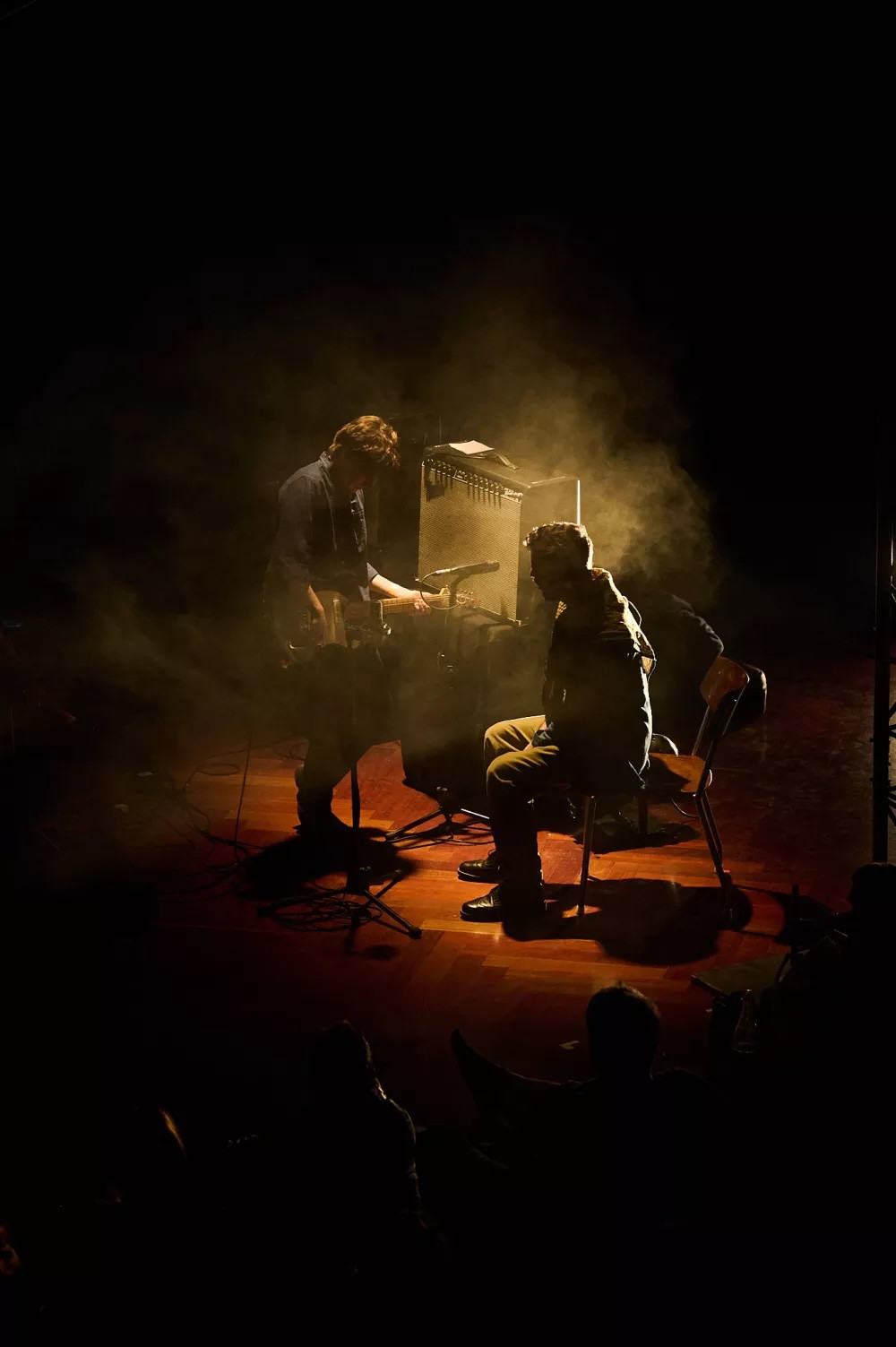
Keeping one’s ears wide open, unlikely instrumental constellations shaped another fascinating concert. On Friday night, the French collective La Nòvia – a flexible group of musicians working between folk and traditional repertoires from their homeland, as well as experimental composition with extended techniques and electronics – took the stage. At the core of their performance was a juxtaposition of two composers, Conlon Nancarrow and Jessica Ekomane. The ensemble, consisting of bagpipes, chabrette, banjo, violins, and electric guitar, confronted Nancarrow’s iconoclastic music alongside Ekomane’s work, giving both a new, arresting frame.
It was the first time I had experienced Nancarrow’s music live at a festival. The avant-garde composer, best known for his Studies for Player Piano – a selection of which was transcribed for the ensemble – had long been considered unplayable by human performers due to its extreme speed and rhythmic complexity. La Nòvia captured the spirit of the music without sacrificing its mechanical drive. Synchronised with kaleidoscopically shifting lights, the performance was overwhelming yet deeply satisfying.
Ekomane’s music, by contrast, approaches physicality through perception: it fills space while reshaping its contours, using different means to engage the listener. With new works written for the ensemble, she explored the passage of time and the balance between chaos and structure. The programme unfolded as a charged exchange between her work and Nancarrow’s, challenging the limits of both bodily execution and auditory perception. In this encounter, the ensemble opened up a field of adventurous harmonic and timbral combinations.
There was something powerful about watching another unlikely instrumental pairing take shape on stage: violin and percussion. In their project Dispars, violinist Clara Lévy and percussionist Alexis Degrenier turn this unbalanced meeting into a field of sonic negotiation. Do they aim for synchronicity while leaning into friction?
The Archipel Festival does not shy away from dark times or pressing issues
Dispars draws on Gilles Deleuze’s Difference and Repetition: Lévy and Degrenier take up his notion of the differential and the discordant, transforming it into a gradual drift towards a trance-like, hypnotic flow that resists resolution. The intensity of each repetition brings to mind American minimalist pioneers such as Steve Reich and Terry Riley, though the comparison only goes so far. Degrenier’s handling of rhythm, with its shifting metric structures, reaches beyond European frameworks, while his meticulous attention to colour lends the percussion a gravitational pull. Lévy’s impassioned responses, staged as a counterforce to the percussion’s logic of alignment, become an equally compelling partner in the exchange.
Many forms of musical resistance
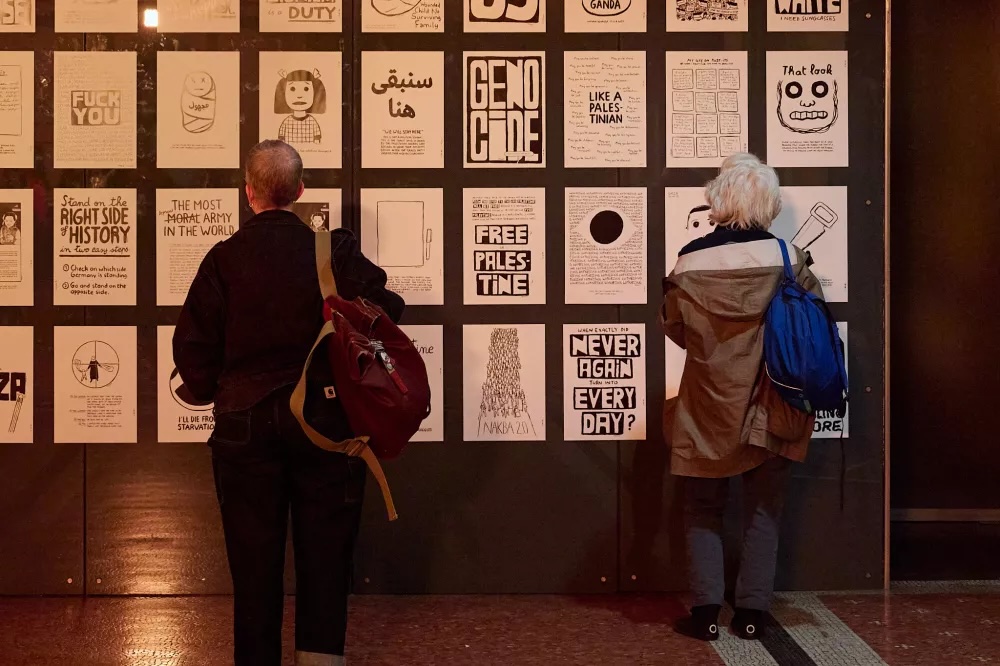
An artistic vision goes hand in hand with a clear political stance in Geneva. The Archipel Festival does not shy away from dark times or pressing issues, instead, it actively creates space for politically engaged contexts and a plurality of perspectives. These unfolded not only in the music, but also in Mazen Kerbaj’s exhibition and a panel discussion on archives and resistance. In doing so, the festival took an explicit stance on the genocide in Gaza. In Germany, such a solidarity gesture might cost festival directors their jobs or risk funding cuts.
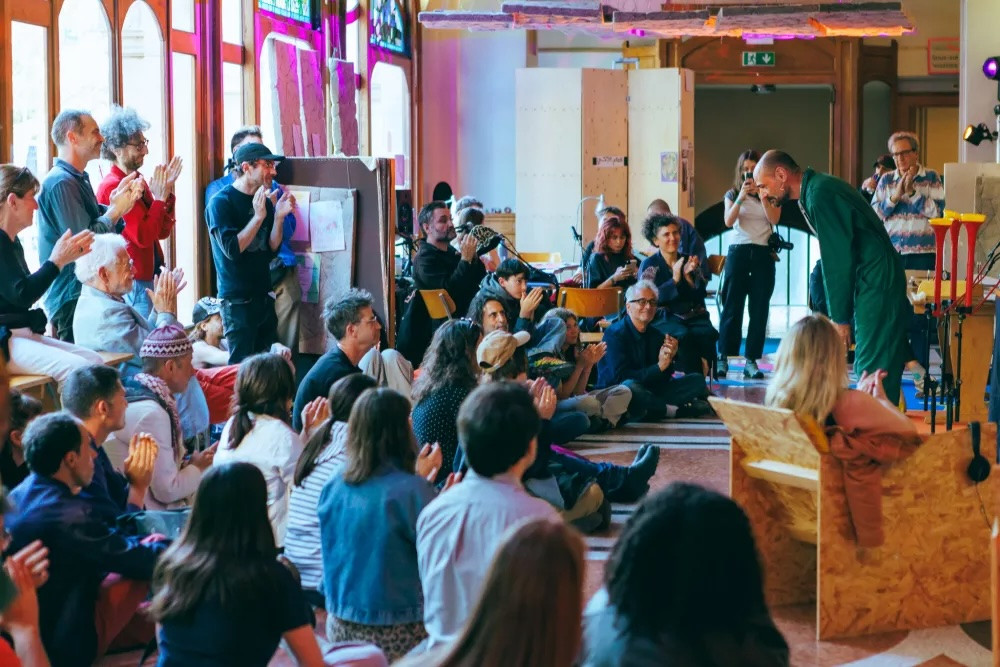
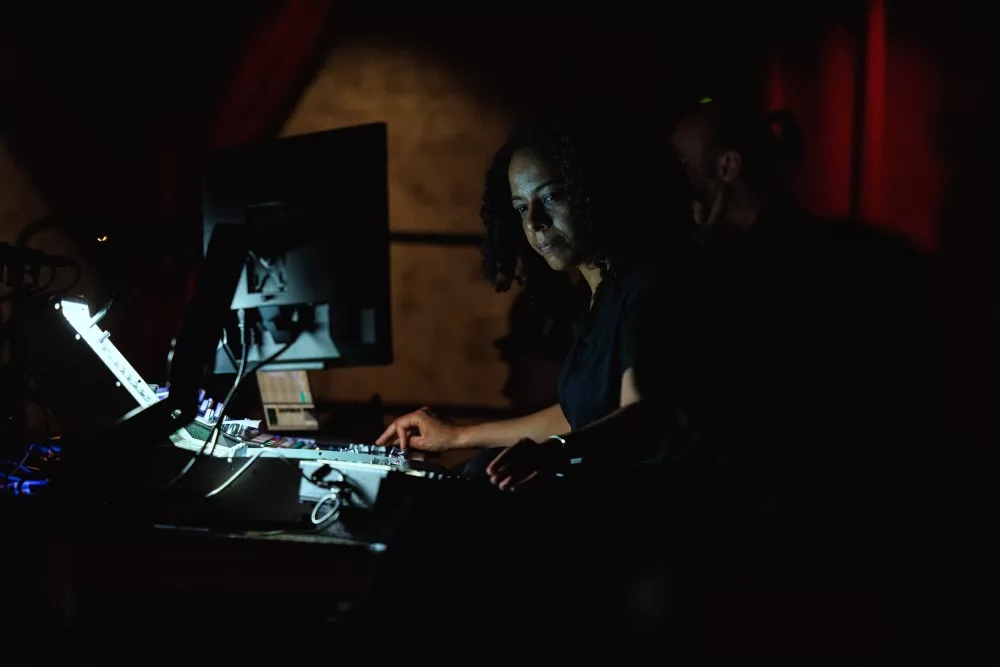
The discussion Building Futures Beyond Sonic Archives on Sunday afternoon, bringing together artists from Palestine, Syria, Tunisia, and Lebanon, was genuinely eye-opening. Maya Al Khaldi, Sarouna, Mohamed Ali Ltaief, Lamin Fofana, and Mazen Kerbaj – all of whom performed during the festival – joined moderator Laura Bohnenblust to reflect on their work: questions of access, ownership, and what archives truly encompass.
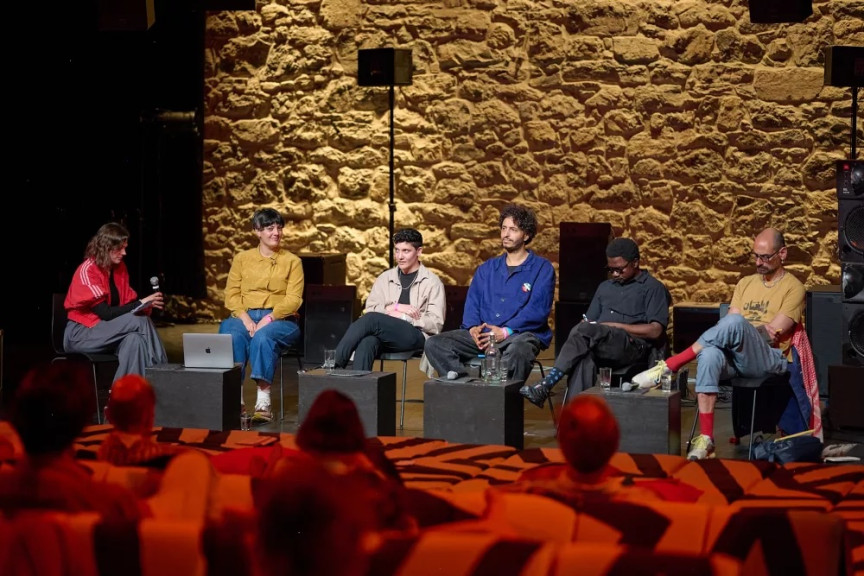
They introduced feminist perspectives into a still male-dominated field, addressed challenges of language and translation, and probed what liberation might mean in practice. Particularly inspiring was their critical reassessment of the term »decolonisation«, now so overused in musical discourse.
The discussion left me with a glimmer of hope for a more inclusive future
As they argued, it re-centres the coloniser, once again displacing agency. At a time when many European festivals grapple with how to present and frame music from the Global South, it felt both necessary and overdue to question the frameworks and assumptions still in place. The discussion left me with a glimmer of hope for a more inclusive future.
Just before the discussion, Ltaief and Fofana presented an energetic set, one of the festival’s few examples of musical resistance rooted in archival material. Moving between recordings from Berlin’s archives and the Ethnological Museum, as well as material from independent labels, they shaped a fluid, witty, and magnetic sonic collage. Fragments of traditional songs were interwoven with piano music, dance tracks, excerpts from speeches, and the sounds of Indigenous instruments, all finding equal footing within this layered mix.
Kerbaj, a musician, comics author, and visual artist, is no stranger to the free improvisation and experimental music scene, where his adventurous exploration of the trumpet has become a hallmark. He pushes boundaries and tests physical limits to the point of reshaping the very identity of his instrument.
As an artist who has lived through war and seeks to reflect it in his music, his Sunday night performance occupied the opposite end of the spectrum: raw and harsh, yet also soft and delicate, playful, even mischievous at times. Gurgles, whispers, and low vibrations all came into play as he expanded his sonic palette with everyday objects and toys. In the end, he stepped into the audience, quite literally closing the distance and drawing listeners into his universe.
Before her death, her grandmother had already passed on a quiet sense of hope of what a Palestine without occupation might look like
Towards a plural listening
My final experience at the Archipel festival was the concert by Maya Al Khaldi and Sarouna, which turned out to be the most moving of the programme. The Palestinian musicians, working with archival material from the Ramallah Popular Art Centre, opened up a series of questions around heritage and the dominant narratives of the present. The performance was especially affecting when Al Khaldi sang alongside a recording of her grandmother’s voice. Before her death, her grandmother had already passed on a quiet sense of hope of what a Palestine without occupation might look like.
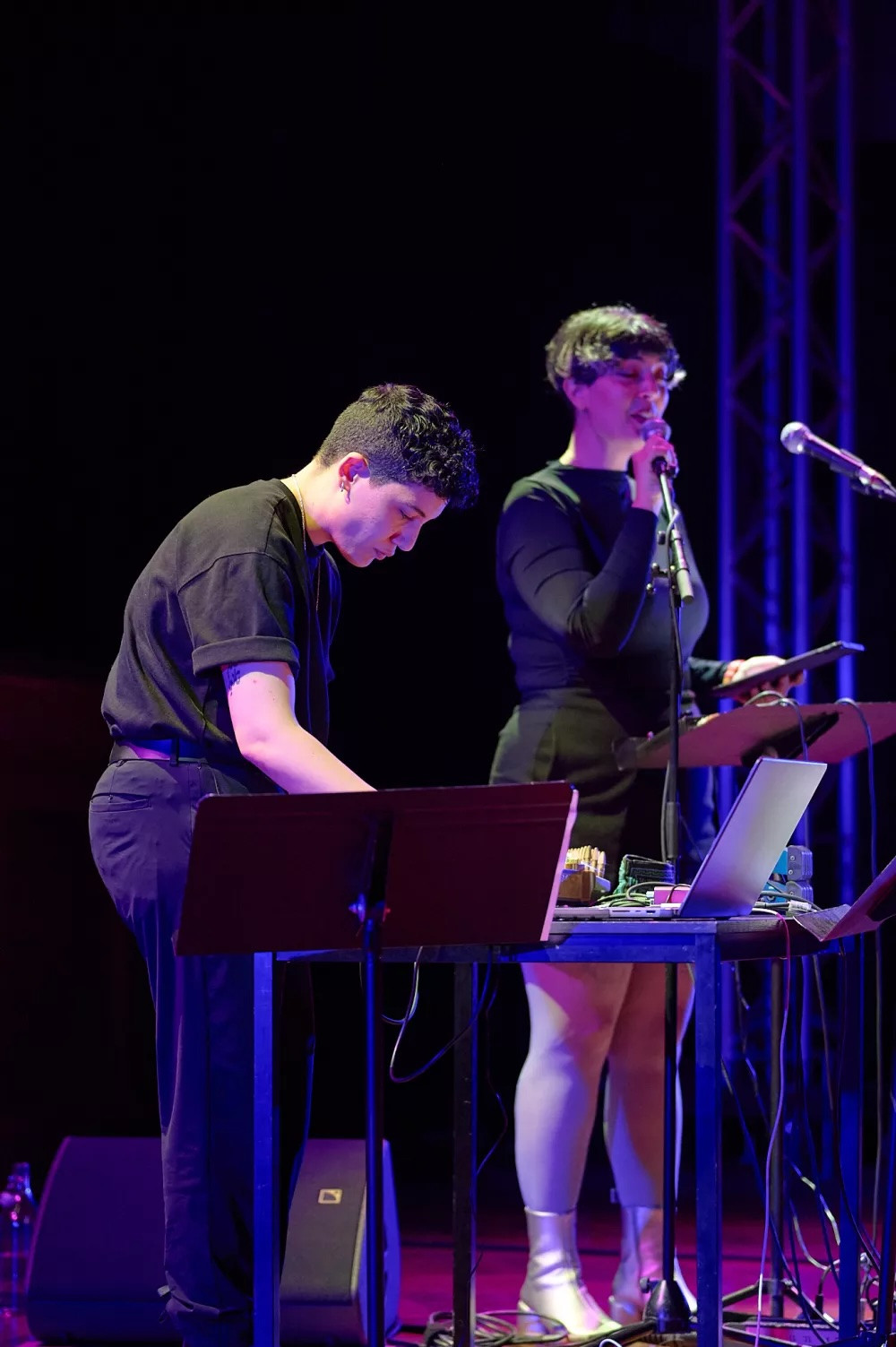
Earlier, during a panel discussion, Al Khaldi explained the format of the »grandmother song«, inspired by Bedouin musical traditions typically accompanied by a string instrument, the rebab. In the performance itself, she turned to grief songs from her homeland, channeling the mourning she has carried over the past three years and opening up a shared space for a collective experience of loss and pain.
What Archipel offered was not resolution, but openness
Listening in Geneva is indeed a shared political and sensory practice – rooted in collective attention and in positioning oneself in relation to others and to histories, often through archives. Time has never been neutral, nor have European ears been neutral in deciding what slips in as music.
What Archipel offered was not resolution, but openness: a space where works are allowed to fail, linger, and where unlikely combinations are not exceptions but method, bringing together different perspectives without forcing them into agreement.