






in briefrelease
13.04

A Cave of Sound: TAK Ensemble Cuts into the Acoustic Darkness

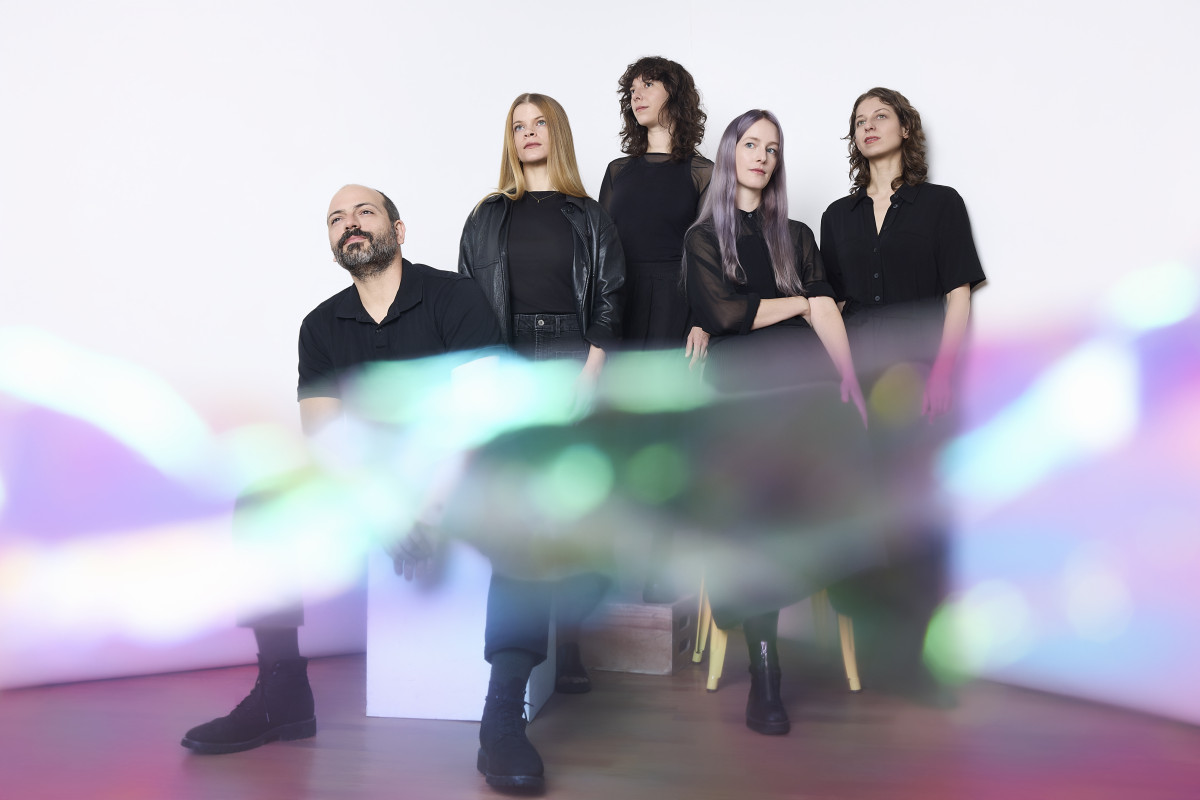
TAK Ensemble: »Between the Air«
© Titilayo Ayangade
© Titilayo Ayangade

Between the Air demands ears in exploration mode. TAK Ensemble’s eighth album unfolds as a dense acoustic landscape – like a cavern of sonic stalactites, rich in texture and resonance.

The five works, written specifically for the New York-based ensemble, present distinct voices in experimental contemporary music. The album opens with Eric Wubbels’s Instruments, a compelling actualization of Helmut Lachenmann’s musique concrète instrumentale. Violinist Marina Kifferstein’s energetic scratch technique sets a raw tone, carried by the ensemble’s precise, noise-based interplay, which shapes the album as a whole. At its center lies Lewis Nielson’s Siesta Negra, a sonification of Che Guevara’s final notes, written in 1967 shortly before his execution. Its oppressive, almost nightmarish atmosphere is foreshadowed by the sharp-edged textures of Golnaz Shariatzadeh’s moon that sank | wet grass. Bethany Young’s At Midnight I Walked in the Middle of the Desert then follows as a surreal, radio-play-like, playfully exaggerated coda. The album concludes with Tyshawn Sorey’s For jamie branch, a restrained elegy for the exceptionally gifted jazz musician who tragically died in 2022 at the age of 41.

With Between the Air, TAK Ensemble once again demonstrates its remarkable sensitivity to the materiality of sound, inviting listeners to move beyond the often harsh surface of the present – and, perhaps, to breathe more freely again. 

© PR

»Music has been a healing balm for me.«

John William Grant is an American singer, musician, and songwriter holding both American and Icelandic citizenship. He first came to prominence as a co-founder, lead vocalist, pianist, and primary songwriter of the alternative rock band The Czars. After releasing six albums between 1994 and 2006, the band disbanded, and Grant withdrew from music for four years before embarking on a solo career.

He returned in April 2010 with a critically acclaimed debut album recorded in collaboration with Midlake. Queen of Denmark was named Album of the Year 2010 by Mojo magazine and was also selected as one of the ten best albums of 2010 by The Guardian’s music critics and writers.

© Malthe Folke Ivarsson

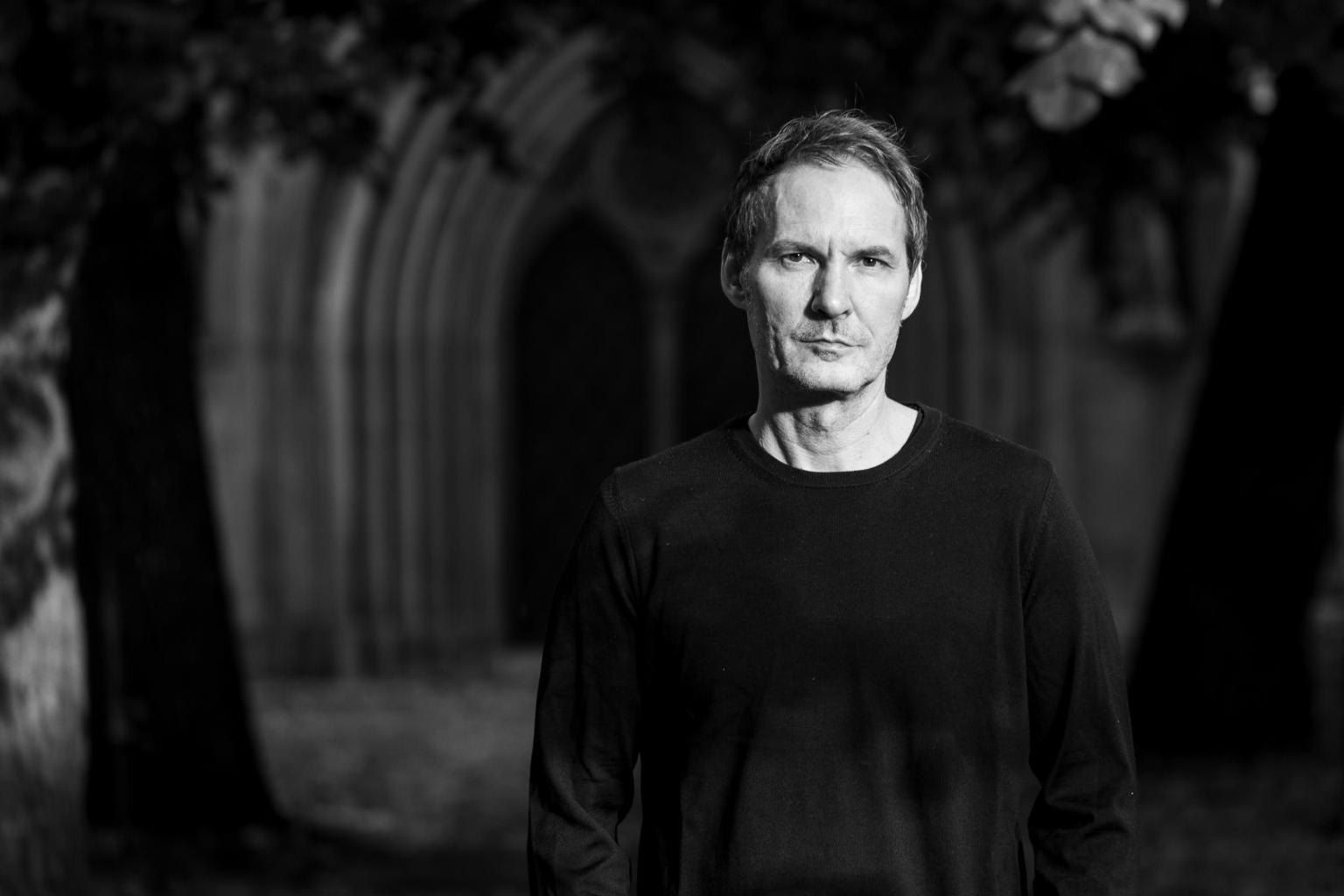
»In his music, composer Allan Gravgaard Madsen tries to create a better version of himself.« 

Allan Gravgaard Madsen is a Danish composer based in Copenhagen. His most recent works include Träume nicht and Nachtmusik. He tries to create a better version of himself in his music – where his personality tends to be restless, chatty and has an active inner life, his music is controlled, simple and merciless in its expression. He is the recipient of the Carl Nielsen & Anne Marie Carl-Nielsens Hæderspris 2022.

in briefrelease
23.01.2022

Finnish Space Travel

Tomutonttu: »Hoshi«
© Tomutonttu: »Hoshi«

The Finnish multimedia artist Jan Anderzén has, with the album Hoshi, released under the solo moniker Tomutonttu, created a true little star. Not only because »hoshi« literally means »star« in Japanese, but above all due to the music itself. There is something cosmic, yet infinitely minute, about the sonic worlds Anderzén conjures—like a galaxy reflected in a puddle, or a space journey in a rocket carved from a hollow tree trunk. Synths emit busy, warm blips and bloops, while ultra-short vocal and instrumental samples create a recognizable blur. At once artificial and organic – soft, rounded, jagged, crackling.

Anderzén approaches sound with a playfulness I simply adore. His music is strange in an incredibly comforting way. It places me in a kind of colorful, trance-like state, only interrupted when, several times over the course of the album, I find myself smiling in delight at a particularly great sound. The synths on »Katse osuu sähköön!« The choral samples on »Kesä oli äkkiä ohi!« Milo Linnovaara’s flute on »Malta lausua ‘AH’!« And many more. Hoshi is an album packed with microscopic moments that together form a frayed, exploding, radiant, idiosyncratic whole—a stellar moment of just under 38 minutes.