







in briefrelease
29.09

From Chaos, Ingebrigt Håker Flaten Weaves Musical Patterns

Ingebrigt Håker Flaten (Exit) Knarr: »Drops«
© PR
© PR

The keyword for this release can already be found in the title of the opening track: »Deluge (deconstructed)«. Here, Håker Flaten takes a Wayne Shorter composition apart like a LEGO set and reassembles it in a way that only occasionally recalls the original. Out of the pieces emerges a short, repetitive guitar motif, around which drums, saxophones, bass, and piano orbit in increasingly fragmented patterns. The melodies gradually become less concrete, the instruments interact less, the intensity rises almost imperceptibly – until everything falls apart and the process begins again. The same approach is used in the third track, »Kanón (for Paal Nilssen-Love)«, where tension and release unfold in waves that propel the music forward. Håker Flaten masters the art of creating dramatic arcs that guide the listener safely through even the most tumultuous passages.

This is not easy listening – we are still in free jazz territory – but there is a strangely compelling balance between chaos and restraint. At first, one is caught by the surprise of the music’s sudden turns, later by the joy of recognition as one begins to sense where the music sharpens and takes shape.

The album closes with »Austin Vibes (tweaked by Karl Hjalmar Nyberg)«, a noisy collage that slowly opens up toward fragments of more conventional horn melodies. Here we get closest to something resembling a classic jazz feeling—and yet not quite. It is still far from easily digestible music. But even when Håker Flaten and his fellow musicians move furthest into fragmentation, they manage to make the difficult-to-understand surprisingly easy to grasp.

English translation: Andreo Michaelo Mielczarek

© Malthe Folke Ivarsson

»In his music, composer Allan Gravgaard Madsen tries to create a better version of himself.« 

Allan Gravgaard Madsen is a Danish composer based in Copenhagen. His most recent works include Träume nicht and Nachtmusik. He tries to create a better version of himself in his music – where his personality tends to be restless, chatty and has an active inner life, his music is controlled, simple and merciless in its expression. He is the recipient of the Carl Nielsen & Anne Marie Carl-Nielsens Hæderspris 2022.
in briefrelease
23.01.2022

Finnish Space Travel

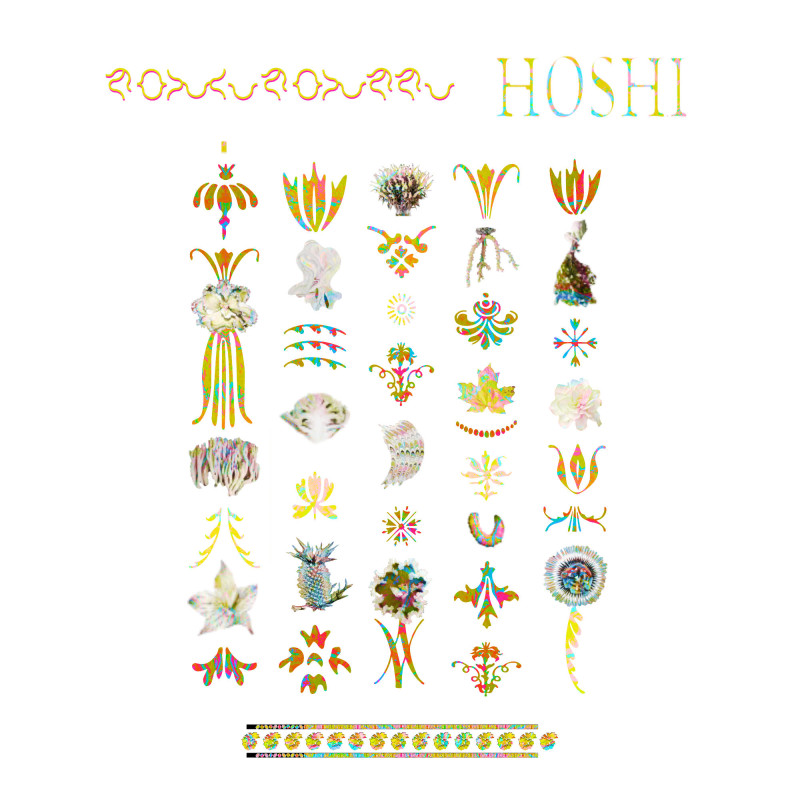
Tomutonttu: »Hoshi«
© Tomutonttu: »Hoshi«

The Finnish multimedia artist Jan Anderzén has, with the album Hoshi, released under the solo moniker Tomutonttu, created a true little star. Not only because »hoshi« literally means »star« in Japanese, but above all due to the music itself. There is something cosmic, yet infinitely minute, about the sonic worlds Anderzén conjures—like a galaxy reflected in a puddle, or a space journey in a rocket carved from a hollow tree trunk. Synths emit busy, warm blips and bloops, while ultra-short vocal and instrumental samples create a recognizable blur. At once artificial and organic – soft, rounded, jagged, crackling.

Anderzén approaches sound with a playfulness I simply adore. His music is strange in an incredibly comforting way. It places me in a kind of colorful, trance-like state, only interrupted when, several times over the course of the album, I find myself smiling in delight at a particularly great sound. The synths on »Katse osuu sähköön!« The choral samples on »Kesä oli äkkiä ohi!« Milo Linnovaara’s flute on »Malta lausua ‘AH’!« And many more. Hoshi is an album packed with microscopic moments that together form a frayed, exploding, radiant, idiosyncratic whole—a stellar moment of just under 38 minutes.