in briefrelease
12.03

Do Whales Actually Want to Listen to Us?

Valentin Paoli: »The Musician and The Whale / La Baleine et le Musicien«
© PR
© PR

The French electronic musician Rone finds it difficult to express emotions verbally. In Valentin Paoli’s rather touching documentary The Musician and The Whale, he reflects on music’s ability to create connections and convey moods to an audience – whether human or interspecies.

One day, Rone receives a video from a sailor who is playing his music at sea. Whales gather around the boat, seemingly drawn to the sounds, and this becomes the starting point for an exploration of whether the musician might be able to communicate with the animals through sound. Rone seeks out an expert in whale vocalizations, who points to certain high-pitched synth elements in his EDM compositions that resemble whale song. He then has a girls’ choir record the whale sounds with human voices and travels to Réunion to play the sounds back to the whales.

At first, the attempt proves futile: the whales appear indifferent to the girls’ choir. Quoting Johann Wolfgang von Goethe, Rone realizes that if one wishes to move others, one must begin with what moves oneself. It is a Disney-like insight in a slightly sentimental film that speaks to the human desire to communicate with animals.

But are we actually sure that animals want to communicate with us? As the film’s central figure, Rone briefly reflects on a few ethical questions concerning animals, yet his infectious enthusiasm for the sounds of whales prevents him from asking the most fundamental questions about the relationship between humans and animals. Instead, we get a portrait of the musician that is almost as polished and warm-hearted as his music. The whale, wisely, remains beneath the surface of the sea.

»The Musician and The Whale« / »La Baleine et le Musicien« (83 min.)
Valentin Paoli (FR), 2026. Screening at CPH:DOX, March 11, 12 and 20


© Malthe Folke Ivarsson

»In his music, composer Allan Gravgaard Madsen tries to create a better version of himself.« 

Allan Gravgaard Madsen is a Danish composer based in Copenhagen. His most recent works include Träume nicht and Nachtmusik. He tries to create a better version of himself in his music – where his personality tends to be restless, chatty and has an active inner life, his music is controlled, simple and merciless in its expression. He is the recipient of the Carl Nielsen & Anne Marie Carl-Nielsens Hæderspris 2022.

in briefrelease
23.01.2022

Finnish Space Travel

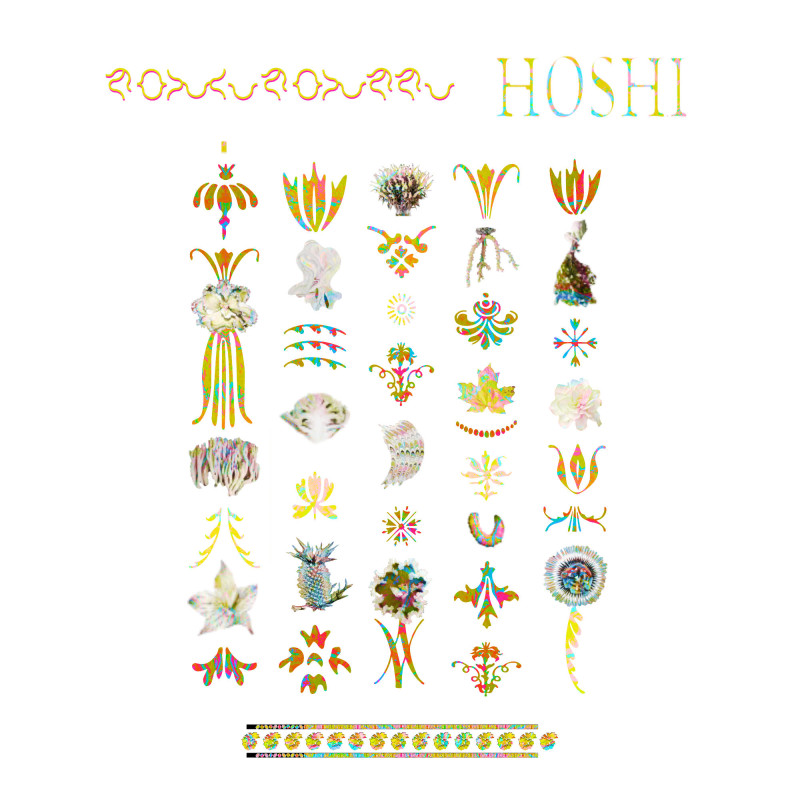
Tomutonttu: »Hoshi«
© Tomutonttu: »Hoshi«

The Finnish multimedia artist Jan Anderzén has, with the album Hoshi, released under the solo moniker Tomutonttu, created a true little star. Not only because »hoshi« literally means »star« in Japanese, but above all due to the music itself. There is something cosmic, yet infinitely minute, about the sonic worlds Anderzén conjures—like a galaxy reflected in a puddle, or a space journey in a rocket carved from a hollow tree trunk. Synths emit busy, warm blips and bloops, while ultra-short vocal and instrumental samples create a recognizable blur. At once artificial and organic – soft, rounded, jagged, crackling.

Anderzén approaches sound with a playfulness I simply adore. His music is strange in an incredibly comforting way. It places me in a kind of colorful, trance-like state, only interrupted when, several times over the course of the album, I find myself smiling in delight at a particularly great sound. The synths on »Katse osuu sähköön!« The choral samples on »Kesä oli äkkiä ohi!« Milo Linnovaara’s flute on »Malta lausua ‘AH’!« And many more. Hoshi is an album packed with microscopic moments that together form a frayed, exploding, radiant, idiosyncratic whole—a stellar moment of just under 38 minutes.