

in briefrelease
11.02

Echoes from the Olive Trees

Mai Mai Mai: »Karakoz«
© PR
© PR

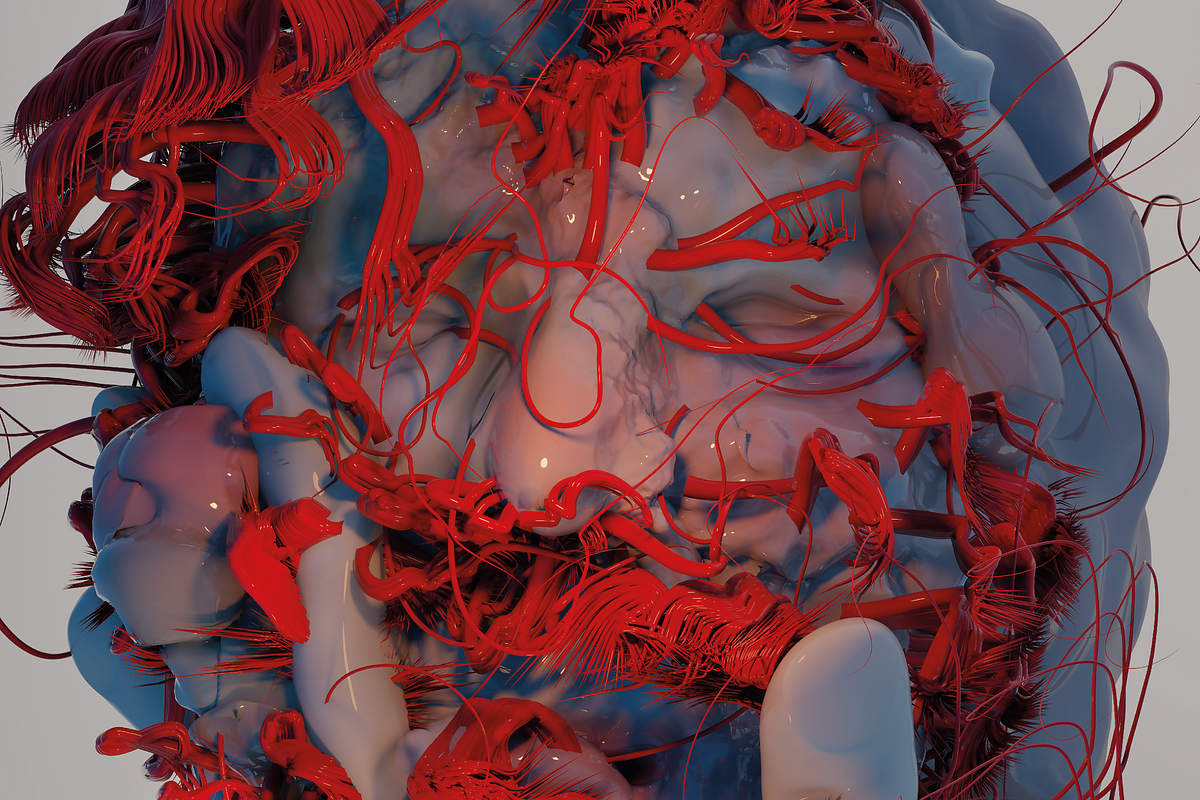
Grief is hereditary. It is collective and more than mere streams of tears – as countless generations of oppressed Palestinians can attest. On the album Karakoz, the Rome-based musician Mai Mai Mai creates a resonance of this collective sorrow and attempts to grasp the desperate hope of the Palestinian people. Not through political slogans, but through dark spiritualism and synthesizers.

Karakoz is an ancient form of shadow theatre with roots in the Ottoman Empire, and the album title serves as an omen of the musical pulse that sets in from the opening track, »Grief«. Here the music sounds like an archaic folk hymn: slow, repetitive percussion creates a tear-soaked minimalism, and the piece feels like a ceremony passed down through generations. With synthesizers slowly coiling around Maya Al Khaldi’s yearning vocals, »Grief« becomes a cultural bridge between forgotten traditions and the painfully current tragedy that today envelops Palestine in an all-consuming darkness.

Across the seven tracks, one hears trauma like a wind murmuring through the streets and among the olive trees. This may be because the album was created in collaboration with local artists and includes archival material from The Palestinian Sound Archive – an archive of decades of forgotten music, poetry, and album covers. Karakoz is a reinterpretation of Middle Eastern spiritualism and forgotten music. It is a testament to grief as lived experience, and as an archival bulwark, Karakoz thus takes part in the struggle for a free Palestine.

English translation: Andreo Michaelo Mielczarek

© PR

»Music has been a healing balm for me.«

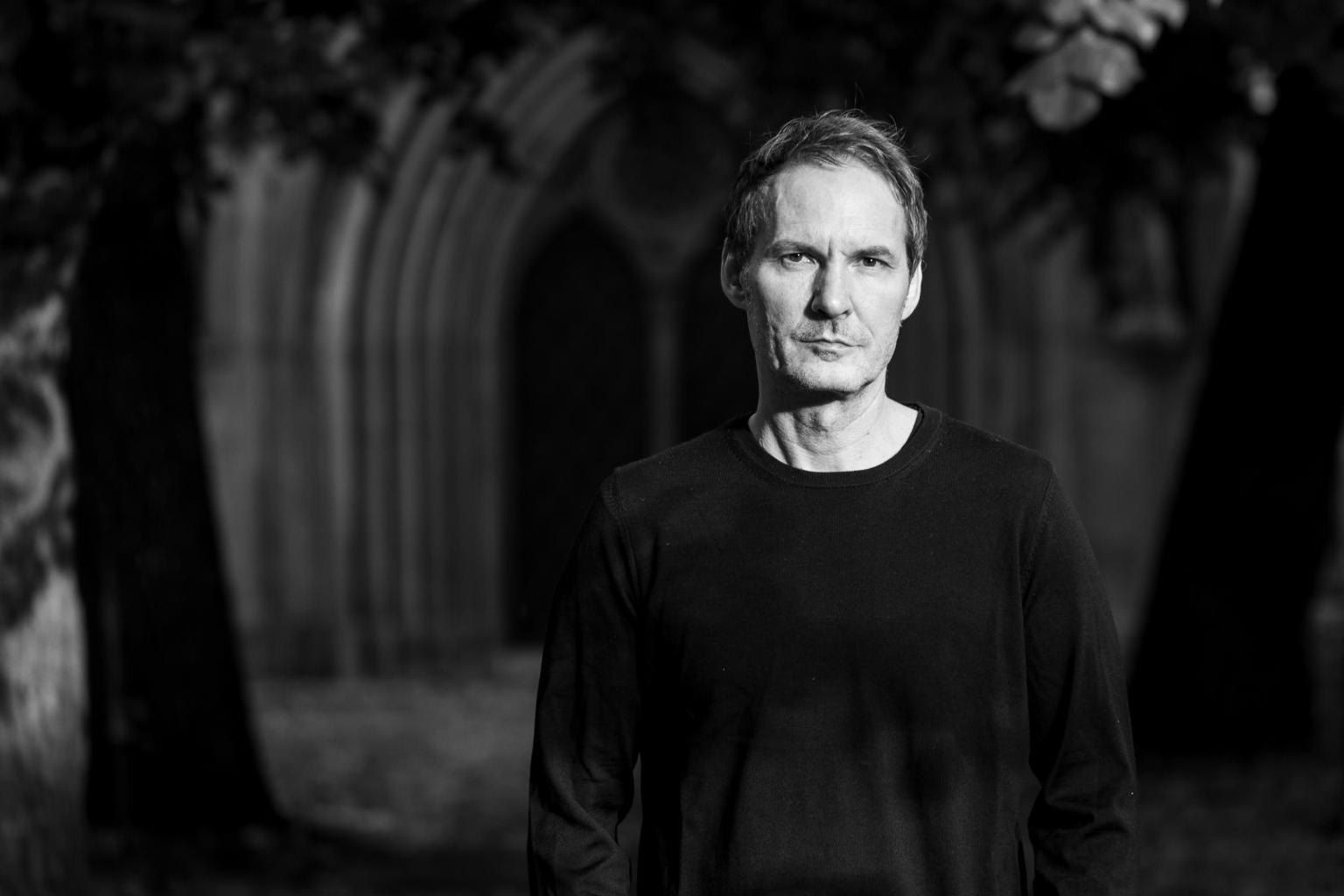
John William Grant is an American singer, musician, and songwriter holding both American and Icelandic citizenship. He first came to prominence as a co-founder, lead vocalist, pianist, and primary songwriter of the alternative rock band The Czars. After releasing six albums between 1994 and 2006, the band disbanded, and Grant withdrew from music for four years before embarking on a solo career.

He returned in April 2010 with a critically acclaimed debut album recorded in collaboration with Midlake. Queen of Denmark was named Album of the Year 2010 by Mojo magazine and was also selected as one of the ten best albums of 2010 by The Guardian’s music critics and writers.

in briefrelease
23.01.2022

Finnish Space Travel

Tomutonttu: »Hoshi«
© Tomutonttu: »Hoshi«

The Finnish multimedia artist Jan Anderzén has, with the album Hoshi, released under the solo moniker Tomutonttu, created a true little star. Not only because »hoshi« literally means »star« in Japanese, but above all due to the music itself. There is something cosmic, yet infinitely minute, about the sonic worlds Anderzén conjures—like a galaxy reflected in a puddle, or a space journey in a rocket carved from a hollow tree trunk. Synths emit busy, warm blips and bloops, while ultra-short vocal and instrumental samples create a recognizable blur. At once artificial and organic – soft, rounded, jagged, crackling.

Anderzén approaches sound with a playfulness I simply adore. His music is strange in an incredibly comforting way. It places me in a kind of colorful, trance-like state, only interrupted when, several times over the course of the album, I find myself smiling in delight at a particularly great sound. The synths on »Katse osuu sähköön!« The choral samples on »Kesä oli äkkiä ohi!« Milo Linnovaara’s flute on »Malta lausua ‘AH’!« And many more. Hoshi is an album packed with microscopic moments that together form a frayed, exploding, radiant, idiosyncratic whole—a stellar moment of just under 38 minutes.