

Niels Rønsholdt
51




With the debut album Loud Bloom, Olof Dreijer – best known from The Knife – comes across as someone who never quite realised the party was over. Or perhaps realised it before everyone else did.
For years, club music has been absorbed into popular culture and its aesthetic vocabulary – imported into the pop song as energy, irony, and texture through artists like Charli XCX, PC Music, and the entire hyperpop complex. On Loud Bloom, the opposite happens. This is not club music disguised as pop, but pop music subjected to the temporality of the club: circular, lingering, and uninterested in quick release.
Dreijer understands something essential about repetition – the melodies are catchy without being insistent. »Rosa Rugosa«, »Plastic Camelia«, and »Cassia« are instantly memorable, yet the melodies never harden into slogans. The sonic palette is airy and almost devoid of chordal surfaces. Steel drums, gleaming synth figures, pitched tom-toms, and sub-bass drift lyrically through the music, while castanets and cowbells flicker at the edges. Even the vocals function more as texture than as centre.
The album feels constantly in motion, as though its melodies are being refracted through prisms that continuously produce new luminous surfaces. On »Lantana«, tones drift away from their point of departure like blurred watercolours – not quite microtonal, but with a sense of intonation as something fluid. Precisely for that reason, one occasionally misses an element of estrangement. In The Knife, Karin Dreijer’s voice functioned as a disturbing counterforce – androgynous, childlike, threatening. On Loud Bloom, the sonic world is more homogeneous and smoothed out.
Still, the album feels like an heir to the half-clubbed, half-pop kaleidoscopic computer music of the mid-2010s – albums such as Our Love by Caribou and In Colour by Jamie xx – music that dared to be melodic without the safety net of irony. Dreijer’s music believes in ecstasy as a gentle experience. It is music meant for dancing, yet somehow shy at the very thought of celebration.
English translation: Andreo Michaelo Mielczarek

The keyword for this release can already be found in the title of the opening track: »Deluge (deconstructed)«. Here, Håker Flaten takes a Wayne Shorter composition apart like a LEGO set and reassembles it in a way that only occasionally recalls the original. Out of the pieces emerges a short, repetitive guitar motif, around which drums, saxophones, bass, and piano orbit in increasingly fragmented patterns. The melodies gradually become less concrete, the instruments interact less, the intensity rises almost imperceptibly – until everything falls apart and the process begins again. The same approach is used in the third track, »Kanón (for Paal Nilssen-Love)«, where tension and release unfold in waves that propel the music forward. Håker Flaten masters the art of creating dramatic arcs that guide the listener safely through even the most tumultuous passages.
This is not easy listening – we are still in free jazz territory – but there is a strangely compelling balance between chaos and restraint. At first, one is caught by the surprise of the music’s sudden turns, later by the joy of recognition as one begins to sense where the music sharpens and takes shape.
The album closes with »Austin Vibes (tweaked by Karl Hjalmar Nyberg)«, a noisy collage that slowly opens up toward fragments of more conventional horn melodies. Here we get closest to something resembling a classic jazz feeling—and yet not quite. It is still far from easily digestible music. But even when Håker Flaten and his fellow musicians move furthest into fragmentation, they manage to make the difficult-to-understand surprisingly easy to grasp.
English translation: Andreo Michaelo Mielczarek
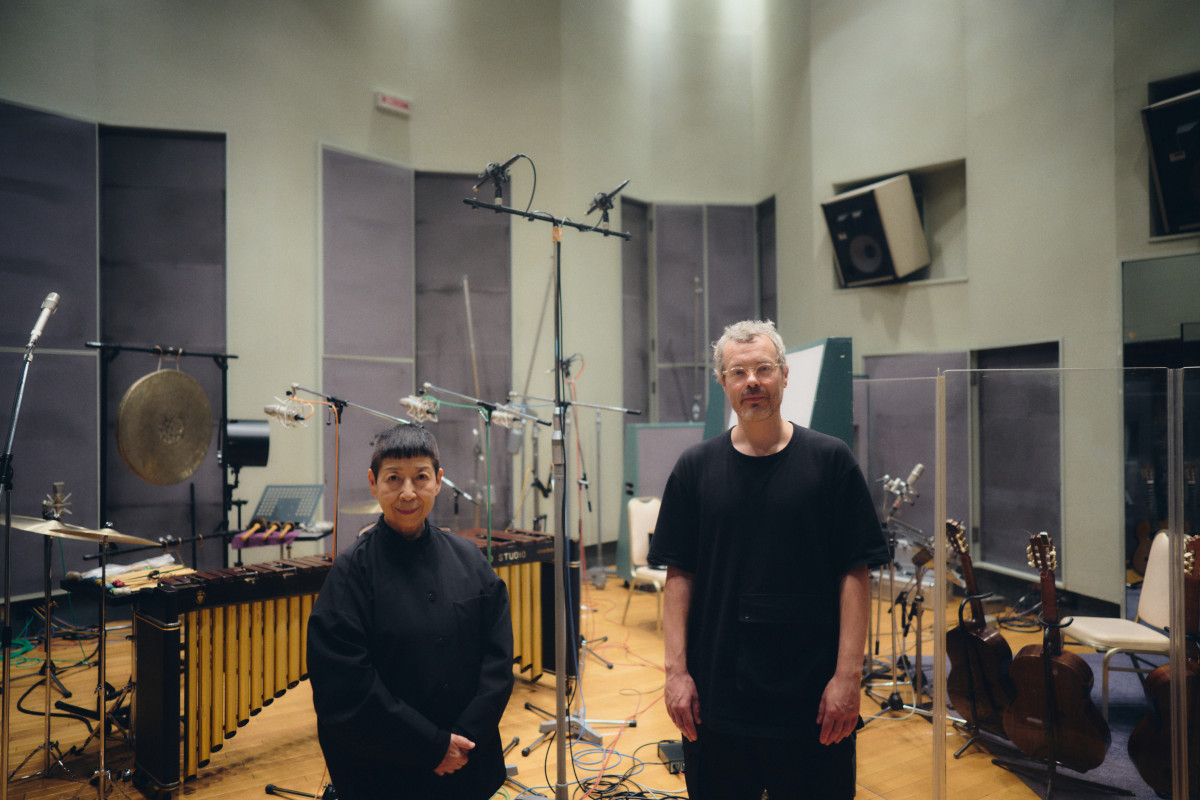
At last, three years after their concert at the Black Diamond, the collaboration between Danish guitarist Jakob Bro and Japanese percussionist Midori Takada has been released in album format – and it does not disappoint.
Their friendship may seem surprising at first, given their differences, but あなたに出会うまで / Until I Met You reveals how it rests on a shared ability to close their eyes and listen. They give each other space to do what they each do best: Bro’s simple yet refined melodies and Takada’s magical soundscapes. On the title track, Bro sketches the outlines with acoustic guitar and sparse notes, which Takada fills in with shimmering marimba and gong. On A Brief Rest of Sisyphosthe roles are reversed – here Takada sets the frame while Bro adds the details.
The sublime sister pieces Landscape II, Simplicity and Landscape I, Austerity are more abstract than the earlier works. Landscape II breathes hope and longing with resonant chimes and percussion, while a middle section unfolds in melodic harmony between guitar and piano. Landscape I carries the same sense of yearning, but with a more melancholic tone; a gently undulating marimba supports a beautifully moving guitar part. Both pieces radiate a clear sense of respect and tenderness between the musicians: Bro and Takada listen to each other with rare intimacy, and together they have created something truly unique.
English translation: Andreo Michaelo Mielczarek
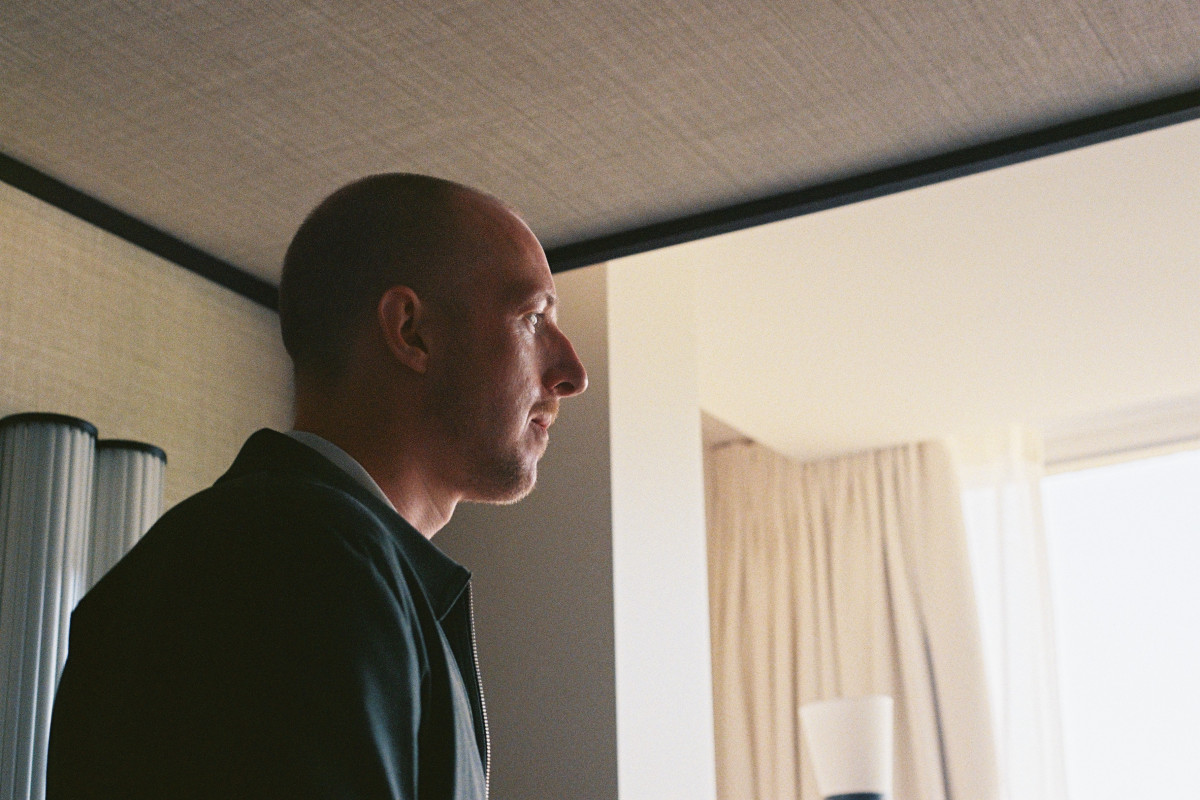
The forest lake is a cradle of life in more than one sense. The forest’s myriad forms of life depend on its waters, but its trickling branches, intense stillness, and soft reflections also hold powerful musical potential. It is precisely this life-giving energy that forms the basis of Swedish composer Filip Leyman’s solo debut album, Soft Light. From the very first track, »Beyond the Sea«, one senses how Leyman manages to create an organic universe where every sound nourishes the soil for the next. It is difficult to find either beginning or end as the many synthesizers and strings grow into and out of one another – you simply have to surrender and sink into this spherical universe of reverberations and deep, steady bass.
Filip Leyman’s work cannot be described without mentioning Swedish artist Anna von Hausswolff. Her music is like a force of nature, carried by long, sacred organ passages – and what is Hausswolff and what is Leyman is never entirely possible to determine. Soft Light gathers together compositions written over decades and appears as a natural extension of the many albums and soundtracks the two have created together. The album contains a strong cinematic dimension: in a track like »Shapes«, the layered sounds culminate in a dazzling climax that feels like slow motion in sound.
Here, Leyman appears as a musical botanist, patiently letting his synthesizers grow, sprout, and bloom. Although Soft Light has developed over many years, it sounds remarkably cohesive – like one long breath. The album seems more cultivated than composed. Let us hope that Soft Light is only the beginning, and that Leyman will allow more solo albums to grow in the same light.
English translation: Andreo Michaelo Mielczarek
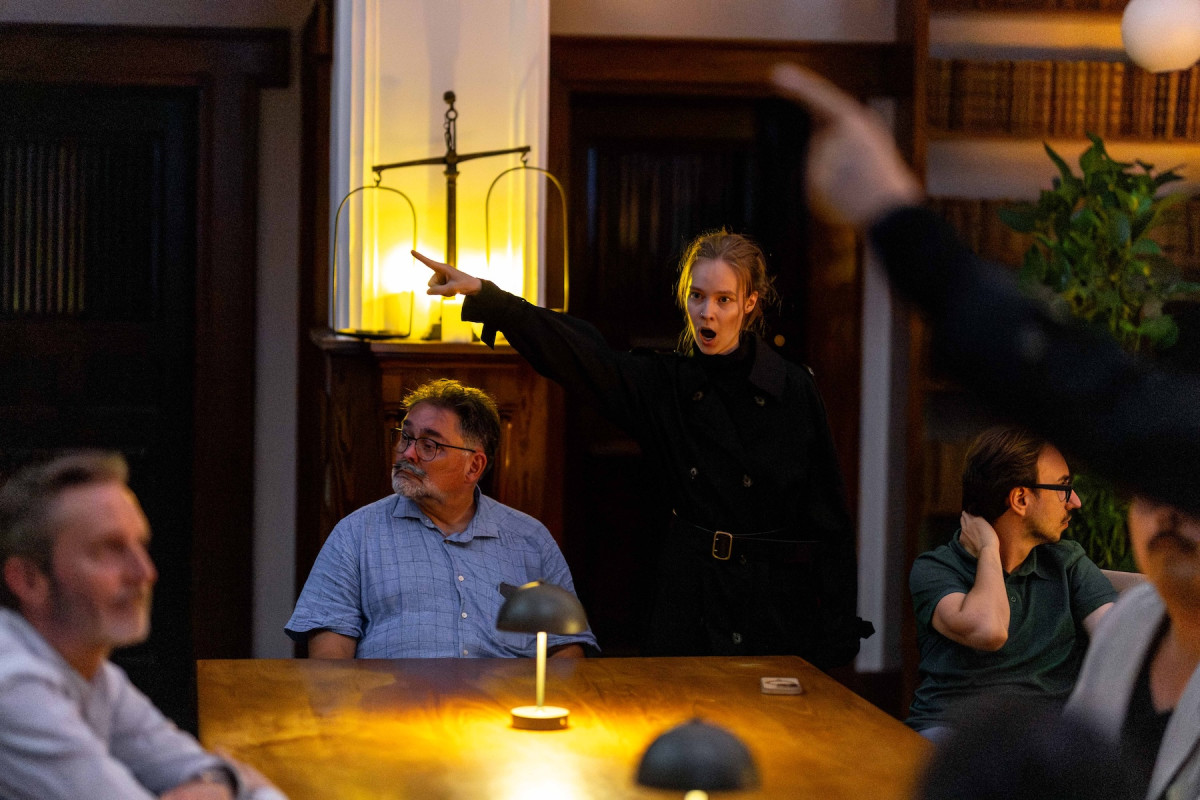
A newly composed opera staged in a courtroom may sound like a banal trick. But as I step into the waiting hall of the Aarhus Courthouse for Niels Rønsholdt and Louise Beck’s Den Stærkes Ret – Den Svages Pligt (The Right of the Strong – The Duty of the Weak), I wonder for a moment if I’ve come to the wrong place. An oblong room, tables scattered about, a balcony above – and then a sheet of music in a glass display case that normally would hold old legal documents. The scenography is discreet, but the legal framework immediately sparks reflections on law, power, and justice.
Soon, nearly 20 singers appear on the balcony. The music is tonal, carried by resonance and repeated phrases that gradually shift like a canon. You sense borrowings from minimalism, but also a near-folklike simplicity that makes the choir both enchanting and unsettling. The plot – a daughter confronting her father’s ghost to claim his weapon – emerges only in fragments. It is the atmosphere that drives the work, and it changes radically when the singers leave the balcony and place themselves among the audience, while three dancers move through the hall.
A pivotal moment comes when the choir suddenly strikes tuning forks and places them on the tables, sending a vibrating »wuu-uu« through the room. Goosebumps arrive instantly. Moments later, the singers address us directly, holding intense eye contact. It feels both intimate and transgressive, like being spoken to in court with no chance to reply. I wanted to look away, but felt compelled to hold their gaze. Here, the title became physical: the duty of the weak to submit.
As the work fades out, all the singers turn against the father and side with the daughter. Books are torn from the shelves, pages ripped out, and as »Listen and learn« is sung, Orwell’s 1984 flickers in the back of my mind. It is both disturbing and uncannily timely in an era where obedience to authority and manipulation again shape public discourse.
Den Stærkes Ret is one of the most intense musical experiences I have had in years. It unites aesthetics, body, and social commentary in a way that makes you shudder. I am already waiting for acts two and three.
English translation: Andreo Michaelo Mielczarek
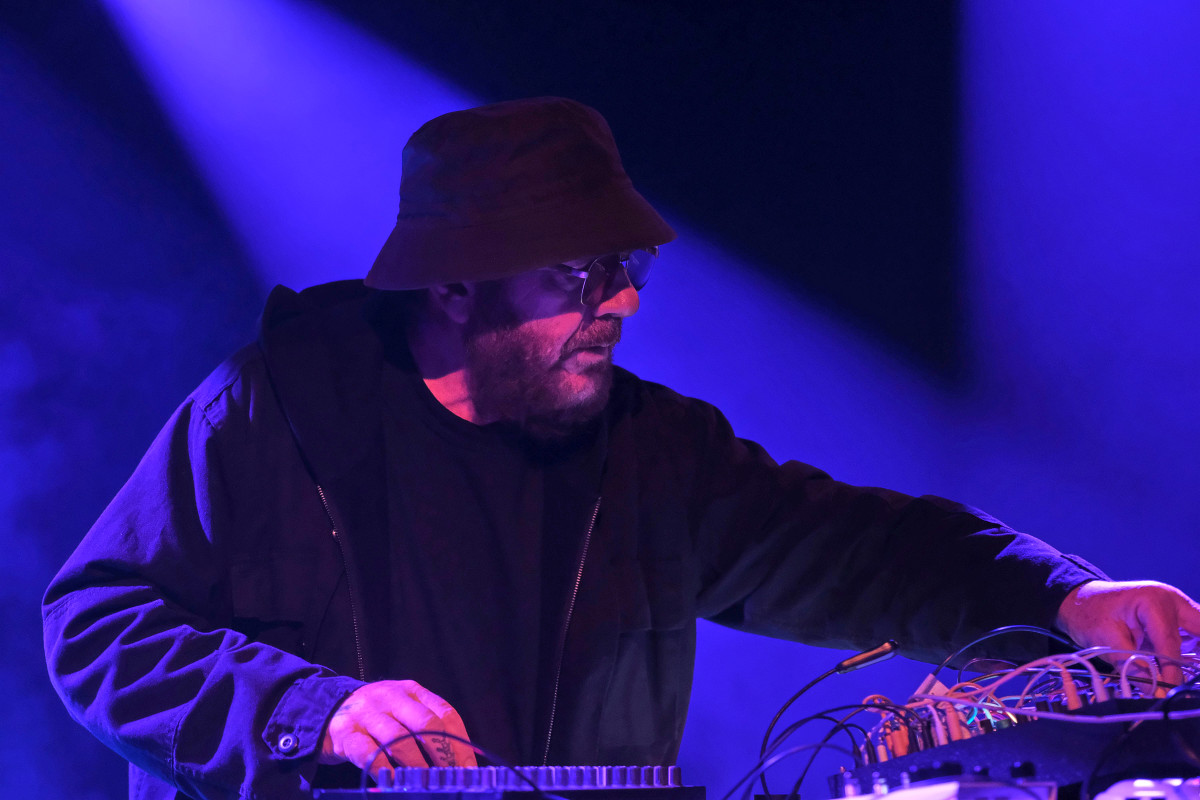
Rumor has it that the now-defunct British electronic band Coil once created a soundtrack for the cult horror film Hellraiser – so disturbing that it was rejected for being too frightening. With that story in the background, it almost felt like a natural opening to autumn’s darkness when Drew McDowall, former member of the mythical band, took the stage at Alice in Copenhagen on Wednesday evening. The Scottish musician is known for entering into striking collaborations – with Danish Puce Mary and, most recently, the American-Swedish composer Kali Malone – and it was precisely for this reason that it made sense for the evening to begin with an intense concert by Gintė Preisaitė. Like McDowall, she has the ability to transform even the simplest sounds into all-encompassing sonic landscapes.
Although both musicians clearly work from an electronic foundation, their sonic universes appeared remarkably organic, as if they were shaping living material. In her all-too-brief concert, Preisaitė created a mosaic of field recordings, voice fragments, and cassette tapes – chaotic one moment, ordered and transparent the next. With the same cool precision, McDowall unfolded his performance as if it were one long harmonium drone, slowly creeping under the skin with the inescapable logic of a horror film. For McDowall, darkness is not an alien force but a familiar companion, which he skillfully reshapes into soundscapes that are at once disturbing and reassuringly enveloping – like lying in a warm bed with the nightmare right beside you.
Both Preisaitė and McDowall moved effortlessly across the border between the acoustic and the electronic. Their music appeared as a contemporary legacy of the musique concrète tradition: an insistence that electronic music remains one of the most experimental art forms – vital, organic, and with the ability to let even the smallest sound open up an entire world in itself.
English translation: Andreo Michaelo Mielczarek