in brieflive
16.02

Indigo over Mahler

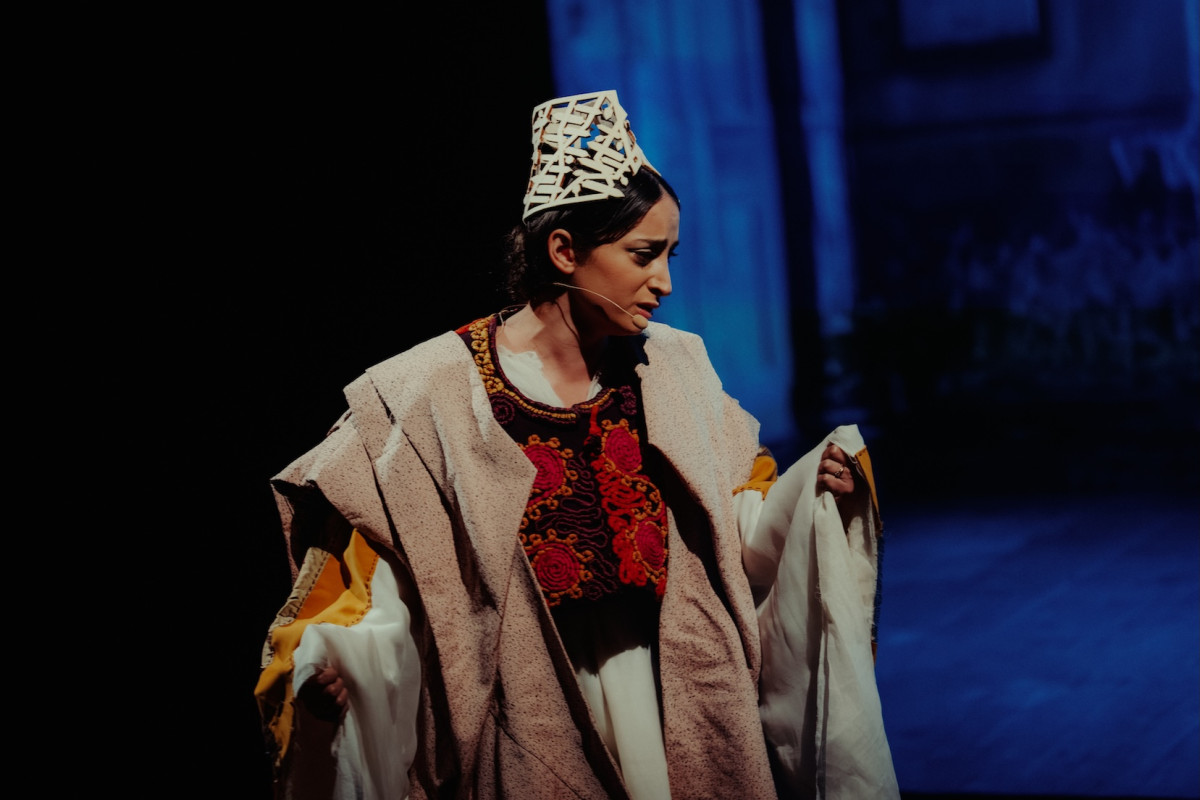
Anthony Sahyoun, Nour Darwish, Larissa Sansour, Søren Lind: »As If No Misfortune Had Occurred In The Night«
© Joakim Züger
© Joakim Züger

One of my most powerful art experiences of 2025 was British-Palestinian video artist Larissa Sansour’s intense work As If No Misfortune Had Occurred In The Night at Kunsthal Charlottenborg. The piece forms the basis of Thursday’s so-called »opera performance«, in which Palestinian soprano Nour Darwish performs in dialogue with Sansour’s visuals.

When Darwish steps onto the stage, it is before a vast screen where black-and-white scenes from an abandoned chapel establish a solemn atmosphere. It feels as though the entire hall is holding its breath as she begins to sing – tentatively, mournfully at first, then with spine-tingling force.

The composition draws on Kindertotenlieder (1905), in which Gustav Mahler sets to music Friedrich Rückert’s poems on the loss of two daughters. Composer Anthony Sahyoun allows Mahler’s music to merge with the Palestinian folk song »Al Ouf Mash’al«, a lament for a man who fell while serving in the Ottoman army during the First World War. Over time, the song has expanded into an oral account of Palestinian suffering. In its encounter with Mahler, it becomes a lament for centuries of grief – addressed to European ears that, through the colonisation of the region, bear part of the responsibility. Quite simply, it is a very good idea. At first, Darwish alternates between the two musical works, but gradually they fuse into a single narrative of sorrow, loss, and inherited trauma. She briefly leaves the stage, giving way to a filmed sequence in which she descends into a basin and is enveloped by indigo-blue water. In Palestinian tradition, indigo is the colour of mourning, because once it has stained skin and fabric, it cannot be washed away. It must be worn away – just as grief can leave us flayed.

Darwish returns in an indigo dress. At the climax, she falls to her knees as the screen behind her turns black, and I realise I have barely breathed for several minutes. The composition was created in 2022 – before the current war in Gaza – but on this evening, with her immense voice and intense presence, she adds yet another verse to the endless song. At times, art can feel brutally prophetic.

English translation: Andreo Michaelo Mielczarek

© PR

»To me, music is love. I love how music allows you to skip the small talk and connect directly with people’s innermost selves. It is an extraordinary and moving way to meet one another.«

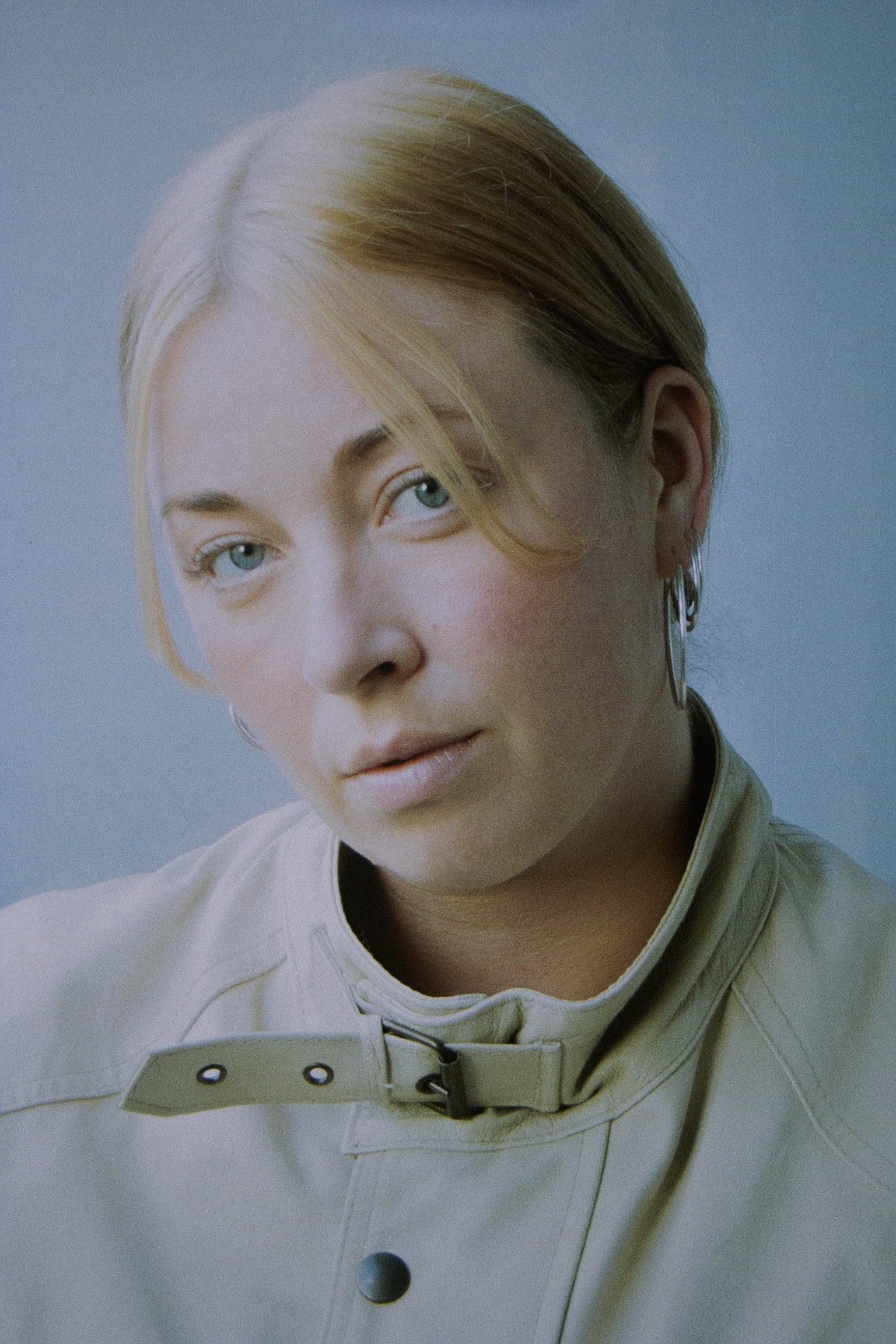
Fenja wrote her first song at the age of twelve – about a polar bear dying due to climate change – and themes of existentialism, nature, and her own sensitive nature came to define the lyrics and sound she has since developed. She released her debut album, Flugtdyr, in 2021, and in February 2026, she released the album Menneskedyr.

© PR
© PR

Danish composer Sofus Forsberg has died at the age of 56. With his distinctive blend of melodic sensibility, electronic processing and rhythmic precision, he created a musical world that moved effortlessly between IDM, pop and the avant-garde.

© Simon Weyhe

»Music for me is my hobby, my job, my outlet, my mood, an endless source of discovering new music and new, old music, some of the best and can be some of the worst. And I love it!« 

Track72 aka Tue Track aka Anders Lundby Brixen. Producer, DJ, rapper and more. Known for his role in the trio Malk De Koijn, which since the mid-1990s has created a personal universe in Danish hip-hop. Has performed in Ponyblod, Xtra Naan, Track Abdullah Rock, Booty Cologne and others.

© PR
© PR

On Wednesday, 5 August 2026, it happened again: a chord in John Cage’s Organ2/ASLSP (As Slow as Possible) changed after two and a half years. Classic FM reports.

The work was written by the American avant-garde composer John Cage in the mid-1980s. The score consists of eight pages of music, and, as the title suggests, the instruction is to play it »as slow as possible.«

»What music is to me? Where have the great feelings gone?«.

Gellért Szabó is a composer, conductor and performer based in Leipzig, Germany. His work combines contemporary composition with influences from free improvisation, noise and the expressive richness of the late nineteenth century. He is the founder and artistic director of the 23-piece Ideal Orchestra, an ensemble dedicated to large-scale experimental music of sweeping emotional intensity. Alongside this work, Szabó performs internationally with his solo project Radical Radio Show, exploring symphonic textures and immersive sound worlds through a single electric guitar and live electronics. His music is driven by a search for intensity, vulnerability and uncompromising emotional expression.