in brief
13.02.2025

Jeppe's Soundtrack

Christian Lollike: »Jeppe på bjerget«
© Rumle Skafte
© Rumle Skafte

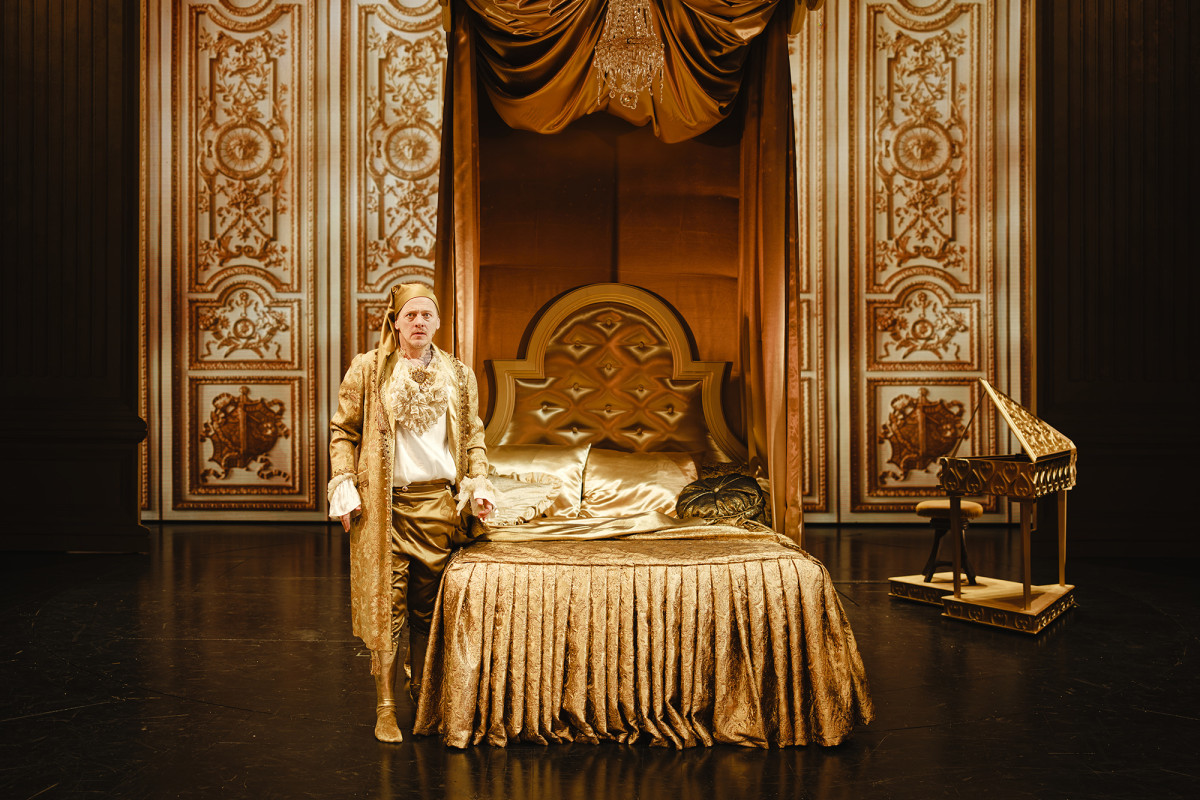
During the opening blowjob – before anyone even says a word in the concrete ghetto—opera is heard. And when Jeppe (Thure Lindhardt), in dramatic fashion, settles accounts at the end during the Royal Couple’s Awards 2025, soprano Lina Valantiejute once again sings Purcell’s Dido’s Lament. Because a lament from around 1688 is about as authentic as it gets. Christian Lollike’s Holberg classic portrays the search for the genuine in a mendacious age. The PTSD-stricken war veteran Jeppe falls into the clutches of the Baron, a contemporary artist who subjects him to an art project – a »mental time journey« meant to transcend/heal him.

Sonically, Lollike is precise. The sounds amplify the reality-show-like ride Jeppe is trapped in: Mozart, Kingo, heavy metal, video-game sounds, hotel ambient music, and Aarhus Theatre’s Choir singing »I Danmark er jeg født« with emotions worn on their sleeves. The country songs in the final part of the play – set in a Western town in the 19th century – lend weight to the story of loser Jeppe. Lollike knows his reality-TV tricks (camera crews even film Jeppe leaving the theatre and heading to the nearest bar), and in a time when everything chimes and clamours, nothing feels more authentic than a real opera singer on stage and true songs from the prairie sung by genuine people in cowboy gear. It happens right before our eyes, live.

The sound design is sharp, just as in Lollike’s Orfeo (2023), where Monteverdi contributed to the atmosphere of doom. Jeppe on the Mountain is such a high (it also contains a good deal of humour) that one ends up thinking: if I woke up in a golden bed with a crowd of strangers around me, I would love to listen to the same soundtrack as Jeppe.

© Guannan Kang
© Guannan Kang

自由即兴创作比性爱更好! – »Free improvisation is better than sex.« According to drummer Kresten Osgood, the saying is attributed to Confucius. Whether the ancient Chinese philosopher ever uttered those words is doubtful. But the quote perfectly captures the spirit of one of the most unusual events at this year's Copenhagen Jazz Festival.

From 7–11 July, pianist Søren Kjærgaard and drummer Kresten Osgood will take over CC Taste on Amagerbrogade, performing daily from 2–4 pm among diners, dim sum and steaming hot pots.

in briefrelease
19.06

When the Machine Starts Singing

Soli City: »Poetics of a New Estate«
© Clement Mogensen
© Clement Mogensen

With Soli City, the boundary between the organic and the synthetic is almost impossible to discern. What first appears to be an ordinary piano suddenly slips into a dizzying glissando. Soli City resembles a cyborg – half cello, half computer – fusing strings and voices into a seamless digital synthesis. The result is a science-fiction dream interrupted by surreal monologues and abruptly punctuated by the shrill click of a camera shutter.

That percussive camera-flash motif runs throughout both PARADOXE (2024) and the new album Poetics of a New Estate. Here, Harald Bjørn, the composer behind Soli City, further develops the sonic language introduced on its predecessor. Whereas PARADOXE staged the encounter between acoustic and digital sounds as an explicit confrontation, the two worlds now feel far more deeply integrated. Even the album's abrupt shifts seem entirely natural, as on »Rooms & Walls«, where a slurred vocoder and delicate string textures give way to an insistent drum groove.

Soli City's music embodies a distinctive form of self-reflection. As acoustic sounds bend, fracture and are interrupted by those recurring electronic flashes, we are reminded of Bjørn's remarkable ability to compose genuinely innovative music. Just as the most visionary science fiction remains rooted in the realities of its own time, every musical breakthrough carries echoes of the past. Soli City embraces these nostalgic resonances only to twist them into unfamiliar shapes.

With deceptively simple means, Poetics of a New Estate dissolves the boundary between nostalgia and contemporaneity. Like a true cyborg, Soli City reveals the divide between the digital and the acoustic to be less a fundamental opposition than an oddly arbitrary construction.

© Laura Cecilie Krogtoft

»Music, for us, is a fusion of different consciousnesses into a single shared focal point.«

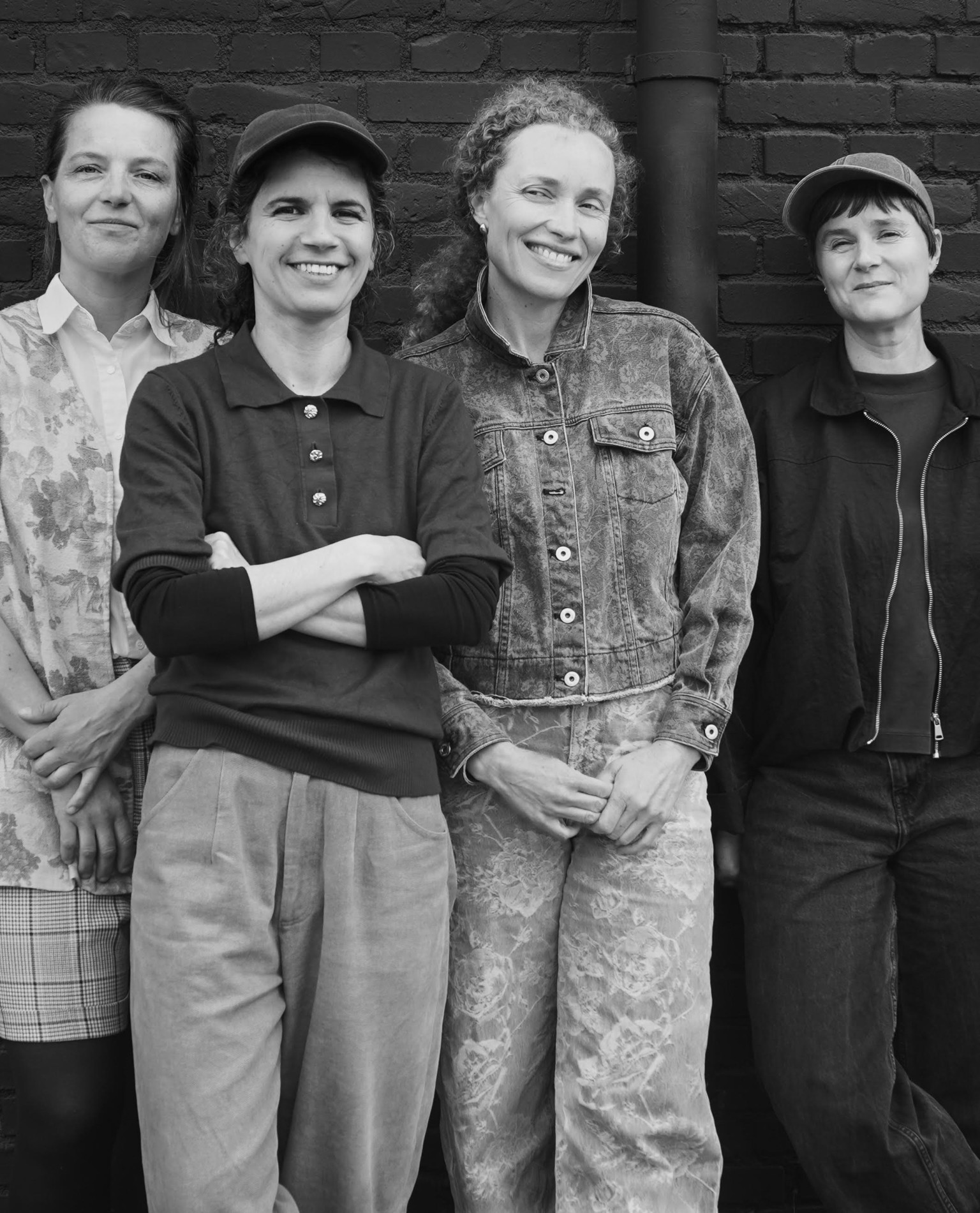
The band Selvhenter was founded in 2010 by trombonist Maria Bertel, saxophonist Sonja LaBianca, violinist Maria Diekmann, and drummers Jaleh Negari and Anja Jacobsen. In 2017, Maria Diekmann left the group, and Selvhenter continued as a quartet.

Selvhenter’s sound is driven by a deep fascination with sonic textures, rhythmic displacements and polyrhythms, acoustic and electronic melodies, hard-hitting compositional choices, improvised beauty, and a sheer joy of creating and performing music. Selvhenter has played concerts both in Denmark and internationally. The group is also the nucleus of the artist collective Eget Værelse, which houses the members’ solo projects as well as collaborations such as Valby Vokalgruppe, SOLW, Nina Garcia & Maria Bertel, and G.E.K.

© PR

»Music for me remembers.«

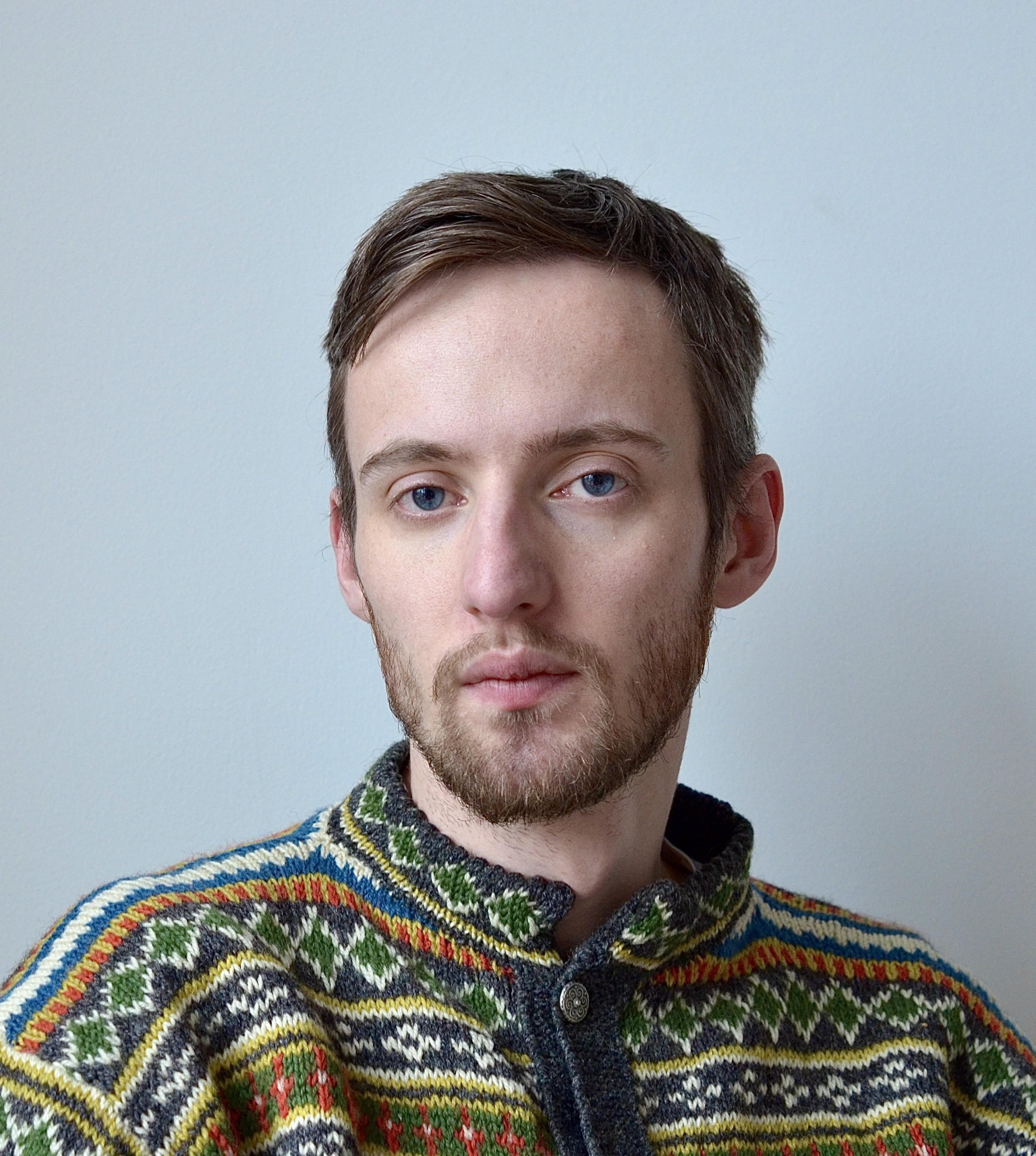
Håkon Guttormsen is a Norwegian composer and trumpeter living in Copenhagen. He is educated at the Royal Danish Academy of Music and the Royal Academy of Rhythmic Music. He primarily composes scores for ensembles as well as music drama and opera. He is currently working on a work for solo violin and electronics for ILK Music’s concert series during CPH Jazz 2026 and on his first symphonic work, which will premiere at the academy in 2027. He is a member of nyMusik’s composer group in Norway and a board member of UNM Denmark.

in brieflive
07.06

Deadly Serious Play at Louisiana

Simon Steen-Andersen, Håkon Stene, Tanja Orning: »Nye klange på Louisiana – Portrætkoncert med Simon Steen Andersen«
© Camilla Stephan
© Camilla Stephan

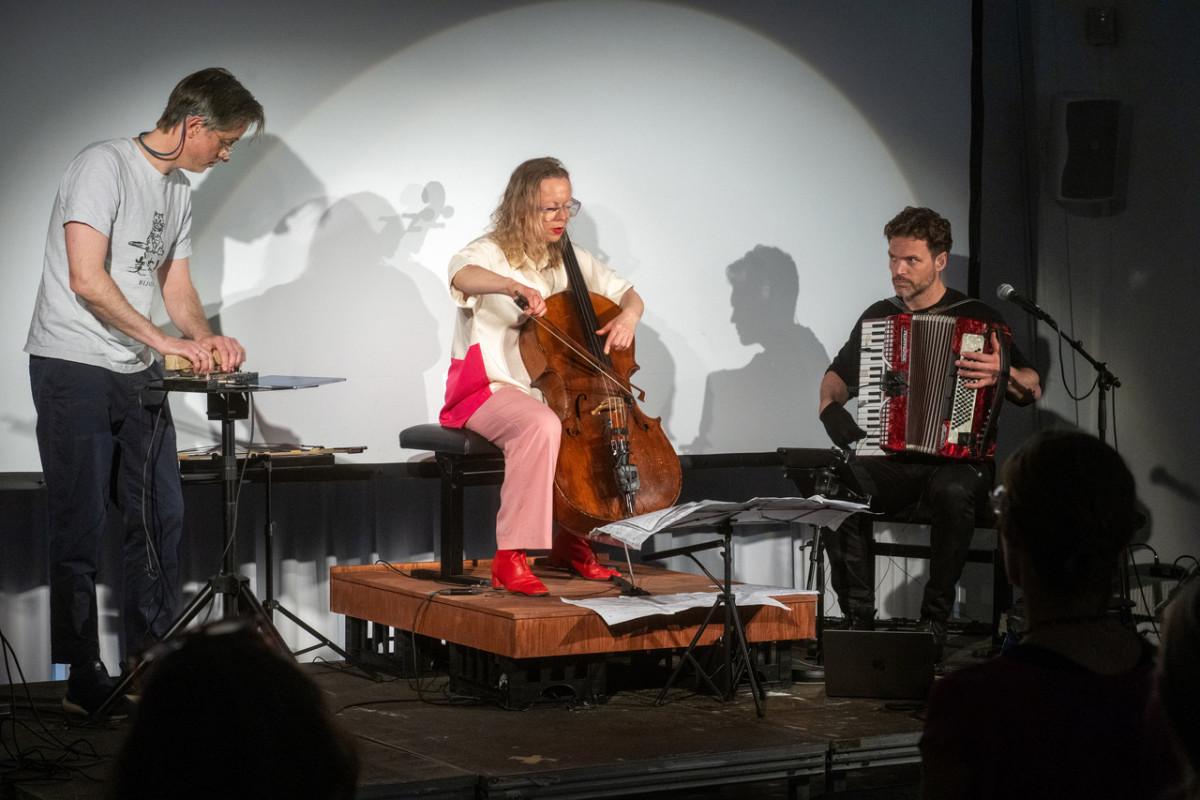
New Sounds at Louisiana is an initiative in which the Louisiana Museum of Modern Art has invited the record label Dacapo and the music publisher Edition S to curate concerts featuring living composers. Simon Steen-Andersen was the first composer in the series, and he seized the opportunity to assemble a programme that was not only overwhelming and exhilarating, but also deeply unsettling. Lasting an hour, the concert unfolded as a continuous sequence in which each work flowed seamlessly into the next, forming a single extended statement of at least part of the composer’s artistic practice and philosophy.

Combining video and live performance, the concert served as a manifestation of several of Steen-Andersen’s key artistic strategies. Central among them are techniques of estrangement and defamiliarisation, exemplified by Asthma (2017) for accordion, air pumps, and video, a work that explores and interrogates human breathing in all its positive and negative dimensions. Amid the many grotesque and humorous scenes – accompanied by Håkon Stene’s brilliant Foley-style soundtrack of air noises, sound effects, and spoken commentary – a brief clip of brutal police violence suddenly appears. In it, an officer methodically sprays pepper spray into the faces of handcuffed demonstrators. In that instant, everything else no longer seems quite so funny, and the crooked smile freezes.

The concert was a veritable sensory bombardment. Presenting all the works attacca undoubtedly created a powerful sense of flow, but it also left the audience almost saturated with impressions. Even so, the subsequent conversation between Simon Steen-Andersen and music critic and author Thomas Michelsen felt far too brief. Yet the composer succeeded in making his point: everything he does, he said, is a form of »deadly serious play.« Exactly.