I know, I know. A workshop concert at the conservatory: yawn. And no, hardly anyone showed up – apart from Bent Sørensen. Fair enough. But yes, you missed out. Especially on young Albert Laubel, who did exactly what you hope someone will do at this kind of concert: suddenly step forward, make a mark, and promise something for the future.
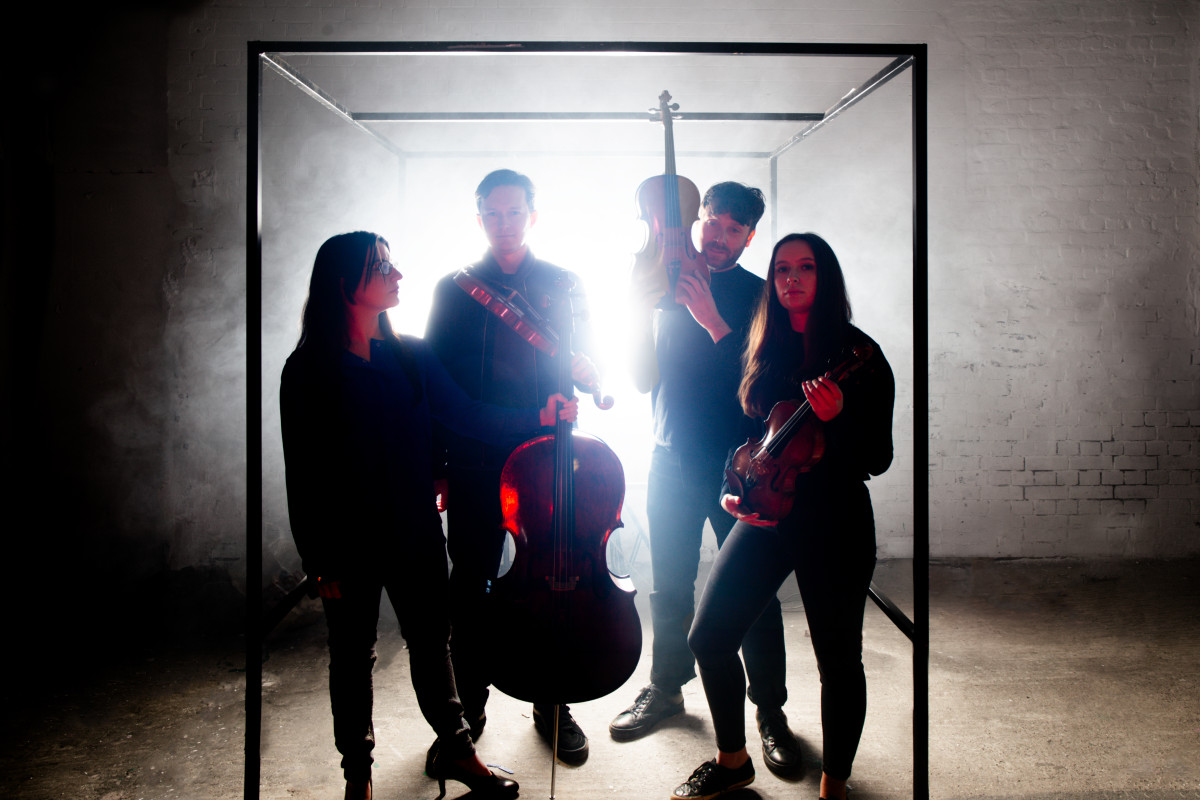
It was the English Ligeti Quartet visiting the Royal Danish Academy of Music for the seventh time to work with the students. And they did so with both commitment and precision. (Someone should really give them a prize one day – say, someone sitting on a fortune they clearly don’t know what to do with.)
Lucas Fagervik’s Bells & Canons set up stark oppositions, as composers tend to do in exercises of style: a bright, slightly fractured minor chord set against gentle baroque pastiche in increasingly rapid alternations. Then a movement with brutal – almost banal – glissandi, another with heavy bow strokes, and a final one in which the strings took turns trying to keep a single tone alive. A beautiful, constructive, and Jürg Frey–porous landing.
A different kind of circus instinct drove Yifan Shao’s ultra-short Dreams Evaporated Too Soon, which sounded like abused sounds dragged across a floor. The ending was ultra-theatrical: the quartet froze mid-air for a moment before scraping the last traces of life out of the strings.
»I can make this even more mannered,« Jonas Wiinblad must have thought, opening his String Trio with Viola – not a quartet, of course! – with silent playing. But cliché turned into quiet poetry as small, innocent intervals slowly emerged in tight patterns. When the viola was finally allowed to join, it went against the grain: a virtuosic solo cadenza with falling bow strokes, shimmering overtones, and temperament. Boom! A striking contrast. Less convincing was the piece’s apparent need for a final, unnecessary layer of electronic distortion. Still, points for mannerism.
What remained was Albert Laubel’s String Quartet as the most fully realized work of the concert. Not overthought, just a seamless movement between dynamic extremes. Distinctive trills were elegantly disarmed by inserted snaps, glissandi sounded like part of an internal logic rather than mere effect, and the sound world shifted with calm dramatic overview. Substance and maturity in 2026 – well, well.
English translation: Andreo Michaelo Mielczarek