
in briefrelease
27.04

Myths From a Dying Sea

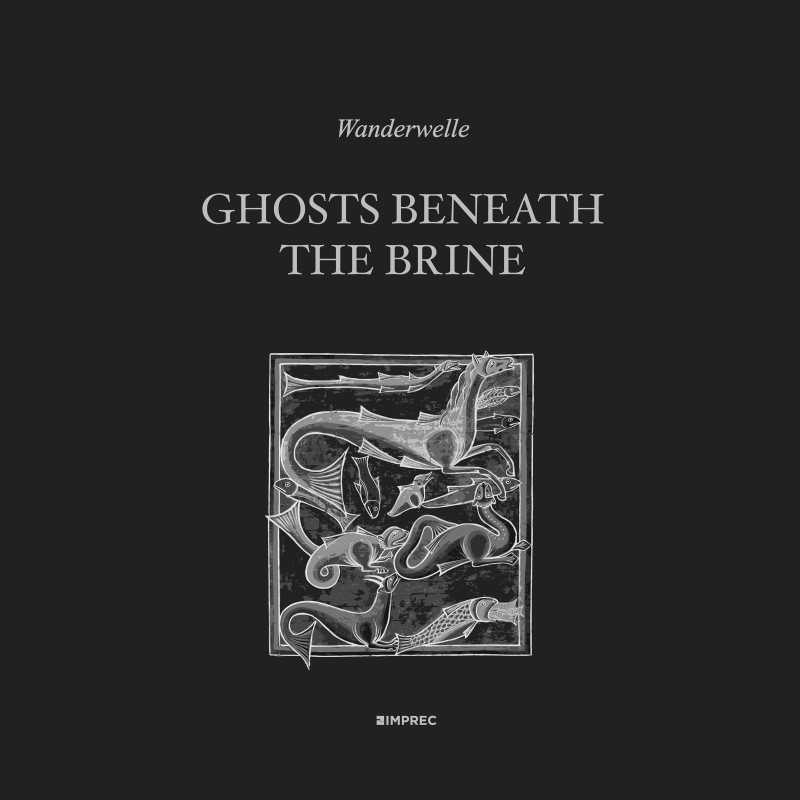
Wanderwelle: »Ghosts Beneath the Brine«
© PR
© PR

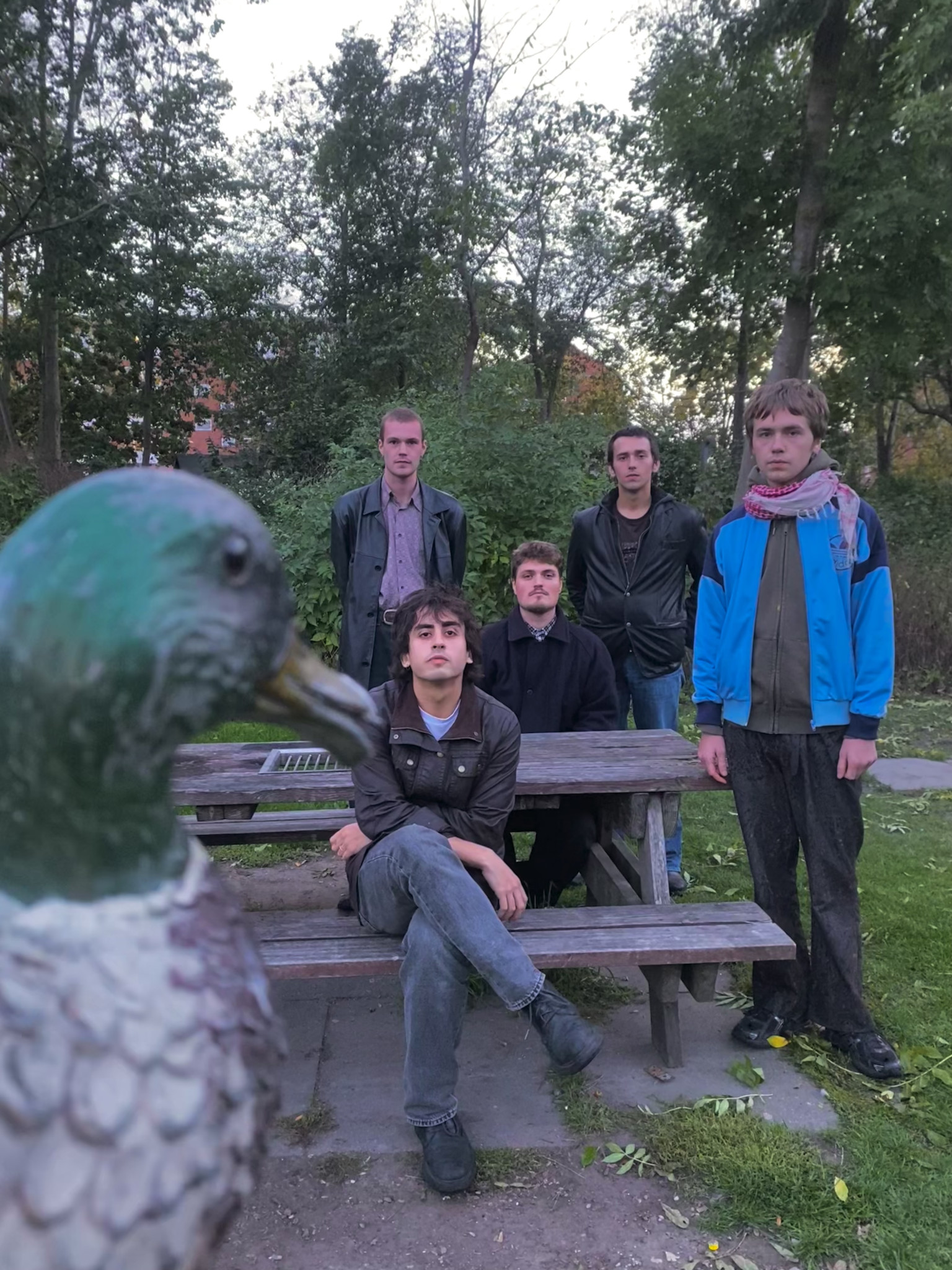
The ocean as Cape Lonesome, as a graveyard where at midnight the mythical, the real, and the endangered rise from the dead: this is the sonic world of Ghosts Beneath the Brine, the new album by Amsterdam-based experimental duo Wanderwelle.

Across eight tracks suspended between elegy and requiem, the album navigates the reality of climate change and species extinction while invoking the mythology of creatures of the deep. To sound the crisis, Wanderwelle chose not to record melting icebergs or raging wildfires. Instead, they submerged cymbals – small, bowl-shaped metal plates used since ancient rituals – in saltwater for extended periods. As the metal degraded, its sound grew darker, more fragile, more unstable, releasing ghostly overtones.

Those tones drift through the album like the critically endangered albatross – to which the sixth track is dedicated – spreading its 3.5-metre wingspan like a ghost across vast, indifferent skies. Layered with reverb and sounds evoking lamenting, whimpering animal voices, the pieces carry titles that weave myth and ecological reality: »The Seabishop's Sermon« (named after a creature allegedly caught in the Baltic Sea in 1513), »Empty Net or Dissolving Souls«. The message is clear: sharks and oysters risk becoming as mythical as sea monsters once were, if destruction continues.

And yet this is precisely where the album's beauty becomes its limitation. Ghosts Beneath the Brine sounds hauntingly gorgeous – but like the sublime spectacle of a shipwreck witnessed from a safe distance, it invites us to shudder rather than act. More ghost train than alarm bell, it offers catharsis where the moment calls for urgency.

in briefrelease
19.06

When the Machine Starts Singing

Soli City: »Poetics of a New Estate«
© Clement Mogensen
© Clement Mogensen

With Soli City, the boundary between the organic and the synthetic is almost impossible to discern. What first appears to be an ordinary piano suddenly slips into a dizzying glissando. Soli City resembles a cyborg – half cello, half computer – fusing strings and voices into a seamless digital synthesis. The result is a science-fiction dream interrupted by surreal monologues and abruptly punctuated by the shrill click of a camera shutter.

That percussive camera-flash motif runs throughout both PARADOXE (2024) and the new album Poetics of a New Estate. Here, Harald Bjørn, the composer behind Soli City, further develops the sonic language introduced on its predecessor. Whereas PARADOXE staged the encounter between acoustic and digital sounds as an explicit confrontation, the two worlds now feel far more deeply integrated. Even the album's abrupt shifts seem entirely natural, as on »Rooms & Walls«, where a slurred vocoder and delicate string textures give way to an insistent drum groove.

Soli City's music embodies a distinctive form of self-reflection. As acoustic sounds bend, fracture and are interrupted by those recurring electronic flashes, we are reminded of Bjørn's remarkable ability to compose genuinely innovative music. Just as the most visionary science fiction remains rooted in the realities of its own time, every musical breakthrough carries echoes of the past. Soli City embraces these nostalgic resonances only to twist them into unfamiliar shapes.

With deceptively simple means, Poetics of a New Estate dissolves the boundary between nostalgia and contemporaneity. Like a true cyborg, Soli City reveals the divide between the digital and the acoustic to be less a fundamental opposition than an oddly arbitrary construction.

© Laura Cecilie Krogtoft

»Music, for us, is a fusion of different consciousnesses into a single shared focal point.«

The band Selvhenter was founded in 2010 by trombonist Maria Bertel, saxophonist Sonja LaBianca, violinist Maria Diekmann, and drummers Jaleh Negari and Anja Jacobsen. In 2017, Maria Diekmann left the group, and Selvhenter continued as a quartet.

Selvhenter’s sound is driven by a deep fascination with sonic textures, rhythmic displacements and polyrhythms, acoustic and electronic melodies, hard-hitting compositional choices, improvised beauty, and a sheer joy of creating and performing music. Selvhenter has played concerts both in Denmark and internationally. The group is also the nucleus of the artist collective Eget Værelse, which houses the members’ solo projects as well as collaborations such as Valby Vokalgruppe, SOLW, Nina Garcia & Maria Bertel, and G.E.K.

© PR

»Music for me remembers.«

Håkon Guttormsen is a Norwegian composer and trumpeter living in Copenhagen. He is educated at the Royal Danish Academy of Music and the Royal Academy of Rhythmic Music. He primarily composes scores for ensembles as well as music drama and opera. He is currently working on a work for solo violin and electronics for ILK Music’s concert series during CPH Jazz 2026 and on his first symphonic work, which will premiere at the academy in 2027. He is a member of nyMusik’s composer group in Norway and a board member of UNM Denmark.

in brieflive
07.06

Deadly Serious Play at Louisiana

Simon Steen-Andersen, Håkon Stene, Tanja Orning: »Nye klange på Louisiana – Portrætkoncert med Simon Steen Andersen«
© Camilla Stephan
© Camilla Stephan

New Sounds at Louisiana is an initiative in which the Louisiana Museum of Modern Art has invited the record label Dacapo and the music publisher Edition S to curate concerts featuring living composers. Simon Steen-Andersen was the first composer in the series, and he seized the opportunity to assemble a programme that was not only overwhelming and exhilarating, but also deeply unsettling. Lasting an hour, the concert unfolded as a continuous sequence in which each work flowed seamlessly into the next, forming a single extended statement of at least part of the composer’s artistic practice and philosophy.

Combining video and live performance, the concert served as a manifestation of several of Steen-Andersen’s key artistic strategies. Central among them are techniques of estrangement and defamiliarisation, exemplified by Asthma (2017) for accordion, air pumps, and video, a work that explores and interrogates human breathing in all its positive and negative dimensions. Amid the many grotesque and humorous scenes – accompanied by Håkon Stene’s brilliant Foley-style soundtrack of air noises, sound effects, and spoken commentary – a brief clip of brutal police violence suddenly appears. In it, an officer methodically sprays pepper spray into the faces of handcuffed demonstrators. In that instant, everything else no longer seems quite so funny, and the crooked smile freezes.

The concert was a veritable sensory bombardment. Presenting all the works attacca undoubtedly created a powerful sense of flow, but it also left the audience almost saturated with impressions. Even so, the subsequent conversation between Simon Steen-Andersen and music critic and author Thomas Michelsen felt far too brief. Yet the composer succeeded in making his point: everything he does, he said, is a form of »deadly serious play.« Exactly.

© Simon Bendix Borregaard
»Music for me is a constant movement (in me). It is a constantly changing song in my head. Music can be calming and uplifting, and it can give me answers that I didn’t know existed. Music guides me through life – whether it is the biggest and best moments of my life, or difficult periods. Music is also a community where new thoughts and ideas can come to life. Community is not a competition, but a way to move forward together.« 
 
Troels H. Sørensen is the booking and program manager at the Skråen venue in North Jutland. He is a former manager at 1000Fryd. Together with Casper Clasen, he runs the Lasher Agency and is responsible for the Lasher Fest festival, among other things. Sørensen plays in the band Vægtløs and has previously been in various bands from the Aalborg underground and has released records through his cooperative record label 5FeetUnder Records.