

in briefrelease
07.02.2025

The Shadow of a Soundtrack

Søren Gemmer & Jessie Kleemann: »Lone Wolf Runner«
© PR
© PR

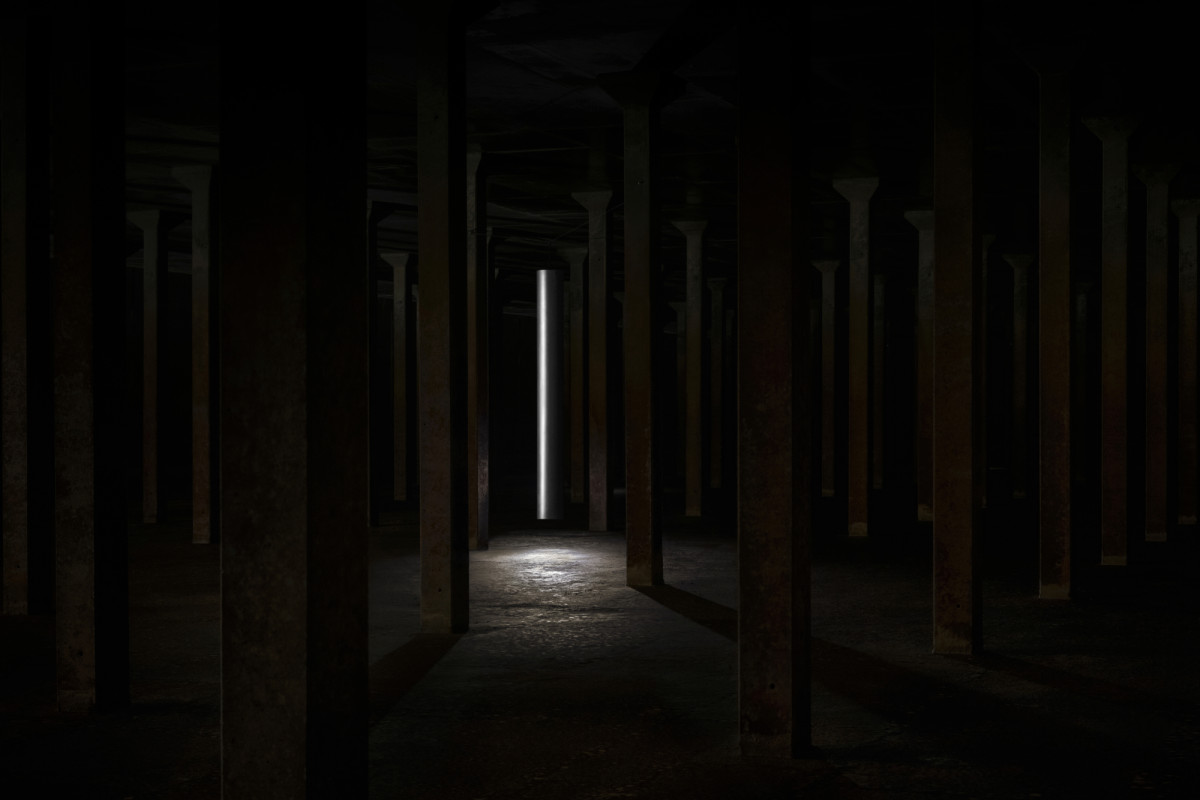
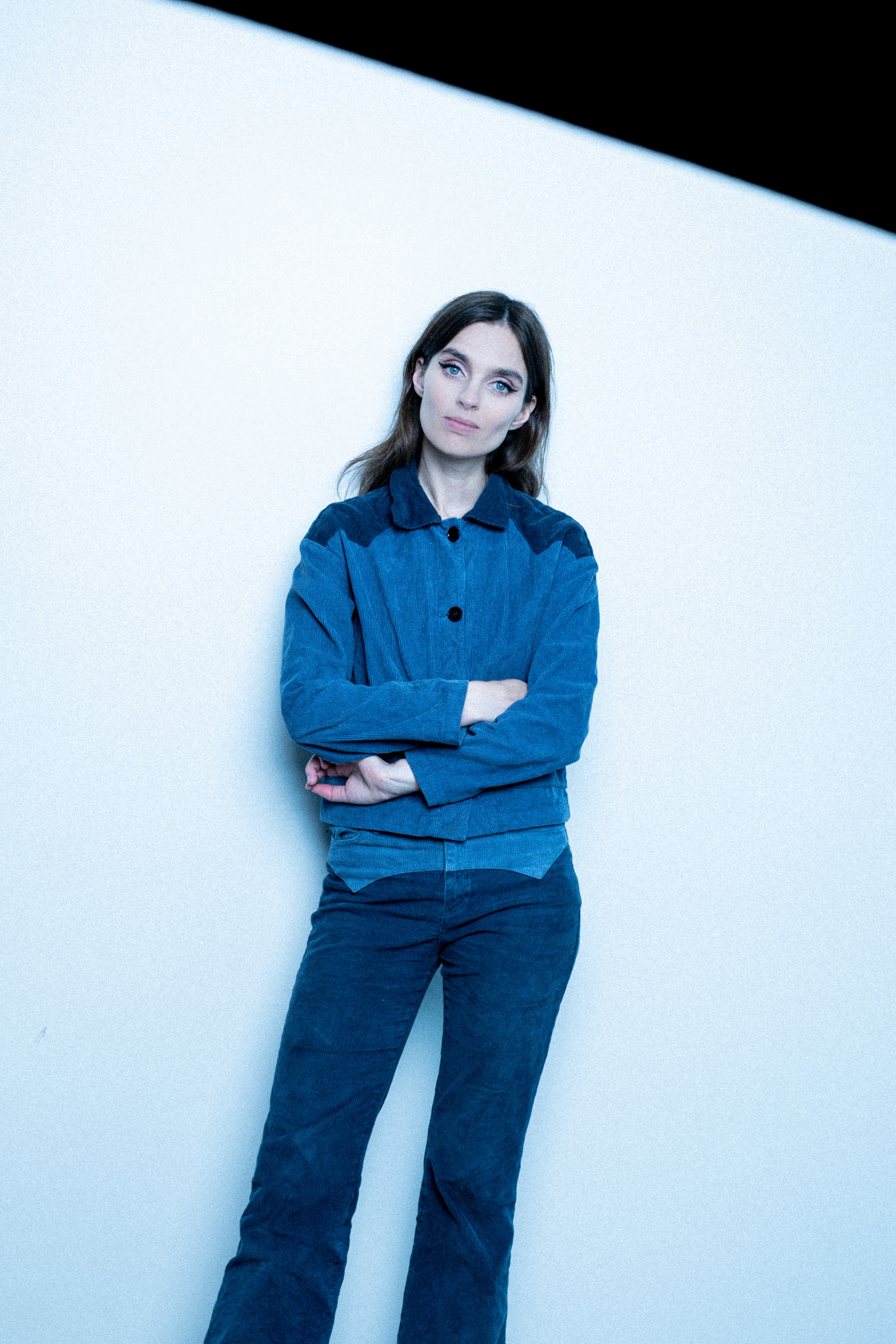
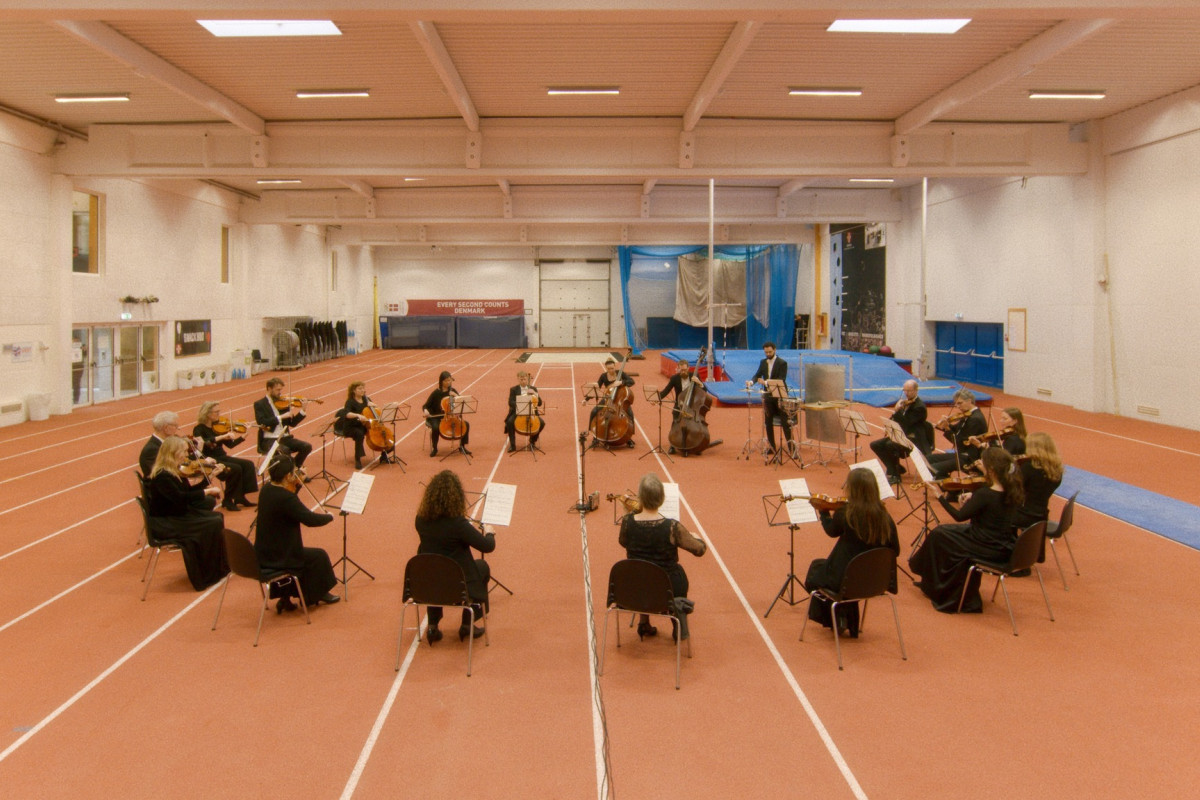
As is often the case with soundtracks, musician and composer Søren Gemmer and the Greenlandic-Danish visual artist Jessie Kleemann tread a fine line on Lone Wolf Runner, whose music was originally written as the soundtrack to Kleemann’s performances of the same name in 2023 at the National Museum. How much of the original purpose (here, Kleemann’s performances) can and should be taken out of the equation for an album release to make sense?

In the PR material, the album is presented, among other things, as a postcolonial critique and an exploration of transcultural questions, which at first glance seems highly compelling – not least in light of the current geopolitical situation in which Greenland suddenly finds itself at the center. On a purely musical level, however, the release is not as gripping as one might have hoped. It lacks a stronger anchoring in a sense of purpose behind the music. Without having experienced Kleemann’s original performance, my impression is that the absence of precisely this aspect has left gaps too large for the otherwise, in many ways, intriguing music to fill on its own. Lone Wolf Runner is filled with references and hints of drama and storytelling that never quite come into their own.

There are nevertheless many interesting and exciting moments: Kleemann’s poetic voice, shifting not only between Greenlandic and Danish, but also between heavily vocoder-processed and seemingly untreated vocals. The atonal, hesitant, yet beautiful piano melodies in, among others, »The Dancer« and »Marble«, which create calm moments infused with tension. The industrial »The Skin«, halfway through the album, plants doubt about which direction the music is leading the listener. But in the end, Lone Wolf Runner lacks precisely what was cut away in the album’s process of becoming: a performance that can bind it all together.

© PR

»Music has been a healing balm for me.«

John William Grant is an American singer, musician, and songwriter holding both American and Icelandic citizenship. He first came to prominence as a co-founder, lead vocalist, pianist, and primary songwriter of the alternative rock band The Czars. After releasing six albums between 1994 and 2006, the band disbanded, and Grant withdrew from music for four years before embarking on a solo career.

He returned in April 2010 with a critically acclaimed debut album recorded in collaboration with Midlake. Queen of Denmark was named Album of the Year 2010 by Mojo magazine and was also selected as one of the ten best albums of 2010 by The Guardian’s music critics and writers.

© Malthe Folke Ivarsson

»In his music, composer Allan Gravgaard Madsen tries to create a better version of himself.« 

Allan Gravgaard Madsen is a Danish composer based in Copenhagen. His most recent works include Träume nicht and Nachtmusik. He tries to create a better version of himself in his music – where his personality tends to be restless, chatty and has an active inner life, his music is controlled, simple and merciless in its expression. He is the recipient of the Carl Nielsen & Anne Marie Carl-Nielsens Hæderspris 2022.

in briefrelease
23.01.2022

Finnish Space Travel

Tomutonttu: »Hoshi«
© Tomutonttu: »Hoshi«

The Finnish multimedia artist Jan Anderzén has, with the album Hoshi, released under the solo moniker Tomutonttu, created a true little star. Not only because »hoshi« literally means »star« in Japanese, but above all due to the music itself. There is something cosmic, yet infinitely minute, about the sonic worlds Anderzén conjures—like a galaxy reflected in a puddle, or a space journey in a rocket carved from a hollow tree trunk. Synths emit busy, warm blips and bloops, while ultra-short vocal and instrumental samples create a recognizable blur. At once artificial and organic – soft, rounded, jagged, crackling.

Anderzén approaches sound with a playfulness I simply adore. His music is strange in an incredibly comforting way. It places me in a kind of colorful, trance-like state, only interrupted when, several times over the course of the album, I find myself smiling in delight at a particularly great sound. The synths on »Katse osuu sähköön!« The choral samples on »Kesä oli äkkiä ohi!« Milo Linnovaara’s flute on »Malta lausua ‘AH’!« And many more. Hoshi is an album packed with microscopic moments that together form a frayed, exploding, radiant, idiosyncratic whole—a stellar moment of just under 38 minutes.