in briefrelease
11.09

A Strange Instrument, a Familiar Sound

Mike Sheridan: «Touch«
© André Hansen
© André Hansen

There is something almost dogmatic about Mike Sheridan’s latest album, Touch. Everything leads back to the Cristal Baschet – a peculiar instrument from the 1950s in which sound is produced by running wet fingers over glass rods, setting metal resonators into vibration. No strings, no keys, just glass, water, skin and friction, slowly making the metal sing.

The Cristal Baschet is not merely an instrument on Touch. It is the album cover, the subject of the press photos, and almost the very argument for the album’s existence.

It recalls the material fetishism found in the American duo Matmos, whose music is often built around a single material or sound source: metal on Metallic Life Review (2025), plastic on Plastic Anniversary (2019), a washing machine on Ultimate Care II (2016). What is interesting about such constraints is that they ought to force the music somewhere it otherwise might not be able to go.

While listening to Touch, a question therefore begins to press itself forward: Which of these sounds could not have existed without a Cristal Baschet?

There are glassy tones that hang in the air and slowly change texture. Thin, cutting vibrations. Metallic surfaces that flutter, ripple, open and close. A constant sense of droning resonance; of something vibrating just on the other side of the audible.

Sheridan’s layering is meticulous. There is a precision to the mix, an almost surgical sense of the distance between the different textures. The best moments occur when the surface is disturbed: something that scratches at or short-circuits the otherwise tightly controlled resonance. On »BOW / GROUND«, for instance, deep bass pulses suddenly enter, creating a different physical quality – crackling, heavy, like something hitting the floor.

But Touch is first and foremost a well-produced ambient album. It moves through different degrees of the same state, changing nuance without ever truly changing its skin. That is not necessarily a weakness. There is something consistent, almost meditative, in Sheridan’s insistence. But the longer one remains in the same sonic state, the more one begins to miss what ought to be the Cristal Baschet’s particular possibility.

This is where the disappointment lies: in the gap between the instrument’s strangeness and the music’s conventional appearance. The sounds have been assimilated into a familiar ambient vocabulary, where the extraordinary instrument ends up producing something surprisingly familiar. You can hear that something unusual is happening at the source of the sound. But you cannot necessarily hear why it had to be this particular instrument. Had one not been told that a rare, almost otherworldly acoustic sculpture was standing in the room, one would hardly have guessed it.

© Laura Cecilie Krogtoft

»Music, for us, is a fusion of different consciousnesses into a single shared focal point.«

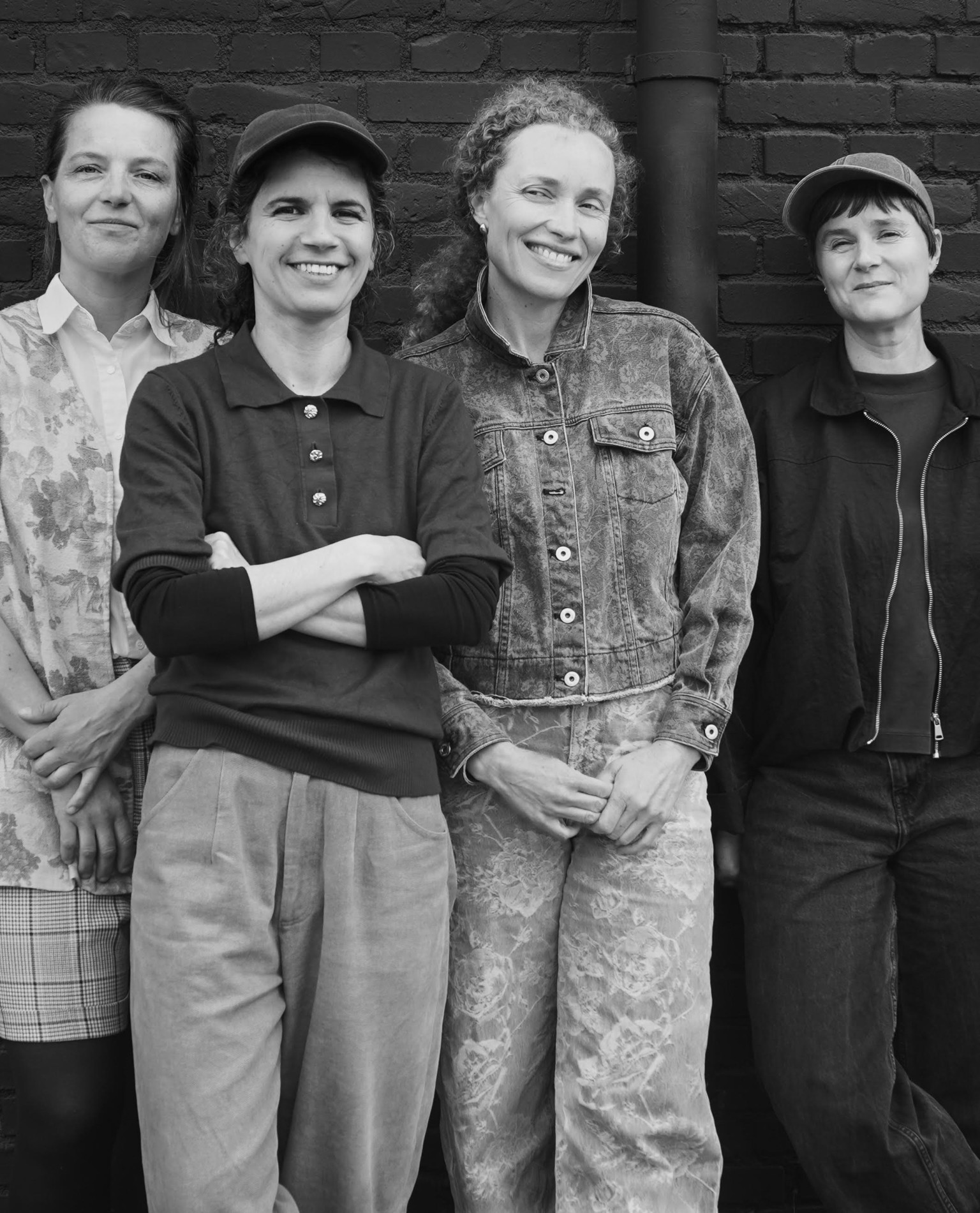
The band Selvhenter was founded in 2010 by trombonist Maria Bertel, saxophonist Sonja LaBianca, violinist Maria Diekmann, and drummers Jaleh Negari and Anja Jacobsen. In 2017, Maria Diekmann left the group, and Selvhenter continued as a quartet.

Selvhenter’s sound is driven by a deep fascination with sonic textures, rhythmic displacements and polyrhythms, acoustic and electronic melodies, hard-hitting compositional choices, improvised beauty, and a sheer joy of creating and performing music. Selvhenter has played concerts both in Denmark and internationally. The group is also the nucleus of the artist collective Eget Værelse, which houses the members’ solo projects as well as collaborations such as Valby Vokalgruppe, SOLW, Nina Garcia & Maria Bertel, and G.E.K.

© PR

»Music for me remembers.«

Håkon Guttormsen is a Norwegian composer and trumpeter living in Copenhagen. He is educated at the Royal Danish Academy of Music and the Royal Academy of Rhythmic Music. He primarily composes scores for ensembles as well as music drama and opera. He is currently working on a work for solo violin and electronics for ILK Music’s concert series during CPH Jazz 2026 and on his first symphonic work, which will premiere at the academy in 2027. He is a member of nyMusik’s composer group in Norway and a board member of UNM Denmark.

in brieflive
07.06

Deadly Serious Play at Louisiana

Simon Steen-Andersen, Håkon Stene, Tanja Orning: »Nye klange på Louisiana – Portrætkoncert med Simon Steen Andersen«
© Camilla Stephan
© Camilla Stephan

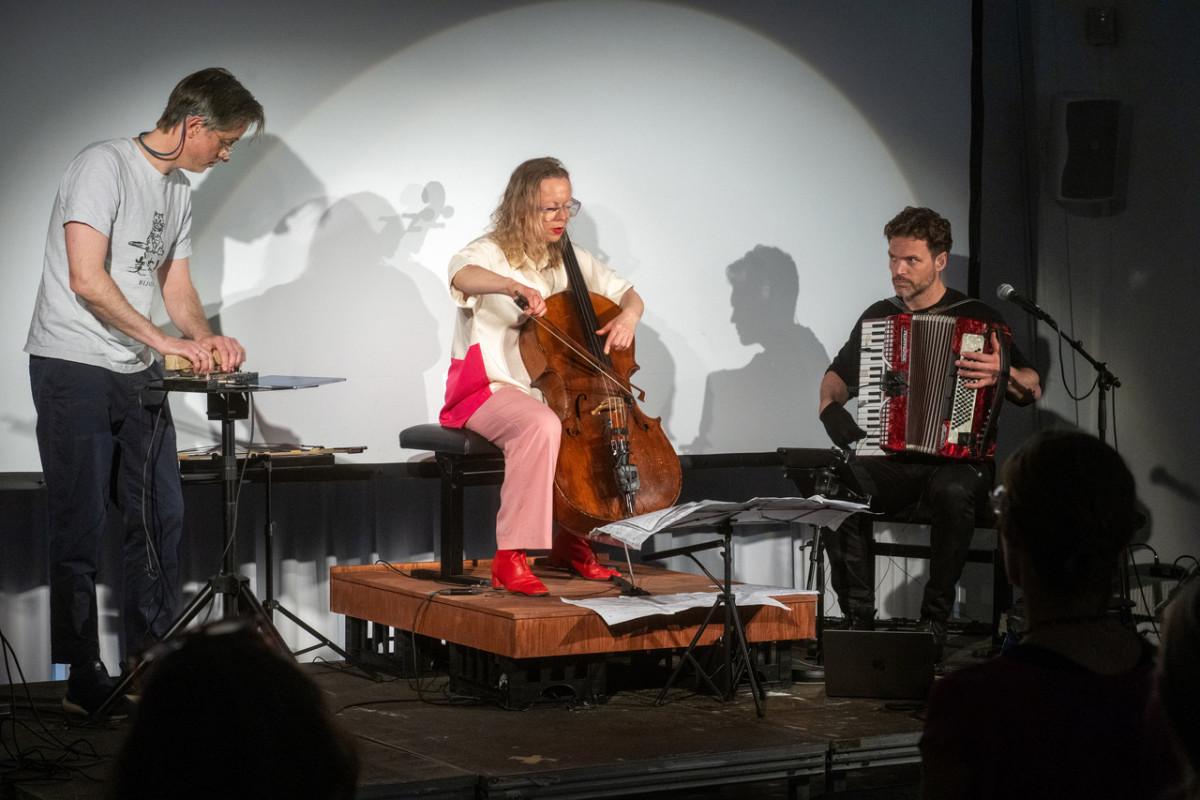
New Sounds at Louisiana is an initiative in which the Louisiana Museum of Modern Art has invited the record label Dacapo and the music publisher Edition S to curate concerts featuring living composers. Simon Steen-Andersen was the first composer in the series, and he seized the opportunity to assemble a programme that was not only overwhelming and exhilarating, but also deeply unsettling. Lasting an hour, the concert unfolded as a continuous sequence in which each work flowed seamlessly into the next, forming a single extended statement of at least part of the composer’s artistic practice and philosophy.

Combining video and live performance, the concert served as a manifestation of several of Steen-Andersen’s key artistic strategies. Central among them are techniques of estrangement and defamiliarisation, exemplified by Asthma (2017) for accordion, air pumps, and video, a work that explores and interrogates human breathing in all its positive and negative dimensions. Amid the many grotesque and humorous scenes – accompanied by Håkon Stene’s brilliant Foley-style soundtrack of air noises, sound effects, and spoken commentary – a brief clip of brutal police violence suddenly appears. In it, an officer methodically sprays pepper spray into the faces of handcuffed demonstrators. In that instant, everything else no longer seems quite so funny, and the crooked smile freezes.

The concert was a veritable sensory bombardment. Presenting all the works attacca undoubtedly created a powerful sense of flow, but it also left the audience almost saturated with impressions. Even so, the subsequent conversation between Simon Steen-Andersen and music critic and author Thomas Michelsen felt far too brief. Yet the composer succeeded in making his point: everything he does, he said, is a form of »deadly serious play.« Exactly.


© Simon Bendix Borregaard
»Music for me is a constant movement (in me). It is a constantly changing song in my head. Music can be calming and uplifting, and it can give me answers that I didn’t know existed. Music guides me through life – whether it is the biggest and best moments of my life, or difficult periods. Music is also a community where new thoughts and ideas can come to life. Community is not a competition, but a way to move forward together.« 
 
Troels H. Sørensen is the booking and program manager at the Skråen venue in North Jutland. He is a former manager at 1000Fryd. Together with Casper Clasen, he runs the Lasher Agency and is responsible for the Lasher Fest festival, among other things. Sørensen plays in the band Vægtløs and has previously been in various bands from the Aalborg underground and has released records through his cooperative record label 5FeetUnder Records.


© Clemens Schmiedbauer
»Music for me is osmotic refuge.«
 
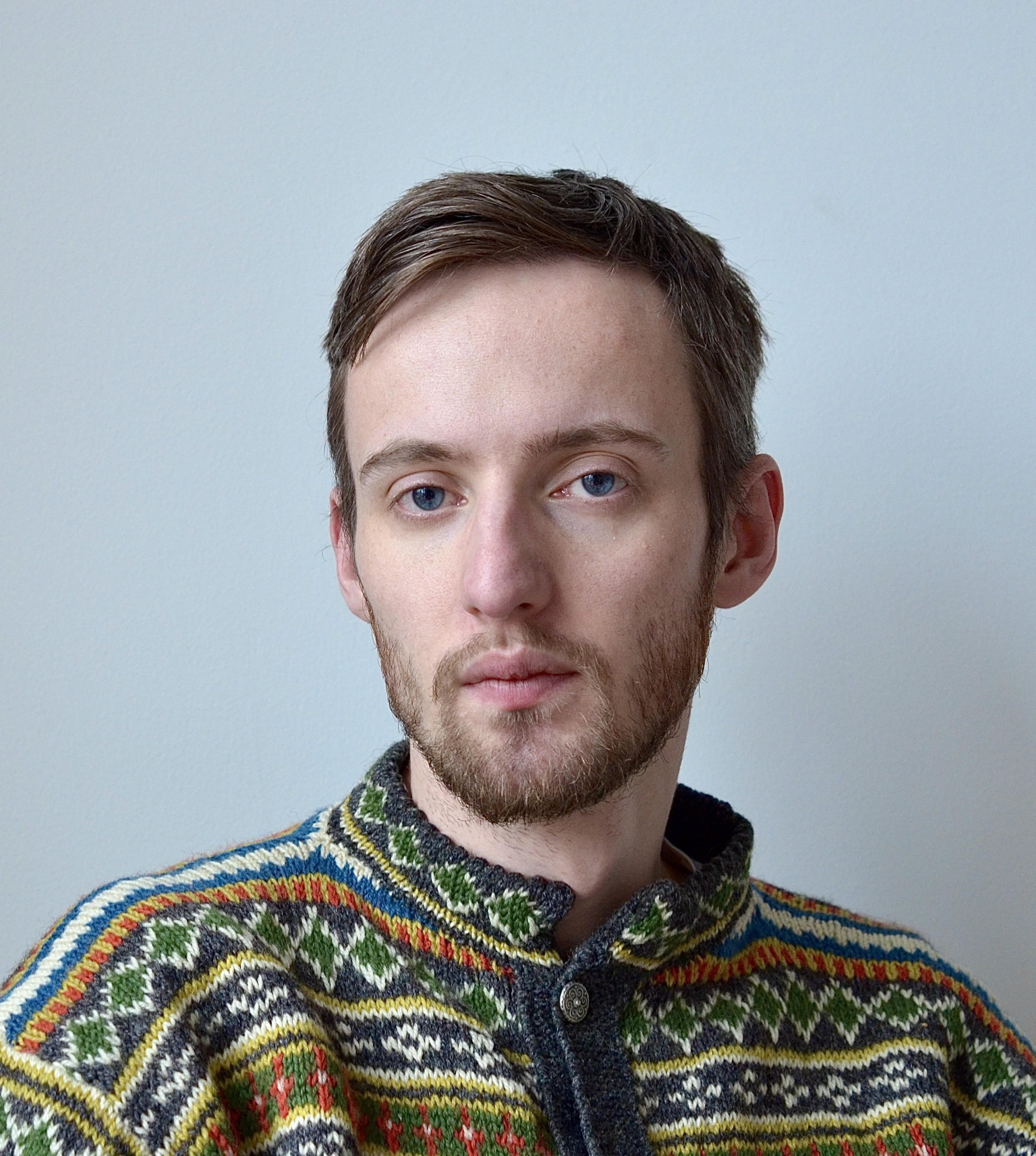
Jungstötter is the solo project of Berlin-based songwriter and musician Fabian Altstötter, whose sounds linger in lyrical softness and formal fragmentation. Using voice as a centre point, as an axis that hinges off an assembly of instrumental experimentation, his work pulls together shifting lyric compositions with textured layering, and whispered moments of release. 
 
Jungstötter has released two albums on [PIAS], and has played shows across Europe, at renowned venues and festivals includingVolksbühne, Silent Green and the Zeiss Major Planetarium (all Berlin), Kampnagel (Hamburg), the Nuremberg State Museum of Art and Design, Palac Akropolis (Prague), Desertshore Festival (Vienna), and more. He’s supported acclaimed acts including Owen Pallett (Final Fantasy, Arcade Fire) and Petra Hermanova.