Treen In Free Fall – And In Common Flow
On Kaikō – the trio Treen’s second release – saxophonist Amalie Dahl, pianist Gintė Preisaitė, and percussionist Jan Philipp demonstrate confidence, mutual trust, and a distinct musical adventurousness. The opening track »Hylē« unfolds with rattling percussion and strikes seemingly aimed directly at the piano strings, stumbling forward over an underlying drone. The saxophone cuts in with phrases that sound at once admonishing and bewildered. Nothing feels meticulously calculated; instead, the music is carried by a keen awareness of the three musicians’ individual voices within the shared soundscape.
The same basic formula unfolds across the album’s three other pieces, yet always in new variations. On »Kinetic«, Dahl’s saxophone emerges with much greater weight, its slowly growing crescendo mirrored and challenged by Preisaitė’s piano. Improvised music can often slip into polite holding patterns, with the musicians taking turns in the spotlight – but not here. Dahl, Preisaitė, and Philipp appear as three drifting islands without anchors, propelled by their own currents yet inexorably drawn in the same direction. The result is both sudden shifts and an organic flow that can pull the listener into a trance, if one surrenders and simply lets the sound wash over.
It is precisely the trust between them that allows the three to play freely, without fear of leaving or losing each other. In doing so, they create a momentum that is hard to resist – whether one chooses to let the islands drift past or to float along in their current.
English translation: Andreo Michaelo Mielczarek

An Organ in the Dark Forest of Doubt
Last year, Builder released Poor_in_Spirit, an album in which he explored, on his own, the sonic possibilities of his self-built organ. It was an album shaped by this exploration, but ultimately also by the limitations of the organ itself. On Although Changed, I Arise the Same, the composer finds a way beyond them.
The organ is now joined by three additions: Builder’s own alto saxophone, along with the voices of Zola Mennenöh and Johanna Sulkunen. It makes all the difference, providing the diversity of instrumentation that Builder has repeatedly demonstrated his ability to compose for. At times, the organ’s bass sinks beneath the voices and saxophone like a light haze; at others, it envelops them in a heavy fog. It howls like wind in the trees and roars like a train in the night. Mennenöh and Sulkunen sing, chant and breathe simple, repetitive phrases about spiritual uncertainty and searching, as though lost in the dark forest of doubt.
It is a Spartan form of storytelling, giving the listener enough lyricism and atmosphere to set the mind in motion, but never so much that it becomes overwhelming. This is where Builder’s strength lies: his music clearly grows out of his life and experiences, yet he composes in such a way that the listener is invited to enter the story with their own imagination.
Builder determines the colours, but leaves part of the picture to the listener. It is an album that is far more restrained in its dramaturgy than previous releases. No less beautiful or inspiring for it.
English translation: Andreo Michaelo Mielczarek

»For us, music is a transcendent force with transformative potential – something we get to experience and shape when we create sound together. It is an opportunity to describe one’s innermost universes without words, and the best way for an introvert to express intense emotions at full volume.«
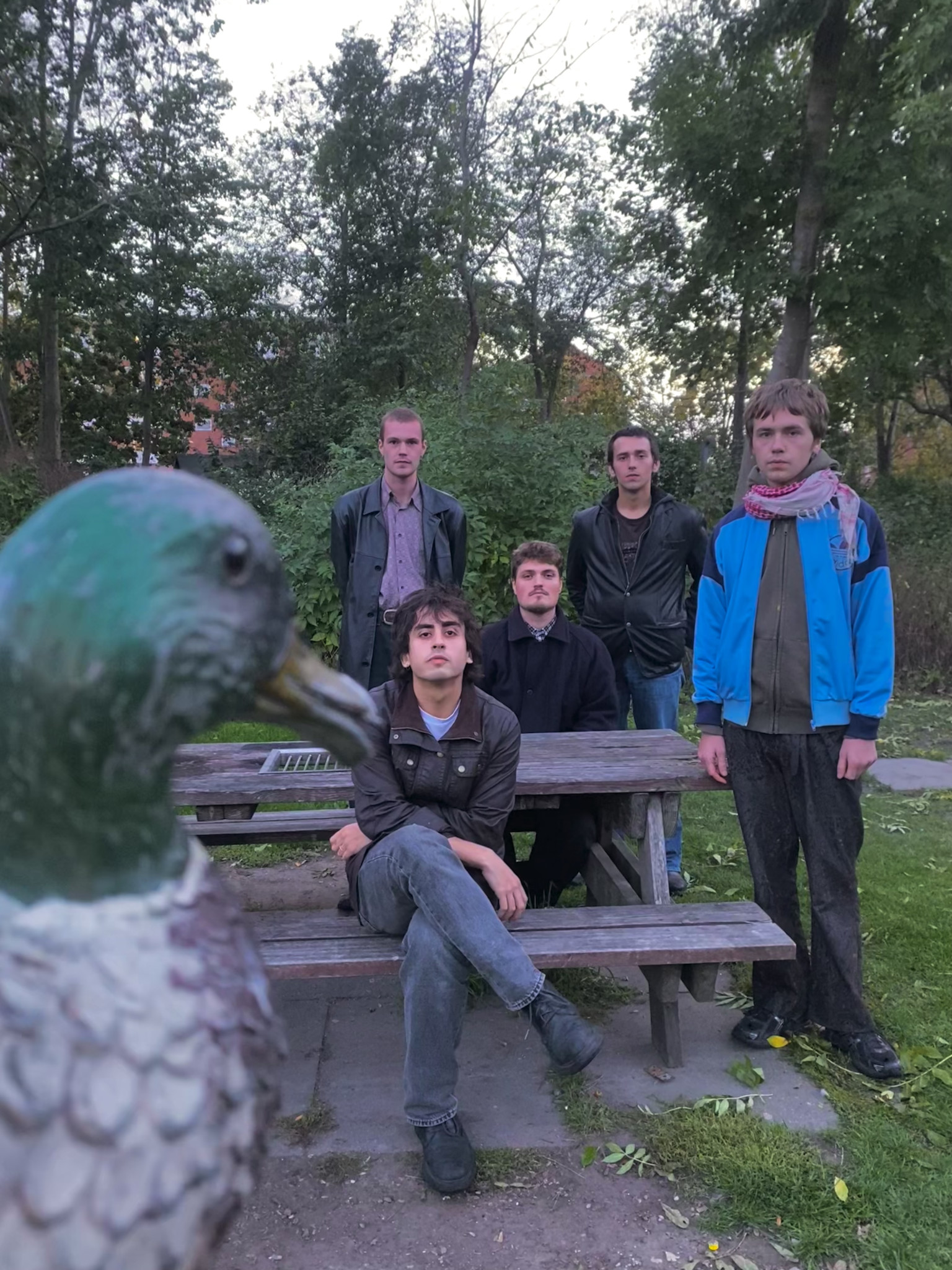
With roots in Copenhagen’s experimental jazz and punk scene, Echo, Bravo challenges the notion of what a rock band can sound like. The quintet blends post-punk, free punk, and noise rock into a raw and unpredictable soundscape. They describe the music themselves as a kind of »empty-the-fridge soup,« where various leftovers come together. »Best enjoyed as a hot meal in a cold industry.«
Thorbjørn Tønder Hansen has died. With Thorbjørn’s passing, the art music community has lost one of the Nordic region’s most significant producers, curators and cultural leaders.
»Music is the best way to discover myself and understand the world around me.«
Luca Quintavalle is a harpsichordist, fortepianist and conductor. He has performed with ensembles including Concerto Köln, Harmonie Universelle, the Mozarteum Orchestra Salzburg and the Kölner Kammerorchester at venues and festivals such as the Kölner Philharmonie, Salzburg Festival and Enescu Festival. He was harpsichordist of Les Musiciens du Prince, led by Cecilia Bartoli, for over five years, and has conducted ensembles including the Orchestra and Chorus of Teatro dell’Opera di Roma, Concerto Köln and Deutsche Kammerakademie Neuss. His recordings include Mirrors, released by Berlin Classics and awarded an OPUS KLASSIK.