James Black
28







James Black and Connor McLean, the two composers behind the tongue-in-cheek outfit The Ensemble That Loves You, are, as newcomers, not yet eligible to vote in Tuesday’s general election. They can, however, intervene – and that is precisely what they did on Saturday with a good old-fashioned podwalk.
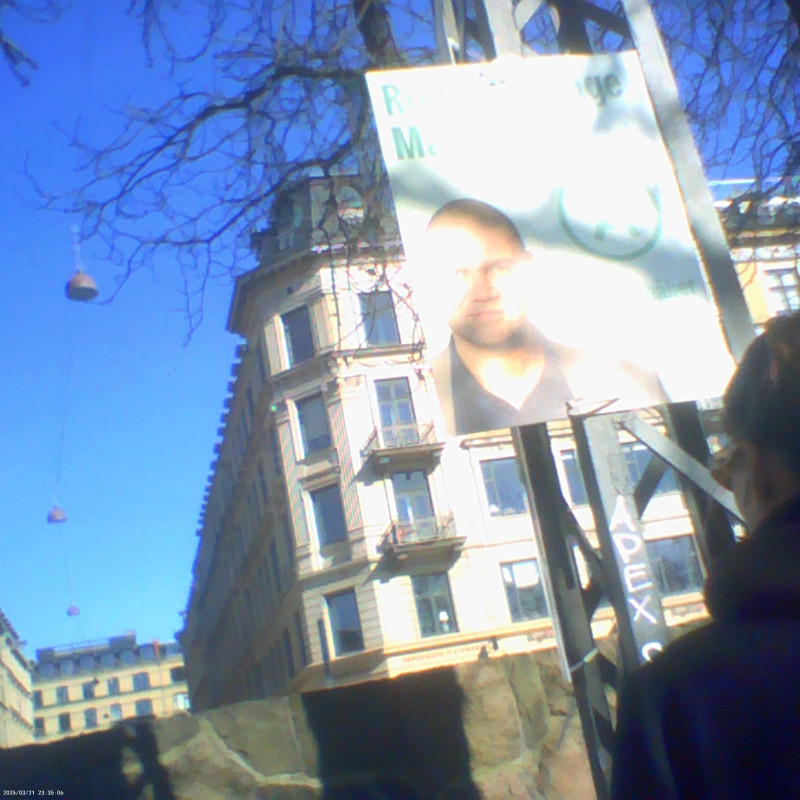
Over the course of three hours, you could stop by the pair, who had set up camp on the northern bank of Sortedams Sø in Copenhagen. There, you were handed a QR code, guided to the nearest campaign poster, and left with a SoundCloud link. »Alright, see you in 16 minutes,« Black said, and suddenly I was standing in front of political scientist Thomas Rohden of the Danish Social Liberal Party, confronted with his peculiar, toothless plastic smile.
»It’s important to connect with the election, so look the candidate straight in the eyes,« a synthetic female voice instructed as I pressed play. So I did. Stood still, listened, stared. Became a kind of artwork myself, I suppose – certainly looked like an idiot. And while the voiceover sent me onward to new posters, Black and McLean worked to complete the sense of alienation with brief sonic interventions.
The voice first took on a slight echo, then locked into a groove – »vote-for-me-vote-for-me-vote-for« – before dissolving into short-circuited 8-bit electronics, a faltering barrel organ, and flickering monologues over live jazz, mimicking an absurd media reality.
Gradually, the glossy, guileless eyes of the posters came to express just how artificial the election really is. »The person you are looking at is not real,« the synthetic voice concluded – remarkably agitated for a computer. »The party will replace you with a robot.«
Alright, alright. From the voiceless, one must hear the truth – wrapped in British political sarcasm and MIDI jingles: a light – and perhaps somewhat cheap – dish, but who has the energy for more after four weeks of campaigning? On my way back to Black and McLean, I saw a woman point at a poster of 26-year-old Maria Georgi Sloth, also from list B: »She gave me a piece of chewing gum down at the station.« And just like that, the election was decided.
English translation: Andreo Michaelo Mielczarek
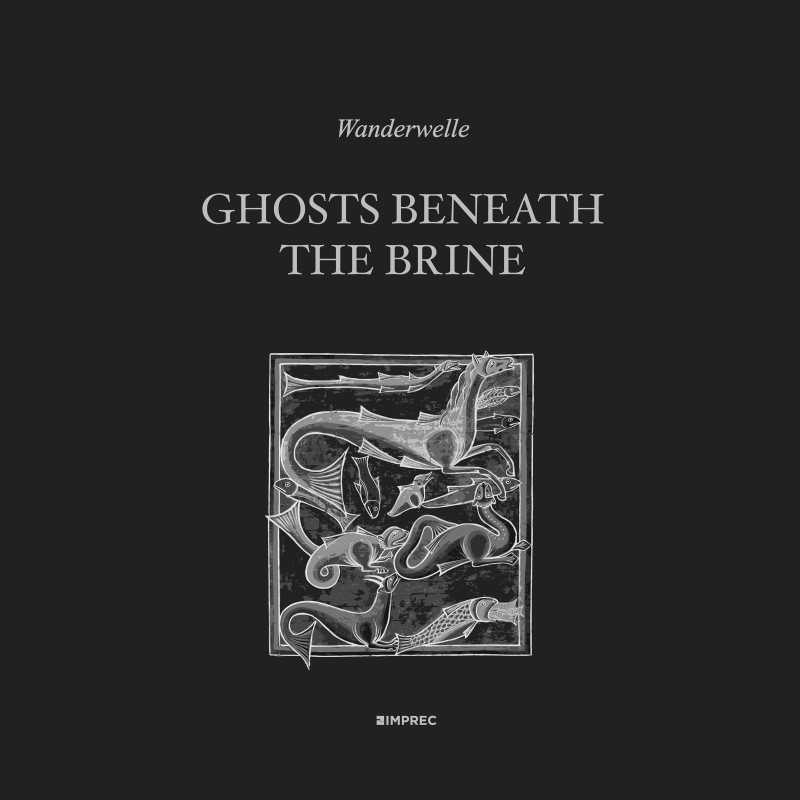
The ocean as Cape Lonesome, as a graveyard where at midnight the mythical, the real, and the endangered rise from the dead: this is the sonic world of Ghosts Beneath the Brine, the new album by Amsterdam-based experimental duo Wanderwelle.
Across eight tracks suspended between elegy and requiem, the album navigates the reality of climate change and species extinction while invoking the mythology of creatures of the deep. To sound the crisis, Wanderwelle chose not to record melting icebergs or raging wildfires. Instead, they submerged cymbals – small, bowl-shaped metal plates used since ancient rituals – in saltwater for extended periods. As the metal degraded, its sound grew darker, more fragile, more unstable, releasing ghostly overtones.
Those tones drift through the album like the critically endangered albatross – to which the sixth track is dedicated – spreading its 3.5-metre wingspan like a ghost across vast, indifferent skies. Layered with reverb and sounds evoking lamenting, whimpering animal voices, the pieces carry titles that weave myth and ecological reality: »The Seabishop's Sermon« (named after a creature allegedly caught in the Baltic Sea in 1513), »Empty Net or Dissolving Souls«. The message is clear: sharks and oysters risk becoming as mythical as sea monsters once were, if destruction continues.
And yet this is precisely where the album's beauty becomes its limitation. Ghosts Beneath the Brine sounds hauntingly gorgeous – but like the sublime spectacle of a shipwreck witnessed from a safe distance, it invites us to shudder rather than act. More ghost train than alarm bell, it offers catharsis where the moment calls for urgency.

The moon is a fundamental poetic motif. Its cycle pulls at both the tides and at us – within bodies and fluids alike. Composer Adrianna Kubica-Cypek and the vocal ensemble ÆTLA interpret this motif from Barbara Agertoft’s poem »Månen«. The composition is divided into »Månen« I, II, III and IV. It is a successful EP with a clear sense of purpose: the strong textual foundation establishes a distinct compositional direction without digressions, yet musically it cannot stand on its own.
The moon’s power to connect the inner and the outer emerges strongly in Agertoft’s poem: »and we stretched ourselves out, the inner in the outer all that we / bled into.« How better to convey this fundamental mood than through a vocal ensemble – individual bodies that bleed into an external, shared sound? Kubica-Cypek’s interpretation is dynamic, full of contrast and undulating, like flood and ebb. It begins with a piercing timbre of female voices, unfolding into crossing glissandi supported by deep, monotonously chanting male voices. At times, the sounds converge into harmonic chords; more often, the voices move in diverging directions in both volume and pitch, or insist on remaining in dissonance and repetition.
»Månen IV« concludes as an inversion of the sharp opening of »Månen I«, with subdued and dark sonorities that feel partially unresolved – as if the work is meant to be heard again from the beginning. In its form, the choral arrangement is cyclical, bringing out something understated in Agertoft’s poem. It demonstrates the quality of mutual interpretation: the art forms add something to one another.
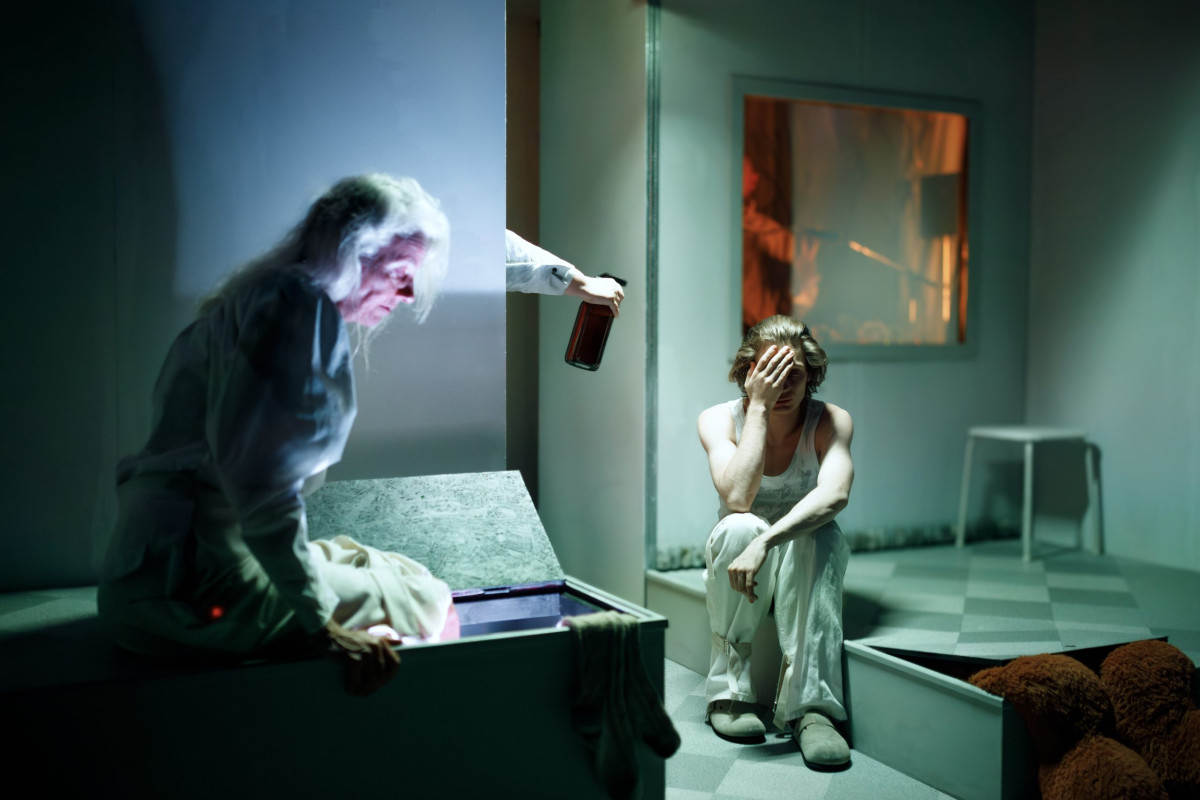
»Is your head also filled with voices that aren’t your own?« the young man asks. The question forms the central theme of Vildnis (Wilderness], a performance by the theatre group MØR collective, and most people would probably answer yes. But whose voices are they, and where do they come from?
In the introduction, Vildnis is described as »a journey into the engine room of theatre.« Playwright Abelone Koppel has written 80 short texts, and each evening a selection is activated by two performers who do not know in advance which texts they will receive through their earpieces. In a back room, a prompter reads the texts aloud, which the actors immediately translate into movement and voice on stage. It could easily have gone wrong. It doesn’t – and much of the credit goes to the two performers, whose work makes the concept function so well.
Also present on stage is composer Mika Forsling, who, through electronic means and abundant percussion, follows the mood unfolding between the performers – but unfortunately not much more than that. I actually found it somewhat difficult to hear what was going on and, at times, forgot about it altogether, as it felt relatively insignificant. It would have been an obvious choice to use the voice itself as an instrument in a performance centered on inner voices, and it is hard to understand why this opportunity is missed.
One should not see Vildnis for the music alone, even if it becomes more prominent towards the end, when the roles are reversed and Forsling’s rhythms seem to guide the performers’ movements. Nevertheless, Vildnis emerges as a cohesive and engaging experience, despite the unpredictability of the experiment.
English translation: Andreo Michaelo Mielczarek
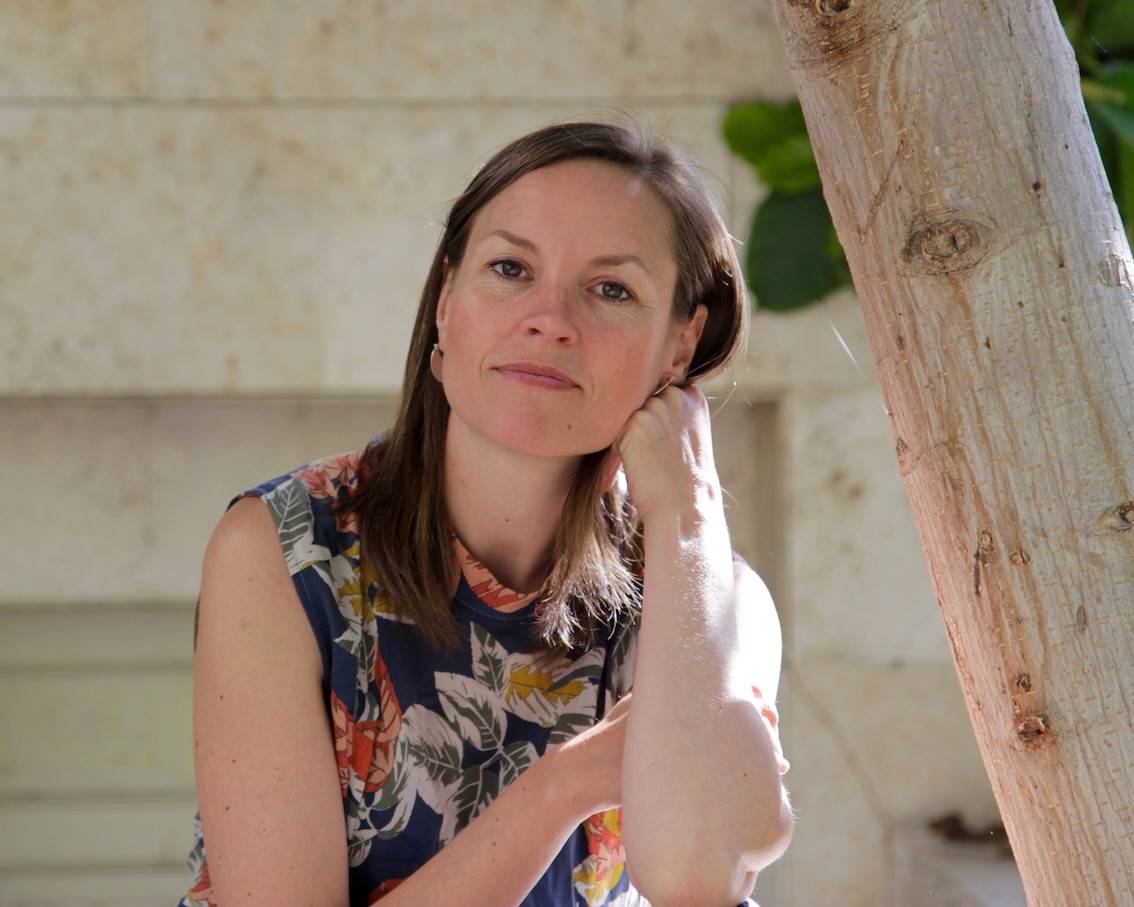
»Music for me is the fifth dimension of life, connecting all the others.«
For the past 10 years, Maja Dyrehauge Gregersen has been at the helm of the Copenhagen Photo Festival – the largest photography festival in the Nordic region. The Copenhagen Photo Festival is an international platform with over 1000 annual applicants from all over the world – and a clearly curated level that attracts world names and has lifted the festival out of its original, more local and open form.
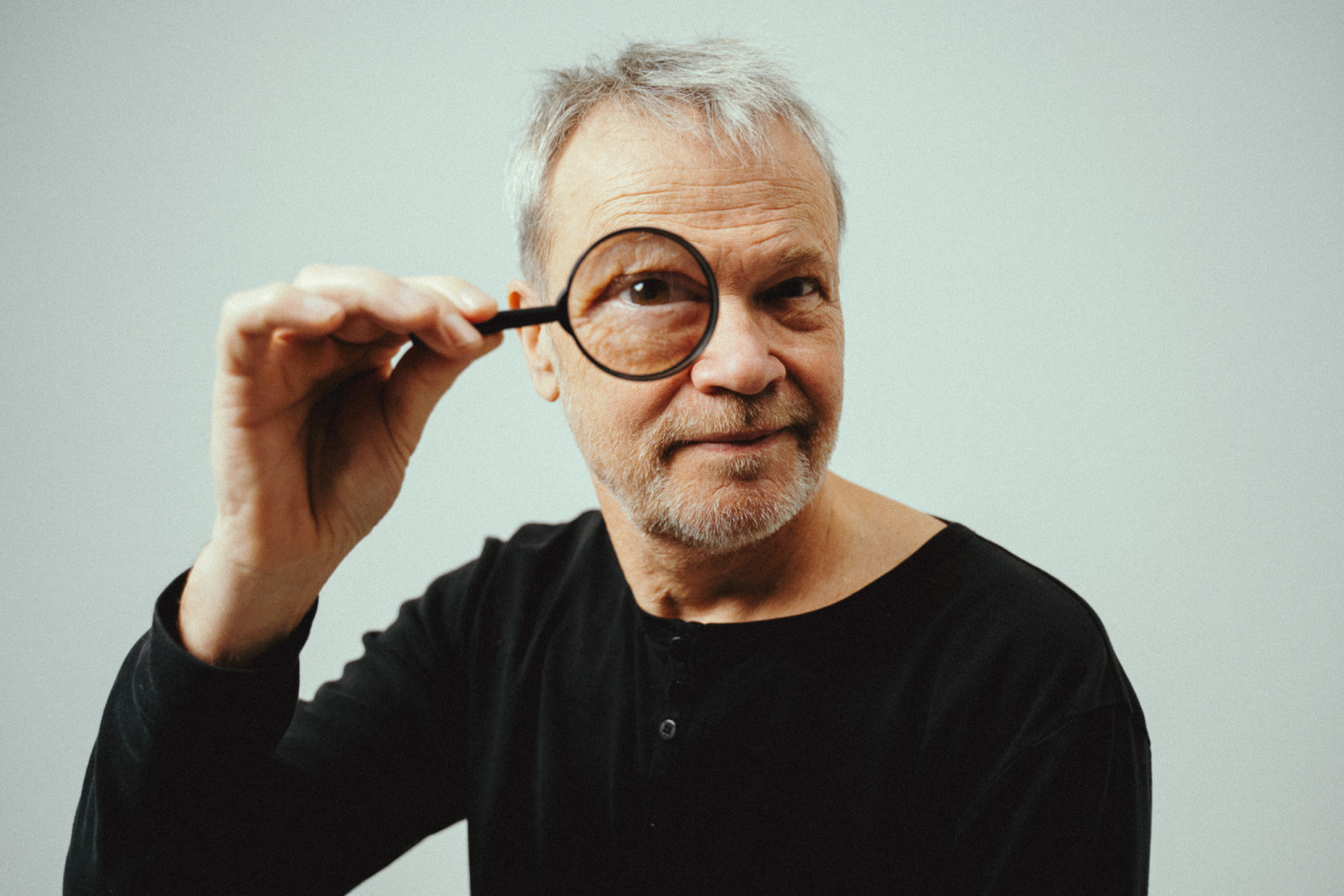
»Music for me is something that’s constantly playing in my head. I can’t switch off that part of my brain where new melodies and rhythms emerge and take shape – hardly even when I’m asleep. For that reason, I’m not really a big music consumer. One exception is live concerts and music festivals, where I love seeking out music I don’t already know and letting myself be surprised – most recently the intriguing band Nebulah, emerging from the Esbjerg Academy of Music. At home, it’s our 19-year-old daughter who controls the playlist. She sings backing vocals on my album and has introduced me to many artists over the past years. Through her, it’s also been great to rediscover classic artists like CV Jørgensen, Stevie Wonder, and Joni Mitchell. Very inspiring.«
LOH is a Danish songwriter and pianist. The piano has been part of his life since childhood, but until recently it was overshadowed by a career in the TV industry, where he worked as a documentary producer, creating hundreds of programs for Danish television. His debut album Logger Ud, released in March 2026, features Danish-language folk-pop songs with a touch of Nordic jazz.