
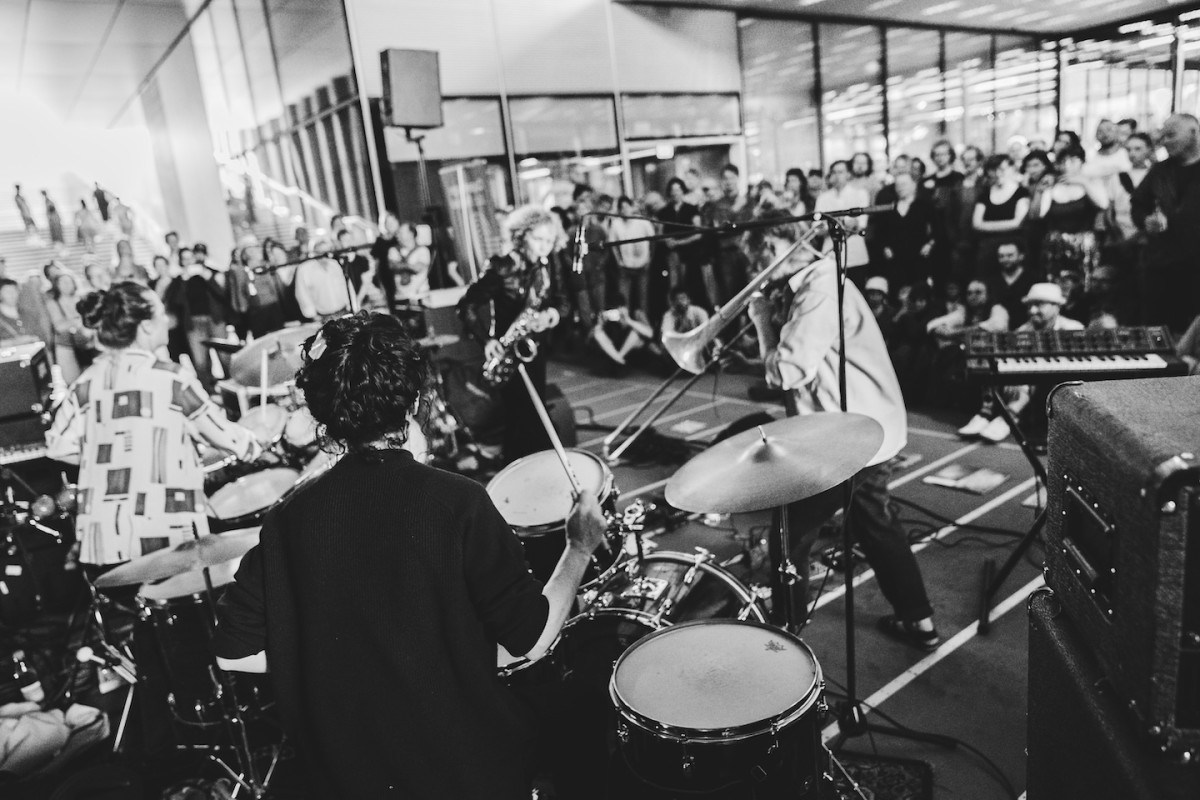

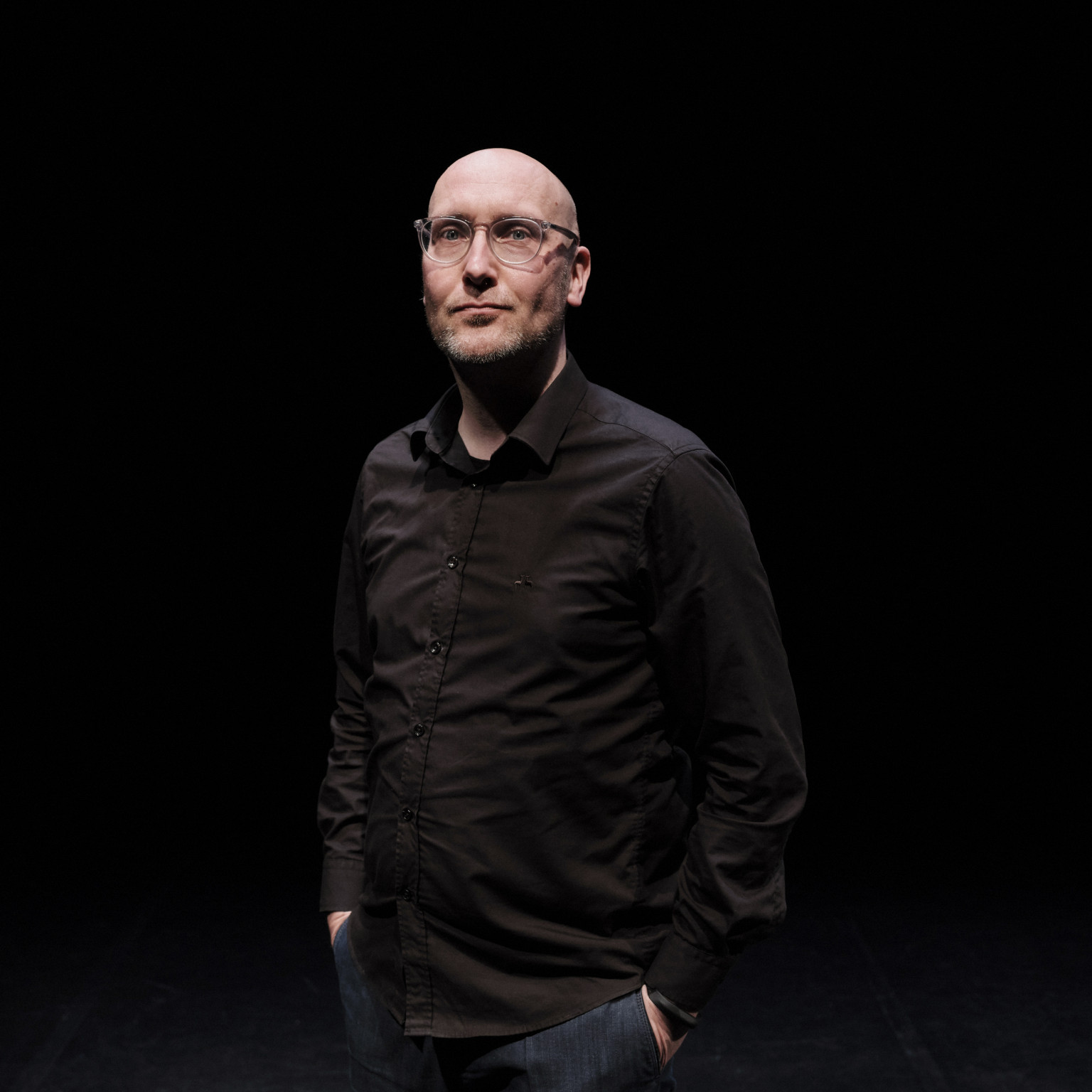
© Christoffer Askman

From the Culture Yard in Helsingør, ships glide past Kronborg Castle through the narrow waters of the Øresund – a reminder of the trade routes that, for centuries, have carried goods, people and power between the Nordic region and the wider world. It is an apt point of departure for the Passage Festival, and for Marie Dahl's vocal work Silk. Sugar. Sand, which explores the intertwined histories of three materials.

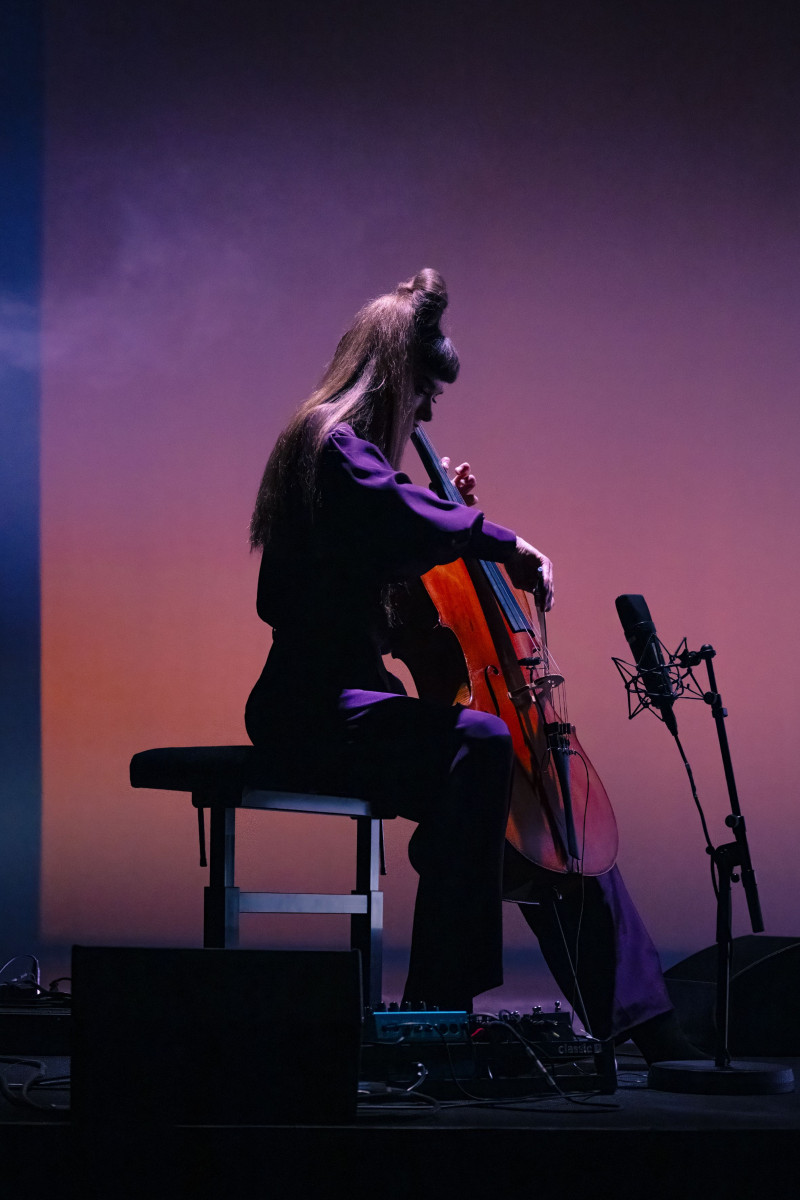
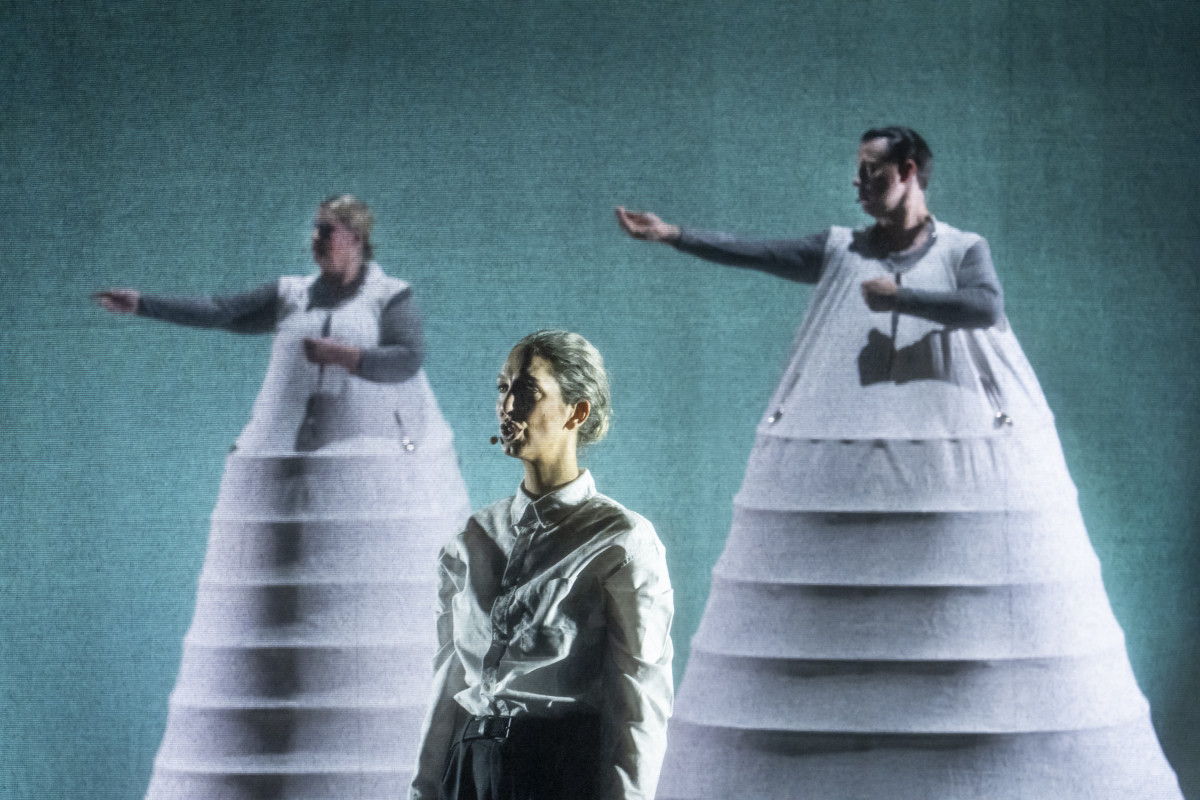
Silk. Sugar. Sand is a vocal performance in three acts tracing the historical journeys of these materials through colonialism, the global economy and geopolitics. Five singers from Ars Nova Copenhagen perform within a minimalist scenography consisting almost entirely of coloured light and three sets of costumes that transform throughout the performance: first silk dresses, then crinoline-like structures evoking sugar loaves, and finally grey stone-like forms suggesting accumulations of sand.

The work's central device is to translate the physical properties of these materials into vocal expression. At one moment, the elasticity of silk becomes soft, flowing polyphony; at the next, a cocoon-like electronic crackle. Sugar's crystalline structure is rendered as sharp vocal attacks – brief, whip-like cracks – as well as sweet, intimate whispers, while sand creaks and rustles, resonating with a libretto about economy and domination, violence and desire.

The performance has no conventional narrative, and the five singers portray no distinct characters, moving somewhat stiffly across the stage, as performers often do when their primary focus is on the voice. Comparisons with Hotel Pro Forma's Flammenwerfer are difficult to avoid. There, the production's rigorous aesthetic was counterbalanced by C.F. Hill's wildly expressive visual universe and Blixa Bargeld's deeply vulnerable stage presence. Those qualities are missing from Marie Dahl's carefully controlled staging, which could have benefited from more of the sensitivity and chaos that also form part of Kirsten Dehlholm's artistic legacy.

© PR

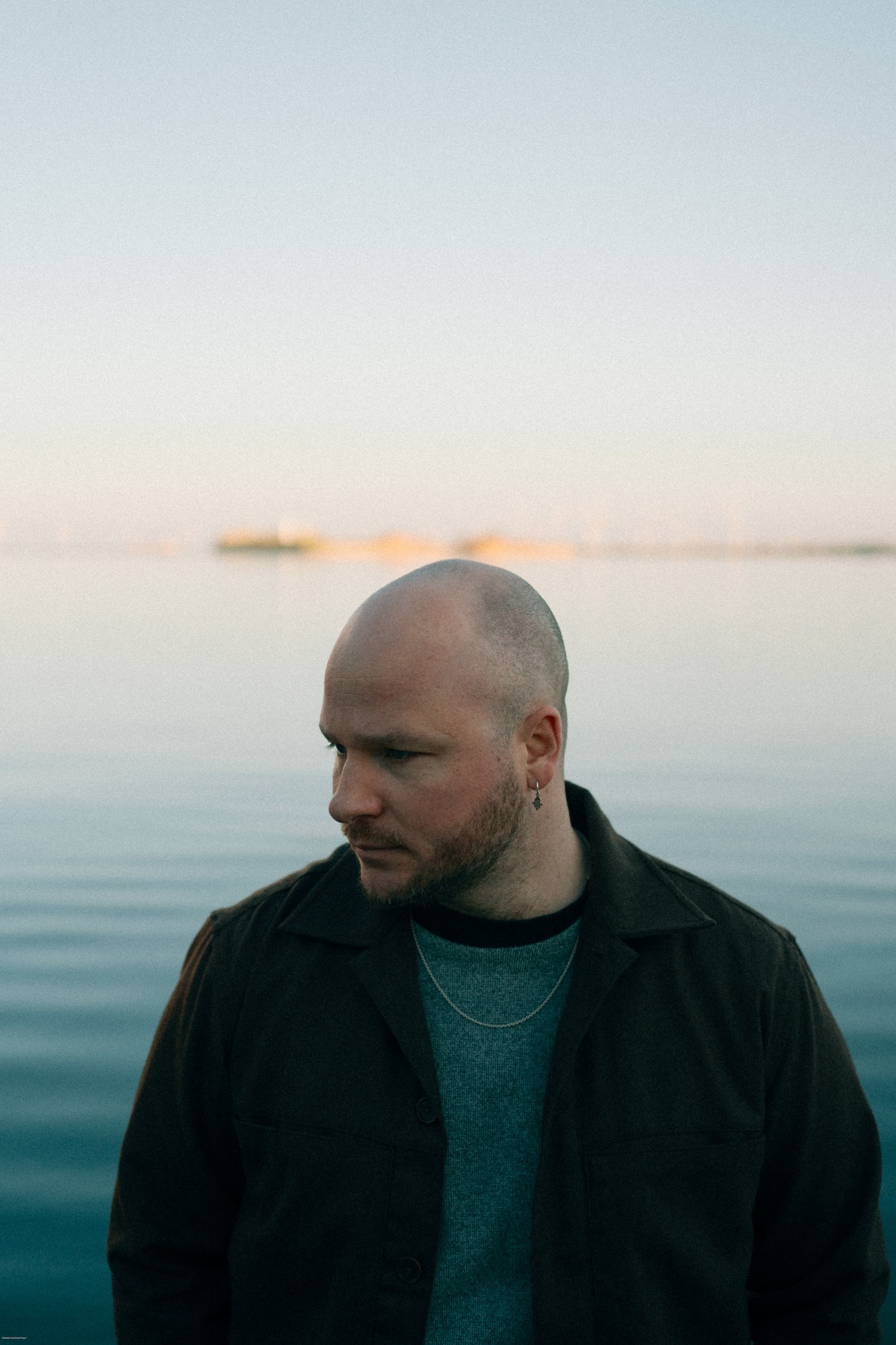
»Music has been a healing balm for me.«

John William Grant is an American singer, musician, and songwriter holding both American and Icelandic citizenship. He first came to prominence as a co-founder, lead vocalist, pianist, and primary songwriter of the alternative rock band The Czars. After releasing six albums between 1994 and 2006, the band disbanded, and Grant withdrew from music for four years before embarking on a solo career.

He returned in April 2010 with a critically acclaimed debut album recorded in collaboration with Midlake. Queen of Denmark was named Album of the Year 2010 by Mojo magazine and was also selected as one of the ten best albums of 2010 by The Guardian’s music critics and writers.

© Malthe Folke Ivarsson

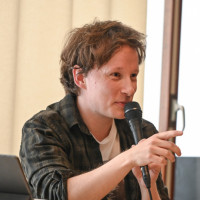
»In his music, composer Allan Gravgaard Madsen tries to create a better version of himself.« 

Allan Gravgaard Madsen is a Danish composer based in Copenhagen. His most recent works include Träume nicht and Nachtmusik. He tries to create a better version of himself in his music – where his personality tends to be restless, chatty and has an active inner life, his music is controlled, simple and merciless in its expression. He is the recipient of the Carl Nielsen & Anne Marie Carl-Nielsens Hæderspris 2022.

in briefrelease
23.01.2022

Finnish Space Travel

Tomutonttu: »Hoshi«
© Tomutonttu: »Hoshi«

The Finnish multimedia artist Jan Anderzén has, with the album Hoshi, released under the solo moniker Tomutonttu, created a true little star. Not only because »hoshi« literally means »star« in Japanese, but above all due to the music itself. There is something cosmic, yet infinitely minute, about the sonic worlds Anderzén conjures—like a galaxy reflected in a puddle, or a space journey in a rocket carved from a hollow tree trunk. Synths emit busy, warm blips and bloops, while ultra-short vocal and instrumental samples create a recognizable blur. At once artificial and organic – soft, rounded, jagged, crackling.

Anderzén approaches sound with a playfulness I simply adore. His music is strange in an incredibly comforting way. It places me in a kind of colorful, trance-like state, only interrupted when, several times over the course of the album, I find myself smiling in delight at a particularly great sound. The synths on »Katse osuu sähköön!« The choral samples on »Kesä oli äkkiä ohi!« Milo Linnovaara’s flute on »Malta lausua ‘AH’!« And many more. Hoshi is an album packed with microscopic moments that together form a frayed, exploding, radiant, idiosyncratic whole—a stellar moment of just under 38 minutes.