












You Just Want to Disappear into These Cosmic Hordes of Sound
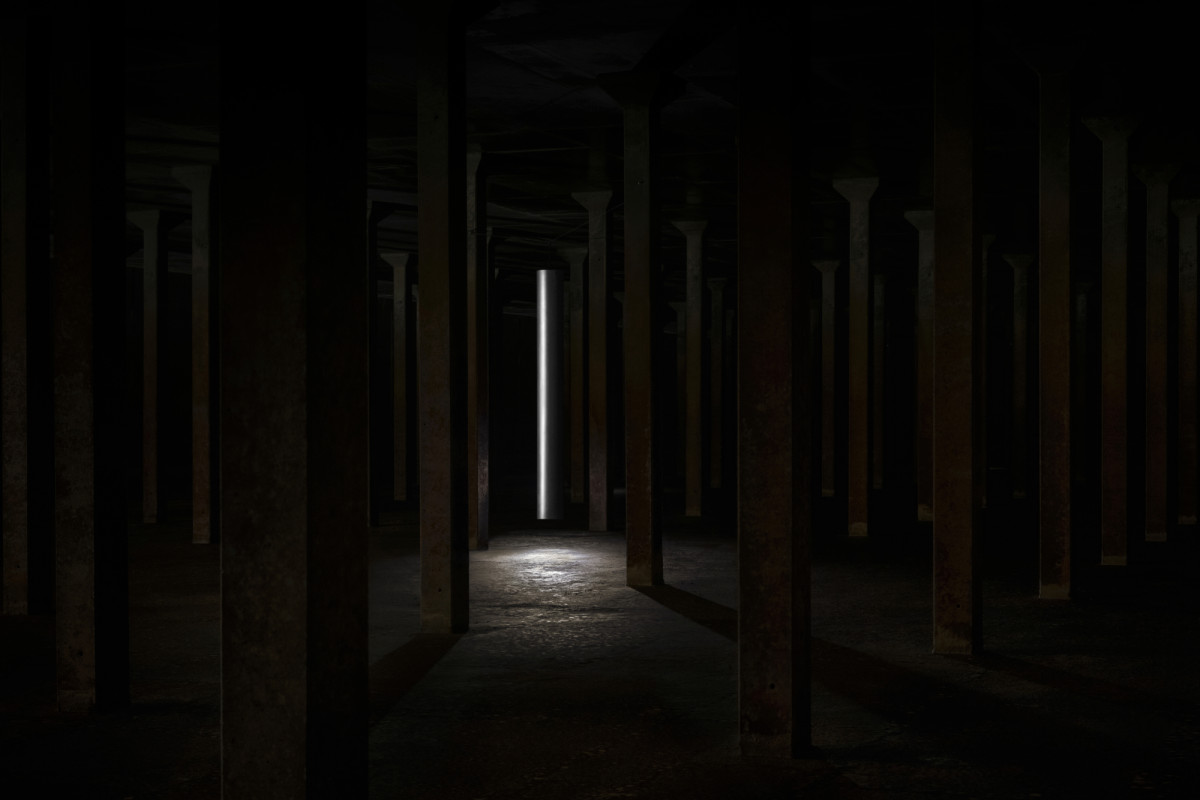
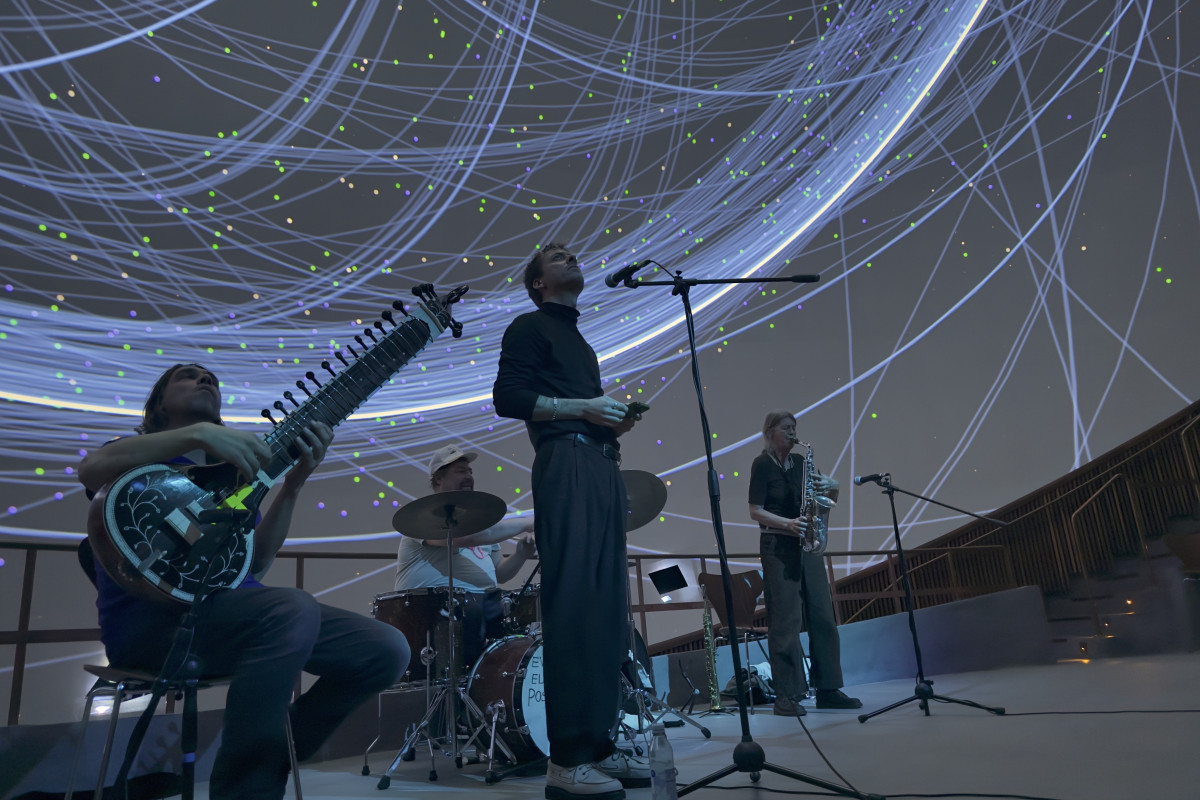
British Burial should have once said that in his music he strives to reproduce the experience of standing outside a club and feeling the rhythms on the asphalt. Distances are fascinating. The sounds in Christian Skjødt Hasselstrøm's work Myriads in an enormous water container at the Ole Rømer Observatory comes from afar. It is rain from space, cosmic radiation or high-energy particles, which are translated into sound via three detectors. They also flash with light in the pillared hall, and when you grope your way to them through the darkness, they puff softly and innocently. But when you walk around the 1,662 square meter room, the sounds still seem a little bit threatening – like artillery drums, sounds from modern wars or warning signals from ancient warlords... The sounds are always very far away and rumble at a low frequency in the room with a reverberation of 40 seconds. But they are just peaceful phenomena from distant galaxies, and they hardly want us any harm. They just make us feel so infinitely small. Hasselstrøm did the same to us in a former cereal silo in the city of Struer.
»You can get salt and minerals on your clothes. It can be washed off,« warned the guide, now ringing a bell. But what if you don't want to get rid of that sound at all and don't want to go home to Aarhus, but just want to stay deep underground for more than the given 15 minutes and disappear into the cosmic and very delicious hordes of sound? Distances are fascinating, and Myriads is better – more enriching – than any club in Aarhus’ Latin Quarter.
Finnish Space Travel
The Finnish multimedia artist Jan Anderzén has, with the album Hoshi, released under the solo moniker Tomutonttu, created a true little star. Not only because »hoshi« literally means »star« in Japanese, but above all due to the music itself. There is something cosmic, yet infinitely minute, about the sonic worlds Anderzén conjures—like a galaxy reflected in a puddle, or a space journey in a rocket carved from a hollow tree trunk. Synths emit busy, warm blips and bloops, while ultra-short vocal and instrumental samples create a recognizable blur. At once artificial and organic – soft, rounded, jagged, crackling.
Anderzén approaches sound with a playfulness I simply adore. His music is strange in an incredibly comforting way. It places me in a kind of colorful, trance-like state, only interrupted when, several times over the course of the album, I find myself smiling in delight at a particularly great sound. The synths on »Katse osuu sähköön!« The choral samples on »Kesä oli äkkiä ohi!« Milo Linnovaara’s flute on »Malta lausua ‘AH’!« And many more. Hoshi is an album packed with microscopic moments that together form a frayed, exploding, radiant, idiosyncratic whole—a stellar moment of just under 38 minutes.