© Bastian Zimmermann

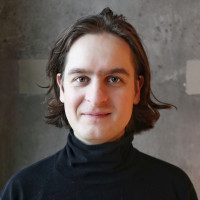
It is difficult to comprehend that Andreas Engström is no longer with us. Just a couple of months ago, he wrote – as he had done so many times before – with an ambitious proposal: he wanted to review a box set of twenty releases by Dror Feiler. In the same message, he mentioned plans to come to Aarhus for the recently concluded Spor Festival.

We often encountered Andreas at festivals. He travelled far and wide in pursuit of music – always moving forward, always searching, always attentive to what remained to be heard, understood, and shared. Some of us remember how he once came to Aarhus to review the sound artist Florian Hecker – and ended up hammering nails into a tree trunk at a German beer bar. Andreas was good company; he carried his curiosity lightly, with a sense of play.

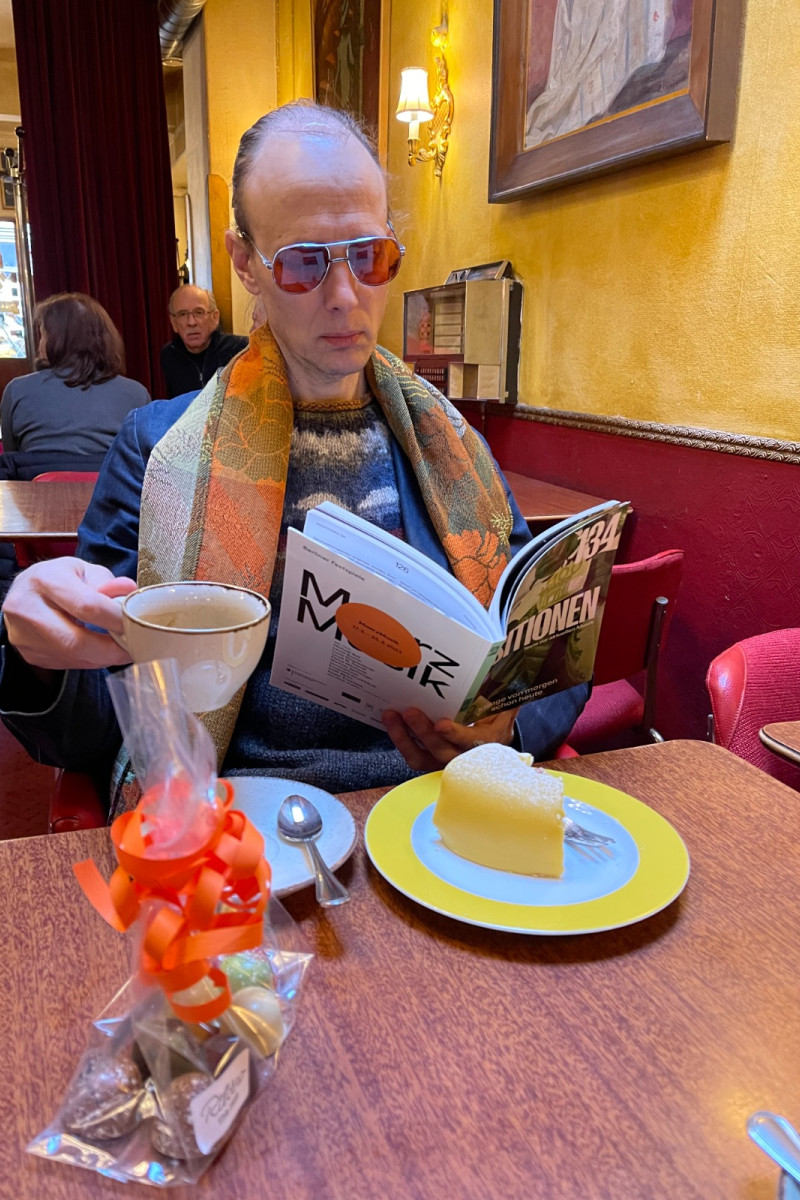
Some of us got to know Andreas as early as twenty years ago, when he became editor of World New Music Magazine, published by the ISCM. Already then, he stood out as a young, quick and remarkably talented editor. Over the years, he would return to editorial roles in times of need – most notably at Positionen, the legendary journal founded by Gisela Nauck, which he later shaped together with Bastian Zimmermann.

Andreas was a sharp and critical thinker who consistently dug beneath the surface. A natural-born editor, he was deeply devoted to the processes of commissioning, refining, and publishing texts. He was involved in numerous publications and generously shared his knowledge of music criticism through teaching and mentorship.

Over the past five years, our three journals – Glissando, Positionen, and Seismograf – have collaborated closely, forming a network in which Andreas played a vital and inspiring role. Together, we initiated projects such as the article series Ukrainian Corridors. As recently as February, Andreas spoke enthusiastically about plans to launch a new music journal with Swedish colleagues.

Even during the series of Zoom meetings we held while he was living in Berlin, it became clear that his health was declining. Yet his commitment never faltered. He remained present, engaged, and curious. He fought his illness with courage and humour, and we remember moments when he would rejoin our meetings after treatment – refreshed, attentive, and ready to continue the conversation.

Andreas Engström was not only an exceptional music critic, but also a generous and deeply engaged human being. He never ceased to ask questions, to challenge assumptions, and to open spaces for reflection.

Fortunately, he leaves behind a substantial body of writing on sound art, music, and music theatre.

May his memory be honoured.

Andreo Mielczarek (Seismograf), Jan Topolski (Glissando), and Bastian Zimmermann (Positionen)

© PR

»Music has been a healing balm for me.«

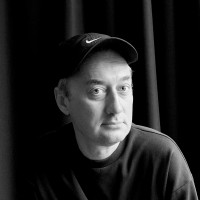
John William Grant is an American singer, musician, and songwriter holding both American and Icelandic citizenship. He first came to prominence as a co-founder, lead vocalist, pianist, and primary songwriter of the alternative rock band The Czars. After releasing six albums between 1994 and 2006, the band disbanded, and Grant withdrew from music for four years before embarking on a solo career.

He returned in April 2010 with a critically acclaimed debut album recorded in collaboration with Midlake. Queen of Denmark was named Album of the Year 2010 by Mojo magazine and was also selected as one of the ten best albums of 2010 by The Guardian’s music critics and writers.

© Malthe Folke Ivarsson

»In his music, composer Allan Gravgaard Madsen tries to create a better version of himself.« 

Allan Gravgaard Madsen is a Danish composer based in Copenhagen. His most recent works include Träume nicht and Nachtmusik. He tries to create a better version of himself in his music – where his personality tends to be restless, chatty and has an active inner life, his music is controlled, simple and merciless in its expression. He is the recipient of the Carl Nielsen & Anne Marie Carl-Nielsens Hæderspris 2022.

in briefrelease
23.01.2022

Finnish Space Travel

Tomutonttu: »Hoshi«
© Tomutonttu: »Hoshi«

The Finnish multimedia artist Jan Anderzén has, with the album Hoshi, released under the solo moniker Tomutonttu, created a true little star. Not only because »hoshi« literally means »star« in Japanese, but above all due to the music itself. There is something cosmic, yet infinitely minute, about the sonic worlds Anderzén conjures—like a galaxy reflected in a puddle, or a space journey in a rocket carved from a hollow tree trunk. Synths emit busy, warm blips and bloops, while ultra-short vocal and instrumental samples create a recognizable blur. At once artificial and organic – soft, rounded, jagged, crackling.

Anderzén approaches sound with a playfulness I simply adore. His music is strange in an incredibly comforting way. It places me in a kind of colorful, trance-like state, only interrupted when, several times over the course of the album, I find myself smiling in delight at a particularly great sound. The synths on »Katse osuu sähköön!« The choral samples on »Kesä oli äkkiä ohi!« Milo Linnovaara’s flute on »Malta lausua ‘AH’!« And many more. Hoshi is an album packed with microscopic moments that together form a frayed, exploding, radiant, idiosyncratic whole—a stellar moment of just under 38 minutes.