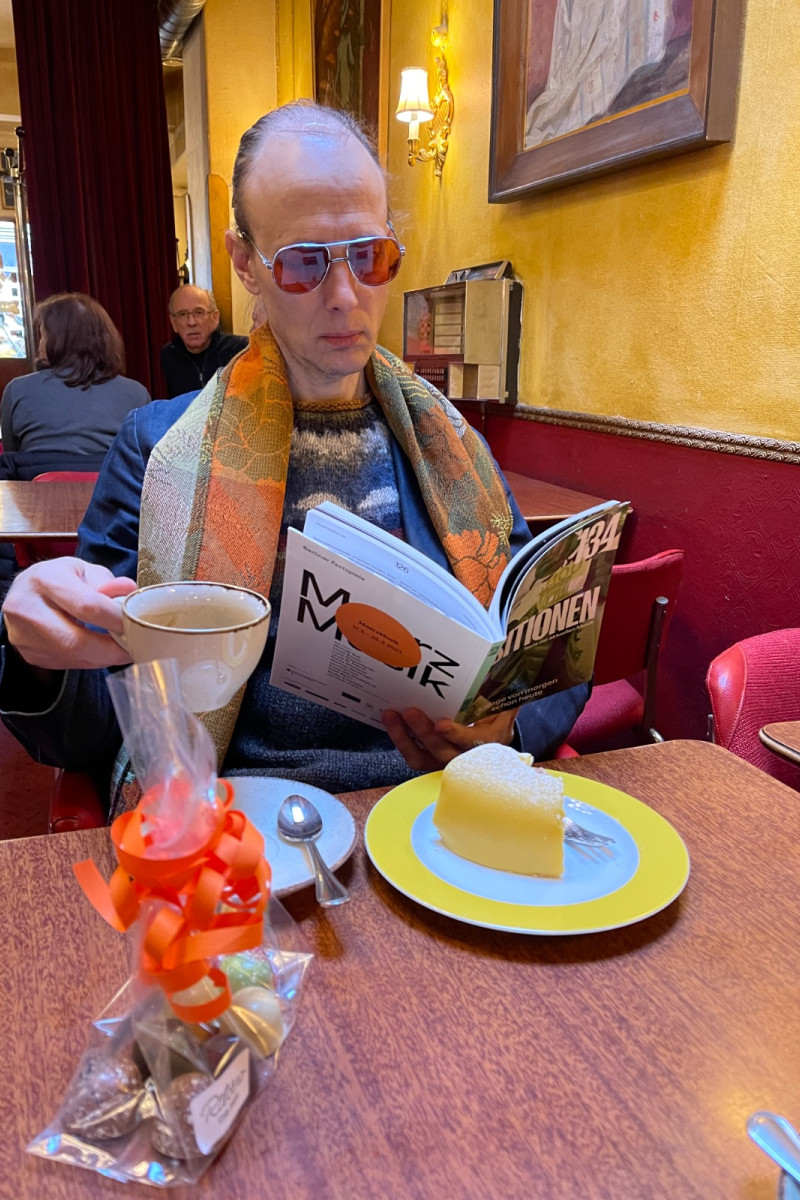
© Bastian Zimmermann

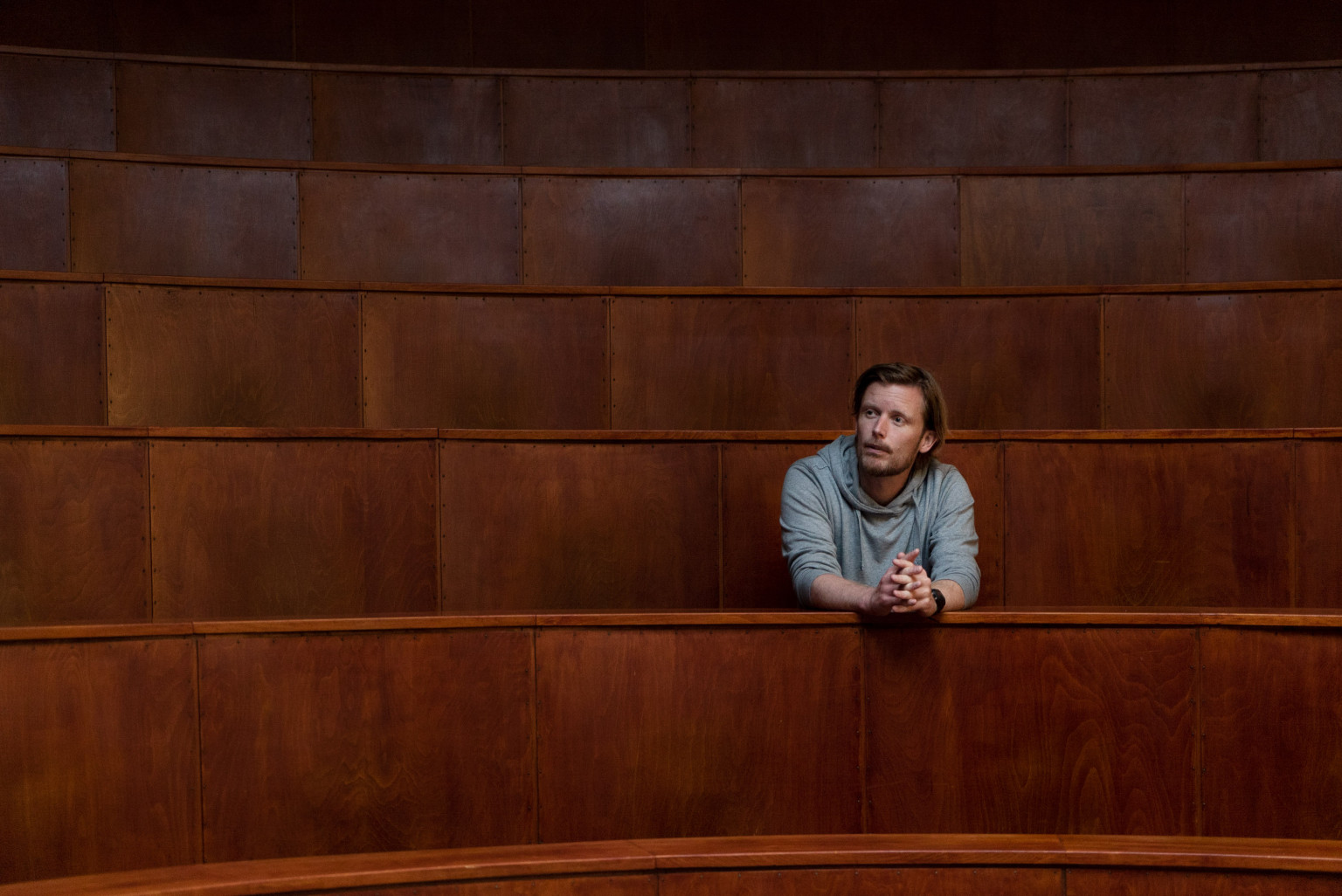
It is difficult to comprehend that Andreas Engström is no longer with us. Just a couple of months ago, he wrote – as he had done so many times before – with an ambitious proposal: he wanted to review a box set of twenty releases by Dror Feiler. In the same message, he mentioned plans to come to Aarhus for the recently concluded Spor Festival.

We often encountered Andreas at festivals. He travelled far and wide in pursuit of music – always moving forward, always searching, always attentive to what remained to be heard, understood, and shared. Some of us remember how he once came to Aarhus to review the sound artist Florian Hecker – and ended up hammering nails into a tree trunk at a German beer bar. Andreas was good company; he carried his curiosity lightly, with a sense of play.

Some of us got to know Andreas as early as twenty years ago, when he became editor of World New Music Magazine, published by the ISCM. Already then, he stood out as a young, quick and remarkably talented editor. Over the years, he would return to editorial roles in times of need – most notably at Positionen, the legendary journal founded by Gisela Nauck, which he later shaped together with Bastian Zimmermann.

Andreas was a sharp and critical thinker who consistently dug beneath the surface. A natural-born editor, he was deeply devoted to the processes of commissioning, refining, and publishing texts. He was involved in numerous publications and generously shared his knowledge of music criticism through teaching and mentorship.

Over the past five years, our three journals – Glissando, Positionen, and Seismograf – have collaborated closely, forming a network in which Andreas played a vital and inspiring role. Together, we initiated projects such as the article series Ukrainian Corridors. As recently as February, Andreas spoke enthusiastically about plans to launch a new music journal with Swedish colleagues.

Even during the series of Zoom meetings we held while he was living in Berlin, it became clear that his health was declining. Yet his commitment never faltered. He remained present, engaged, and curious. He fought his illness with courage and humour, and we remember moments when he would rejoin our meetings after treatment – refreshed, attentive, and ready to continue the conversation.

Andreas Engström was not only an exceptional music critic, but also a generous and deeply engaged human being. He never ceased to ask questions, to challenge assumptions, and to open spaces for reflection.

Fortunately, he leaves behind a substantial body of writing on sound art, music, and music theatre.

May his memory be honoured.

Andreo Mielczarek (Seismograf), Jan Topolski (Glissando), and Bastian Zimmermann (Positionen)

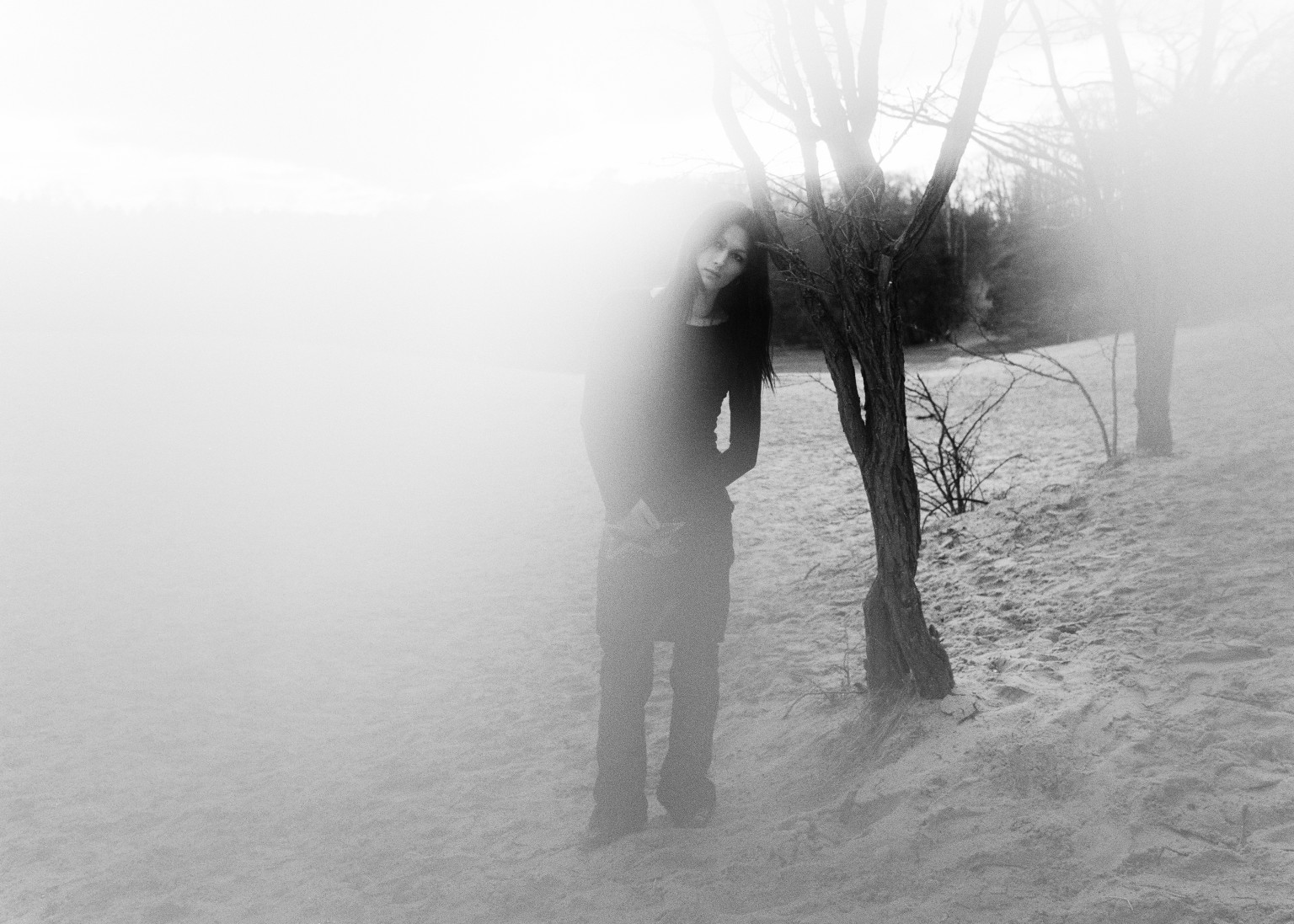
© Ellie Brown

»Music for me is: inevitable.« 

Ryong is a composer, artist & DJ that explores: Danish and Korean heritage, spirituality, embodiment, family and love, Ryong is also a member of the experimental pop band haloplus+. Across her releases, she draws on both ambient, noise and pop music, incorporating the sound of field recordings and spoken word. Having previously released on Why Be’s label Yegorka, and debuting on Posh Isolation with Isa Ryong, an 11 part work that explores transition and the anguish of complexity, Ryong has established herself as a unique artist in the experimental electronic music scene in Copenhagen.
 

in briefrelease
26.01.2025

She Makes the Music Vibrate Like a Living Organism

Astrid Sonne: »Great Doubt« 
© PR
© PR

When I first listened to the Danish violist, singer, and producer Astrid Sonne’s new album, Great Doubt, I honestly wasn’t quite sure what to make of it. I immediately noticed how extraordinary Sonne’s viola sounds on the album – such a powerful presence that it almost feels like a deeply complex living organism, breathing, feeling, and moving dramatically through the album’s nine songs.

My favourite track was without a doubt »Almost«, where Sonne’s fragile, subtly intense voice is accompanied solely by the viola’s minimalist pizzicato melody, which reminds me of a forgotten composition from Japanese new age pioneer Hiroshi Yoshimura’s masterpiece Green.

On most of the tracks, however, voice and viola are also joined by electronic rhythms, piano chords, and synth figures which, in contrast to the viola’s organic, vibrating sound, initially struck me as almost plastically artificial. To me, it sounded as if the viola and the electronics were being transmitted from two very different universes, unable to fully coexist. There was something about the contrast that felt slightly… uncanny.

Yet with repeated listens, everything begins to make sense. Sonne’s coolly understated voice is the glue that binds the entire soundscape together, as if it itself exists in the porous space between the viola’s raw natural force and the electronics’ tamed purity. I like it more and more – and perhaps I may even come to love it. Great Doubt is an album that, despite its modest running time of just 26 minutes, demands immersion and reflection – and ultimately rewards the listener for it.

© PR

»Music for me is a highway hotel. Open 24 hours a day. There are no receptionists, and you are not given keys. You wander sleepily around the hotel's many corridors, from door to door. Some doors are ajar, others you have to pry open. Behind them all are rooms. Some are sparsely furnished, others are filled to the brim with dancing people. You can stay in there for a few minutes. Some rooms you return to. Many are a bit boring, others almost knock you over. What I like most is the ones I can't really orient myself in. The rooms where I have doubts about what is floor and what is wall. And what the furniture is actually used for. All the rooms fit together. You leave the hotel and drive on along the highway of life. A different person than when you arrived.« 

Anders Søgaard is a poet and professor of artificial intelligence and philosophy at the University of Copenhagen. He has written eleven books and more than 300 research articles. He has three children and lives in a housing community in Roskilde.

in brief
08.01.2025

Love and Poetry under Black Streetlights

Jørgensen/Botes: »Dråberne 5, 7, 8 og 11«
Marina Botes og Steen Jørgensen. © Isak Hoffmeyer

While many still sigh at the thought of seeing a full Sort Sol once again illuminate the dark grey Danish sky, the band’s eternal crooner Steen Jørgensen, together with his equally strong other half, pianist Marina Botes, has created music that is something entirely different – something deeper. And yes, I have seen words like »pretentious« and »boring« hurled at the duo, but none of that sticks to their new release, which consists of a series of intimate suites where Jørgensen’s spoken word is woven together with Botes’ magnificent piano playing. If the ambition is to build a bridge between the classical and the electronic, it succeeds convincingly.

As a lyricist who moves through the same pitch-black landscape as Jørgensen, I tip my hat to the strong poetic imagery that characterizes Dråberne 5, 7, 8, and 11 – especially on the album’s longest track, the dramatic »Hul – Dråberne 7«. As Jørgensen muses on the luminous melancholy of the inner city, the music becomes a transformation, a sphere of change made of ambient surfaces, muted strings, and a female vocal that slips in like a shadow—until the song rises in dramatic momentum, centering on the line »En nat i indre kvarter«.

The music is primarily grounded in piano-heavy terrain, where Botes’ keys find repose in muted pedal strikes and light strings. Only in rare moments do the compositions break free, as on the opener »Glemsel – Dråberne 5«, where chamber orchestra and jazzy breakbeats create a compelling and almost cinematic atmosphere.

Dråberne 5, 7, 8, and 11 is a seductive, inspiring, and downright sumptuous experiment in which the love between the two artists can be felt in every tone. If this is Jørgensen’s career winter, I will gladly accept more dark, warm moments.


in briefrelease
16.12.2024

A Riddle I Am Not the Right One to Solve

Abdullah Miniawy: »Nigma Enigma«
© PR
© PR

I believe I am not the right person to grapple with all the existential questions of faith and culture that the multidisciplinary artist and political experimentalist Abdullah Miniawy grapples with on his latest album, Nigma Enigma. The record is equal parts Arabic chant, folk music, and sound art, based on modular synths and field recordings. The Egyptian composer uses the album’s eleven abstractions as the soundtrack to what he himself calls »an Arabic opera of doubt and faith«. But as a non-Arab, lifelong atheist, it is difficult for this reviewer to fully engage with the big questions Miniawy poses in his mother tongue, while samples of crackling fires and layers of filtering create an otherwise enigmatic atmosphere that resonates well with the album’s title. As the music also functions as the soundtrack to an immersive video game, we are taken even further from familiar territory, given that the reviewer has not touched such things since Quakein 1992.

If one sets aside the search for meaning and allows oneself to be colored by the music’s immediacy, what emerges is a strongly conceptual, sonically accomplished work, in which Miniawy’s voice – most often chanting Arabic phrases from old folk songs – is interwoven with electronic noise. In particular, the transition from the beautiful two-part chanting on »Jayhano Al Kawahi« – with strong religious undertones – to the deeply anarchic noise vignette »Half a Year II«, featuring filtered sine tones and pounding bursts of bass noise, serves as an apt characterization of a minimalist piece of sound art.

Yet without being able to share Miniawy’s cultural and spiritual context, the album feels like a riddle I cannot solve. Like drinking an Irish coffee without the whiskey: the real praise is withheld. Nigma Enigma will speak to those who can relate to the spiritual and philosophical questions Miniawy raises, while others may experience it as a musical journey without fully understanding its destination.

English translation: Andreo Michaelo Mielczarek