Rune Glerup
15





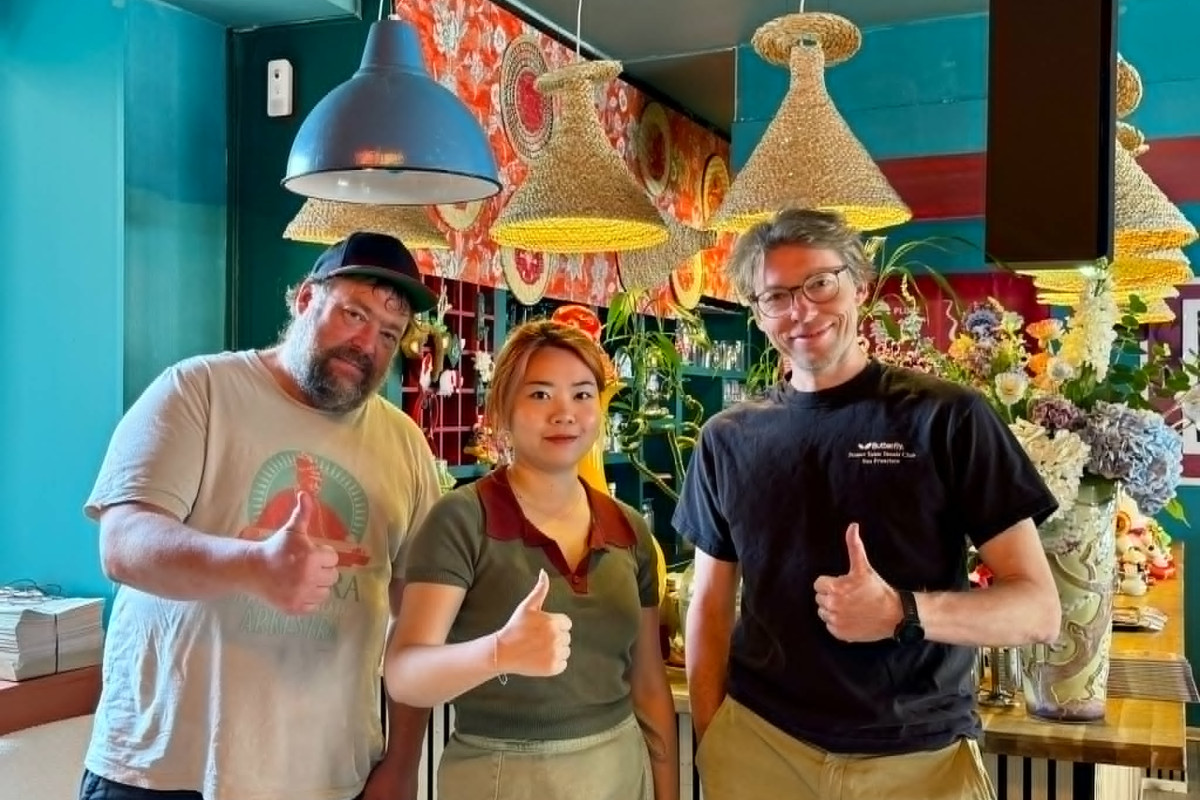
自由即兴创作比性爱更好! – »Free improvisation is better than sex.« According to drummer Kresten Osgood, the saying is attributed to Confucius. Whether the ancient Chinese philosopher ever uttered those words is doubtful. But the quote perfectly captures the spirit of one of the most unusual events at this year's Copenhagen Jazz Festival.
From 7–11 July, pianist Søren Kjærgaard and drummer Kresten Osgood will take over CC Taste on Amagerbrogade, performing daily from 2–4 pm among diners, dim sum and steaming hot pots.
For years, the two musicians have dreamed of taking free improvisation out of its familiar concert settings and into a place where audiences would least expect to encounter it. The idea emerged when they discovered an old upright piano in the restaurant, which has long served as one of their regular meeting places. Stephanie, the owner of CC Taste, immediately embraced the project.
Kjærgaard and Osgood are cousins who grew up together on Denmark's west coast and have been making music together since childhood. For more than 35 years, their duo has remained a constant thread running through collaborations with artists including Herb Robertson, Tim Berne, Thomas Morgan, Bent Jædig and the musician collective ILK. In recent years, they have toured as a duo in Estonia, Latvia, Finland and Norway.
»We've wanted for a long time to bring our music into places that aren't naturally predisposed to it, and to explore how the music affects an environment where people come to enjoy dim sum and have a lovely lunch,« says Kresten Osgood. »The owner of CC Taste loved the idea, and I think everyone involved is a little excited to see what happens.«
For Søren Kjærgaard, the residency format is equally significant:
»We're really looking forward to playing together in the same place for five consecutive days. That's quite rare in the world of free improvisation, where most performances are one-off concerts or ad hoc constellations. We share an enormous amount of experience and have a very deep musical relationship – yet there's always something at stake whenever we improvise together. We know each other inside out, while constantly seeking the unpredictability that comes from that familiarity.«
The restaurant will remain open throughout the performances, allowing audiences to enjoy lunch while listening to the music. The concerts take place daily from 2–4 pm, and all five performances will be recorded.

The sea is a powerful metaphor for the nature of identity – from stormy defiance to tranquil stillness, our individual traits drift in an eternally shifting ocean. On Original Spirit, French musician Les Halles drops anchor in the mutable waters of the mind, using pan flutes and dusty echoes as his compass.
The eight tracks are deeply rooted in the enveloping world of ambient music, and from the opening piece, »Angels of Venice«, the sound washes over the listener like gentle waves. Soft, bending synth textures accompany recurring flute runs, while echoes of the past flicker by like faded Kodak moments – faint glimmers of memory in a foggy inner landscape.
The word ambient can be traced to the Latin ambire, meaning »to go around«, and the genre is thus defined by music that »surrounds« the listener. Les Halles, also known by his real name Baptiste Martin, fully embraces this quality. The music is gentle, devoid of dominant melodies or rhythms – like a safe little bubble one can freely float in.
Like much ambient music, Original Spirit is free of lyrical frames of interpretation. However, the accompanying press text frames the album as a letter, written by Baptiste Martin during a disoriented period, including a stay in psychiatric care. As listeners, we’re invited to drift in a turbulent yet mirror-still sea of lost identities and lose ourselves in the warm current of consciousness the music creates. It certainly doesn’t break any ambient conventions – but it’s a pleasure to be swept away nonetheless.
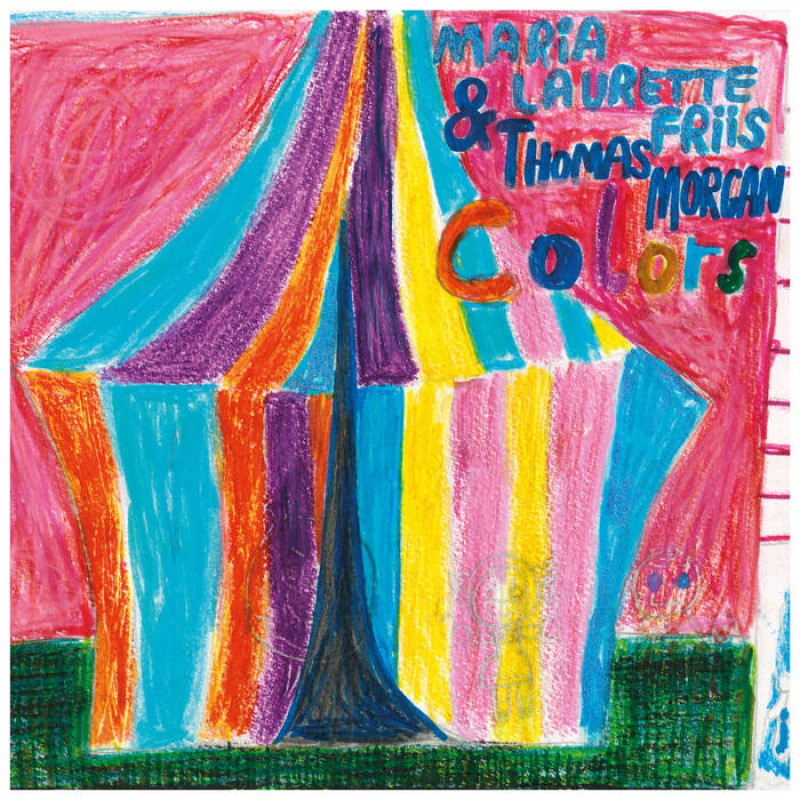
In the world of experimental music, it now takes quite a lot to be truly surprised – it’s a space where both treasures and old debts are often revisited. That’s why listening to Colors, the improvised duo album by Maria Laurette Friis and Thomas Morgan, feels like a fresh revelation. Pairing an experimental vocalist and composer (Friis) with an experienced double bassist (Morgan) and letting them improvise for three hours may not sound groundbreaking at first. Yet somehow, a rare and unique symbiosis arises between voice and double bass – a connection so special that one rarely hears anything quite like it.
Friis is a dazzling singer, and her wordless expressions draw on everything from Mongolian throat singing and jazz to Nordic darkness. She shifts effortlessly between pure singing and guttural sounds within a single improvisation. Morgan’s double bass provides an intriguing contrast, exploring the instrument’s outer edges without ever becoming unpleasant.
The three-hour recording session has been distilled into nine tracks spanning a total of 45 minutes, and the concept of using only voice and double bass is maintained throughout – despite both musicians’ backgrounds in vastly different musical expressions. The unique language that emerges is often both unsettling and deeply beautiful. When they give each other space – as in the seven-minute »Eight« – and when the bass plays alone, it’s impossible not to sway along, even without a proper beat. Colors proves that great art can still arise from nothing – in both the strange and the more familiar dialogues. That is exactly what Friis and Morgan achieve on this captivating postcard from another world.
English translation: Andreo Michaelo Mielczarek
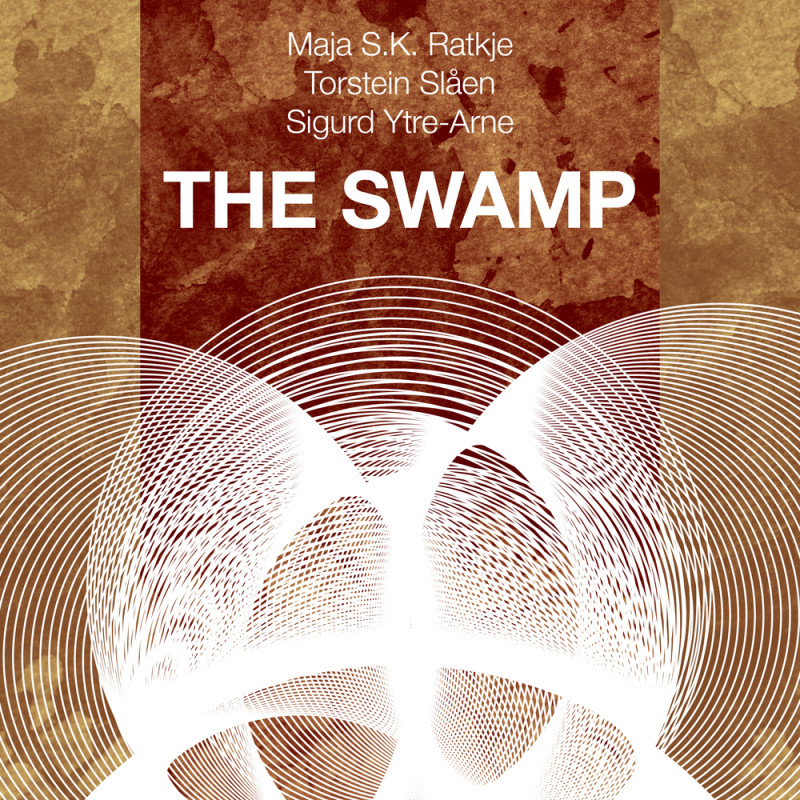
The term Dadaism must be used with caution – it easily risks becoming a cliché and trampling disrespectfully on its origins. Nevertheless, it’s hard to avoid Dada when listening to The Swamp, created by Norwegian experimental composers Maja Ratkje, Torstein Slåen, and Sigurd Ytre-Arne. The album is a 40-minute chaotic mirror of our times, shaped by merciless improvisation, noise drones, and Ratkje’s absurd vocalizations.
The music is raw, rancid, and deliberately un-beautiful – a constant stream of manipulated field recordings, reminiscent of a horror film foley studio. Bells, metallic clanks, white noise, and industrial sounds are warped together, driven by a syncopated, menacing rhythm and an underlying fuzz drone. Most fascinating is Ratkje’s voice, which appears as a riddle: is she singing in Celtic, Norwegian, or pure gibberish? The latter seems most likely and evokes the Dada poetry of Kurt Schwitters, particularly his 1932 Ursonate. At the same time, her vocal techniques dig deep into Nordic soil – conjuring the spirit of völva chants and Viking songs.
The combination of controlled noise and purposeful chaos elevates much of the album, with the opening track and the completely unhinged »Discomanic« standing out. The former is as close as the trio gets to something conventional; the latter borders on pure sound art. Only the two slower pieces – the seven-minute-long »Oligarchification« and »Lullaby for Trembling Hearts« – tend to drag a bit. Otherwise, the group manages to keep the material focused, sharp, and intensely trippy. It’s impressive how effectively it all works, even as the expression remains so relentless and challenging.
English translation: Andreo Michaelo Mielczarek
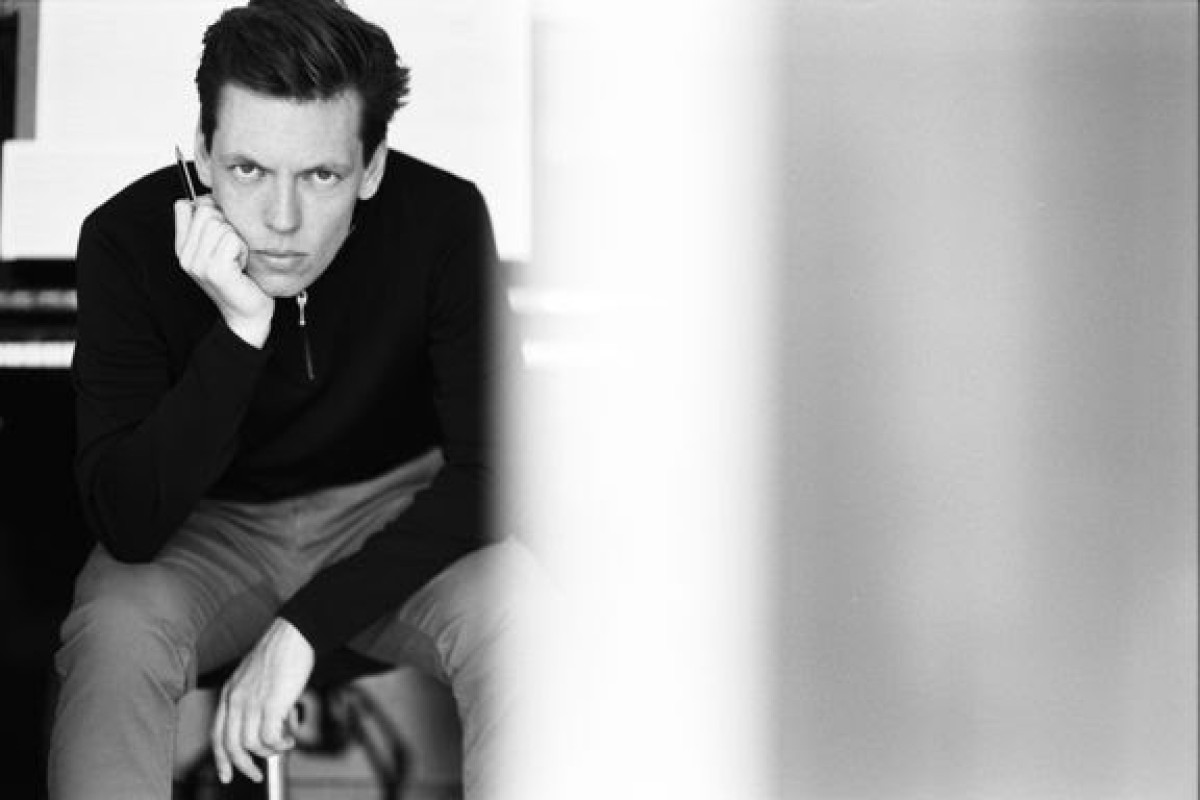
A string quartet consists of four players, and a clarinet quintet five, though the Danish composer Rune Glerup (b. 1981)’s newly recorded works for both ensembles would have you believe their ranks are vastly undercounted. The recipient of last year’s Nordic Council Music Prize for his violin concerto Om lys og lethed (About Light and Lightness), Glerup writes pieces for chamber and orchestra that are often characterized by their multidimensionality: a sonic idea will persistently recur in altered guises, for a sense that one is feeling around different facets of a physical form. Yet the two works on Perhaps Thus the End – brought to life by the impeccable Quatour Diotima and clarinetist Jonas Frølund – are just as potent a demonstration of expansive interiority as they are of surface area.
In the titular string quartet, whose seven movements are named for lines from Beckett’s late prose work Stirrings Still, long tones and galloping motives are seamlessly shuffled amongst the ensemble, generating such a sonority that the group seems to have doubled in size. The language is sometimes mechanical but never automatic, bending rather into balletic shapes. Glerup is a careful manager of texture, finding grace in unintuitive sounds through skillful layering – to speak merely of how, in a later movement, a harmonic pizzicato punctuates the string equivalent of vocal fry before the group pivots suddenly into stillness.
On the unexpectedly addictive »Still Leaning Towards this Machine«, which is surely among the few times a contemporary clarinet quintet has received that distinction, electronics magnify the ensemble through a subtle stuttering resonance. As a result, across three spunky movements, the group is occasionally transmuted into a sort of paranormal accordion. It’s a wonderfully weird effect that, just as weirdly, the score seems to deliver with a straight face – just one more satisfying surprise among many others on this excellent record.
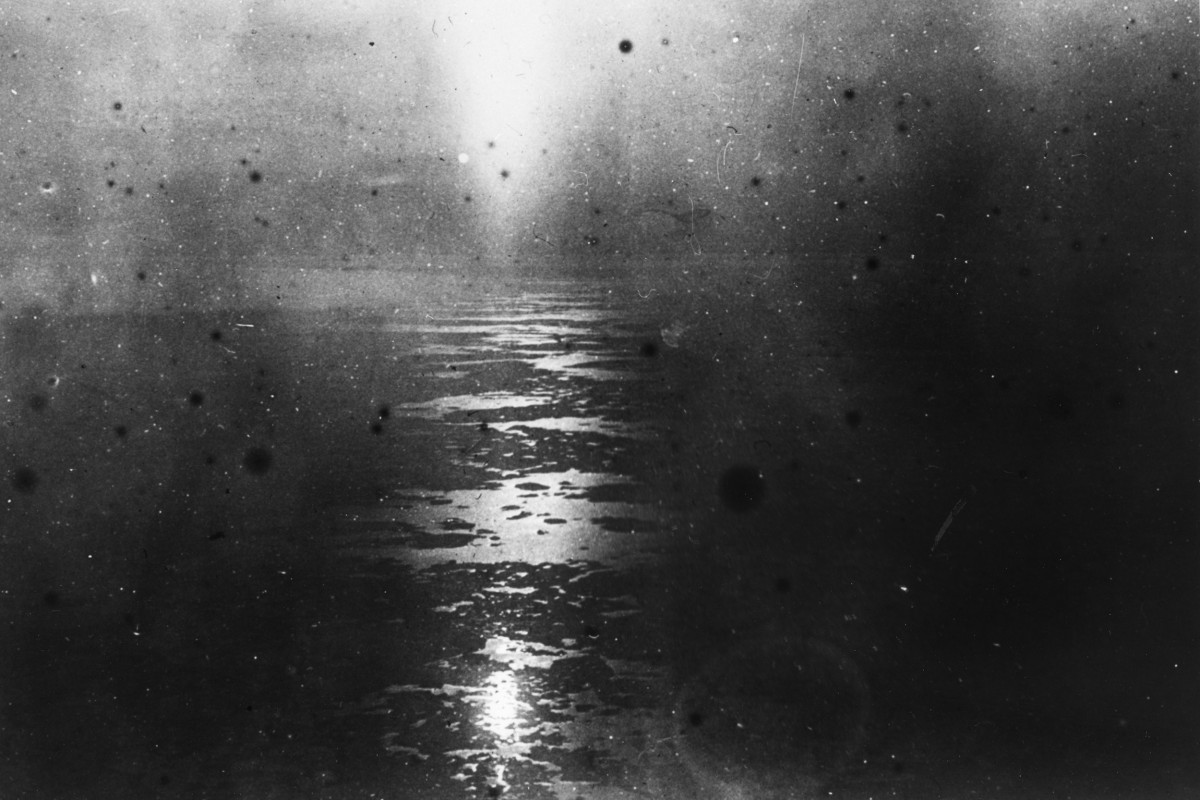
On his new album, Snowblind, Jacob Kirkegaard shifts his focus away from revealing the hidden sounds of our surroundings to instead depict a psychological drama. The inspiration: The Swedish polar explorer Salomon August Andrée, who in 1897 set course for the North Pole in a hot air balloon – a reckless journey that cost him and two others their lives, blinded by snow and the pursuit of fame.
Through 11 icy tableaus, Kirkegaard paints a portrait of the anxiety and doubt Andrée must have felt when the balloon crashed onto the pack ice east of Svalbard. For two months, the three men continued on foot until they reached the desolate island of Kvitøya – where they died a few weeks later, possibly poisoned by undercooked polar bear meat. By then, nature had long since revealed its hostility.
You hear all this on Snowblind. First, the balloon takes off in an air current that elegantly balances on the edge of suffocating dark synths and a heartbeat rhythm, while a metallic screech – reminiscent of a heroic electric guitar – subtly signals doubt: Was Andrée a hero or a villain? Shortly after, we land in a vast nothingness of scraped metal. The shockwave transforms into mischievous, squelchy synth footsteps as desperation and hallucinations grow: Was that a ship's horn I heard? A lifeline?
But no. Silence wins. The icy water rattles like a hungry beast. The hardboiled psychological drama leaves no room for hope, only a chance to stare at your end right in the face. Had Kirkegaard been a truly ruthless portraitist, we might have descended even further into darkness and disorientation, but his weightless ambience still leaves its marks in the snow.
English translation: Andreo Michaelo Mielczarek