© Guannan Kang
© Guannan Kang

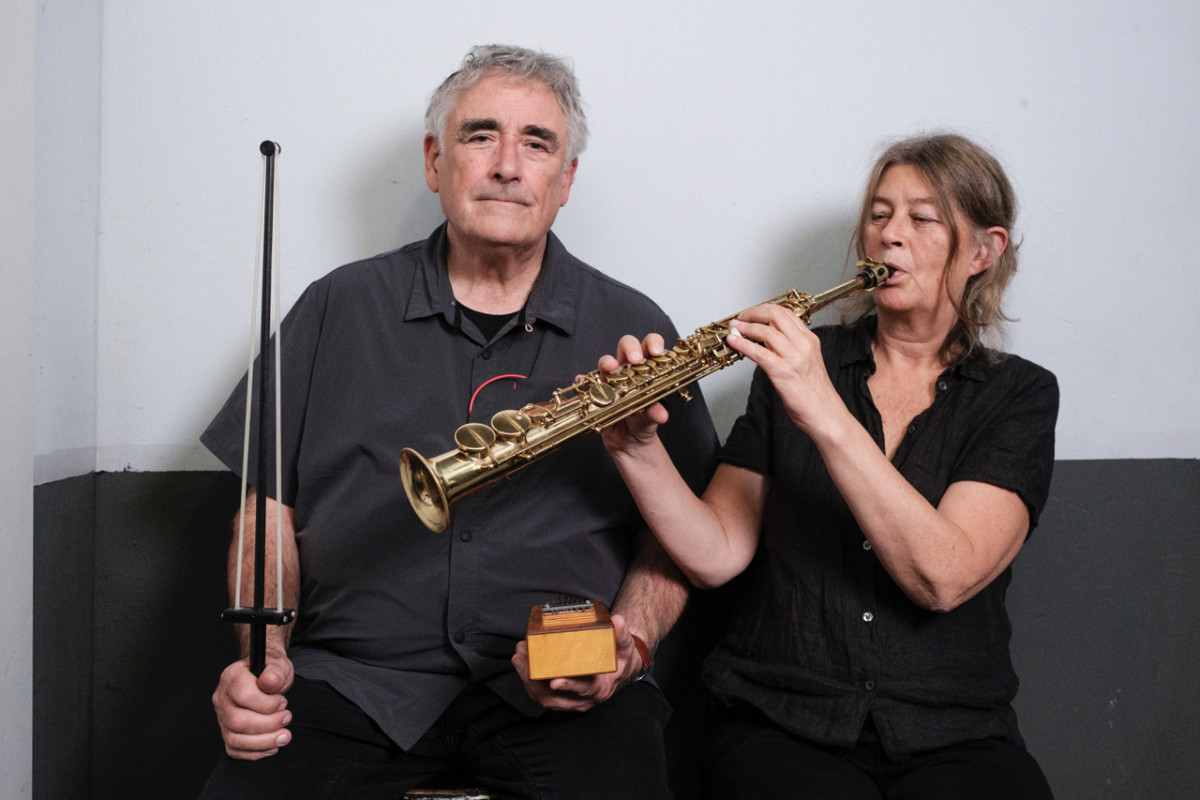
自由即兴创作比性爱更好! – »Free improvisation is better than sex.« According to drummer Kresten Osgood, the saying is attributed to Confucius. Whether the ancient Chinese philosopher ever uttered those words is doubtful. But the quote perfectly captures the spirit of one of the most unusual events at this year's Copenhagen Jazz Festival.

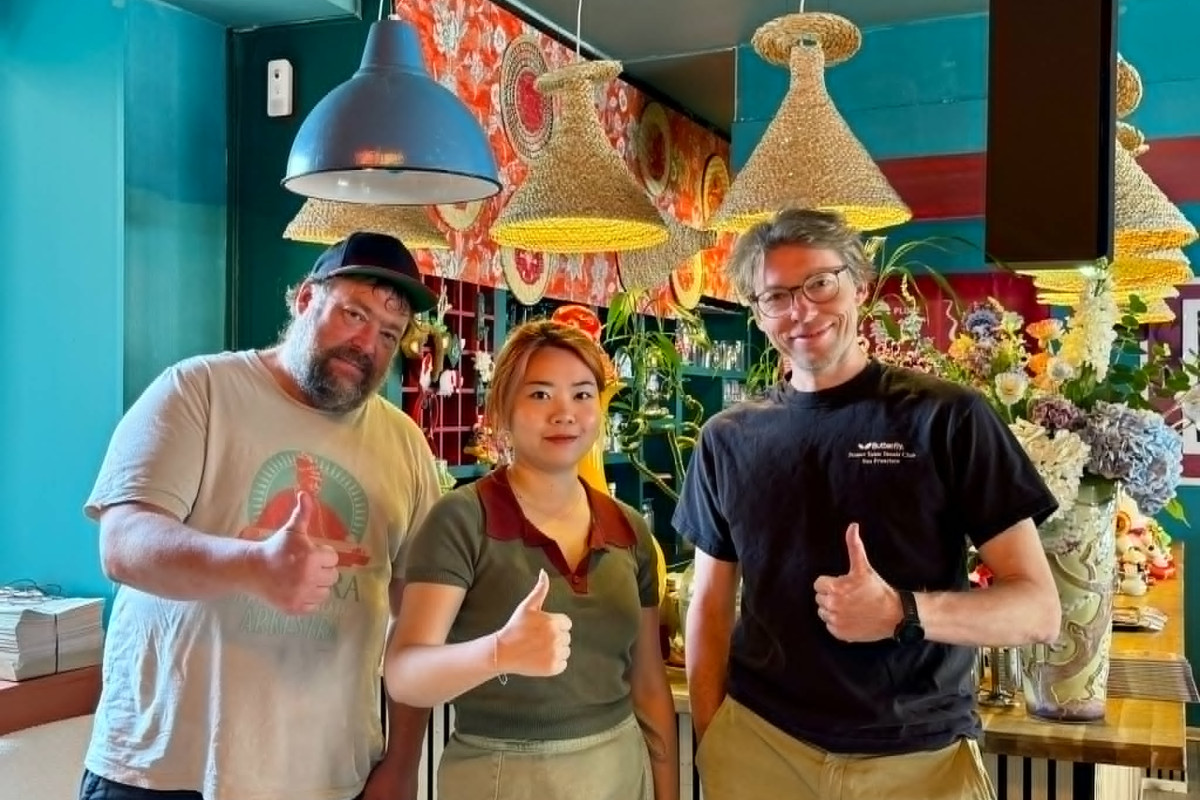
From 7–11 July, pianist Søren Kjærgaard and drummer Kresten Osgood will take over CC Taste on Amagerbrogade, performing daily from 2–4 pm among diners, dim sum and steaming hot pots.

For years, the two musicians have dreamed of taking free improvisation out of its familiar concert settings and into a place where audiences would least expect to encounter it. The idea emerged when they discovered an old upright piano in the restaurant, which has long served as one of their regular meeting places. Stephanie, the owner of CC Taste, immediately embraced the project.

Kjærgaard and Osgood are cousins who grew up together on Denmark's west coast and have been making music together since childhood. For more than 35 years, their duo has remained a constant thread running through collaborations with artists including Herb Robertson, Tim Berne, Thomas Morgan, Bent Jædig and the musician collective ILK. In recent years, they have toured as a duo in Estonia, Latvia, Finland and Norway.

»We've wanted for a long time to bring our music into places that aren't naturally predisposed to it, and to explore how the music affects an environment where people come to enjoy dim sum and have a lovely lunch,« says Kresten Osgood. »The owner of CC Taste loved the idea, and I think everyone involved is a little excited to see what happens.«

For Søren Kjærgaard, the residency format is equally significant:

»We're really looking forward to playing together in the same place for five consecutive days. That's quite rare in the world of free improvisation, where most performances are one-off concerts or ad hoc constellations. We share an enormous amount of experience and have a very deep musical relationship – yet there's always something at stake whenever we improvise together. We know each other inside out, while constantly seeking the unpredictability that comes from that familiarity.«

The restaurant will remain open throughout the performances, allowing audiences to enjoy lunch while listening to the music. The concerts take place daily from 2–4 pm, and all five performances will be recorded.


© Simon Bendix Borregaard
»Music for me is a constant movement (in me). It is a constantly changing song in my head. Music can be calming and uplifting, and it can give me answers that I didn’t know existed. Music guides me through life – whether it is the biggest and best moments of my life, or difficult periods. Music is also a community where new thoughts and ideas can come to life. Community is not a competition, but a way to move forward together.« 
 
Troels H. Sørensen is the booking and program manager at the Skråen venue in North Jutland. He is a former manager at 1000Fryd. Together with Casper Clasen, he runs the Lasher Agency and is responsible for the Lasher Fest festival, among other things. Sørensen plays in the band Vægtløs and has previously been in various bands from the Aalborg underground and has released records through his cooperative record label 5FeetUnder Records.


© Clemens Schmiedbauer
»Music for me is osmotic refuge.«
 
Jungstötter is the solo project of Berlin-based songwriter and musician Fabian Altstötter, whose sounds linger in lyrical softness and formal fragmentation. Using voice as a centre point, as an axis that hinges off an assembly of instrumental experimentation, his work pulls together shifting lyric compositions with textured layering, and whispered moments of release. 
 
Jungstötter has released two albums on [PIAS], and has played shows across Europe, at renowned venues and festivals includingVolksbühne, Silent Green and the Zeiss Major Planetarium (all Berlin), Kampnagel (Hamburg), the Nuremberg State Museum of Art and Design, Palac Akropolis (Prague), Desertshore Festival (Vienna), and more. He’s supported acclaimed acts including Owen Pallett (Final Fantasy, Arcade Fire) and Petra Hermanova. 
in briefrelease
29.05

Gintė Preisaitė Turns Doubt into Music

Gintė Preisaitė: »Instruments of Forgetting and the Singing Bone«
© Lukas Mykolaitis
© Lukas Mykolaitis

You increasingly encounter Gintė Preisaitė in different contexts and under different names – solo as Baraboro and as part of the trio Treen. With Instruments of Forgetting and the Singing Bone, the Lithuanian-Danish composer releases her first album under her own name, and it certainly feels like her most personal work to date.

Above all, this is because Preisaitė sings on seven of the album’s eight tracks. She treats her voice as an instrument equal to all the others, and although the singing is lyrical, she primarily uses it to create texture, depth, and contrast. On »Summary Saint Mary«, for instance, layers of vocals in different registers intermingle with scraping background noise, rapid pulses, resonant bass, and a multitude of sounds of both digital and analog origin. It feels refreshingly fragmentary – a willingness to play with uncertainty. Not everything coheres, yet it is precisely this lack of cohesion that makes the music feel alive and compelling.

Only on »Nippon Dreams« – a dense collage of percussion, samples, and field recordings of Japanese voices – is Preisaitė’s vocal absent. And it is only then that one realizes how essential it has been as a point of orientation throughout the album. Its absence leaves a void that underscores the duality Preisaitė works with: the music feels both intimate and cool, present and distant.

Instruments of Forgetting and the Singing Bone does not provide many answers. Instead, it becomes yet another fascinating piece in the puzzle of Preisaitė’s singular oeuvre.

in briefrelease
28.05

A Violinist with Fire in His Bow

Darragh Morgan, Ulster Orchestra & David Brophy: »Spin – New music for Violin & Orchestra from Northern Ireland«
© Brian Morrison
© Brian Morrison

There is nothing quite like true enthusiasts. They champion composers and works that might otherwise have remained dormant. Here we have the exuberant violinist Darragh Morgan, who since the age of fifteen (!) has promoted and performed contemporary music. He knows what works and has a keen instinct for new pieces and composers – especially on this album with the not exactly catchy title Spin – New Music for Violin & Orchestra from Northern Ireland. Four relatively recent violin concertos, all centred around Morgan as soloist. Two of them are dedicated to the musical firebrand himself.

There is fire in Brian Irvine’s violin concerto À mon seul désir from the very beginning, where sparkling motifs and riffs erupt everywhere. Almost too much energy and activity – but it works, and all the fierce gestures are carefully balanced. The movement is titled »With a big life embracing energy«. Concrete and descriptive – the Irish leave the grand spheres of abstraction to the contemporary music scene in Central Europe. I have replayed the dramatic climax of the second movement several times out of sheer enthusiasm, and the entire concerto (which lasts only fifteen minutes) ends with angelic beauty on Morgan’s highest, finest strings.

Ryan Molloy’s three-movement violin concerto, stretching beyond twenty minutes, by contrast tends to drift somewhat aimlessly, although the final movement reaches a strong level. Bill Campbell’s Swim is unmistakably Irish in tone throughout, conjuring images of rolling fields and the proud Irish landscape. Midway through the quarter-hour work, Darragh Morgan delivers a heartfelt and expansive solo cadenza. 

Fortunately, Frank Lyons’s Spin 3 is also a small gem, leaving the listener uplifted by this new Northern Irish music performed by the Ulster Orchestra and the fascinating Darragh Morgan, whose deep personal dedication gives so much to the music.

English translation: Andreo Michaelo Mielczarek


in briefrelease
25.05

Ecstasy After the Party

Olof Dreijer: »Loud Bloom«
© PR
© PR

With the debut album Loud Bloom, Olof Dreijer – best known from The Knife – comes across as someone who never quite realised the party was over. Or perhaps realised it before everyone else did.

For years, club music has been absorbed into popular culture and its aesthetic vocabulary – imported into the pop song as energy, irony, and texture through artists like Charli XCX, PC Music, and the entire hyperpop complex. On Loud Bloom, the opposite happens. This is not club music disguised as pop, but pop music subjected to the temporality of the club: circular, lingering, and uninterested in quick release.

Dreijer understands something essential about repetition – the melodies are catchy without being insistent. »Rosa Rugosa«, »Plastic Camelia«, and »Cassia« are instantly memorable, yet the melodies never harden into slogans. The sonic palette is airy and almost devoid of chordal surfaces. Steel drums, gleaming synth figures, pitched tom-toms, and sub-bass drift lyrically through the music, while castanets and cowbells flicker at the edges. Even the vocals function more as texture than as centre.

The album feels constantly in motion, as though its melodies are being refracted through prisms that continuously produce new luminous surfaces. On »Lantana«, tones drift away from their point of departure like blurred watercolours – not quite microtonal, but with a sense of intonation as something fluid. Precisely for that reason, one occasionally misses an element of estrangement. In The Knife, Karin Dreijer’s voice functioned as a disturbing counterforce – androgynous, childlike, threatening. On Loud Bloom, the sonic world is more homogeneous and smoothed out.

Still, the album feels like an heir to the half-clubbed, half-pop kaleidoscopic computer music of the mid-2010s – albums such as Our Love by Caribou and In Colour by Jamie xx – music that dared to be melodic without the safety net of irony. Dreijer’s music believes in ecstasy as a gentle experience. It is music meant for dancing, yet somehow shy at the very thought of celebration.

English translation: Andreo Michaelo Mielczarek