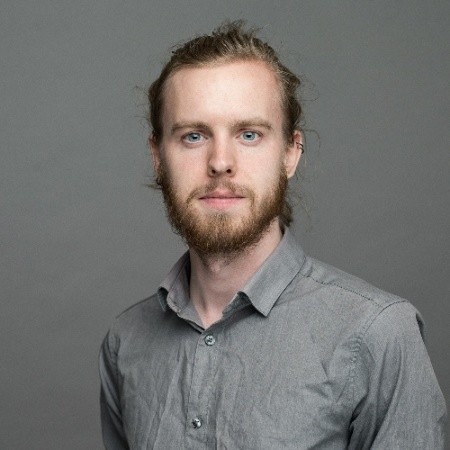
»Who ever said that music is ‘just’ music? To me, it is anything but that: an urge to understand and explain it all. A piece of jewelry I wear every single day. A joy that can, at times, run deep. An ever-changing imprint of millions of stitches in my heart. A longing to disappear.«
Henrik Marstal is a musician, author, and music researcher. He holds a PhD in musicology, is a senior lecturer at the Rhythmic Music Conservatory, and frequently appears in the media as an expert source on music. His areas of interest include contemporary music, such as electronic music. This winter, he will release both a new album with the pop group ibens and a book about Else Marie Pade, published by the British publishing house Bloomsbury.
Pludselighed og mumlen
Der var godt fyldt både i salen og på scenen, da Athelas uropførte Simon Christensens Carved in Stone, et værk, der begyndte brat med en trekamp mellem bækkenslag, akkorder i strygerne og ostinater i blæserne.
Det var svært at finde holdepunkter i musikken, men som jeg var ved at blive tabt, spillede bækkenerne en figur, der afsluttede værket så brat, som det begyndte – hvilket fik mig til at længes tilbage efter det organiserede kaos, jeg få sekunder forinden var forvirret over. Effektivt!
Desværre skabte Georg Friedrich Haas’ Remix (2007) primært en mumlen via instrumenterne. Som en radio, der var i stykker og kun fangede noget af lyden. Et klimaks for dobbelt slagtøj, der brød gennem virvaret, kunne ikke redde værket fra at føles langt og uden retning.
Man manglede Kristine Tjøgersens klaverkoncert, der udgik på grund af sygdom, da det kunne have skabt et bedre flow i koncerten.
»Music, to me, reflects human experience and allows us to find ourselves on an entirely existential level, beyond language. It feels like a shared realm to which we all have access. Music may be the art form that requires the least intellectual processing (although it can certainly involve that, too!). Because it consists of sound unfolding over time, we must recreate its colours and emotions within ourselves. This can happen rapidly, as if we were possessed by a force from outside. Music contains many layers of codes to which we relate in both similar and different ways. Some of these codes, such as pulse, resonate with unconscious levels within us that date back to prehistoric times. Other layers, such as familiar musical references, speak to the modern, cultivated human being. This interplay makes music uniquely stimulating! In cultural policy discourse, art is often reduced to an instrument for something else (which it certainly is and can be, too). In doing so, we forget art’s intrinsic value.«
Solveig Sørbø is a composer, music producer and artist who creates classical music and alternative pop. She composed the music for the documentary Hans pluss Liv (NRK), and a piece from the film was later performed by KORK (the Norwegian Radio Orchestra). On the occasion of the 2026 solar eclipse, she composed an orchestral work connecting Dante’s metaphysics with the physics of celestial bodies.
Solveig has previously worked in academia on innovative projects such as MusicLab (the edition featuring DSQ was named Event of the Year by DR), as well as as a radio journalist and presenter for NRK and radiOrakel. With a methodological approach to art, Solveig seeks to create music that moves people.
Her critically acclaimed opera Heroin chic, with a libretto by award-winning author Maria Kjos Fonn, premiered at the Classix Festival in Romania in 2025 and received its Norwegian premiere at Parkteatret in Oslo in February 2026. Following this, Ballade dubbed her »Music’s Klæbo«. Solveig is currently working on an opera based on Ibsen’s The Wild Duck, among other projects, and preparing a concert with the band Naturhistorisk.

»For me, music is a kind of secret path – a gateway to emotions, thoughts, and ideas that might otherwise be difficult to access. It serves as a shortcut to daydreaming and creativity – to those moments when I feel most connected to my own humanity and that of others. Through music, my own life intertwines with the artist’s, and together we create something entirely new.«
Kristoffer Møllegaard holds an MA in Russian Language and Culture from the University of Copenhagen (2017), with a specialization in future speculation within Russian art and philosophy. He writes regularly about Russian culture and, in his spare time, is active as a visual artist and amateur saxophonist. He has been a contributor to Seismograf since 2020.
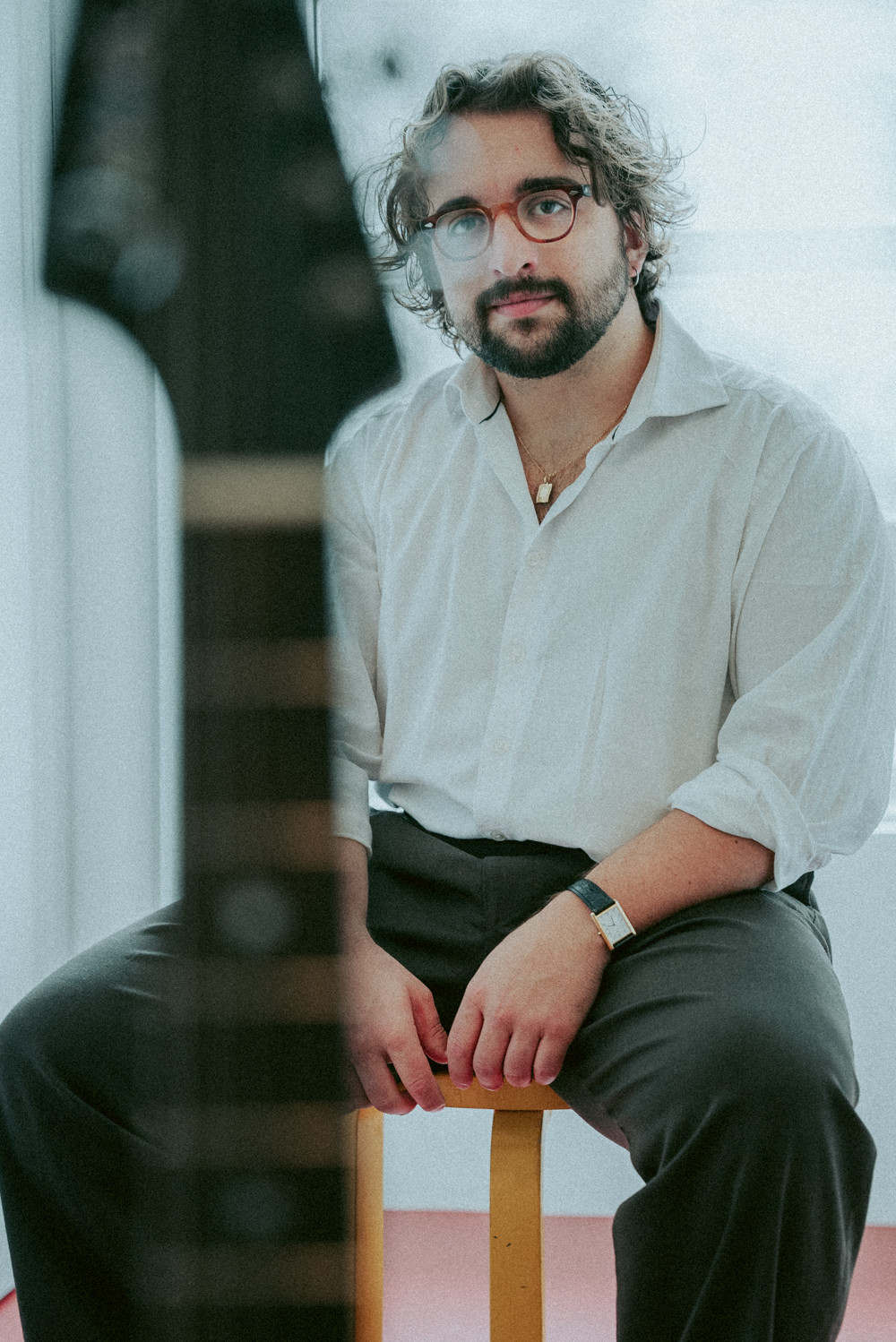
»Music is like a black hole that sucks you in and shoots you out on the other side of the universe.«
Francesco Rista is a guitarist working across classical and electric guitar. His recordings have been reviewed by international music magazines and broadcast on BBC and RAI Radio 3. After studying at the Royal Danish Academy of Music and Lund University, he focused on studio recordings, exploring guitar repertoire from the Baroque and Romantic periods to contemporary music, as well as the instrument’s varied tonal possibilities. Rista is currently based in Iceland, where he teaches guitar, composes music, and collaborates with contemporary composers.