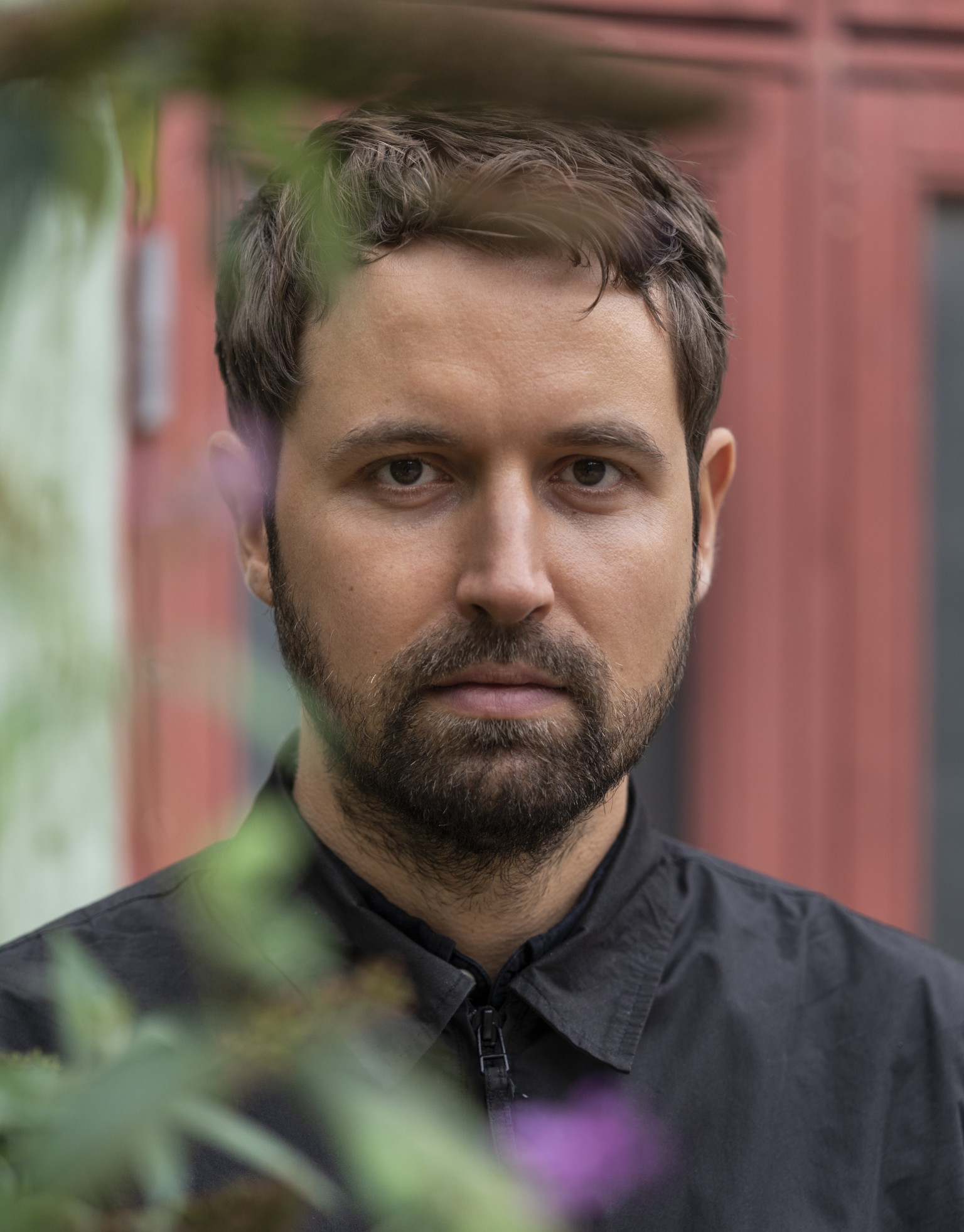
Mads Emil Dreyer
»Music to me is – having spent a lot of time listening, composing, and thinking about it – still, essentially, a mystery.«
Mads Emil Dreyer is a Danish composer working within the field of electroacoustic music.






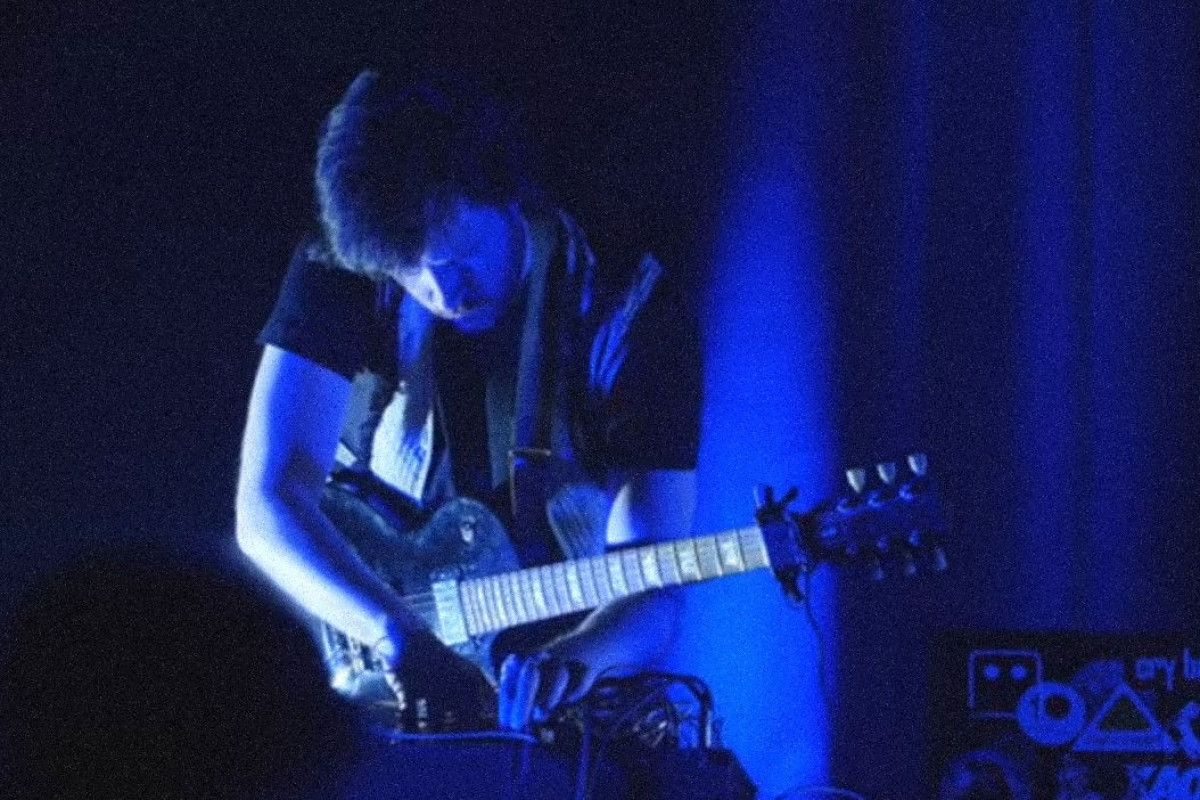
Schou is a powerhouse – unafraid to try new things, push himself in new directions, and pull us all along with him. We sorely need this energy, and we are lucky to have Schou and his do-it-anyway attitude.
But sometimes do-it-anyway needs tempering a little. Schou spoke about how he prepared this concert without guidance from his teachers. Brave, but I missed a guiding hand, a sharper focus. Both concerts were too long, and not always coherent. I sensed an artist who has defined himself by who he isn’t, but not yet by who he is.
Still, there were glimpses of a unique personality. Stefan Prins’ Generation Kill was an odd choice to start a debut concert with – Schou’s back was facing the audience, and the piece did little to highlight his skills as a performer (I also hated the piece, but that’s a personal matter). So I’m going to pretend that the concert started with Johannes Kreidler’s Guitar Piece – a vile little video-nasty to which Schou fully committed. A perfect manifesto – the absolute nerve of presenting two years of soloist class education by eating your guitar. I wish we’d had more of this playfulness.
But the energy sagged with a disparate selection of pieces that seemed more like a composer class concert than a presentation of a fresh artistic profile. Props to Schou for this – using your debut concert to focus on younger composers is bold, and should be celebrated. I just wish we’d had more Schou. My highlight was Emil Vijgen’s Photobooth Study, where Schou got to engage with his instrument in a different way, let loose a little, and be a soloist.
Schou may present himself as a force of nature, and he is, but there is an air of sensitivity (reticence, even) to his presence that does not always match up with the pieces being performed. Rob Durnin’s What, de facto could have benefitted from some more ‘fuck you’ attitude – the performance was oddly shy.
The late-night concert’s improvisation was fun: it’s always a joy to see Marcela Lucatelli and Henrik Olsson improvise (although Schou was the clear third wheel). However, the concert was overlong, and did not add much to Schou’s profile. I get that he wanted to show more sides of himself, but, again, it came at the expense of focus. Replacing Esben Nordborg Møller’s bloated Drones with Sarah Nemtsov’s lounge-jazz tinged Seven Colours from earlier would both shorten the concerts and sharpen the intention.
But these things are matters of polish. Schou is a rare and exceptional artist, and deserves accolades for his work and for these concerts. With more confidence and time to refine his vision, there is no doubt that Schou will be an essential fixture on the new music scene for years to come.

On Kaikō – the trio Treen’s second release – saxophonist Amalie Dahl, pianist Gintė Preisaitė, and percussionist Jan Philipp demonstrate confidence, mutual trust, and a distinct musical adventurousness. The opening track »Hylē« unfolds with rattling percussion and strikes seemingly aimed directly at the piano strings, stumbling forward over an underlying drone. The saxophone cuts in with phrases that sound at once admonishing and bewildered. Nothing feels meticulously calculated; instead, the music is carried by a keen awareness of the three musicians’ individual voices within the shared soundscape.
The same basic formula unfolds across the album’s three other pieces, yet always in new variations. On »Kinetic«, Dahl’s saxophone emerges with much greater weight, its slowly growing crescendo mirrored and challenged by Preisaitė’s piano. Improvised music can often slip into polite holding patterns, with the musicians taking turns in the spotlight – but not here. Dahl, Preisaitė, and Philipp appear as three drifting islands without anchors, propelled by their own currents yet inexorably drawn in the same direction. The result is both sudden shifts and an organic flow that can pull the listener into a trance, if one surrenders and simply lets the sound wash over.
It is precisely the trust between them that allows the three to play freely, without fear of leaving or losing each other. In doing so, they create a momentum that is hard to resist – whether one chooses to let the islands drift past or to float along in their current.
English translation: Andreo Michaelo Mielczarek

The first time I heard the title of this opera, I was reminded of Franz Kafka’s grotesque short story In the Penal Colony (1914–19), in which a prisoner is sentenced to have his punishment – a moral admonition – engraved into his skin, after which he is meant to feel what it says. In Written on Skin, which premiered in 2012 and has quickly become something of a modern classic in opera houses around the world, the writing on the skin is instead the caress of a young illustrator, who in reality (!) is an angel. The story is set in the 13th century and appeared in Boccaccio’s collective narrative The Decameron in the following century, but it could just as well take place in a dystopian future.
In a land ravaged by war, violence, and terror, the illustrator is hired to create a book for a tyrannical and ultra-violent lord who, among other things, regards his wife’s body as his own private property. The illustrator/angel, however, enters into a passionate relationship with this wife, and all hell breaks loose. Naturally, they both die, and the lord is left alone with his bitter, useless victory, while the angel is resurrected and thus becomes the true victor – and perhaps a queer figure, as the voice type (countertenor) might suggest.
The Royal Danish Theatre’s production is highly convincing. Benjamin’s music roars and crashes, yet is at the same time curiously hushed in its markedly economical use of means. It is as hard as steel forks magically bent again and again, while the often very powerful volume inscribes itself onto the skin of the eardrums in silken script.
English translation: Andreo Michaelo Mielczarek
»Music to me is – having spent a lot of time listening, composing, and thinking about it – still, essentially, a mystery.«
»Music for me is a universal tool for opening myself for feelings. It may be anger. It may be happiness or sadness. Music may make you wanna dance or cry. But it never leaves you indifferent to the emotional load it brings. Good music, at least. Music may tell stories. It may as well be a background, or a soundtrack for the moment, for the day, for life. That being said, music for me is a company for everyday. And I’m quite lucky that it’s my company at work as well, I guess.«
Jan Janczy is a Polish journalist and radio host at Radio Nowy Świat. His main fields of professional interest are Northern Europe, international affairs and music. He interviewed among others 3x Grammy Awards winner Fantastic Negrito, Röyksopp, Alabaster DePlume, Archive, Trentemøller and Mogwai. In 2024 together with JazzDanmark, Kultur(a) and Radio Nowy Świat he released a podcast series devoted to the history of Polish-Danish jazz connections. He is a Swedish philologist by education.
»Music is inseparable from listening: a close, attentive act. It’s not about beauty, truth or even intelligibility, but connection. This intense, focused intimacy is where meaning and everything else begins.«
Simon Cummings is a composer, writer, and researcher based in England. His music centres on two areas, both of which blur abstract and emotional impulses. The first, explored in instrumental work, involves highly intricate algorithmic processes rooted in carefully-defined behaviours, in a bespoke approach that combines stochastic and intuitive methods to realise large-scale behavioural transformations. His electronic music typically begins with visual stimuli, used to sculpt time-frequency structures investigating the boundary between noise and pitch, reappraising what defines each and their boundaries. He is currently working on a song cycle for voice and electronics for Icelandic soprano Heiða Árnadóttir, to be premièred in 2026. His research is primarily long-form critical writing on contemporary music, published on his website 5:4, as well as in assorted online and print publications.