Niels Rønsholdt
51







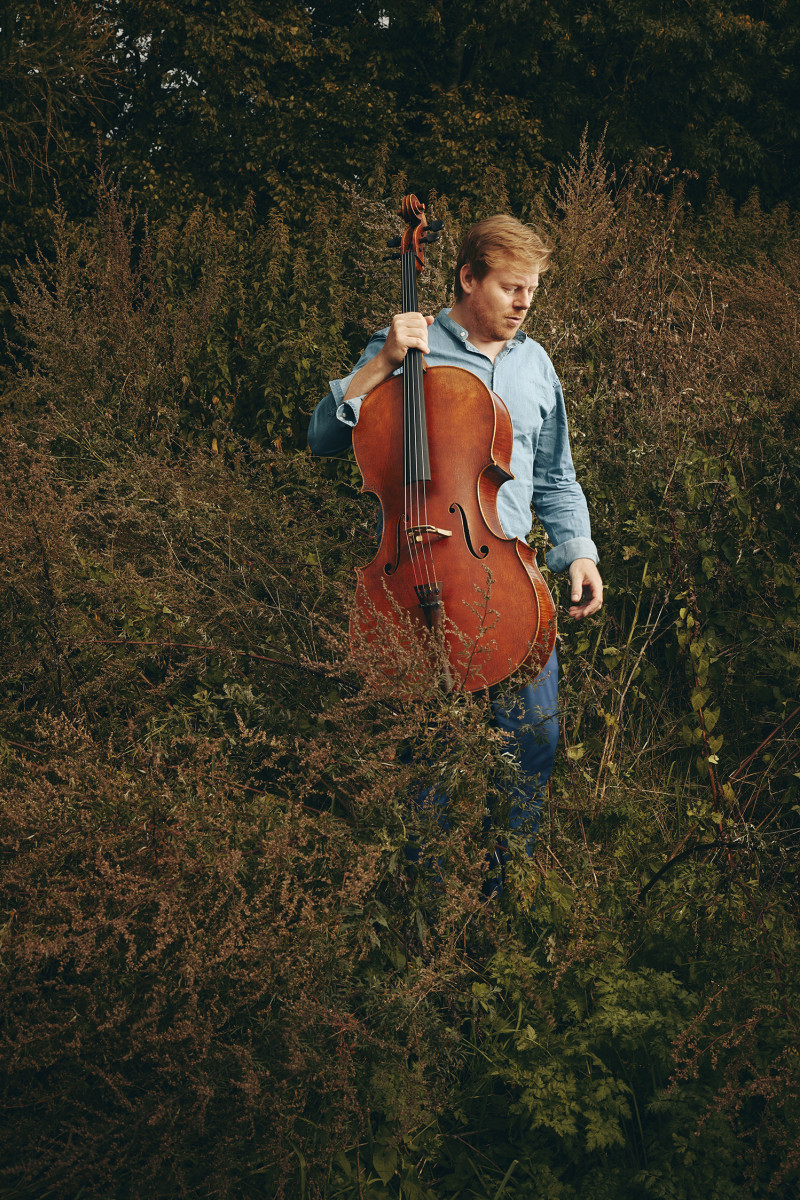
Lad os bare få fyret konfettikanonerne af med det samme. Carl Prisens hæder som årets komponist 2021 vejer ikke for tungt på skuldrene af Niels Rønsholdt, hvis du spørger mig. Den indspillede udgave af cellokoncerten Country – bestilt af hovedrollen Jakob Kullberg – er så vellykket, at den sagtens kan bære en triumfbue af statuetter og rosende ord.
Den rønsholdtske signatur er ikke til at tage fejl af. Det handler om performerkroppen. Kullberg vender celloen 45 grader, omfortolker den som westernguitar og synger inderligt om en oprindelsesløs tid i det erobrede Amerika. En følsom trubadur omgærdet af bittersøde molklange, der både smager af hjemløs saloonfolklore og fremmedgjort Broadwaymusical.
Rønsholdt vinder ikke nyt land i arbejdet med solistrollen, hvis altså man hører Country som et frigørelsesprojekt. I stedet hører jeg på indspilningen en nøjeregnende sammensætning af autenticitetsmarkører. Trubadurismen gør et godt modspil til institutionssolisten, der pligtskyldigt river og flår i strengene, som vi hører det på »Trees (I)«. På »We Don’t Ride the Same Horse« stivner disneydramaet i refrænet, idet prærieidentitetens blå tone falder på det mest karikerede 1-slag i affraseringen.
Den største fornøjelse er ikke Kullbergs hovedrolle men derimod det birollecast af samplestemmer, som dikterer flowet, klangen og det solistiske fokus i værket. Stemmerne skaber legeringen mellem komponist, orkester og solist: en sammensat krop. Autenticiteten kommer alle mulige steder fra, lader værket til at fortælle os. Den er ikke kun repræsenteret i det oprindelige, nærværende og skrøbelige.
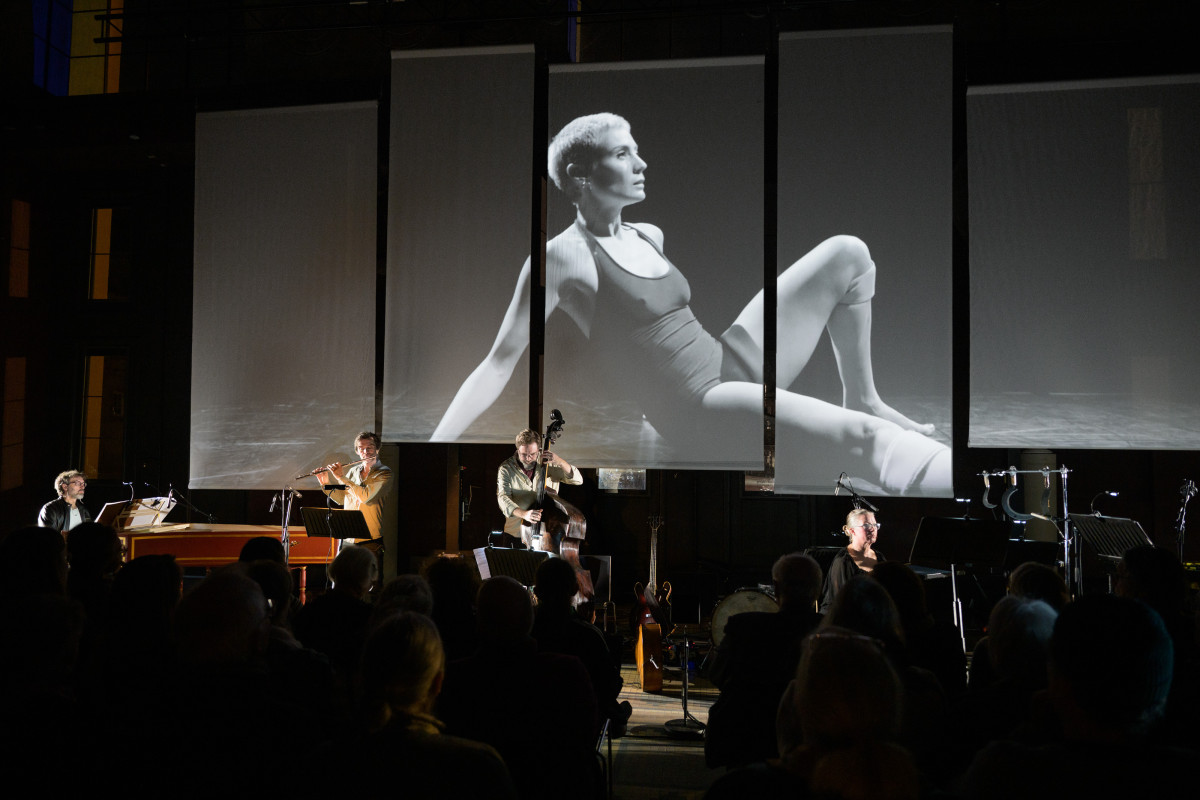
Tarantula is presented as a »documentary opera«, a genre created by Mauro Patricelli. The work takes its starting point in tarantism – the myth of the spider’s bite, which triggers madness and the ecstatic dance that heals – and intertwines it with A Doll’s House and Napoli by August Bournonville. The ambition is clear: to reflect female experiences of mania, oppression, and interpretation throughout history. The scenography reinforces the documentary approach. Five suspended screens display text, archival material, a dancer, and a professor character who didactically explains the work’s sources. At the same time, four musicians and the soprano Signe Asmussen stand in a row.
The music alternates between long, bare lines and repetitive, rhythmically complex figures clearly inspired by the tarantella. Yet this very complexity becomes a drawback: the reliance on click-track and sheet music lends a mechanical quality that clashes with the work’s purportedly demonic and physical energy. The main issue is the balance between explanation and interpretation. The professor figure constantly dictates the reading, undermining the work’s own critical ambitions – not least when it simultaneously critiques a »male lens«. The engagement with Ibsen also feels simplified, almost misread, functioning more as illustration than genuine interpretation.
The libretto – largely composed of historical sources and academic language – weighs heavily on the dramaturgy. When a letter about Ibsen’s knowledge of tarantism is elevated to a dramatic climax, it becomes difficult to grasp what is truly at stake. That the text is sung, projected, and handed out in libretto form only intensifies the sense of redundancy. In the end, one is left with the feeling of having attended a lecture rather than an opera. My final note before the curtain fell: Will this be on the test?
English translation: Andreo Michaelo Mielczarek

»Music for me is a place to meet both oneself and others in emotions. It is freedom, community, individuality, language and expression.«
Danish artist Alice Ai combines emotional depth with electronic impact and a punk energy. Her sound moves in the field of tension between the vulnerable and the confrontational – between the human and the synthetic. This duality is embedded in her name: »Alice« refers to curiosity and adventure, and »Ai« points towards the artificial and technological. Together they form the foundation for a contrasting universe that permeates both her music and artistic persona. Alice Ai will play at this year’s Roskilde Festival.
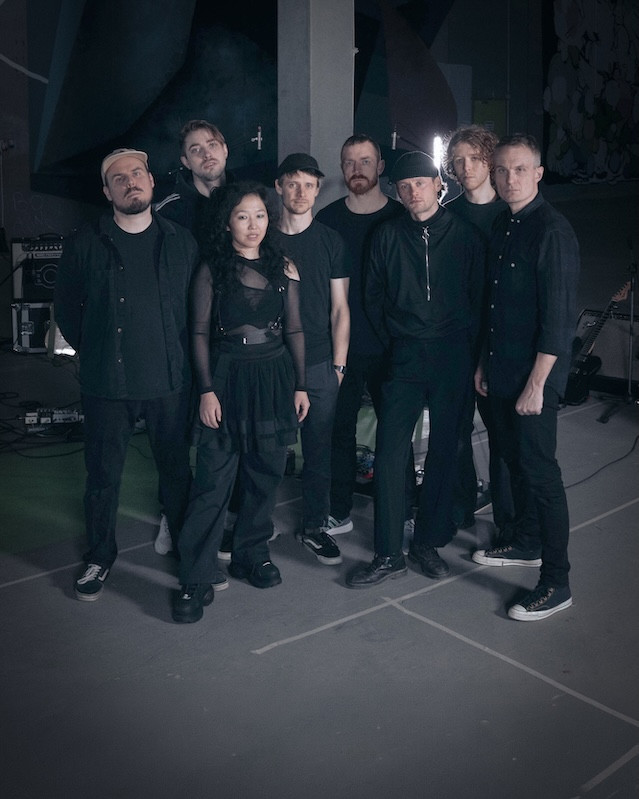
»Music is the pre-linguistic and pre-logical art form that allows us to access parts of consciousness that have not yet been thought about. You can sometimes become aware of what a song means several months later and have an inner problem resolve itself. Music is also collaboration and community. The Danish hard music scene is a fantastic place these years, where artists support each other and collaborate in all directions. In this way, music does not become a competition, but a community to constantly move forward.«
Two forces on the Danish underground scene, MEEJAH x HIRAKI, have joined forces on their release INTERWOVEN (Pelagic Records). The two bands belong to the Danish metal underground with common references such as The Body, The Armed, Chelsea Wolfe & Converge's Bloodmoon and Death Engine. HIRAKI released their debut album Stumbling Through The Walls in 2021 (Nefarious Industries]. Followed by ALTERER – Stumbling Through The Walls REWORKED in 2022. HIRAKI has toured Norway, supported The Armed in Germany and collaborated with Kh Marie. Danish-Korean MEEJAH released Queen of Spring in 2021, which was nominated for a Steppeulv, and recorded a KEXP Live Session during the Lunar New Year in 2024. Meejah has toured South Korea and supported Blonde Redhead and Jambinai. MEEJAH and HIRAKI have both played at A Colossal Weekend and have also crossed paths in the doom-rave collective John Cxnnor.
What does Britain sound like now? Like a country longing for ideals and meaning following its abandonment of any sort of common cause or experience. The catastrophe of Brexit looms large.
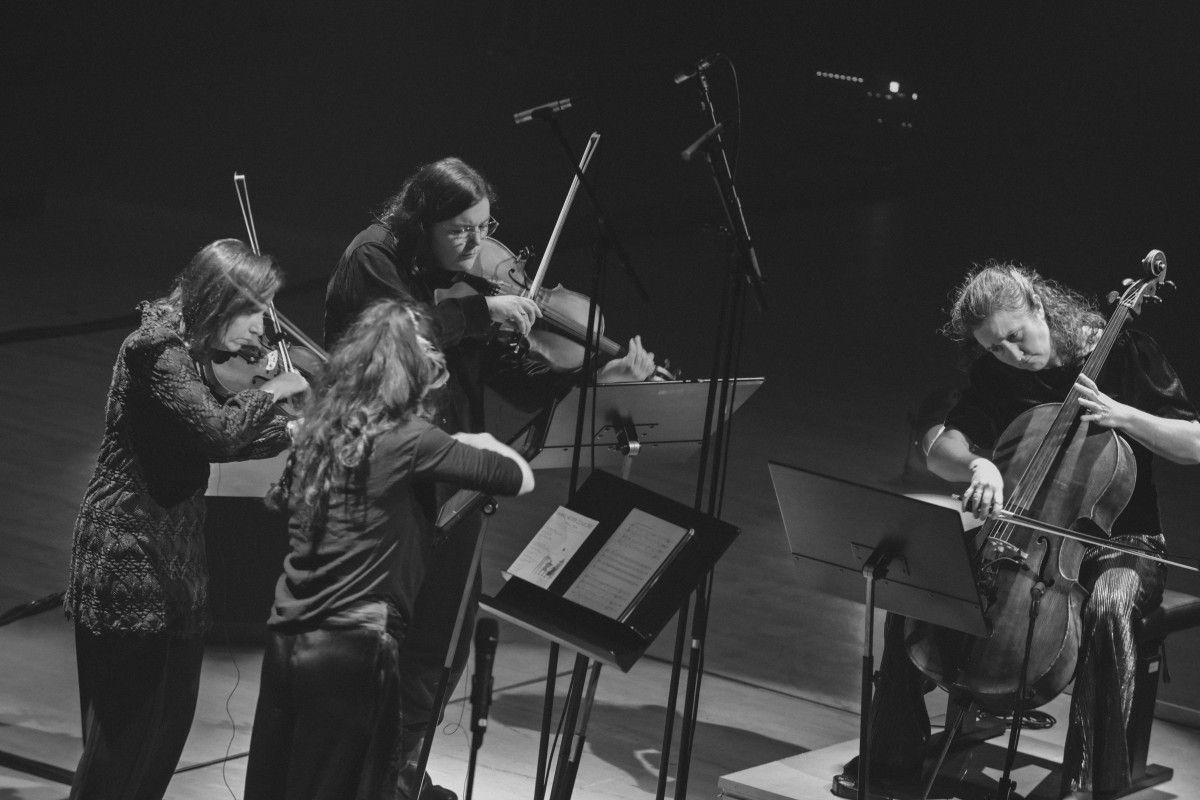
At least Britain still has talent. Manchester Collective is one of the nimble ensembles that have emerged from a British artistic landscape in which old infrastructural certainties no longer rule. It is a flexible, string-based group that plays with heart, soul and extraordinary technical finesse. Its ear for detail, sense of floating lightness and good taste in composers caught the attention of the Danish String Quartet, which presented the ensemble’s exploration of contemporary Britishness as part of its Series of Four festival.
All the composers featured see beyond thinking of innovation in terms of tonality. The wild hockets and reels of »Muttos« from Christian Mason’s Sardinian Songbook tap a typically English handling of folk material, as do Dobrinka Tabakova’s Insight and Jonathan Dove’s Out of Time. Those pieces, and Andrew Hamilton’s absurdist musical jigsaw puzzle In beautiful May, speak of loss as much as Anna Meredith’s Tuggemo shrieks a sort of plastic optimism.
The highlights were the half-lit remembrances of Jocelyn Campbell’s 3AM and Edmund Finnis’s String Quartet No 2. Finnis’s piece extends a salient, introspective form of British minimalism. The third movement, played without vibrato, seems to express a longing to exist beyond the confines it has prescribed for itself. Very British. Just as much so was the particular charm that flowed all night from MC-founder Rakhi Singh, who with her colleagues, played everything with astonishing, tender beauty.
James Black and Connor McLean, the two composers behind the tongue-in-cheek outfit The Ensemble That Loves You, are, as newcomers, not yet eligible to vote in Tuesday’s general election. They can, however, intervene – and that is precisely what they did on Saturday with a good old-fashioned podwalk.
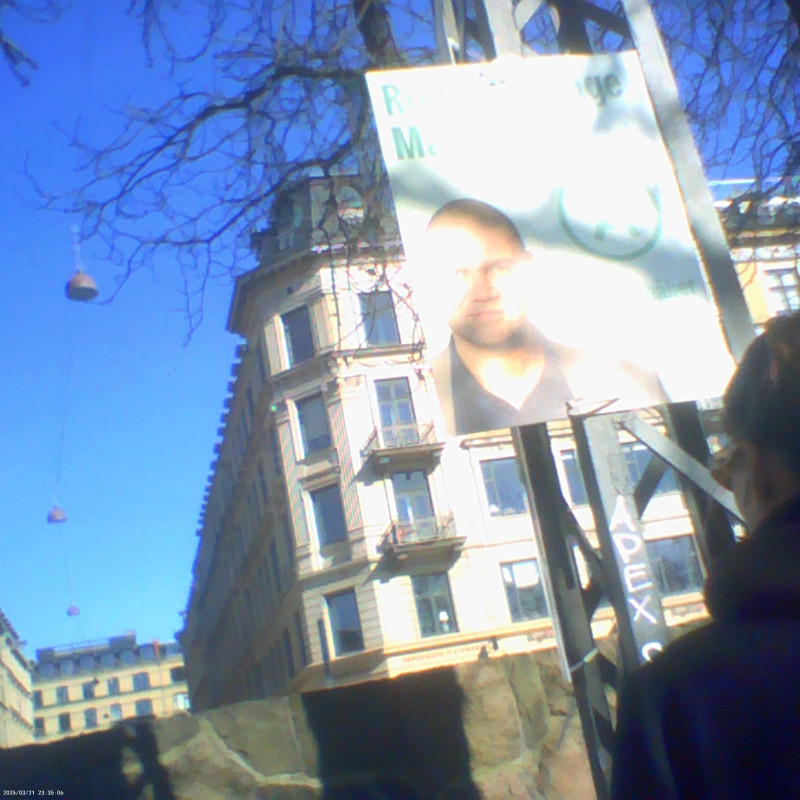
Over the course of three hours, you could stop by the pair, who had set up camp on the northern bank of Sortedams Sø in Copenhagen. There, you were handed a QR code, guided to the nearest campaign poster, and left with a SoundCloud link. »Alright, see you in 16 minutes,« Black said, and suddenly I was standing in front of political scientist Thomas Rohden of the Danish Social Liberal Party, confronted with his peculiar, toothless plastic smile.
»It’s important to connect with the election, so look the candidate straight in the eyes,« a synthetic female voice instructed as I pressed play. So I did. Stood still, listened, stared. Became a kind of artwork myself, I suppose – certainly looked like an idiot. And while the voiceover sent me onward to new posters, Black and McLean worked to complete the sense of alienation with brief sonic interventions.
The voice first took on a slight echo, then locked into a groove – »vote-for-me-vote-for-me-vote-for« – before dissolving into short-circuited 8-bit electronics, a faltering barrel organ, and flickering monologues over live jazz, mimicking an absurd media reality.
Gradually, the glossy, guileless eyes of the posters came to express just how artificial the election really is. »The person you are looking at is not real,« the synthetic voice concluded – remarkably agitated for a computer. »The party will replace you with a robot.«
Alright, alright. From the voiceless, one must hear the truth – wrapped in British political sarcasm and MIDI jingles: a light – and perhaps somewhat cheap – dish, but who has the energy for more after four weeks of campaigning? On my way back to Black and McLean, I saw a woman point at a poster of 26-year-old Maria Georgi Sloth, also from list B: »She gave me a piece of chewing gum down at the station.« And just like that, the election was decided.
English translation: Andreo Michaelo Mielczarek