Niels Rønsholdt
51







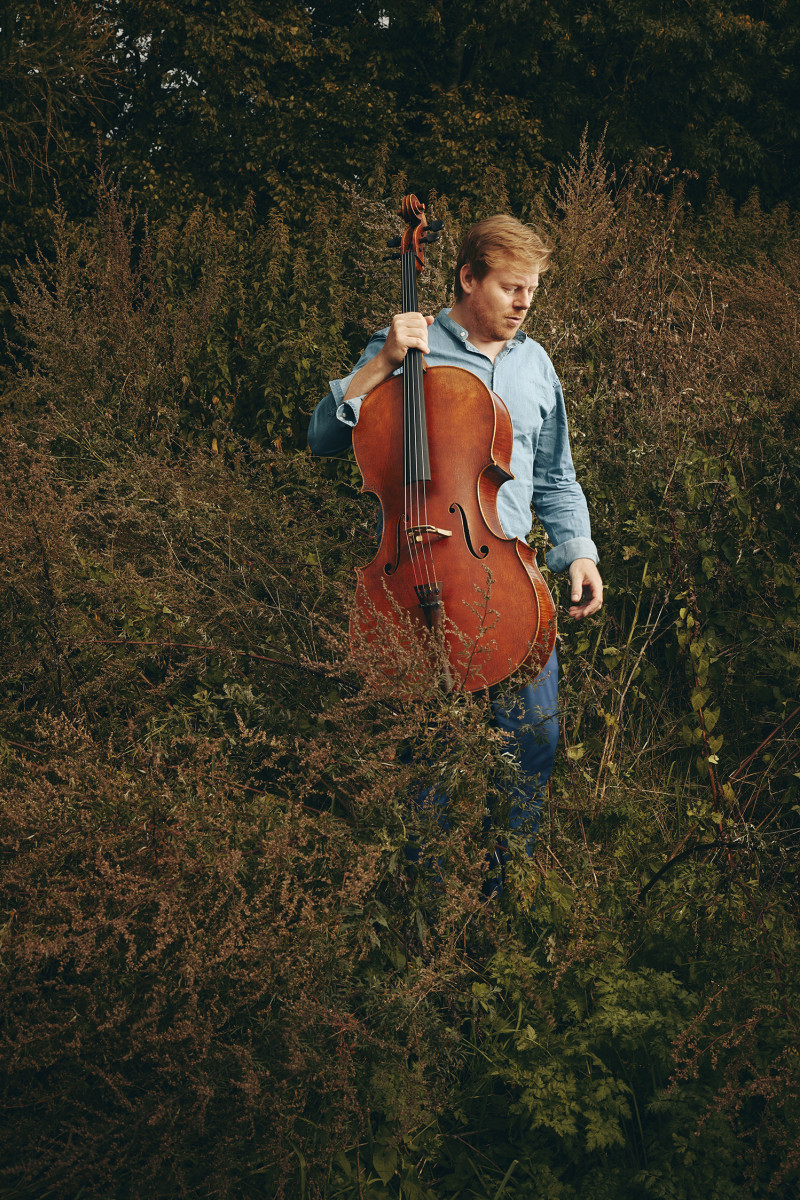
Lad os bare få fyret konfettikanonerne af med det samme. Carl Prisens hæder som årets komponist 2021 vejer ikke for tungt på skuldrene af Niels Rønsholdt, hvis du spørger mig. Den indspillede udgave af cellokoncerten Country – bestilt af hovedrollen Jakob Kullberg – er så vellykket, at den sagtens kan bære en triumfbue af statuetter og rosende ord.
Den rønsholdtske signatur er ikke til at tage fejl af. Det handler om performerkroppen. Kullberg vender celloen 45 grader, omfortolker den som westernguitar og synger inderligt om en oprindelsesløs tid i det erobrede Amerika. En følsom trubadur omgærdet af bittersøde molklange, der både smager af hjemløs saloonfolklore og fremmedgjort Broadwaymusical.
Rønsholdt vinder ikke nyt land i arbejdet med solistrollen, hvis altså man hører Country som et frigørelsesprojekt. I stedet hører jeg på indspilningen en nøjeregnende sammensætning af autenticitetsmarkører. Trubadurismen gør et godt modspil til institutionssolisten, der pligtskyldigt river og flår i strengene, som vi hører det på »Trees (I)«. På »We Don’t Ride the Same Horse« stivner disneydramaet i refrænet, idet prærieidentitetens blå tone falder på det mest karikerede 1-slag i affraseringen.
Den største fornøjelse er ikke Kullbergs hovedrolle men derimod det birollecast af samplestemmer, som dikterer flowet, klangen og det solistiske fokus i værket. Stemmerne skaber legeringen mellem komponist, orkester og solist: en sammensat krop. Autenticiteten kommer alle mulige steder fra, lader værket til at fortælle os. Den er ikke kun repræsenteret i det oprindelige, nærværende og skrøbelige.
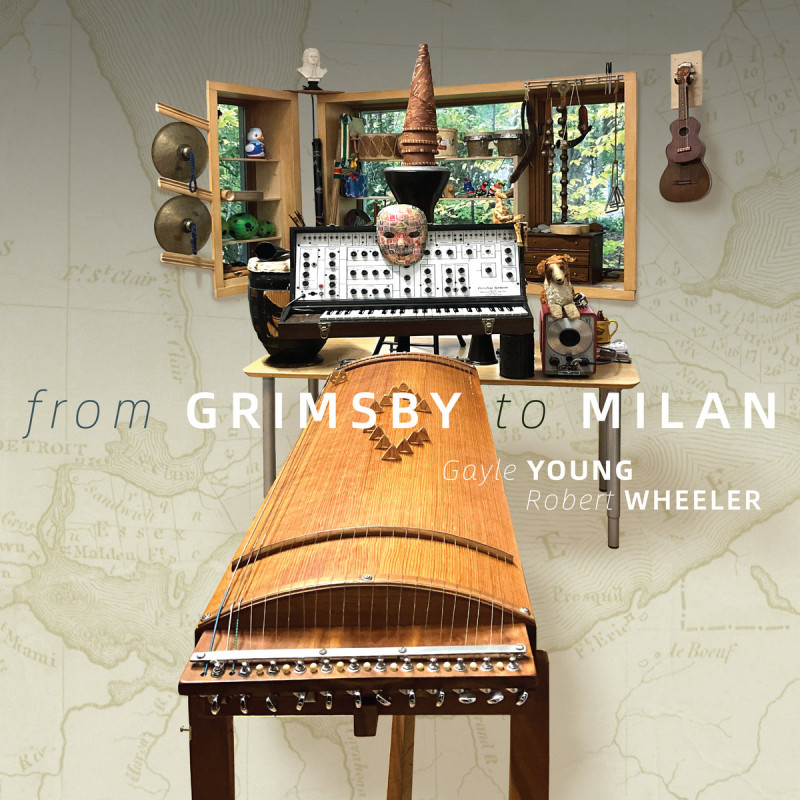
The Amranthen is a peculiar string instrument, invented and built by Canadian instrument maker Gayle Young. It consists of a wooden box fitted with 21 steel strings and three bass strings, and its unique, organic timbre unfolds on From Grimsby to Milan, where Young improvises alongside American musician Robert Wheeler on synthesizer. The recordings from Grant Avenue Studios capture the encounter between the acoustic and the electronic in a loosely shaped, raw musical flow.
Across nearly 70 minutes divided into six parts, the listener is kept in a state of constant uncertainty. The sonic landscape resembles a noisy, dystopian construction site: on »Seaweed Slowly Shifting«, bows are drawn with a saw-like rasp, fingers scratch, machines whirr, and sharp electronic zaps flash like warning lights. Later, bells and pulse-like rhythms enter on »Mariana Trench«, while »Consonant Harmony« slows the pace, settling into a subdued, crackling atmosphere where sparse melodic gestures suggest a momentary lull in the turmoil.
The construction-site metaphor fits well, for the most compelling version of this project would likely be to experience Young’s handmade instruments live, in direct dialogue with Wheeler’s electronics. As an audio recording, however, the project remains closed-off and somewhat insular. And although From Grimsby to Milan contains a wealth of fine detail, the journey – from Grimsby in Canada to Milan in Ohio – ultimately feels long and monotonous, without ever offering the listener the key to unlock its dystopian worksite.
English translation: Andreo Michaelo Mielczarek
»Music is all of life in sound.«
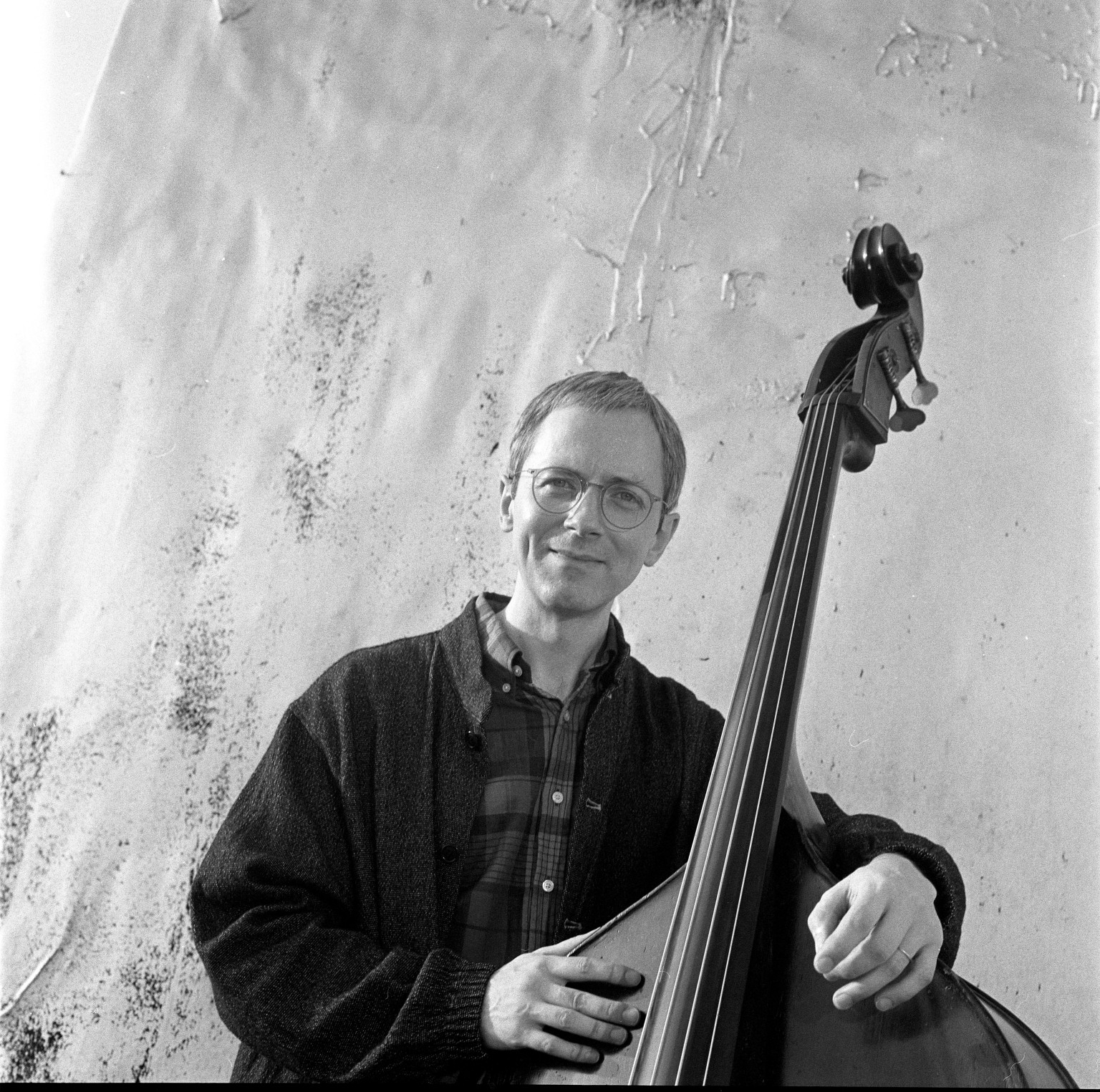
Thomas Morgan is a double bass player based in New York. He has recorded and toured all over the world as a member of Paul Motian’s bands, the John Abercrombie Quartet, Steve Coleman and Five Elements, Tomasz Stanko New York Quartet, Bill Frisell Trio, Jakob Bro Trio w. Joey Baron among many others. He has also collaborated with Dan Tepfer, Craig Taborn and Masabumi Kikuchi, and released albums with Bill Frisell, Small Town; Maria Laurette Friis, Colors, and with Jakob Bro/Joe Lovano, Once Around The Room. In November 2025 he stepped forward with his first solo project, Around You Is a Forest (Loveland Music). The record is built around WOODS, a virtual string instrument Morgan designed in SuperCollider that evokes the sound of plucked and struck string instruments – West African lute-harps, Asian zithers, the Hungarian cimbalom, marimbas – while operating according to generative code that Morgan shaped into a living, evolving instrument.
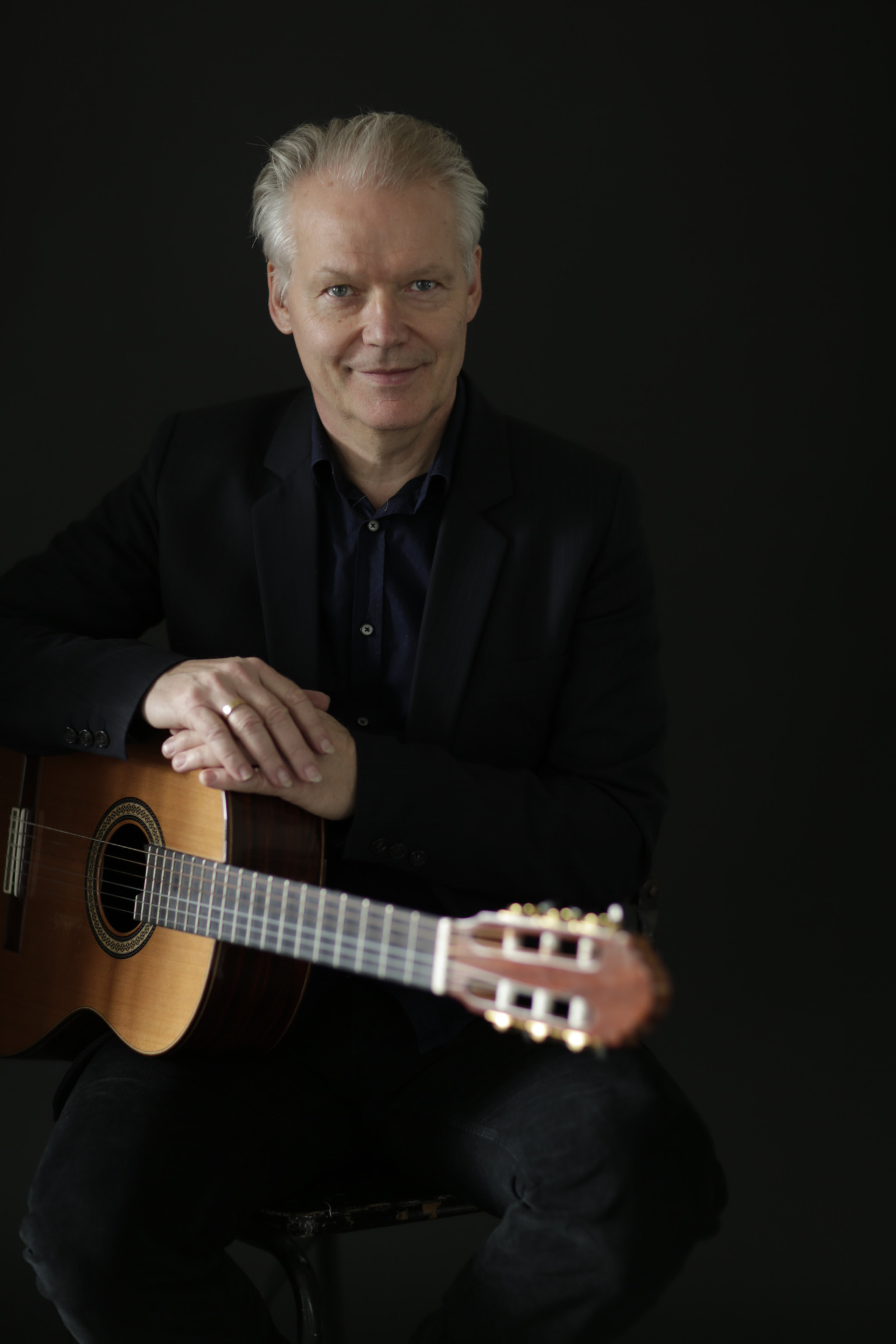
»Making a playlist is not an easy task for me. Music occupies most of my waking hours. It is a condition that began to grow when I was a teenager. If I am not playing myself, or working with the music I release or compose, music is still present, reaching out to me. I have always found it difficult to experience music in boxes or genres, so I listen very broadly and take pleasure in any music I can feel and that moves me. Music is a condition of life, and expressing oneself through music is a gift – but being able to experience music with openness is perhaps an even greater gift. I have chosen a list in which the guitar plays a part.«
Lars Hannibal began – like many others of his generation – playing folk and rock guitar at the age of fifteen. But when he heard the Spanish guitar master Andrés Segovia perform the gavotte from Bach’s Partita in E major, his musical life took a new direction, and he decided to devote himself to the classical guitar.
Since the early 1970s, Lars Hannibal has also composed songs and instrumental works. Today he performs primarily as a member of the Petri/Hannibal Duo and works alongside this as managing director of the record label OUR Recordings, which he founded together with Michala Petri in 2006, as well as a consultant for Edition Borup-Jørgensen.
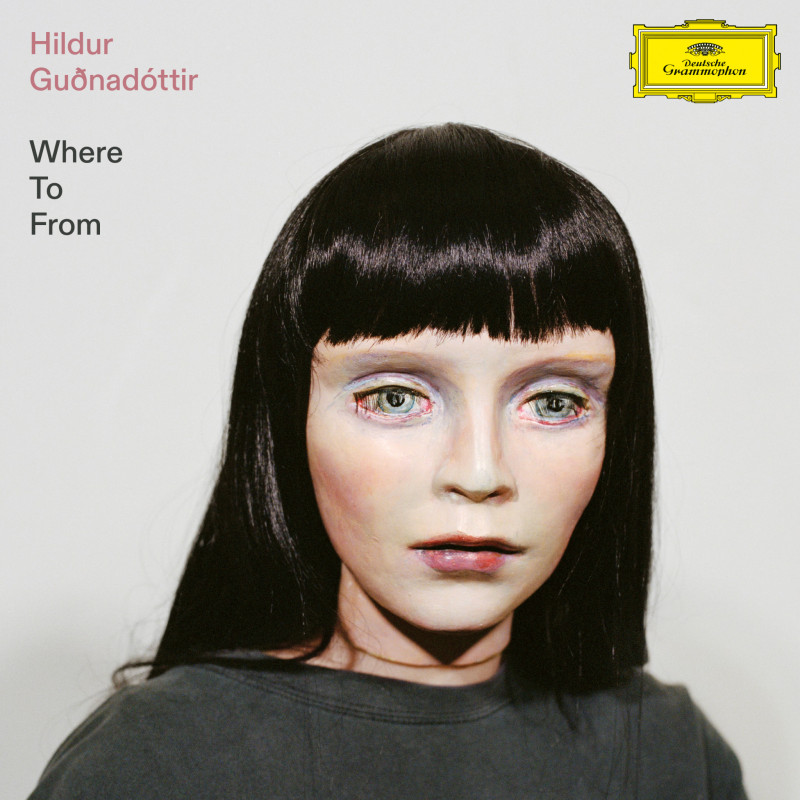
It seemed to come like a bolt from the blue when the Icelandic cellist and composer Hildur Guðnadóttir broke the sound barrier with an uncompromising, inward-looking sound situated between contemporary classical and experimental music – most widely recognised through her suffocating soundtracks for Chernobyl and Joker.
Yet on her Deutsche Grammophon debut Where to From, it is the personal spaces we are invited into. The instrumentation is pared right back to a chamber ensemble, voices, and extended passages of near-absolute silence. The result is often achingly beautiful – and deeply affecting.
The work unfolds in small vignettes, rarely lasting more than a couple of minutes, before vocals are introduced in the album’s second half – most notably in »Make Space« and the exquisite a cappella hymn »I Hold Close«. The equally beautiful »Melody of Not Knowing« explores the cello’s darkest registers, striking blue midnight tones in the echo of the heart, especially as it glides into »All Along«, where voice and strings merge.
Where to From is a powerfully mood-saturated work that moves effortlessly between chamber music and neoclassicism, finding its uncompromising character in the quietest, most intimate sighs between human and instrument. It is neither too little nor too much – always precisely measured. And for that very reason, Guðnadóttir remains such a compelling musical presence.
English translation: Andreo Michaelo Mielczarek
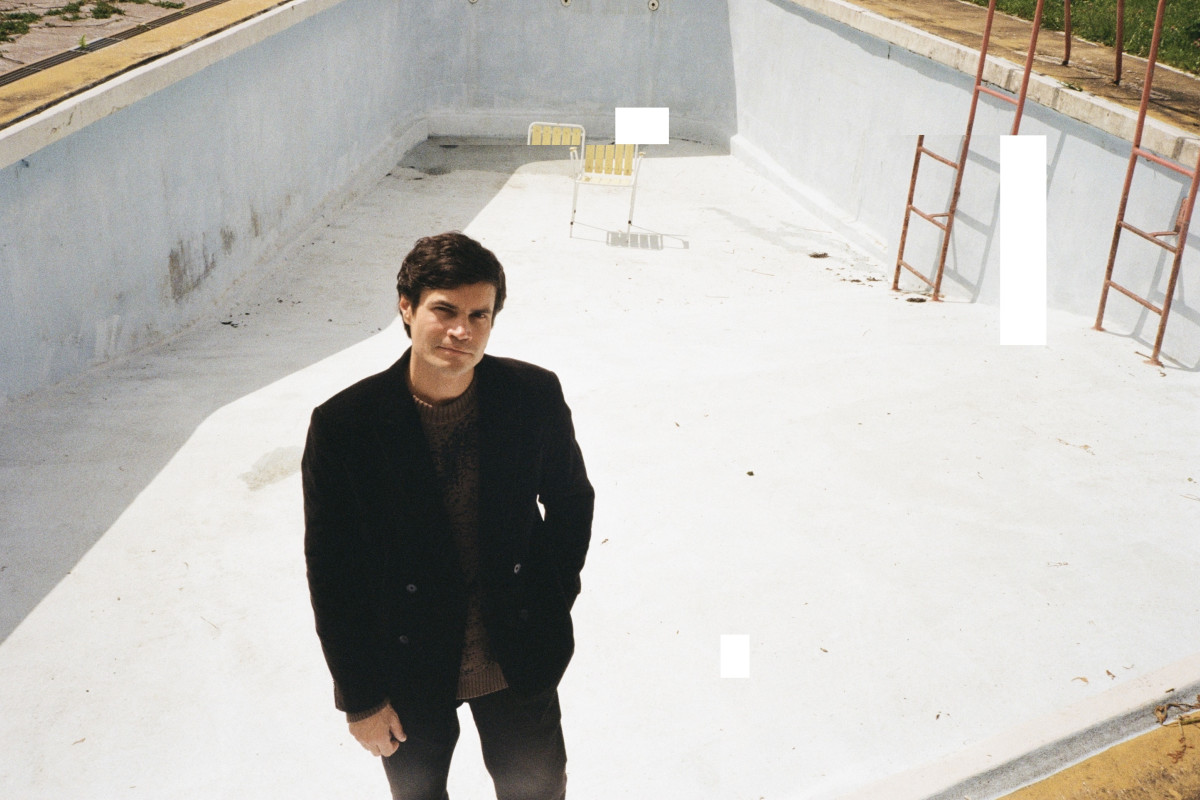
Varve – from the Danish varv – refers to the annual layers of sediment, a quiet geological archive of time’s passage. Lukas Lauermann’s album carries this meaning into its very sonic core. Here, organ and vocal samples taken from worn cassette tapes meet an inquisitive, almost ascetic cello that moves like fine strokes across a flickering, dust-filled soundscape.
The cello is restrained but never passive. It slips in and out of the cassette’s white noise, of fragmented voices and the organ’s gentle currents of air, until all elements ultimately merge into a single, organic texture. Lauermann himself describes the music as a depiction of irregularities, and it is precisely in these small shifts that Varve finds its quiet strength. The album’s idea of sonic sedimentation becomes an image of our longing to reconnect with nature’s tempo. The compositional motifs seem repetitive, yet they never repeat themselves entirely; they build layer upon layer, like organic growth. As a listener, one becomes witness to microscopic changes slowly unfolding – a process that can bring about an almost meditative state.
Varve is an album for those who prefer listening experiences at an unhurried pace; for those who find Hans Zimmer too grandiose and would rather follow the patient growth of grass than an orchestra’s emotional climaxes.