






Røgen i dine hænder
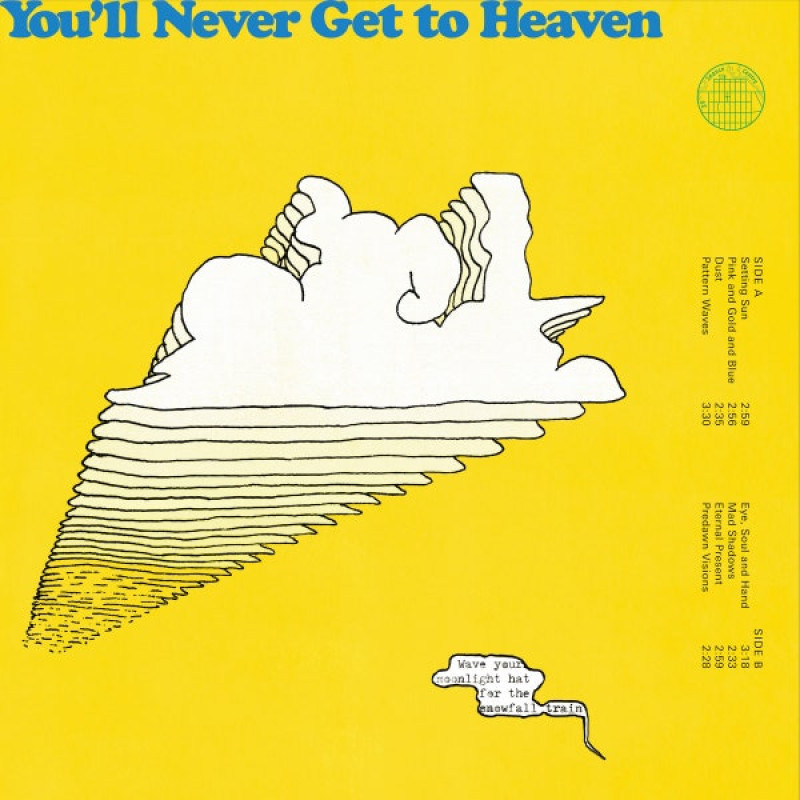
At lytte til den canadiske duo You'll Never Get to Heavens fjerde album er som at forsøge at fastholde røg i sine hænder. Albummets otte meget korte sange er alle smertefuldt smukke: Den Julee Cruise-agtige vokal rammer den perfekte balance mellem indsmigrende og melankolsk, og det Brian Eno-inspirerede klaverspil har en krystalklar, nærmest glasagtig klang. Alligevel har sangene det med at undslippe ens greb og forsvinde ud i intetheden, inden de har nået at efterlade et varigt indtryk. Den impressionistiske vignetstil er uden tvivl et bevidst, kunstnerisk valg, men jeg kan alligevel ikke slippe følelsen af at have fået en smagsprøve på en meget, meget udsøgt ret – blot for at få at vide, at køkkenet er lukket.
Det er ikke nødvendigvis en dårlig ting: Albummet er i al sin utydelighed næsten den perfekte stemningsskabende baggrundsmusik, der kan spilles igen og igen, uden at nogen nogensinde opdager, at de har hørt det før. Her er tale om ægte møbelmusik; musik, der ikke har andet formål end at skabe en akustisk vibration i rummet, som Erik Satie formulerede det. Personligt er jeg næsten sikker på, at dette album bliver soundtracket næste gang, skyggerne er lange, flaskerne er tomme og samtalerne er fulde af nostalgi.
You'll Never Get to Heaven hedder duoen meget sigende: Du kommer ikke i himlen, men kan måske få lov til at stå ved indgangen og beundre det hvide, disede lys i otte meget korte glimt, inden porten smækker i. Godt at Spotify har en repeat-funktion.
All Life Has the Right to Live

It is this violent and feral line of text that hangs like a monolith in the austere stage space at Sort/Hvid after 80 minutes of a furious, raging monologue in the performance Animal. Actress Signe Egholm Olsen is left standing like an animalistic goddess who has carried out her own ritual of purification. A ritual about motherhood and about morality for animals and humans alike – flanked by the three wordless classical singers Katinka Fogh Vindelev, Nina Smidth-Brewer, and Hávard Magnussen, who function as a chorus in a Greek tragedy. They illustrate and stage the text through precise sonorities.
Animal is based on Alexandra Moltke Johansen’s debut novel from 2022 of the same name and overflows with meaning, hurled into the audience’s face from beginning to end. Worries, anxiety, angry activism, grief, and doubt – tied to being pregnant and becoming a mother to a »useless« child with Down syndrome in a world marked by climate catastrophes, war, inhumane political cynicism, and greed. All of this flows from the mother’s inner dialogue as a long moral reckoning and outpouring, unfolding in a scenic tour de force – from the clinically clean and artificial atmosphere of a wellness spa to a material chaos of soil, branches, and sweat.
Kirstine Fogh Vindelev has composed a soundscape that makes it possible for us to breathe at all. Discreet choral tones, small electronic passages, a touch of barbershop, screams, and a pop song are wedged in between the words. It is simple and straightforward. The music is allowed to comment and converse like a shadow presence alongside the many words, but at no point is it allowed to become the protagonist or truly carve out its own space within the performance. One could easily wish for another form of sensory reflection than that which words and speech alone can provide.
14 Meters of Wave Swells from History’s Anonymous Depths
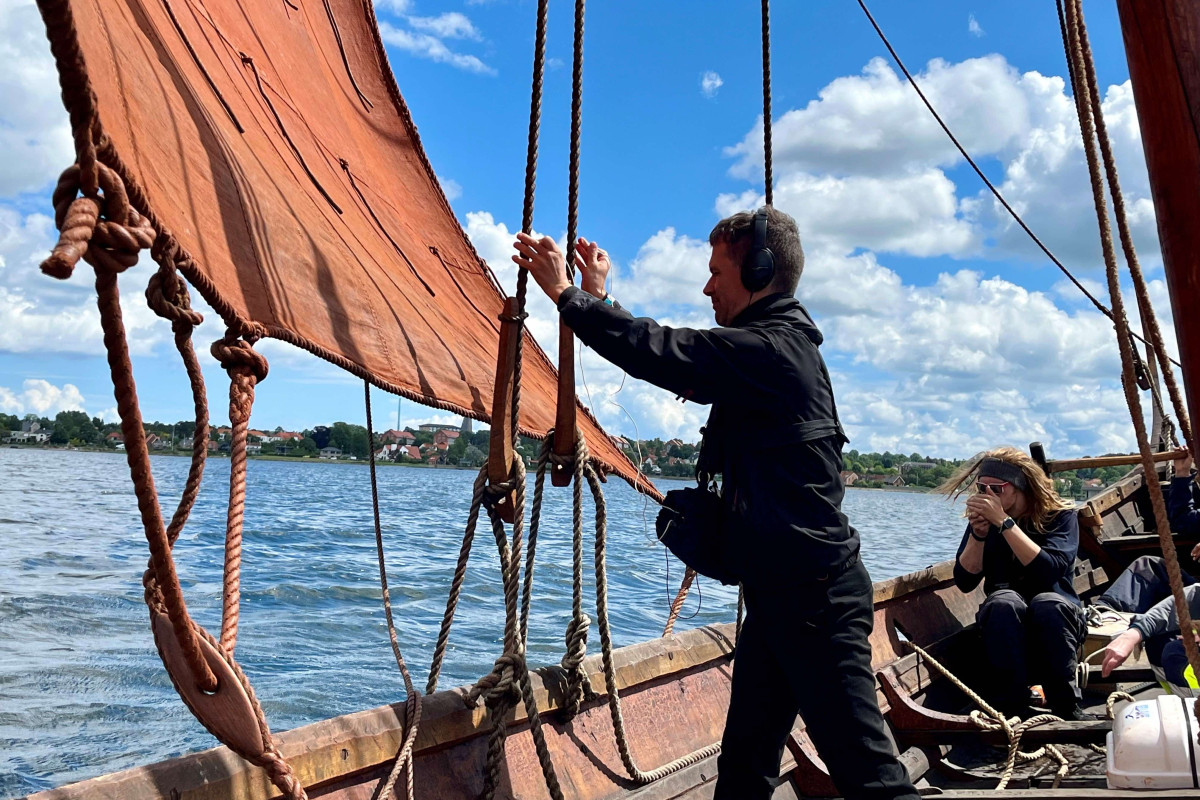
Sound artist Jacob Kirkegaard records sounds to connect with the world – to endure what is happening. This time, it's a commissioned work for the Museum of Copenhagen, created to accompany the exhibition of an excavated shipwreck from the harbor. The result is Naufragium (Latin for shipwreck) – gently lapping, quiveringly simple, and almost self-effacingly discreet. And in this way, everything aligns: the story of life in the harbor during the late Middle Ages is only known through rare, major events, while the bustling everyday life, connecting it to the larger world, has drowned in anonymous oblivion.
The shipwreck itself is barely recognizable. A series of ship planks – up to 14 meters in length – suspended on mirrors and supplemented by 11 crossbeams. That’s it. The light in the museum’s narrow room is dimmed, and the windows are covered with film. We are submerged into the depths of the water.
The sound loop lasts 39 minutes if one wishes to listen to it in full. Small sounds are distributed across seven speakers – four in the ceiling, three beneath the wreck. Carefully placed, the gentle lapping, dripping inserts, a trembling rustling like a nerve pathway above, and muffled sounds of wood shifting in water are heard. A kind of foghorn also makes an appearance. All of it is subtly arranged as a soundscape for a silent protagonist, staged through sound. There were likely very few storms, cannons, or other forms of grand drama in the ship’s perhaps 300 years as a cargo vessel in the Copenhagen Harbor before it sank in the 18th century. But if one looks closely – and opens their ears – it bears tangible and truthful witness to the kind of history most of us inherit: the ordinary one.
Echoes from a Forgotten Time
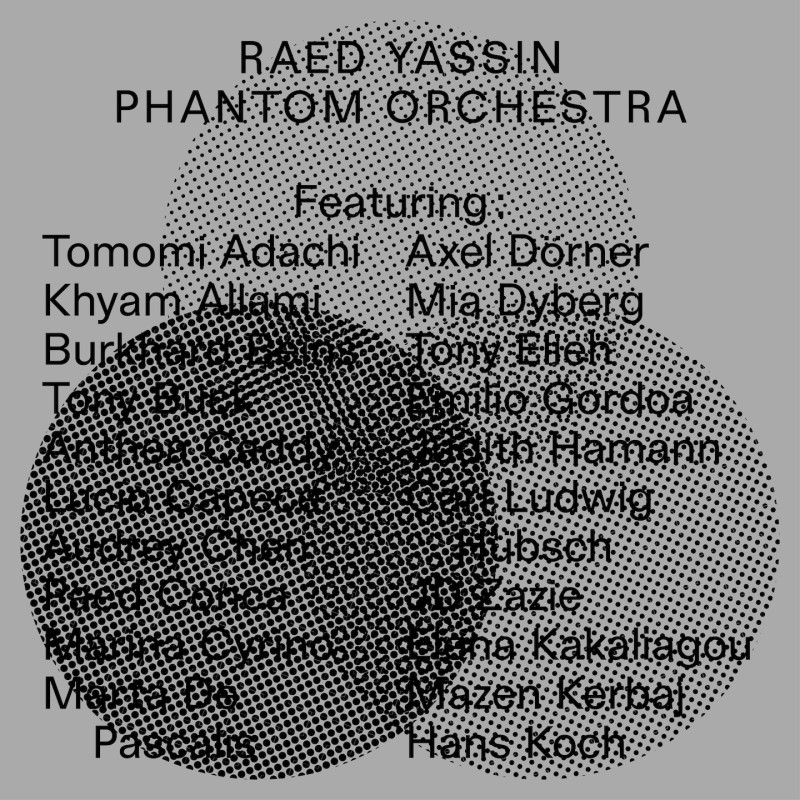
The abstract, collage-like »Movements« on Lebanese artist Raed Yassin's Phantom Orchestra are yet another piece of contemporary art born out of the COVID-19 crisis. Like a distant echo from a time most have already repressed, the experimental artist has assembled a series of recordings performed by a motley group of Berlin musicians – all united by a single premise: improvisation.
Over nearly an hour, Yassin weaves these recordings into seven progressive suites, ranging from approximately nine to twenty minutes. And while the sonic chaos at times reaches such heights that one struggles to find a common auditory anchor, the result is a creatively stimulating listening experience, as hand-played percussion, Baltic folk singing, and the Japanese koto (harp) seamlessly merge – despite the musicians never having been in the same room together.
At its core lies an immensely inspiring concept, one that draws equally from sampling aesthetics and contemporary art. This is particularly evident considering that the pieces were reportedly created using no fewer than twelve turntables, introducing an element of chance. One can only assume that this required a remarkable degree of planning – which makes it all the more astonishing when, for instance, the interplay between modular synths and drums on »Movement III« unfolds, or when the almost horror-like contrast between happy jazz trumpet, frantic vocals, and demonically prepared piano emerges on »Movement IV«.
At times, the idea behind the work is more fascinating than the sound itself, but all in all, Phantom Orchestra is a dazzling, slightly mad experiment, driven by a will to create harmony in chaos. A final echo of the pandemic – of standing together while apart.
English translation: Andreo Michaelo Mielczarek
From Pain to Paralysis: a Stabat Mater Without Wounds

The theme has been revisited countless times in music history, but ELECTRIO (Francesco Rista, Simone Giordano and Sandra Lind Þorsteinsdóttir) attempt to give Stabat Mater a new expression, combining guitar, vocals and electronics with Latin texts, Monteverdi fragments and songs by Dowland. The ambition is clear, yet the result is uneven.
There are, however, two striking exceptions. The opening of Stabat Mater – recorded at the Royal Danish Academy of Music – is captivating in itself: a four-minute build-up that establishes a muted, hovering sense of expectation. But it lies so close to Pink Floyd’s »Shine On You Crazy Diamond« that one can almost hear the quotation shimmering underneath. The characteristic three guitar notes fall at exactly the same place, just before Sandra Þorsteinsdóttir’s voice enters. »Fac me Cruce« is shaped with attractive energy and dynamic form, making strong use of electronics, but ends abruptly before the music has truly begun to unfold. If only ELECTRIO had continued in this direction.
The harmonic foundations of the eight pieces are often predictable, as in »Sancta Mater«, in which the Holy Mother prays that the wounds of the crucified be imprinted upon her heart. The harshness of the text is entirely absent from the underlying feel-good guitar fingerpicking, which moves shamelessly through familiar chord progressions. No wounds. No suffering.
More generally, Þorsteinsdóttir rarely strays from conventional baroque phrasing or genuinely experiments with the genre. The result resembles a mirror version of Sting’s Dowland project from 2006: only inverted – here a classically oriented singer who keeps too respectful a distance to let the songs truly enter an experimental universe.
Why did the trio not instead draw inspiration from Pergolesi’s music for the same text and theme? His score brims with wild dissonances that a new interpretation could have explored to powerful effect – revealing more anguish and outward-turning sorrow.
English translation: Andreo Michaelo Mielczarek
In the Ruins of Old Organs, Builder Finds His Own Sonic Universe
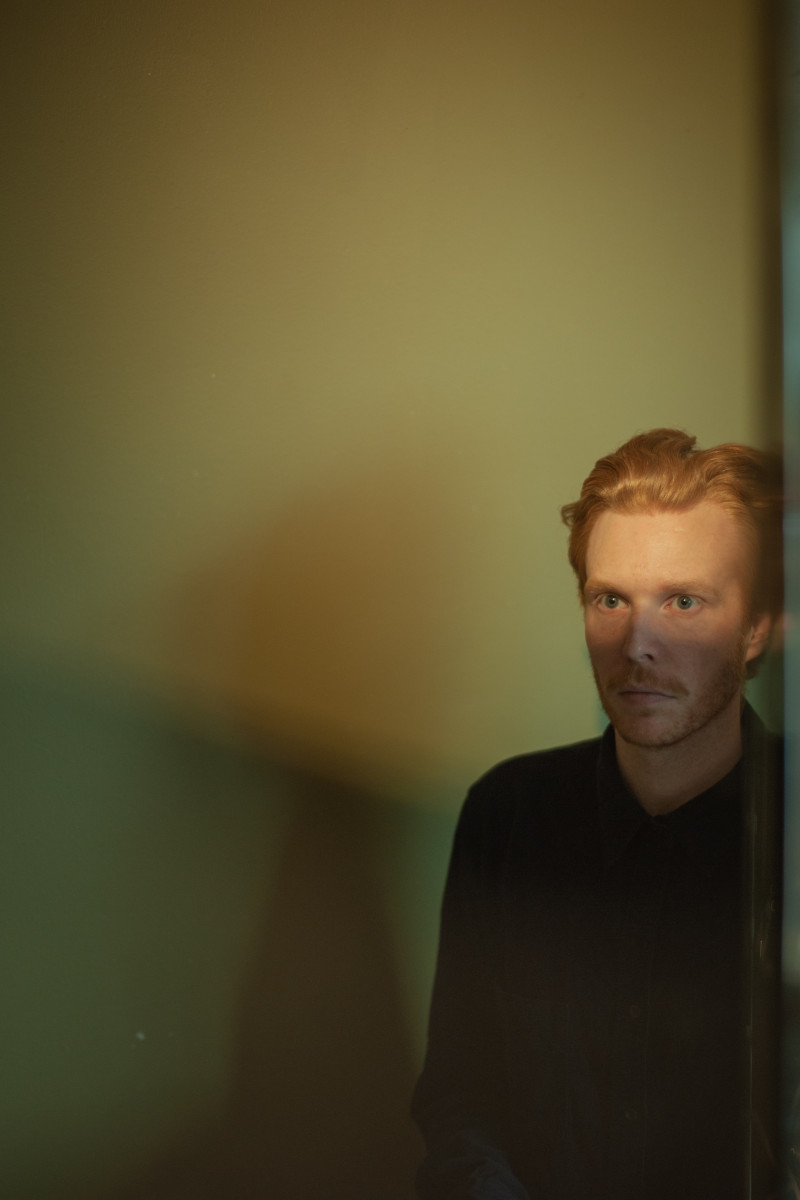
On his previous album, Renewal Manifestation, Calum Builder let the organ of Mariendal Church roar forth as an imposing protagonist. Now he returns with a work in which the same instrument not only carries the narrative but is the entire narrative – in the form of »the (Re)constructed Pipe Organ«, an organ he has assembled himself from discarded pipes and mechanics salvaged from Danish churches.
It’s a fascinating project, but what about the music? It’s a mixed experience. The three opening tracks, which together form the title piece, as well as »sometimes, I wonder«, are the highlights. The homemade organ surges beneath Builder’s touch on the keys, its frequencies rising and falling like hills and valleys in constant flux. The instrument howls like an autumn wind in the trees, while under- and overtones stand tall like runestones before crashing into each other. Builder’s talent for dramatic songwriting emerges in these miniature pieces – despite the instrument’s audible limitations.
Unfortunately, things unfold differently in several of the other tracks, such as »cicadas_nighttimesound« and »Pacific«. They appear more like sketches – demonstrations of the organ’s possibilities – than fully realised compositions. Ideas remain static and repeated, with very little development. The expected shifts and resolutions never arrive. On Poor_in_Spirit, Builder is clearly experimenting with form and function, and that in itself is interesting. But I miss the vitality and dramaturgy that are otherwise the core of his music.
English translation: Andreo Michaelo Mielczarek