in brief
02.08.2022

Stockholm noir

Kali Malone: »Living Torch«
© Kali Malone
© Kali Malone

Den Stockholm-baserede komponist Kali Malones musik er indbegrebet af tesen om »less is more«. De altid tilstedeværende, nøjsomme og blødt ringende droner lægger sig som tunge tågebanker nederst i mikset, mens Mats Äleklints trækbasun og Isak Hedtjärns basklarinet spiller få, enkeltstående toner højere i mikset. Men ikke så højt at de nogensinde slipper helt ud af tågen. Jeg higer efter noget at hæfte mig ved, bliver opmærksom på de små ting, som jeg i en mere tætpakket produktion nok ville have overset. Som hvordan man kan høre de to blæseres hvislende udåndinger under instrumenternes klang – og nogle gange endda udelukkende disse vejrtrækninger.

Mens den musikalske tåge i EP’ens første nummer er så tyk, at man kan skære i den, introducerer andet nummer en mere fremtrædende, endda melodisk synth, der meget passende netop synes at skære igennem disen. Således skaber Malone først en rolig, nærmest ophøjet ubevægelig lyd, for derefter selv at bryde den ned med en langt mere sinister afslutning. 

Drone er af natur ofte en uhåndgribelig form for musik, men Malones store styrke er hendes evne til at skabe tekstur, en følelse af rum og nærhed i sine kompositioner. Dette beviste hun med det monumentale orgelværk The Sacrificial Code (2019). Med Living Torch understreger hun blot hvorfor hun i mine øjne er en af de mest interessante nyere stemmer inden for drone og minimalistisk musik.

»What music is to me? Where have the great feelings gone?«.

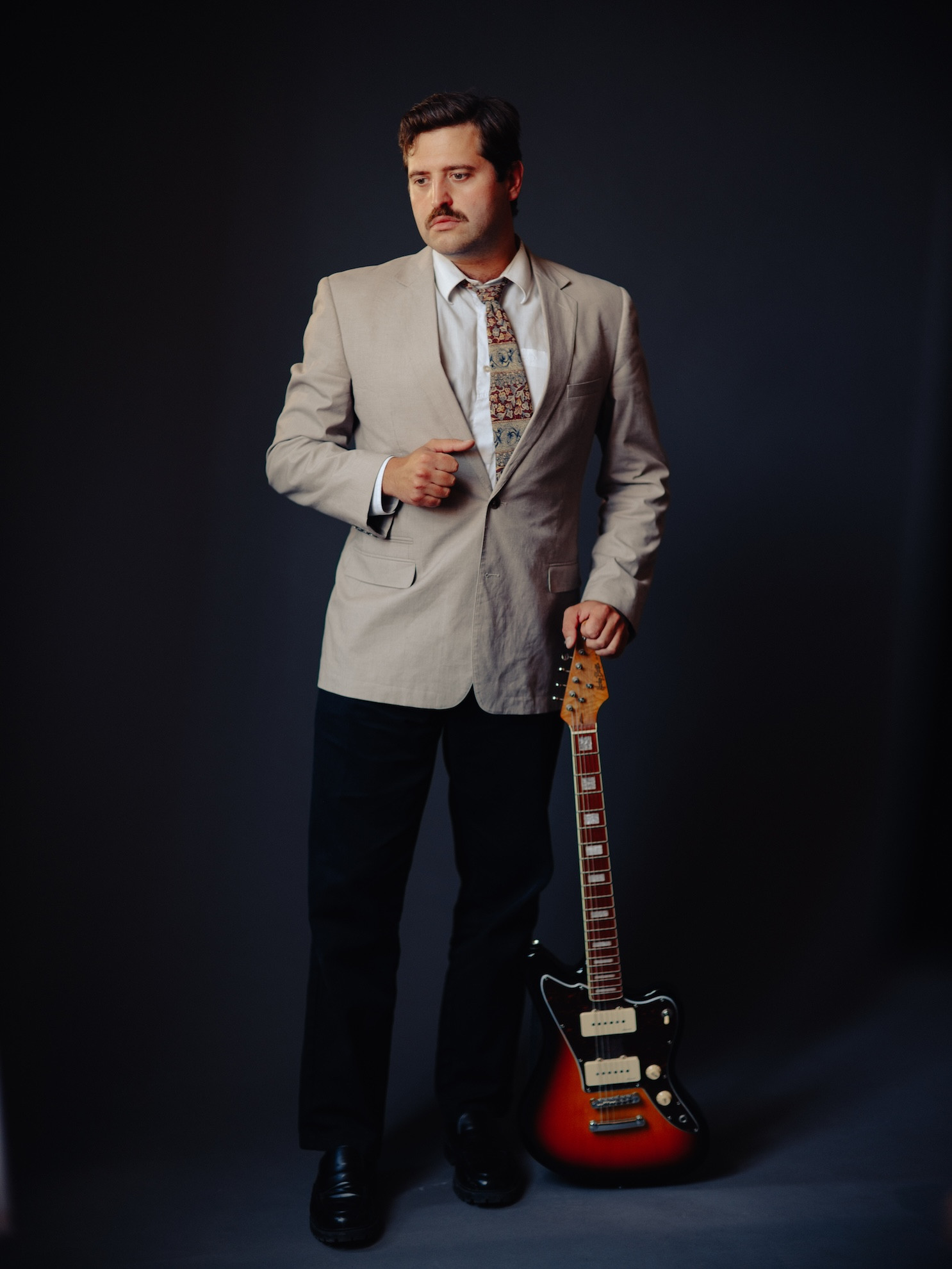
Gellért Szabó is a composer, conductor and performer based in Leipzig, Germany. His work combines contemporary composition with influences from free improvisation, noise and the expressive richness of the late nineteenth century. He is the founder and artistic director of the 23-piece Ideal Orchestra, an ensemble dedicated to large-scale experimental music of sweeping emotional intensity. Alongside this work, Szabó performs internationally with his solo project Radical Radio Show, exploring symphonic textures and immersive sound worlds through a single electric guitar and live electronics. His music is driven by a search for intensity, vulnerability and uncompromising emotional expression.

© Christoffer Askman

From the Culture Yard in Helsingør, ships glide past Kronborg Castle through the narrow waters of the Øresund – a reminder of the trade routes that, for centuries, have carried goods, people and power between the Nordic region and the wider world. It is an apt point of departure for the Passage Festival, and for Marie Dahl's vocal work Silk. Sugar. Sand, which explores the intertwined histories of three materials.

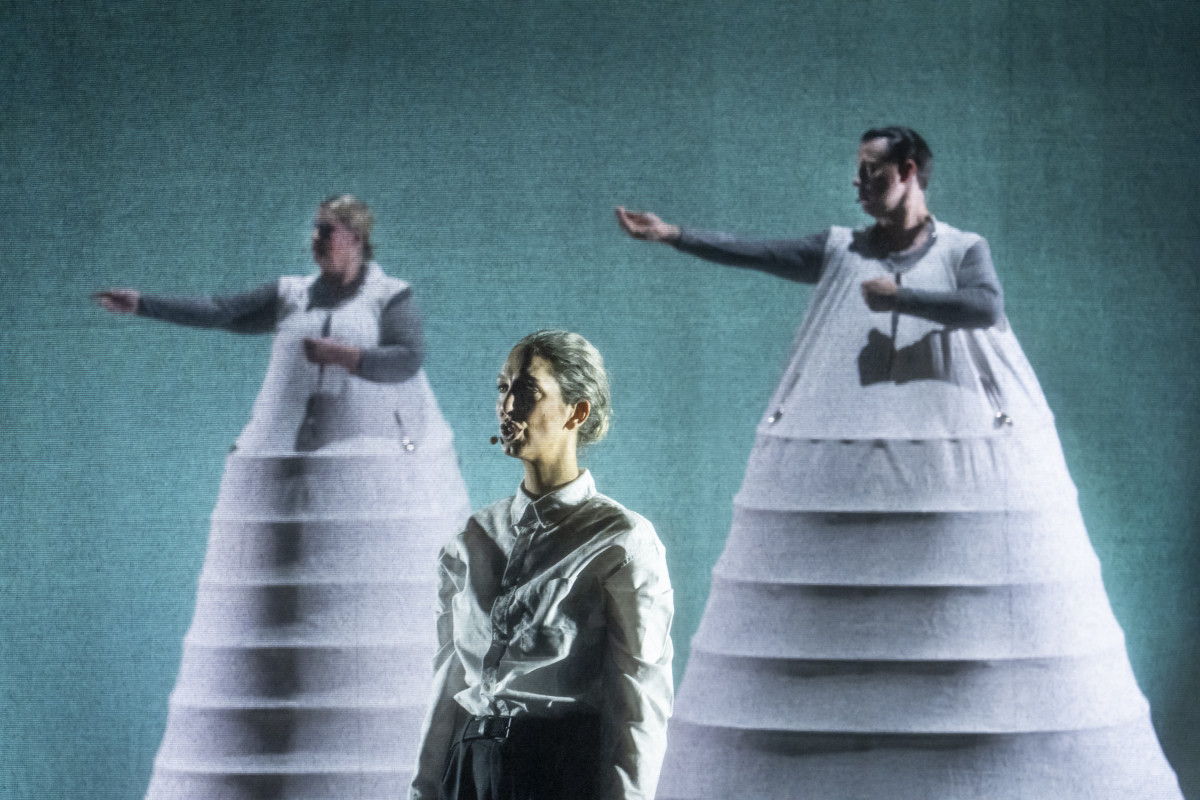
Silk. Sugar. Sand is a vocal performance in three acts tracing the historical journeys of these materials through colonialism, the global economy and geopolitics. Five singers from Ars Nova Copenhagen perform within a minimalist scenography consisting almost entirely of coloured light and three sets of costumes that transform throughout the performance: first silk dresses, then crinoline-like structures evoking sugar loaves, and finally grey stone-like forms suggesting accumulations of sand.

The work's central device is to translate the physical properties of these materials into vocal expression. At one moment, the elasticity of silk becomes soft, flowing polyphony; at the next, a cocoon-like electronic crackle. Sugar's crystalline structure is rendered as sharp vocal attacks – brief, whip-like cracks – as well as sweet, intimate whispers, while sand creaks and rustles, resonating with a libretto about economy and domination, violence and desire.

The performance has no conventional narrative, and the five singers portray no distinct characters, moving somewhat stiffly across the stage, as performers often do when their primary focus is on the voice. Comparisons with Hotel Pro Forma's Flammenwerfer are difficult to avoid. There, the production's rigorous aesthetic was counterbalanced by C.F. Hill's wildly expressive visual universe and Blixa Bargeld's deeply vulnerable stage presence. Those qualities are missing from Marie Dahl's carefully controlled staging, which could have benefited from more of the sensitivity and chaos that also form part of Kirsten Dehlholm's artistic legacy.


© PR

»To us, music is a primal, elemental force that allows us to shed our inhibitions.«

Leizure is a Copenhagen-based quintet operating at the intersection of post-punk, no wave, and experimental rock. The band’s sound is characterized by atonal vocals, piercing saxophone, hypnotic guitar riffs, and a rhythmic foundation that oscillates between tight precision and raw intensity. 

The band’s upcoming album, The Guillotine, explores themes such as societal decay, upheaval, and the challenging of established structures – all conveyed through a direct and high-energy musical style.

© Robin Skjoldborg
© Robin Skjoldborg

Danish musician, author, and artist Martin Hall has died at the age of 63. According to his family, he passed away from a heart attack at his home in Frederiksberg on Tuesday, 21 July.

Since the early 1980s, Hall left an indelible mark on Danish music and cultural life – first with Ballet Mécanique and Under For, and later through an extensive solo career that moved effortlessly between experimental music, electronic pop, poetry, performance, and literature. He leaves behind one of the most substantial discographies and bibliographies in Danish cultural history.

© Kåre Viemose
© Kåre Viemose

Seismograf is heading off on summer break to check out the ocean's deep vibrations.  🌊🤿  See you in August. Have a great summer!