In brief
30.08.2022

Kirkerave med lammeskyer 

Aarhus Festuge: »Rum der forkynder« – SKY H1 & Mika Oki
© Martin Dam Kristensen

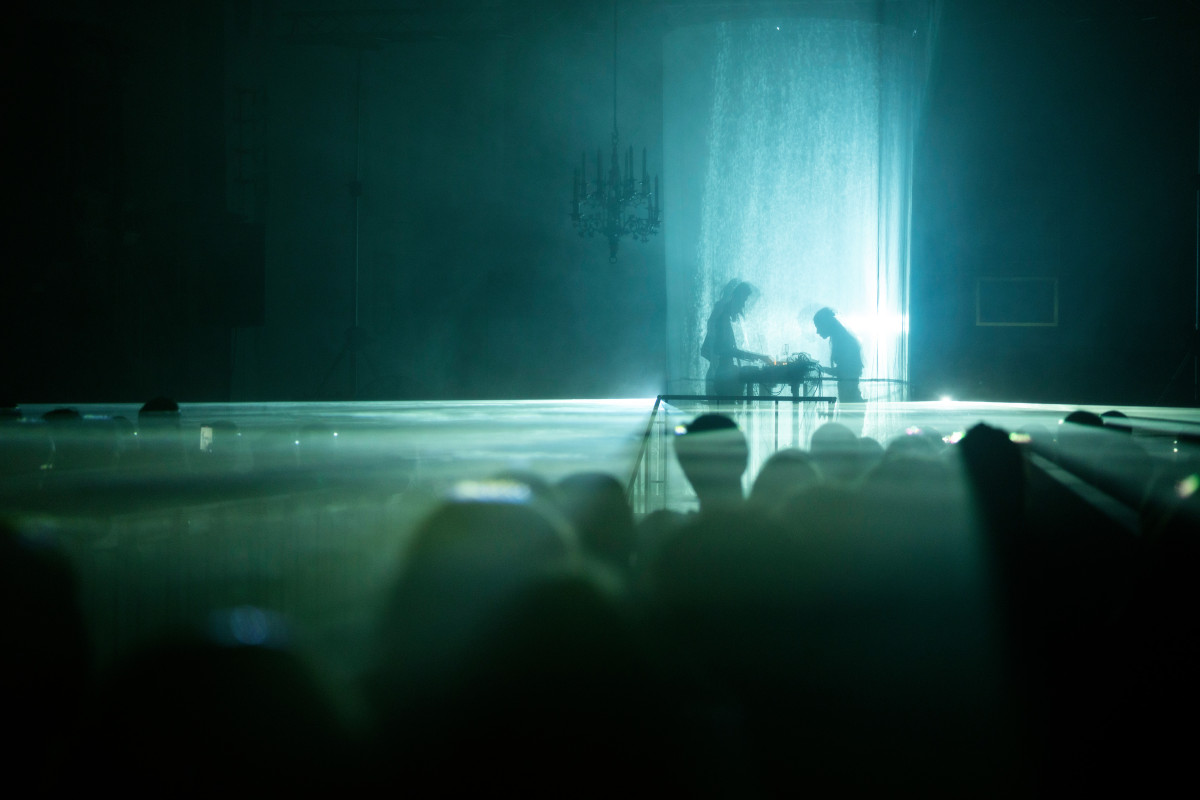
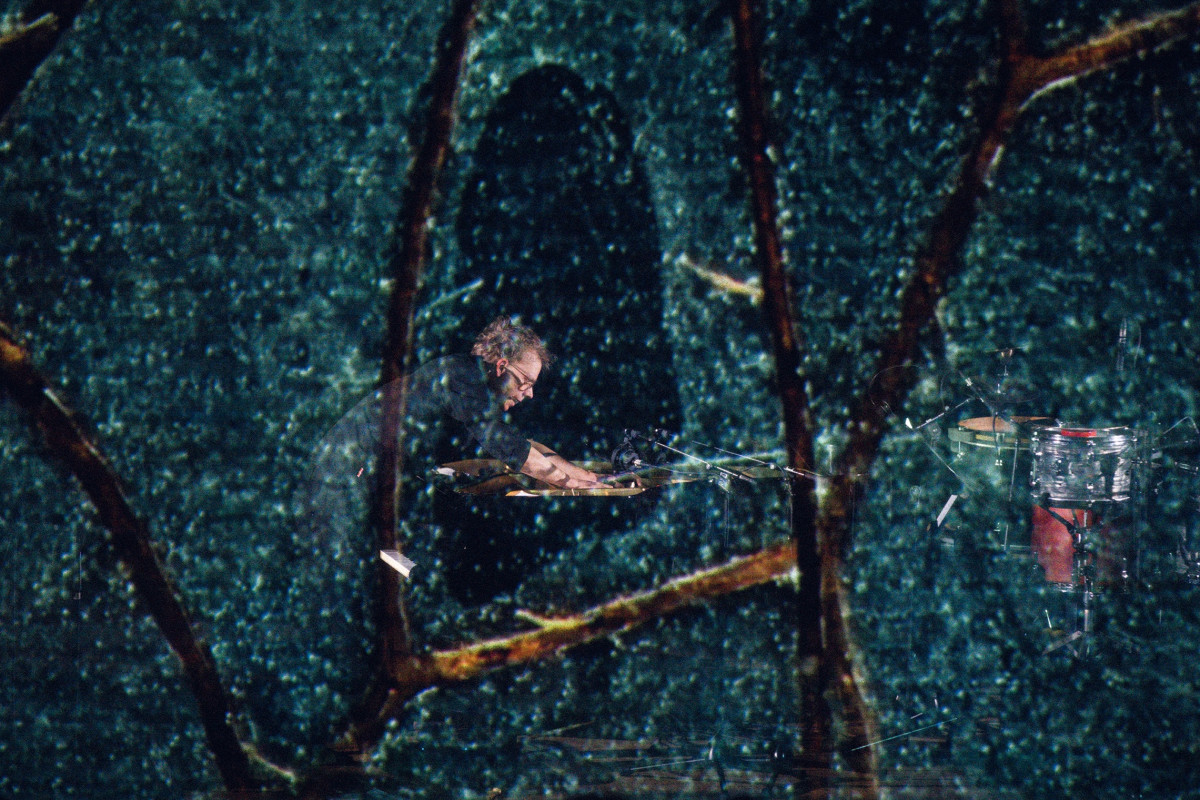
Under den korsfæstede Jesus stod SKY H1 og Mika Oki ved deres mixerpulte indhyllet i en to-tre meter høj cirkel af semitransparent hvidt stof. Elektroniske orgeldroner strømmede ud i rummet, blandede sig med lyden fra en røgmaskine. Over os bredte sig blåt lys. 

Industrielle trommer og breaks blandede sig med det flydende soundscape tilsat fuglefløjt og melodisk synth indtil tunge basbeats tog over. Kunstnerne lignede pixelerede sort/hvide figurer i det runde tårn over en himmel skabt af lyskegler og røg. Angelisk synthkor afløstes af en basdrone, imens en solopgang brød frem i blå, røde og grønne nuancer.

Blåt lys og røg dannede lammeskyer, Jesus lyste op i glimt, kegler af stroposkoplys kastede sig ud over publikum, og det, som begyndte med orgeldroner og fuglefløjt, udviklede sig til et technorave med hårde og hurtige slag på elektroniske olietønder. 

På tre kvarter havde SKY H1 og Mika Oki opbygget, gennemført og afsluttet et technorave. En imponerende bedrift, der rejser spørgsmålet om, hvorvidt man skal høre hård house i en kirke, hvor flere kan være med, imens de kunstneriske og æstetiske aspekter af genren fremhæves og bevæger musikken fra lyssky undergrund til kunst i de hellige haller. Principielt: Ja. I praksis skabte de hvidkalkede vægge og hvælvinger en hård refleksion af lyd og lys, og det var usikkert, om kunstnerne havde taget højde for, at de ikke længere optrådte i en mørk natklub. 

Et komprimeret kunstværk, der dog ikke kan konkurrere med sine rødder i deres naturlige habitat, hvor tid, bevægelse og rum er vigtige faktorer for den fulde oplevelse.   

I anledning af Music City Aarhus 2022 sætter Seismograf fokus på musik, lydkunst og komponister i Aarhus. 

© PR

»Every moment is nothing but the uttermost end of the past. Music makes this edge wide and beautiful.«

Sven Helbig is a German composer and producer known for combining orchestral and choral music with electronic elements and a strong poetic sensibility. A self-taught musician raised in Eisenhüttenstadt, he released his debut album Pocket Symphonies on Deutsche Grammophon to critical acclaim for its emotional depth and formal precision. Helbig has collaborated with ensembles such as the BBC Singers, Fauré Quartett, and Staatskapelle Dresden, as well as with artists like Rammstein and the Pet Shop Boys. He just released REQUIEM A on Deutsche Grammophon. It is a deeply personal and reflective composition, intertwining classical Latin liturgical texts with new ones written by Helbig himself. The work revolves around themes of loss, memory, and the possibility of renewal – with the »A« in the title symbolizing Anfang (beginning) and the belief in a new start after devastation.

© Kåre Viemose

»Recently, I discovered that when a couple of thousand people clap their thick gloves in minus 30 degrees, it sounds like the softest techno – a freezing space where the cold air turns into a wave of warmth, and we, in a moment of collective devotion, become one with the rhythm, one with the invisible bond that connects us in the warmth of silence. Music is not just sounds, but a vain attempt to capture the infinite, which has always been and always will be.«

Andreo Michaelo Mielczarek has been the editor-in-chief of Seismograf since 2021. He is also a music critic and cultural journalist at Kristeligt Dagblad and Århus Stiftstidende/Avisen Danmark and has over the years written to publications such as Kunsten.nu, Glissando (Poland), Neural (Italy), Raw Vision (UK), Nutida Musik (Sweden), Kunstkritikk (DK/Sweden), Iscene.dk, B.T., and Jazz Special. He is the author (together with Lars Muhl) of the book HVA' SAA! En guidet rutsjebanetur gennem Aarhus – før, nu og i fremtiden (2024) and has also contributed to the anthology on music criticism Man skal høre meget (ed. Thomas Michelsen and Claus Røllum-Larsen, 2024). He is a founder and partner in the Polish-Danish cultural organization Kultur(a), and wherever there is a piano, he will be there, eager to coax a melody from it.

© PR

»A lot is projected onto music and making music – I'm careful, singing doesn't make you more intelligent and certainly doesn't make you a better person. It's like in sexuality. A lot of things go very consciously wrong for some people. Music like sex are means of communication, people come into contact and negotiate with each other and their instruments/tools and meet themselves in it. This is also the case when I listen to music – from every conceivable genre and context, even if I always notice that as a teenager I used to play a lot of jazz guitar.«

Bastian Zimmermann lives in Munich and works freelance in the areas of music and performance. As a dramaturge, he works with artists such as the soloist ensemble Kaleidoskop, Yael Ronen and Neo Hülcker. He is editor of the German speaking magazine Positionen – Texts on Current Music and curates projects such as »Music for Hotel Bars« and the festival Music Installations Nuremberg festival. His focus is on social aspects of making music, experimental music concepts and the questioning of bourgeois structures in contemporary music. In Spring 2025 he will take over the Wolke Verlag publishing house for books on music with Patrick Becker.

© PR

»Music to me is… my work. I've landed in the best job in the world, where a core task is to discover new music, to learn its internal logic and aesthetics, who created it, and why. I'm a music researcher and have just returned from the island of Java in Indonesia with my research partner and husband Nils, where we've been visiting experimental musicians in Yogyakarta – artists we've now followed for seven years.
One recurring theme is the trance/horse dance jathilan (or jaranan), which several of the artists have introduced us to. Jathilan is on one hand an old Javanese ritual, and on the other hand a contemporary (village) culture in full development. There is no single historically 'correct' jathilan. It's a practice that follows an old spiritual ritual, but is also open to current Indonesian influences.

The playlist consists of three tracks by Senyawa, Gabber Modus Operandi, and Raja Kirik, all of whom have incorporated the ritual into their music. The fourth track was supposed to be a 'traditional' jathilan, but as far as I know, no such recording exists on Spotify. Instead, I found a related jaranan piece that includes a dangdut song – an ultra-popular genre that is often performed as part of a jathilan event. The final track is one of the most popular dangdut songs at the moment.«

Sanne Krogh Groth is Associate Professor of Musicology at Lund University, Sweden, where she conducts research on electronic music and sound art, currently with a focus on Indonesia. Sanne was editor-in-chief of Seismograf from 2011–2019. In 2015, she established Seismograf Peer, which she is still the managing editor of.