in brief
04.09.2022

Lyden af tiden, der rinder ud

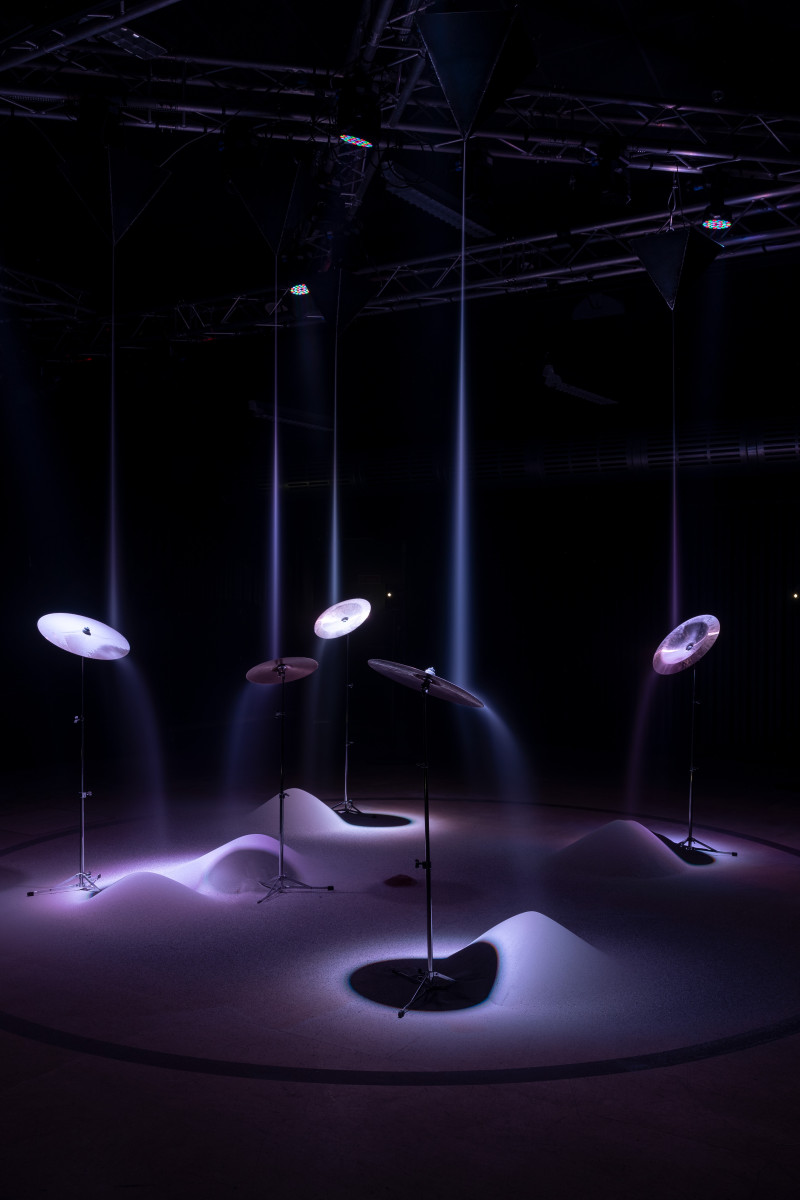
Signe Klejs & Christian Windfeld: »Tilflugt«
© Mikkel Kaldal
© Mikkel Kaldal

Centralt i Radars mørklagte rum, omkranset af en ring af højttalere – et såkaldt akusmonium – står fem bækkener oplyst i violet. Som fra et timeglas i loftet daler en sagte strøm af sand, der knitrende rammer bækkenerne, og modsvares af en rungende, lavfrekvent, metallisk dronende gong fra de omkringstående højttalere. Udspændt mellem det tidløse og det flygtige møder sand metal; knitren som eroderende regn og fygende sand, buldren, som jordskorpens tektonik eller havets rasen. Det er saktralt, langsommeligt, nærmest kosmisk: Lyden af tiden, der rinder ud.

Bag Tilflugt står billedkunstner Signe Klejs og trommetæmmer Christian Windfeld. Klejs har i en årrække arbejdet med sandets flygtige natur, og Windfelds eksperimentale tilgang til slagtøjets materialitet og klangmæssige potentialer er et både frugtbart og originalt match.

Der er dog ingen tvivl om, at værket først for alvor folder sig ud, hvis man tager turen til Thy, hvor den anden halvdel af installationen udfolder sig i kunstbunkeren Regelbau 411. Dén oplevelse er det desværre langtfra alle besøgende på Radar undt, og det er en skam, for det er først i samspillet mellem de to lokaliteter, hvor lydlige og visuelle spejlinger og ekkoer resonerer på tværs af tid og sted, at udstillingens egentlige tematik åbenbarer sig for publikum. Uden denne oplevelse efterlades den gennemsnitlige besøgende i Aarhus lidt uforløst med den ledsagende introduktionstekst.

Når det så er sagt, udgør installationen på Radar isoleret set stadig et velfungerende moment of zen, og absolut blandt de mere interessante og poetiske indslag i Aarhus lige nu.

in brieflive
30.10

Only at the End Did the Music Break Free

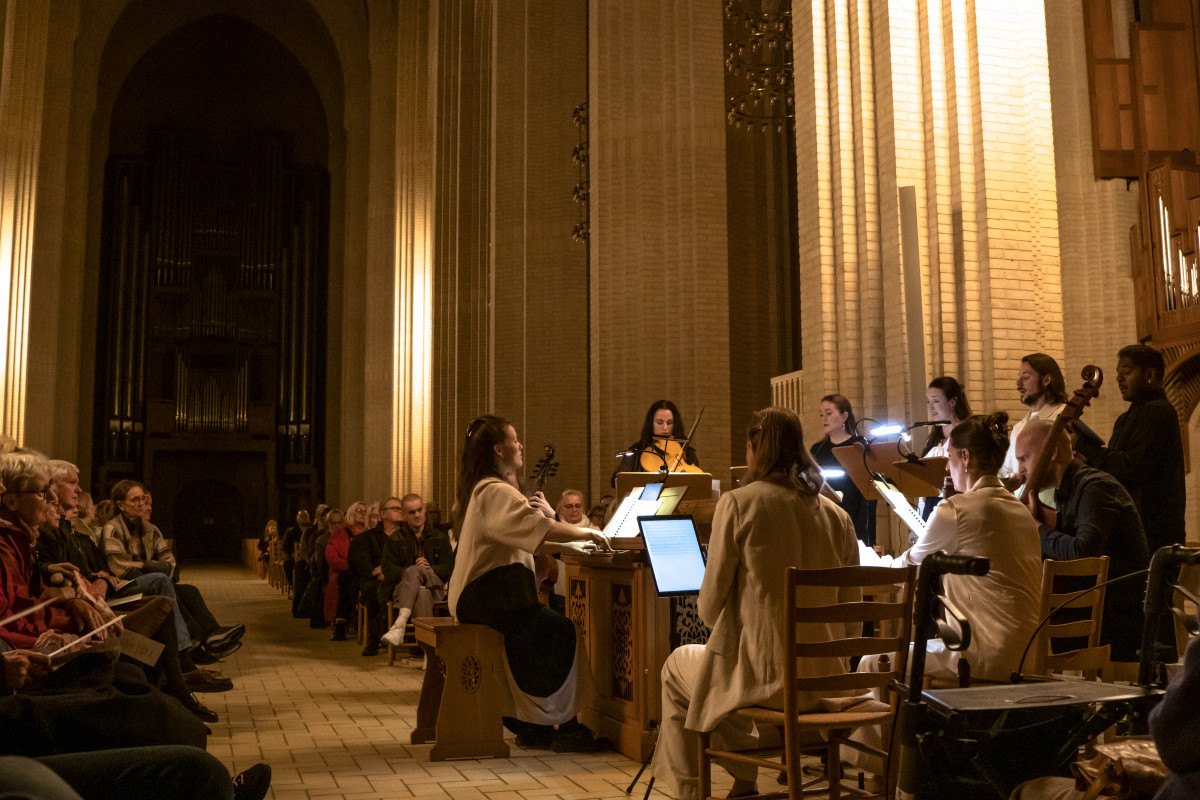
The Baroque Society: »Remembering«
© Malin Annie Jansson

The British composer Nick Martin, who is based in Copenhagen, attempts to give remembrance a sonic form in his brand-new work Remembering, written specifically for The Baroque Society. On Thursday evening at Grundtvig’s Church, he succeeded beautifully in parts of the fifteen-minute work for four singers and a small, intensely focused group of Baroque instruments.

Dense vocal textures lingered over harmonies that unfolded slowly, while allowing the soloists to emerge one by one. The static accompaniment provided a foundation for remembrance, over which the floating voices evoked the lost and departed. The harmonies gradually shifted in colour like clouds in the sky, constantly changing shape – seemingly at random, yet following what felt like a fixed, organic pattern. But the work became too long and passive. Only in its final minutes did the harmonies break apart, making room for welcome rhythmic variation and tantalising silences. Had this shift in form come earlier, Martin might have created a more compelling work. It nevertheless ended with a gem of an open, searching chord which not only demonstrated his gifts as a vocal composer but perhaps also invited us to think of remembrance as something positive and transformative rather than tragic.

Remembering was framed by two works by J.S. Bach (BWV 118 and 106). The latter cantata was later given the title Actus Tragicus, but it was not entirely tragic: for Bach, death primarily offered access to something better. That sense of consolation was harder to find in this performance, where the small orchestra of The Baroque Society lacked energy and momentum. Yngvild Haaland Ruud, seated behind the small organ in the middle of the ensemble, provided insufficient musical direction to bring the players together. The tempo was far too ponderous, and the music lingered too much on the feeling or memory of the sounds just heard. Still, it was refreshing to encounter a new work by Nick Martin – an invitation to remember at All Saints’ Day.

The concert will be repeated in Copenhagen, Helsingør and Gentofte over the coming days

English translation: Andreo Michaelo Mielczarek

© PR

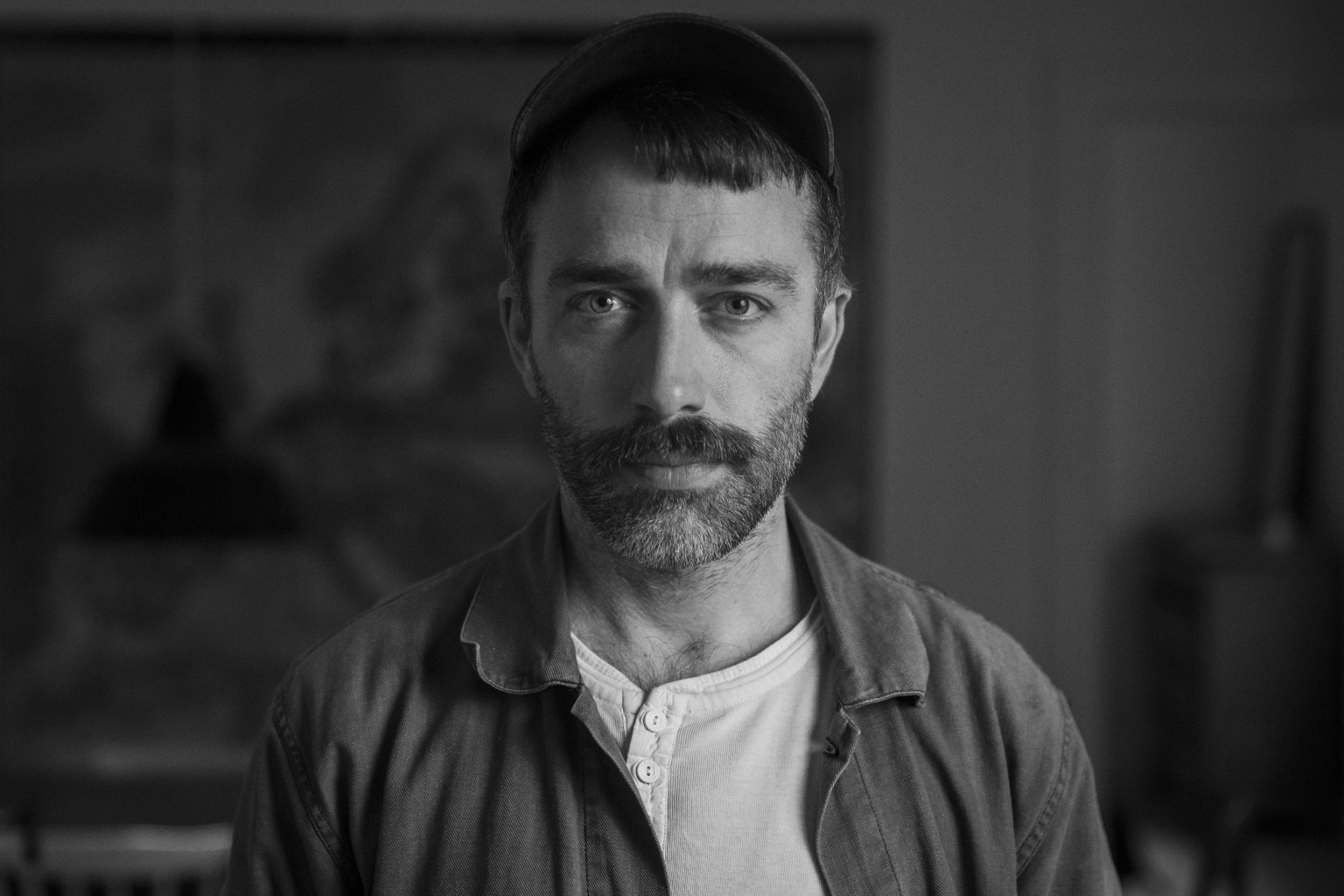
»For me, music is incredibly important. It is music that reveals who I am and who I want to be. Music is my muse, my solace, and my paintbrush. It paints my state of mind, serves as a frequent topic of conversation among my friends, and – along with the lyrics – acts as my preferred form of expression. To me, music represents the colors and shapes of my life. I have a particular fondness for Danish artists such as C.V. Jørgensen, Elisabeth, Olesen-Olesen, Peter Sommer, and Gravens Rand.«

Søren Damm is an award-winning author known for the novels Transit, Melodrama, and Finland. He is also a singer and songwriter, having released, among other works, the album Håbet Er Den Største Last.

© Paw Ager

»For me, music is about curiosity and surprises – yet it’s also something in which you can feel right at home. Music resides within us all, in a physical way that sets it apart from any other art form. To me, music is something greater than the individual – something that will always outlive the individual. The good stuff, in other words ;) « 

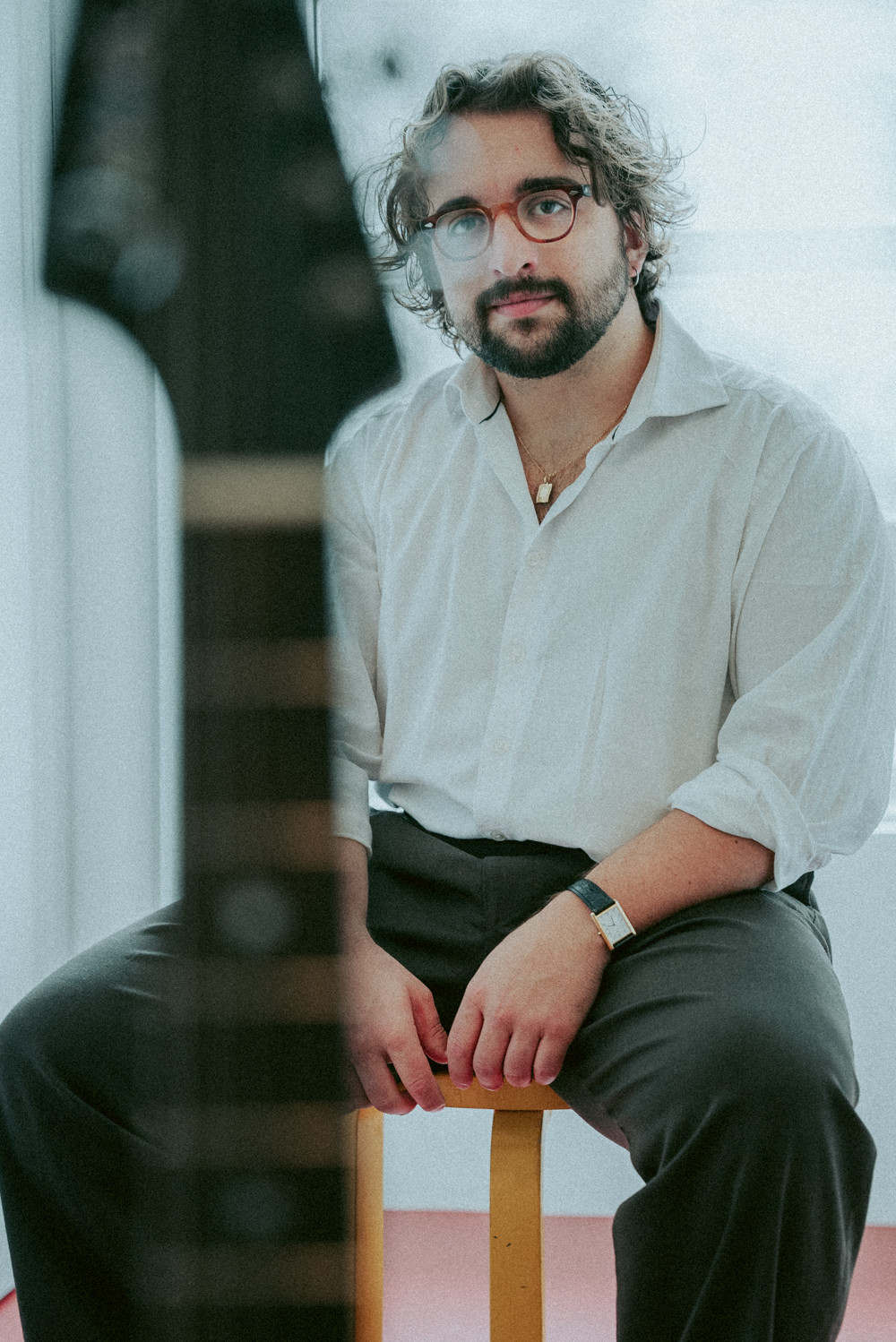
Kaspar Kaae is an award-winning film composer, music producer, and songwriter, known for his work with bands such as CODY and Bug Chaser. He holds a Master’s degree in film composition from SDMK.  He has previously been a guitarist in a number of bands on the Danish indie scene, such as CODY, Broken Twin, and Bug Chaser. The latter is releasing the album My First Crippled Love in November. He was born in 1983 on Bornholm, but has lived in Copenhagen and Berlin throughout his adult life.

© PR

»Music is like a black hole that sucks you in and shoots you out on the other side of the universe.«

Francesco Rista is a guitarist working across classical and electric guitar. His recordings have been reviewed by international music magazines and broadcast on BBC and RAI Radio 3. After studying at the Royal Danish Academy of Music and Lund University, he focused on studio recordings, exploring guitar repertoire from the Baroque and Romantic periods to contemporary music, as well as the instrument’s varied tonal possibilities. Rista is currently based in Iceland, where he teaches guitar, composes music, and collaborates with contemporary composers.


© Villads Hoffmann
© Villads Hoffmann

Percussionist and composer David Hildebrandt is honoured for his virtuosic work with new music and his efforts to push the boundaries of what rhythm can be.

David Hildebrandt is among the recipients of this year’s honorary awards from the Wilhelm Hansen Foundation. He receives DKK 200,000 in recognition of his uncompromising work with new music and multi-percussion, as well as his ability to challenge conventional ideas about rhythm.