in brief
16.09.2022

Den Sorte Skole i fængsel

Panoptikon: Den Sorte Skole x Vertigo
© Erling Brodersen, locations.dk

For 150 år siden var fangerne isoleret døgnet rundt i Vridsløselille fængsel, med en brun lædersæk over hovedet når de kort var uden for cellerne. De skulle have mulighed for at angre deres synder og forlige sig med Gud... Torsdag aften var vi ikke indsatte, men musikelskere, i det nedlagte fængsels skræmmende fascinerende indre. »Panoptikon« hedder overvågningsarkitekturen, men nu var elektronik, mixere og pladespillere placeret i midten, sammen med de uhyre begavede musikere fra duoen Den Sorte Skole til lysinstallationer af kunstnerkollektivet Vertigo. 

Vi var stadig anonyme overfor hinanden – for en diffus røg lagde sig mellem alle, så laserlys og rytmisk skær fra LED-stængerne kunne få frit spil – lykkeligt fanget på tre etager i helheden af lys og lyd. 

Samplingerne var især stemme-orienterede: Fra manipuleret småsnakken der speedes op, til fraserede stemmeskrig over de tunge rytmer. Var det tidligere tiders indsatte der skreg til os i mørket? Den genreløse duos musik rev læderhjelmen af individet og gav det stemme. Med etnisk sang fra verden over, som Den Sorte Skole også benyttede i deres forrige projekt Refrakto, og især den flerstemmige afrikanske korsang gjorde indtryk. Måske fordi den i sin kerne er frihed/slavebunden-orienteret. Måske fordi det bare lød afsindig godt, her reflekteret af fængslets mure og forstærket af en varieret og musikalsk lysinstallation, som lod hvert track få sin helt egen visuelle iklædning. Individualitet. Duoens symfoniske elektronics er så stramt komponeret med sin helt egen klang-æstetik, at man i den grad kunne forlige sig med at være i fængsel.

© Linnea Syversen

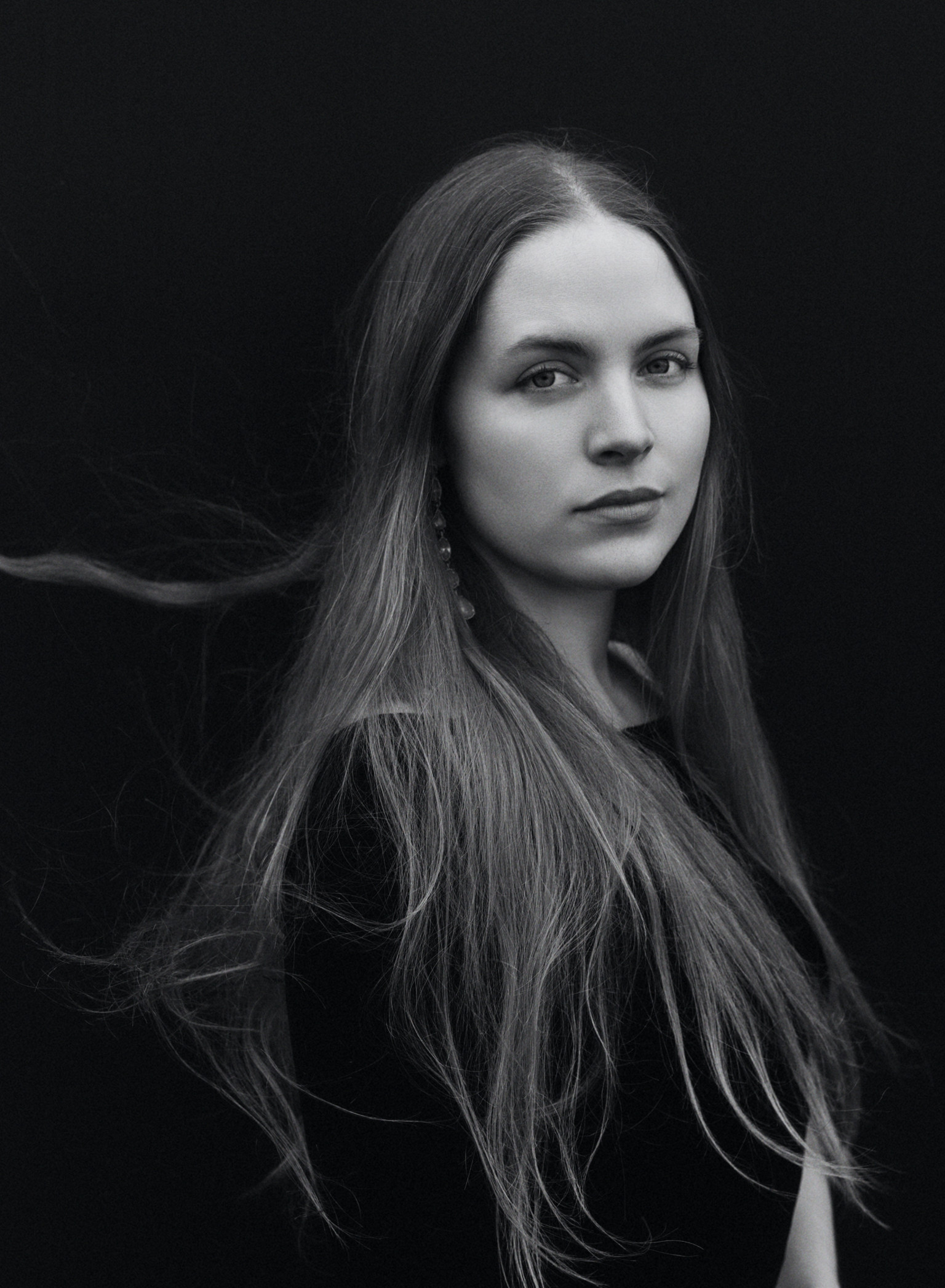
»Music, to me, reflects human experience and allows us to find ourselves on an entirely existential level, beyond language. It feels like a shared realm to which we all have access. Music may be the art form that requires the least intellectual processing (although it can certainly involve that, too!). Because it consists of sound unfolding over time, we must recreate its colours and emotions within ourselves. This can happen rapidly, as if we were possessed by a force from outside. Music contains many layers of codes to which we relate in both similar and different ways. Some of these codes, such as pulse, resonate with unconscious levels within us that date back to prehistoric times. Other layers, such as familiar musical references, speak to the modern, cultivated human being. This interplay makes music uniquely stimulating! In cultural policy discourse, art is often reduced to an instrument for something else (which it certainly is and can be, too). In doing so, we forget art’s intrinsic value.«

Solveig Sørbø is a composer, music producer and artist who creates classical music and alternative pop. She composed the music for the documentary Hans pluss Liv (NRK), and a piece from the film was later performed by KORK (the Norwegian Radio Orchestra). On the occasion of the 2026 solar eclipse, she composed an orchestral work connecting Dante’s metaphysics with the physics of celestial bodies.

Solveig has previously worked in academia on innovative projects such as MusicLab (the edition featuring DSQ was named Event of the Year by DR), as well as as a radio journalist and presenter for NRK and radiOrakel. With a methodological approach to art, Solveig seeks to create music that moves people.

Her critically acclaimed opera Heroin chic, with a libretto by award-winning author Maria Kjos Fonn, premiered at the Classix Festival in Romania in 2025 and received its Norwegian premiere at Parkteatret in Oslo in February 2026. Following this, Ballade dubbed her »Music’s Klæbo«. Solveig is currently working on an opera based on Ibsen’s The Wild Duck, among other projects, and preparing a concert with the band Naturhistorisk.
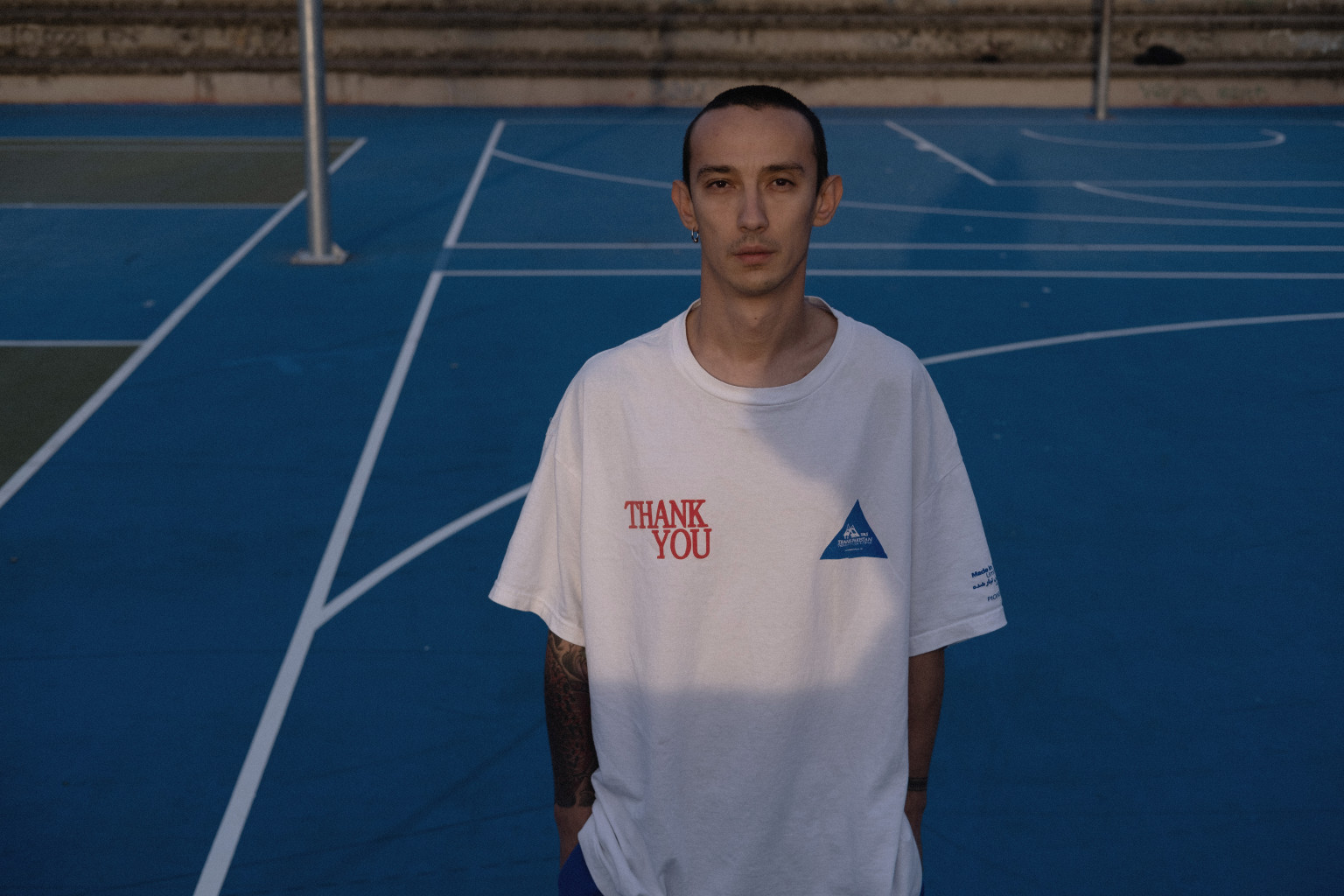
Viner Khaiitov. © Tatita Zhiliaeva
»Music is the opposite of escape for me right now: it’s where the tension gets held, repeated and turned into rhythm.«
 
Viner is a DJ and producer based between Marseille and Barcelona, where he runs the label and art lab PATAR. Born in Ulyanovsk to an Uzbek, Tatar and Bashkir family, he started making music in Kazan. In 2022 he recorded across Uzbekistan: Navruz in Tashkent, the Stihia festival in Muynak (where he was technical director), and street sound in Khiva, Bukhara and Samarkand. On 2330 (PATAR, November 2026) those recordings are cut into fragments of two seconds or less and set into three-beat loops running against the main pulse, »doira« patterns that take several bars to come round, and bass in blunt, distorted blocks. The sources stay half-legible. What carries is the friction, held for five tracks and never quite released.


© PR

»For me, music is a kind of secret path – a gateway to emotions, thoughts, and ideas that might otherwise be difficult to access. It serves as a shortcut to daydreaming and creativity – to those moments when I feel most connected to my own humanity and that of others. Through music, my own life intertwines with the artist’s, and together we create something entirely new.«

Kristoffer Møllegaard holds an MA in Russian Language and Culture from the University of Copenhagen (2017), with a specialization in future speculation within Russian art and philosophy. He writes regularly about Russian culture and, in his spare time, is active as a visual artist and amateur saxophonist. He has been a contributor to Seismograf since 2020.

© PR

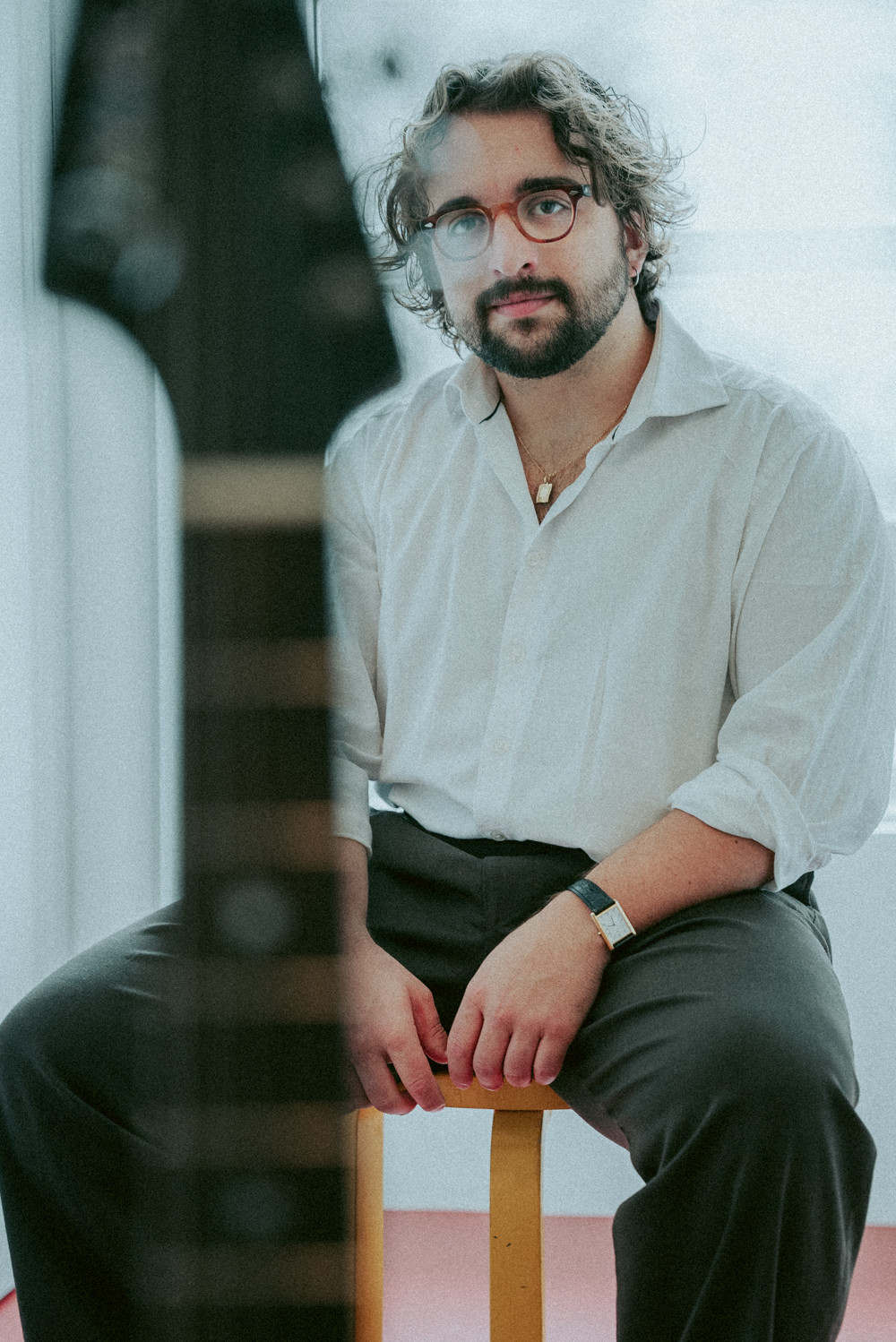
»Music is like a black hole that sucks you in and shoots you out on the other side of the universe.«

Francesco Rista is a guitarist working across classical and electric guitar. His recordings have been reviewed by international music magazines and broadcast on BBC and RAI Radio 3. After studying at the Royal Danish Academy of Music and Lund University, he focused on studio recordings, exploring guitar repertoire from the Baroque and Romantic periods to contemporary music, as well as the instrument’s varied tonal possibilities. Rista is currently based in Iceland, where he teaches guitar, composes music, and collaborates with contemporary composers.


in brieflive
30.10

Only at the End Did the Music Break Free

The Baroque Society: »Remembering«
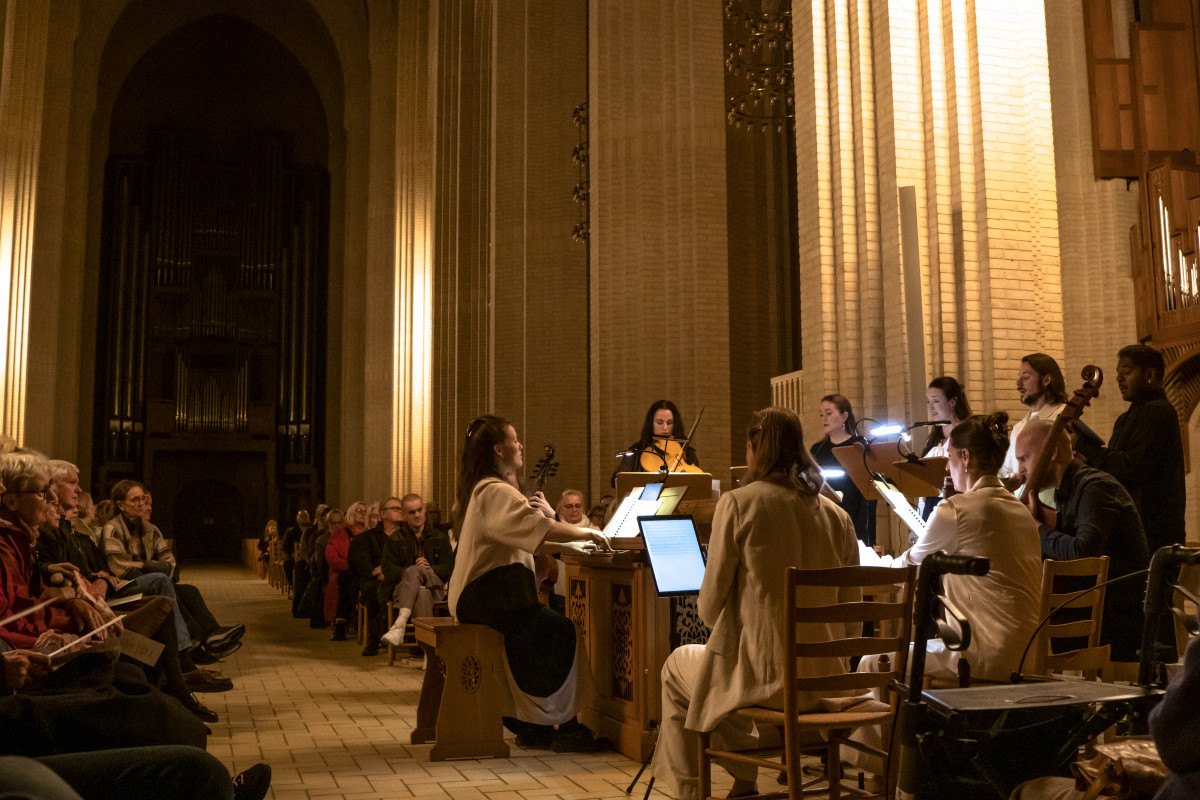
© Malin Annie Jansson

The British composer Nick Martin, who is based in Copenhagen, attempts to give remembrance a sonic form in his brand-new work Remembering, written specifically for The Baroque Society. On Thursday evening at Grundtvig’s Church, he succeeded beautifully in parts of the fifteen-minute work for four singers and a small, intensely focused group of Baroque instruments.

Dense vocal textures lingered over harmonies that unfolded slowly, while allowing the soloists to emerge one by one. The static accompaniment provided a foundation for remembrance, over which the floating voices evoked the lost and departed. The harmonies gradually shifted in colour like clouds in the sky, constantly changing shape – seemingly at random, yet following what felt like a fixed, organic pattern. But the work became too long and passive. Only in its final minutes did the harmonies break apart, making room for welcome rhythmic variation and tantalising silences. Had this shift in form come earlier, Martin might have created a more compelling work. It nevertheless ended with a gem of an open, searching chord which not only demonstrated his gifts as a vocal composer but perhaps also invited us to think of remembrance as something positive and transformative rather than tragic.

Remembering was framed by two works by J.S. Bach (BWV 118 and 106). The latter cantata was later given the title Actus Tragicus, but it was not entirely tragic: for Bach, death primarily offered access to something better. That sense of consolation was harder to find in this performance, where the small orchestra of The Baroque Society lacked energy and momentum. Yngvild Haaland Ruud, seated behind the small organ in the middle of the ensemble, provided insufficient musical direction to bring the players together. The tempo was far too ponderous, and the music lingered too much on the feeling or memory of the sounds just heard. Still, it was refreshing to encounter a new work by Nick Martin – an invitation to remember at All Saints’ Day.

The concert will be repeated in Copenhagen, Helsingør and Gentofte over the coming days

English translation: Andreo Michaelo Mielczarek