in brief
17.02.2023

Stram hidkaldelse med okkulte strejf

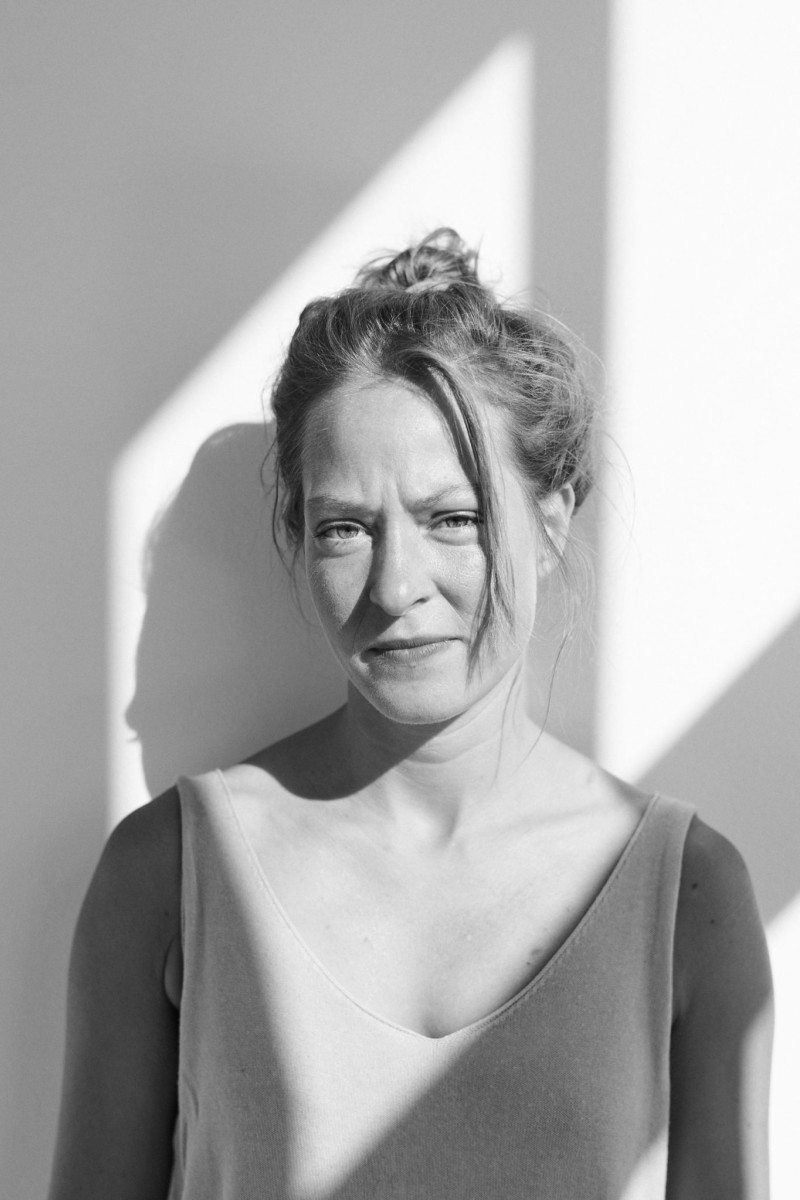
Pauline Hogstrand: »Chants«
© Henrik Adamsen Photography

Med dronende strøg på en løs bratschstreng begyndte Damkapellets uropførelse af Pauline Hogstrands tyve minutter lange ritual Chants (2022) som en invitation.

Først bredte tågen sig til de seks øvrige strygere som rene naturintervaller, siden farvedes den mørk med to celloer i front. Men værket var draget af lys, og med hver sit gradvise ryk opad bevægede musikerne sig som en sværm af fugle mod solen.

Den dur, de landede i, fik følgeskab af et fløjtende stueorgel, men også af drilske stikker på bongotrommer og gulvtam, der vekslede mellem lige og trioliserede slag. Humøret bredte sig til et enkelt strygermotiv med indlejret glidetone, men fik også et okkult touch, da en violinist pludselig nynnede med som halvgemt sopran.

I sidste ende trumfede den rene velklang sig igennem, også selvom slagtøjet blev mere sprælsk og strygerne i frenetiske glimt lagde tryk og overtoner ned i deres strenge. Hogstrands meditative hidkaldelse var velgørende stram og lod sig ikke lokke ud på overdrevet.

Størst slægtskab havde Chants derfor nok med Lo Kristensons indledende bølgeværk på Damkapellets nye og charmerende album, Demiurge. Savnede man noget, var det, at det bid og den tumult, der følger efter på resten af albummet, også fik plads ved den korte koncert:

Randi Pontoppidans skærsild af glidninger og kvælning, Kirstine Lindemanns balstyriske percussionfjolleri og Greta Eacotts fabelagtigt ondsindede mystik. Men så er der noget at glæde sig til, når Damkapellet en dag folder hele repertoiret ud.

»What music is to me? Where have the great feelings gone?«.

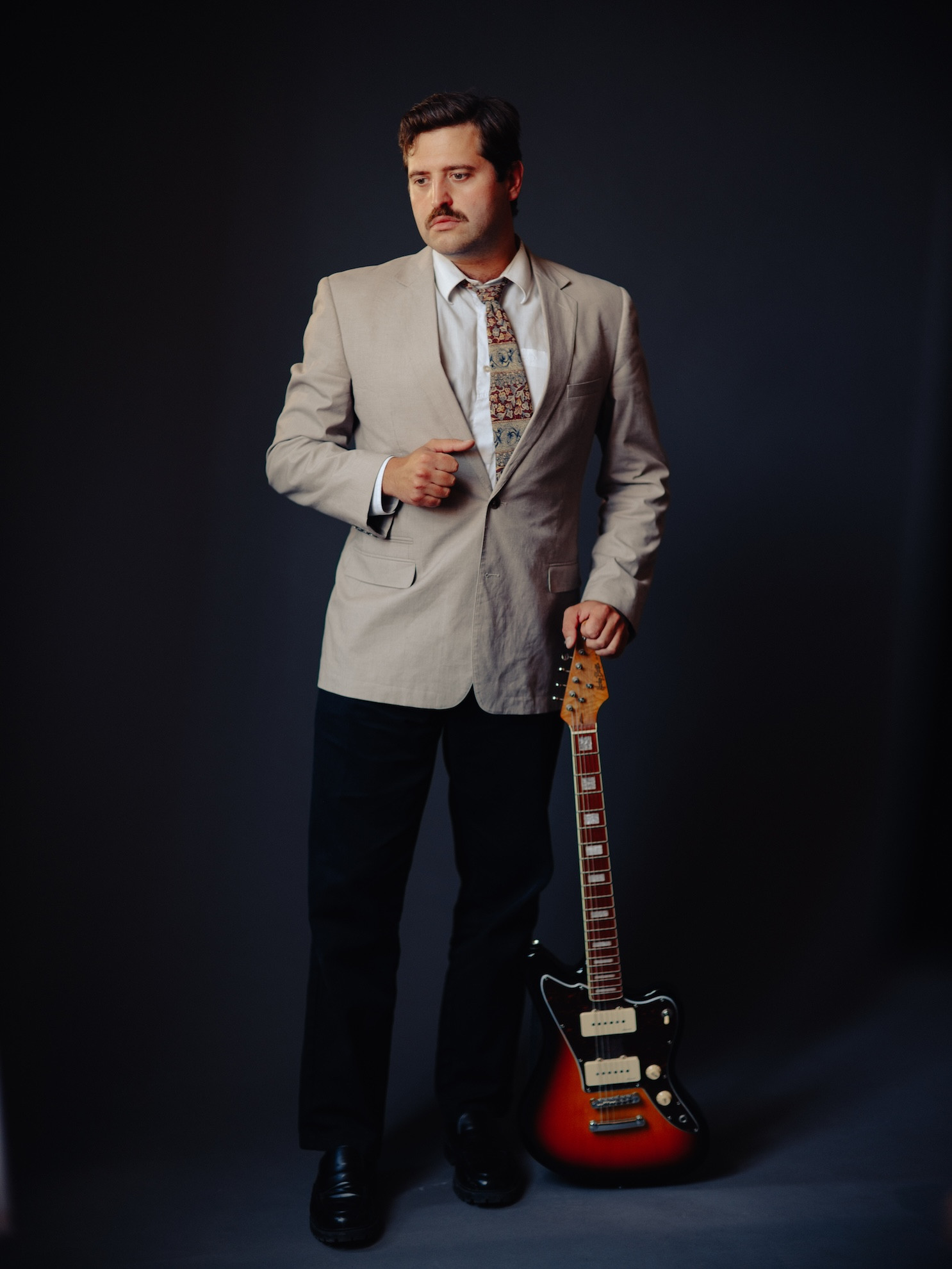
Gellért Szabó is a composer, conductor and performer based in Leipzig, Germany. His work combines contemporary composition with influences from free improvisation, noise and the expressive richness of the late nineteenth century. He is the founder and artistic director of the 23-piece Ideal Orchestra, an ensemble dedicated to large-scale experimental music of sweeping emotional intensity. Alongside this work, Szabó performs internationally with his solo project Radical Radio Show, exploring symphonic textures and immersive sound worlds through a single electric guitar and live electronics. His music is driven by a search for intensity, vulnerability and uncompromising emotional expression.

© Christoffer Askman

From the Culture Yard in Helsingør, ships glide past Kronborg Castle through the narrow waters of the Øresund – a reminder of the trade routes that, for centuries, have carried goods, people and power between the Nordic region and the wider world. It is an apt point of departure for the Passage Festival, and for Marie Dahl's vocal work Silk. Sugar. Sand, which explores the intertwined histories of three materials.

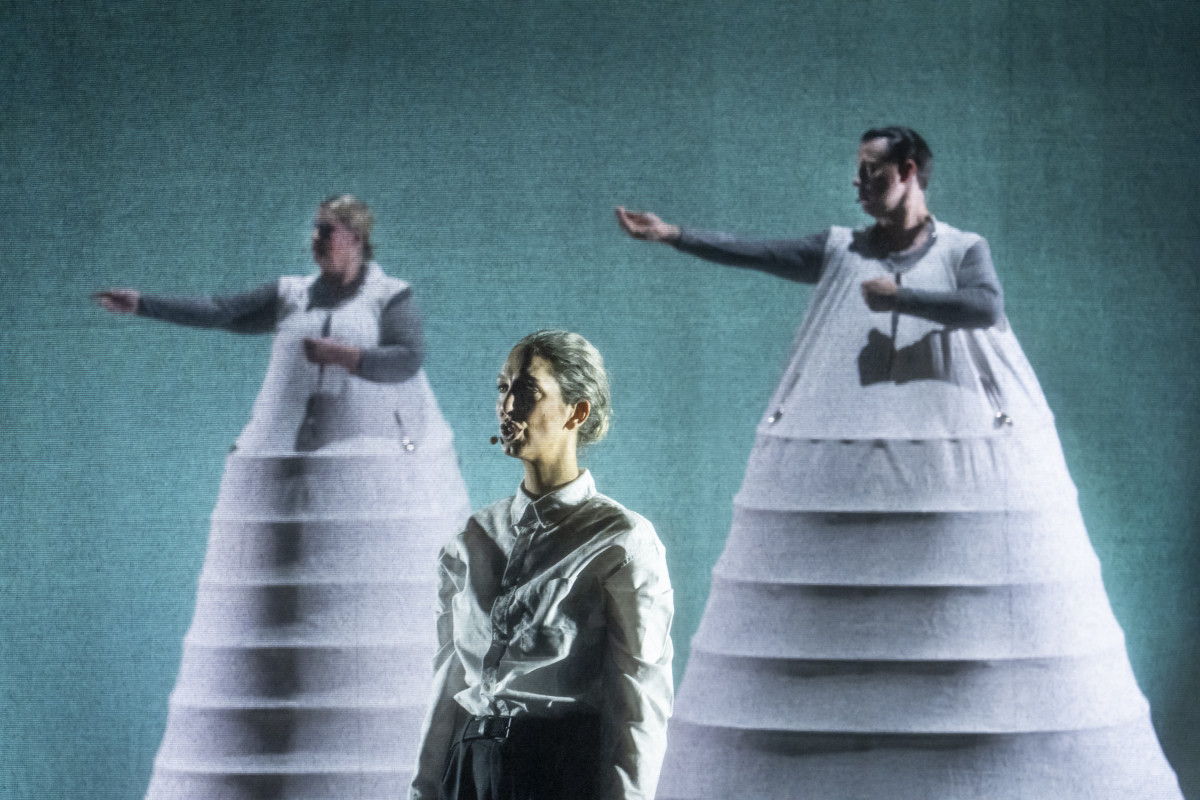
Silk. Sugar. Sand is a vocal performance in three acts tracing the historical journeys of these materials through colonialism, the global economy and geopolitics. Five singers from Ars Nova Copenhagen perform within a minimalist scenography consisting almost entirely of coloured light and three sets of costumes that transform throughout the performance: first silk dresses, then crinoline-like structures evoking sugar loaves, and finally grey stone-like forms suggesting accumulations of sand.

The work's central device is to translate the physical properties of these materials into vocal expression. At one moment, the elasticity of silk becomes soft, flowing polyphony; at the next, a cocoon-like electronic crackle. Sugar's crystalline structure is rendered as sharp vocal attacks – brief, whip-like cracks – as well as sweet, intimate whispers, while sand creaks and rustles, resonating with a libretto about economy and domination, violence and desire.

The performance has no conventional narrative, and the five singers portray no distinct characters, moving somewhat stiffly across the stage, as performers often do when their primary focus is on the voice. Comparisons with Hotel Pro Forma's Flammenwerfer are difficult to avoid. There, the production's rigorous aesthetic was counterbalanced by C.F. Hill's wildly expressive visual universe and Blixa Bargeld's deeply vulnerable stage presence. Those qualities are missing from Marie Dahl's carefully controlled staging, which could have benefited from more of the sensitivity and chaos that also form part of Kirsten Dehlholm's artistic legacy.


© PR

»To us, music is a primal, elemental force that allows us to shed our inhibitions.«

Leizure is a Copenhagen-based quintet operating at the intersection of post-punk, no wave, and experimental rock. The band’s sound is characterized by atonal vocals, piercing saxophone, hypnotic guitar riffs, and a rhythmic foundation that oscillates between tight precision and raw intensity. 

The band’s upcoming album, The Guillotine, explores themes such as societal decay, upheaval, and the challenging of established structures – all conveyed through a direct and high-energy musical style.

© Robin Skjoldborg
© Robin Skjoldborg

Danish musician, author, and artist Martin Hall has died at the age of 63. According to his family, he passed away from a heart attack at his home in Frederiksberg on Tuesday, 21 July.

Since the early 1980s, Hall left an indelible mark on Danish music and cultural life – first with Ballet Mécanique and Under For, and later through an extensive solo career that moved effortlessly between experimental music, electronic pop, poetry, performance, and literature. He leaves behind one of the most substantial discographies and bibliographies in Danish cultural history.

© Kåre Viemose
© Kåre Viemose

Seismograf is heading off on summer break to check out the ocean's deep vibrations.  🌊🤿  See you in August. Have a great summer!