in brief
17.02.2023

Stram hidkaldelse med okkulte strejf

Pauline Hogstrand: »Chants«
© Henrik Adamsen Photography

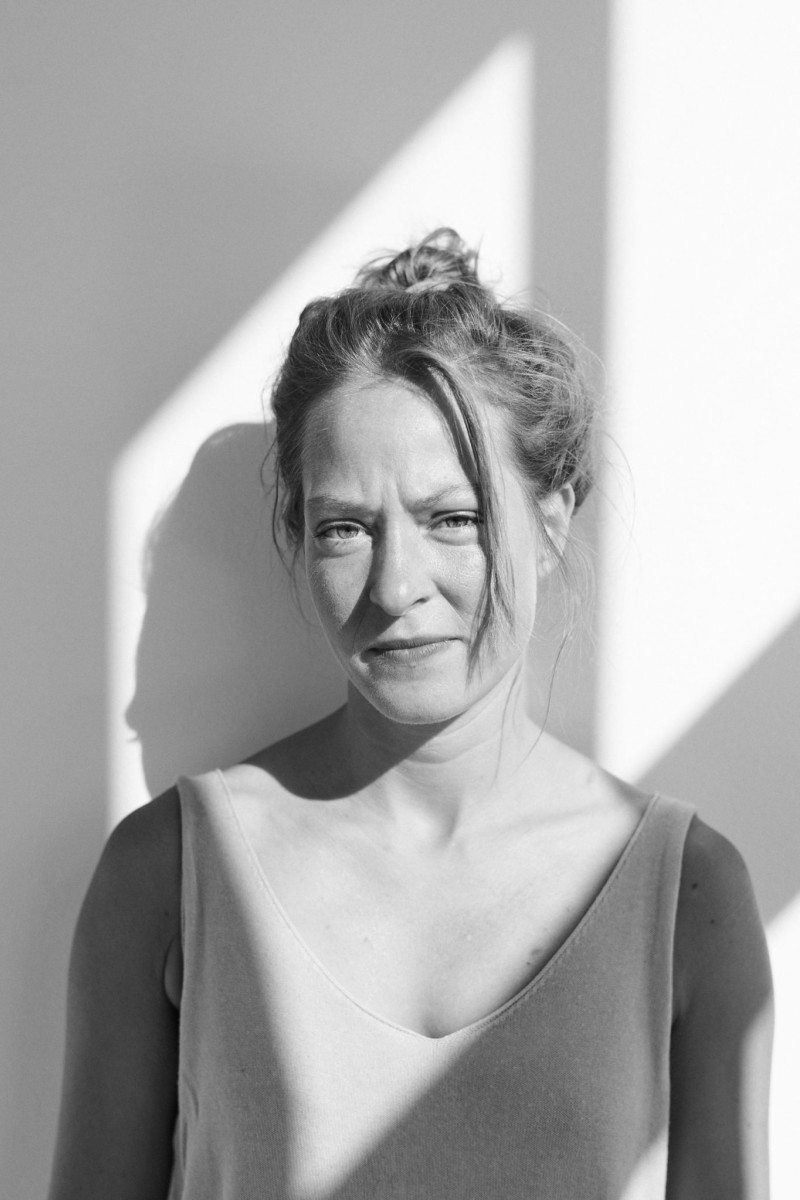
Med dronende strøg på en løs bratschstreng begyndte Damkapellets uropførelse af Pauline Hogstrands tyve minutter lange ritual Chants (2022) som en invitation.

Først bredte tågen sig til de seks øvrige strygere som rene naturintervaller, siden farvedes den mørk med to celloer i front. Men værket var draget af lys, og med hver sit gradvise ryk opad bevægede musikerne sig som en sværm af fugle mod solen.

Den dur, de landede i, fik følgeskab af et fløjtende stueorgel, men også af drilske stikker på bongotrommer og gulvtam, der vekslede mellem lige og trioliserede slag. Humøret bredte sig til et enkelt strygermotiv med indlejret glidetone, men fik også et okkult touch, da en violinist pludselig nynnede med som halvgemt sopran.

I sidste ende trumfede den rene velklang sig igennem, også selvom slagtøjet blev mere sprælsk og strygerne i frenetiske glimt lagde tryk og overtoner ned i deres strenge. Hogstrands meditative hidkaldelse var velgørende stram og lod sig ikke lokke ud på overdrevet.

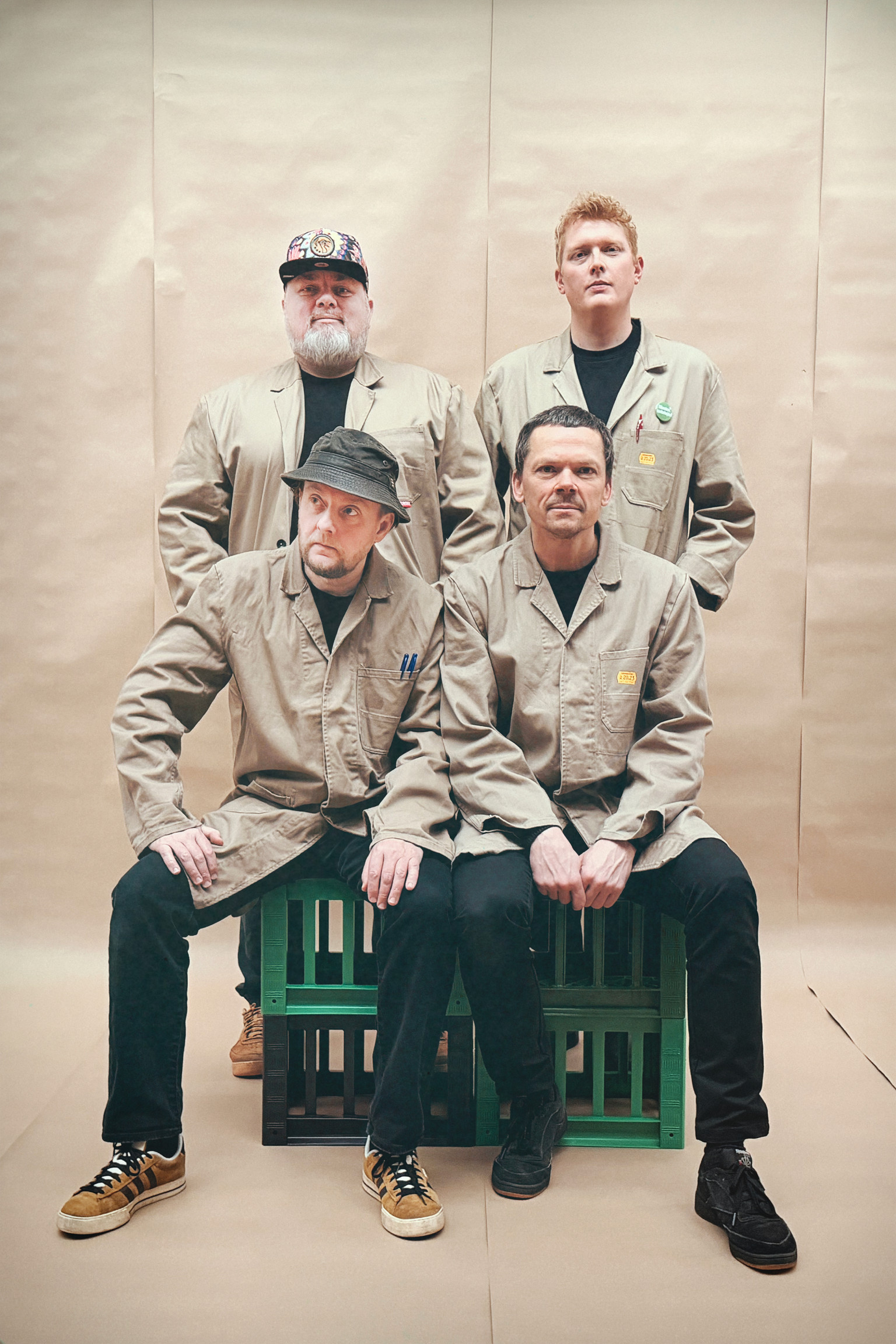
Størst slægtskab havde Chants derfor nok med Lo Kristensons indledende bølgeværk på Damkapellets nye og charmerende album, Demiurge. Savnede man noget, var det, at det bid og den tumult, der følger efter på resten af albummet, også fik plads ved den korte koncert:

Randi Pontoppidans skærsild af glidninger og kvælning, Kirstine Lindemanns balstyriske percussionfjolleri og Greta Eacotts fabelagtigt ondsindede mystik. Men så er der noget at glæde sig til, når Damkapellet en dag folder hele repertoiret ud.

in brieflive
09.03

Beauty in Decay

Thure Lindhardt, Ensemble Hermes, Sophie Haagen & Mikkel B. Grevsen: »Helvedesblomsterne«
© Anders Hede, Musikhuset

We sat in slow decay for an evening in the vestibule of Hell. It was during an ambitious, multisensory interpretation of Charles Baudelaire’s poetry collection Les Fleurs du mal (1857) – Helvedesblomsterne (The Flowers of Evil). Director Anna Schulin-Zeuthen and composer Mikkel B. Grevsen brought together mezzo-soprano Sophie Haagen and actor Thure Lindhardt with the six string players of Ensemble Hermes, adding electronic music to the mix. This Frankenstein-like staging transported modernist poetry into 2026, where the motifs stretching between beauty and decay still – despite many scientific advances – remain a fundamental condition.

In Musikhuset Aarhus, the stage was decorated with lush and withered flowers as vanitas symbols. Lindhardt opened with a recitation that shattered the fourth wall: with both humour and intensity he addressed us directly in the audience – hypocrites and future corpses.

In contrast to the almost seamless sonic unity of Haagen’s dark voice, the string players’ sustained textures and the ghostly distortions of the electronics, Lindhardt’s reading appeared as a strange but necessary disturbance. He prowled about with a folder tucked under his arm like an awkward outsider – the poet as eternal observer.

For my part, I dutifully tried to follow the printed programme sheet, but soon gave up and instead – quite in the spirit of the work – allowed myself, hypocritically, to be intoxicated and seduced. Helvedesblomsterne succeeds as a bold and grand project. Yet the performance also balances a little too cautiously between harmonic beauty and the nineteenth-century uncanniness that in Baudelaire crawls with death all the way into the bones.

English translation: Andreo Michaelo Mielczarek

© Diana Aud

»For me, music is both the beat that gets me through my run, sets the mood for everyday life, but not least my personal soundtrack that evokes past events and moods throughout my life.« 

Lasse Andersson is the museum director of Kunsten Museum of Modern Art and Utzon Center, as well as the chairman of the board of Krabbesholm Højskole and the Packness Foundation. Before museums took up all his time, he wrote his PhD thesis The City and the Creative Entrepreneurs, co-founded the art and technology house Platform4, and was behind both the LasseVegas office and the technology project Nulkommafem. He has also headed the Urban Design department at Aalborg University. Today, he works purposefully to develop cultural institutions as modern spaces for learning: places where people meet and connect through aesthetic experiences that move, challenge, and open new perspectives on the society we share. For Lasse Andersson, art and architecture are not just mirrors of the world – they help shape it. With that ambition, he has curated exhibitions such as Fatamorgana – Utzon møder Jorn (2016) I Arkitektens Verden – Reiulf Ramstad (2019), Pierre Huyghe – Offspring (2022), Tal R & Mamma Andersson – omkring Hill (2023) og Michael Kvium – Knudepunkt (2025).

in brieflive
07.03

Sound Crusts in Slow Motion

Abul Mogard
© Claudia Gschwend
© Claudia Gschwend

It has become common to describe a strain of ambient music as »cinematic«, thereby – perhaps unintentionally – dismissing it as mood-setting functional music rather than an art form in its own right. Yet the exploration of static sound fields and atmospheric drone structures long predates their use as a cinematic device. Within this tradition, stretching from Morton Feldman to Éliane Radigue and Phill Niblock, the Italian composer Guido Zen has, for the past fifteen years or so, inscribed himself under the pseudonym Abul Mogard. In the late 1990s he moved through London’s electronic underground with the duo Gamers In Exile and has since collaborated with, among others, the Danish composer Goodiepal.

At the concert at Alice, Mogard’s broad synth textures emerged like banks of fog. Behind a table densely packed with drum machines, mixers and patch cables – tendrils of wires curling between the machines – the black-clad Mogard stood illuminated by small clip lamps attached to the edges of his equipment. The tones were elongated, almost motionless. Time was not measured in bars but in intensity: bass resonating in the chest; a subtle adjustment of atmospheric pressure. Undramatic, yet unstoppable. The textures shifted so gradually that one often registered the changes only after they had passed. Harmonic modulations rarely felt like traditional chord changes, but rather like shadows moving across a surface.

Synth layers slid into one another with near-geological slowness, settling like accumulated sediment – gentle and colossal at once. Mogard lingered on the single tone long enough for it to begin revealing its inner life: tiny trembling vibrations, almost microscopic irregularities in the crust of sound. The sound pulsed from within, crossed by undulating patterns of interference.

English translation: Andreo Michaelo Mielczarek


in brieflive
06.03

Labour of Birth

Katinka Fogh Vindelev, Sankt Annæ Pigekor, Kind of Opera et al.: »Elegier over jorden«
© PR

»This pain is not only yours,« chants a choir standing in a circle around the woman in labour. »This pain is not only yours,« comes the enveloping echo from the rest of the choir, positioned along the walls of the ceremonial hall, forming a circle around the audience and inscribing us into the labour of female fertility.

Elegier over Jorden (Elegies over the Earth) is based on Sofie Isager Ahl’s reworking of the myth of Persephone, daughter of the goddess of agriculture and queen of the underworld. The Greek myth is one of those that explains the barrenness of winter by Persephone’s descent into the underworld, but in this reinterpretation she returns to earth to give birth. We follow her labour over nine months while members of the choir work in the fields, struggling for crops under pressure from the current climate collapse. Here, the regeneration of nature is not a matter for higher powers but a struggle that begins in the body and in the soil – much like that of the woman giving birth.

The ecofeminist interconnectedness of the female body and nature has been a hot topic for several years now, and I am unsure what Elegies over the Earth adds to it. My hesitation stems mainly from the harsh acoustics of the ceremonial hall at Ny Carlsberg Glyptotek which, combined with Marie Topp’s choreography – often positioning singers with their backs turned to parts of the audience – makes it difficult to hear Ahl’s words.

When Elegies over the Earth works best, it is in the dialogue and timing between the choir, the soprano and composer Katinka Fogh Vindelev in the role of the labouring Persephone, and the minimal ensemble of two violins and a cello. When the voices of Sankt Annæ Girls’ Choir curl around the cello’s dark timbre, and when the primordial woman Persephone’s lament is allowed to hang in the room for a moment before the choir resumes, the performance touches on something real. Yet the experience never quite settles in the body, and the painful struggle of birth – despite the choir’s insistent chanting – never truly becomes mine.

Performances on 5, 7 and 8 March

English translation: Andreo Michaelo Mielczarek

© PR

»For me, music is... I was about to say everything, but that's still an exaggeration. I'm a sensitive person, and therefore all art - but especially music - affects me in different ways. Music has both a therapeutic and an artistic meaning for me. Music affects my mood and gives me energy. It can also put me in a certain state where I see things differently and reflect in a different way than I would otherwise. I always have headphones in when I'm alone, I sleep to music, I work to music. The first thing I did as a new councilor was to set up my father-in-law's old B&O system in the councilor's office. It plays every day, and I very rarely close the door.« 

Jesper Kjeldsen is councilor for Culture and Citizen Service in Aarhus and a member of the city council for the Social Democrats. He graduated from Kaospiloterne and has a background as an entrepreneur, including with the company Postevand. Before his political career, he worked creatively with culture and music – he has released music, been a DJ and taught as a dance teacher. Jesper Kjeldsen has lived and worked in Greenland for a long period of time, which has influenced his view of community, culture, climate and society.