in brief
20.04.2023

Lad os alle synge med Orfeo

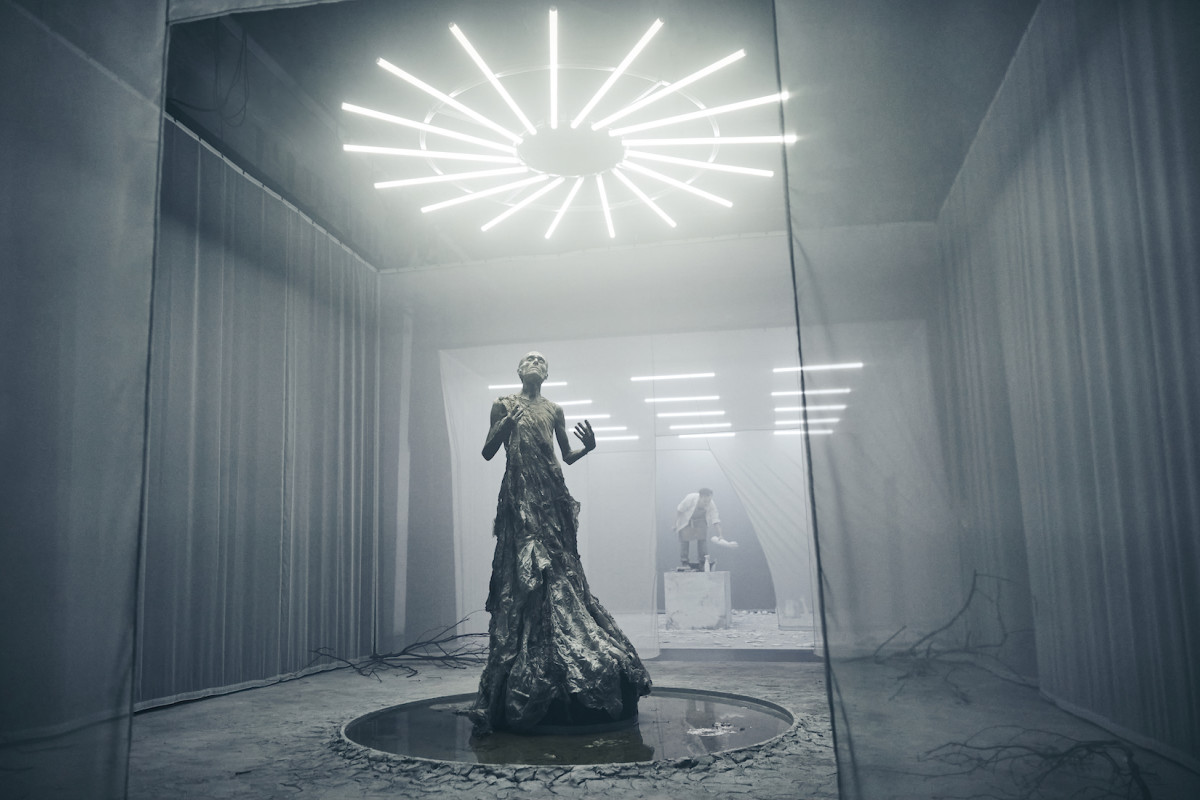
Christian Lollike, Rasmus Zwicki, Madame Nielsen: »Orfeo«
© Emilia Therese
© Emilia Therese

Tingene er ikke, som de plejer på Sort/Hvid. Efter vi har hængt vores jakker, bliver vi bedt om at gå udenfor, så alle bliver blæst igennem af en frisk forårsvind. Da dørene åbnes, længes vi derfor alle efter underverdenen og skynder os ind – og bliver prompte givet hver vores maske og lukket ind i en mindre labyrint, som det ellers er op til os at gå på opdagelse i. Langsomt begynder de at synge en sang, og før vi ved af det, bliver vi gennet ind i nogle lidt mere normale rammer med stolerækker og en scene.

Orfeo er mange ting: Det er en teaterkoncert, der giver os beretningen om Orfeus’ rejse til underverdenen, med Monteverdis evigt genkendelige musik. Det er også en hyldest til Monteverdis opera, med nye akkompagnementer komponeret af Rasmus Zwicki, der ikke føles forcerede. Det er også total(musik)teater, da vi får lov at synge med på skuespillernes simple og forførende klagesang. Og før vi ved af det, sendes vi tilbage i labyrinten, og nu er vi virkelig en del af underverdenen, for vi inviteres til at tage del i aktiviteterne i underverdenen.

Orfeo er en forestilling, der først og fremmest lykkes med at give en følelse af længsel – vi har aldrig nok tid, der hvor vi er. Lige som jeg var begyndt at finde rundt i labyrinten, blev jeg smidt ud, lige som jeg længtes efter endnu en Monteverdi-arie, stoppede musikken, og lige som jeg turde nærme mig Madam Nielsen og række hånden frem, begyndte klagesangen igen, og vi blev bedt forlade underverdenen. Den samme symmetri, der er i Monteverdi, oplever vi også i Orfeo.

Min gåsehud har endnu ikke lagt sig, og jeg længes tilbage til underverdenen, til at synge med, til at høre Monteverdis musik. På den måde var noget, som det plejer på Sort/Hvid, for det er en oplevelse, der bliver siddende.


© PR

»For us, music is... magic? Aside from the fact that we are huge fans of silence, the closing line of one of our upcoming singles perfectly captures our relationship with music: 

'Music feels like magic to me / A superior art form in a marketplace / Trying to find an empty space'. 

That is what it can feel like as a songwriter and performing musician. We try to hold onto an almost childlike infatuation with music, yet the art form we work in – alternative-leaning pop-rock – was created and has evolved 'in a marketplace' driven by powerful economic forces. As a romantic, that can sometimes be a bit disheartening...«

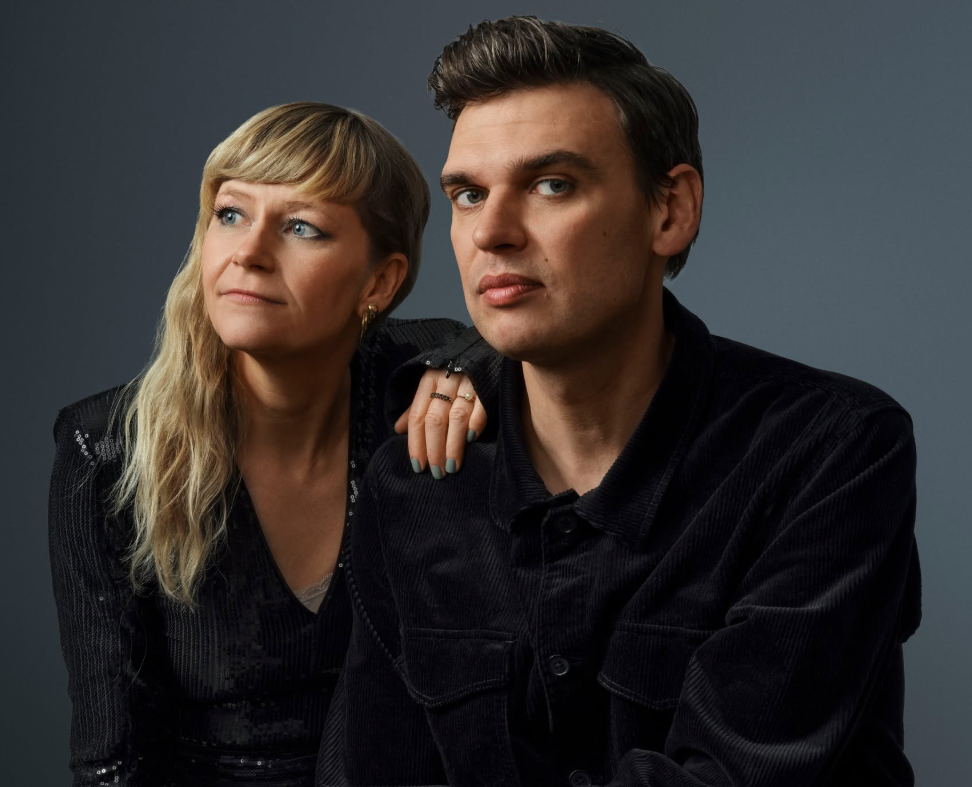
Late Runner consists of Asger Tarpgaard and Tanja Forsberg Simonsen, both formerly of the bands Superheroes and Private.

© PR
© PR

It was officially confirmed only recently that Icelandic avant-garde star Björk is visiting Bielsko-Biała today. After keeping it under wraps until the last moment, the organizers of the Wędrujący Festiwal (Wandering Festival) have revealed that Björk is the artist closing out the festival's grand finale.

© Kåre Viemose

»Recently, I discovered that when a couple of thousand people clap their thick gloves in minus 30 degrees, it sounds like the softest techno – a freezing space where the cold air turns into a wave of warmth, and we, in a moment of collective devotion, become one with the rhythm, one with the invisible bond that connects us in the warmth of silence. Music is not just sounds, but a vain attempt to capture the infinite, which has always been and always will be.«

Andreo Michaelo Mielczarek has been the editor-in-chief of Seismograf since 2021. He is also a music critic and cultural journalist at Kristeligt Dagblad and Århus Stiftstidende/Avisen Danmark and has over the years written to publications such as Kunsten.nu, Glissando (Poland), Neural (Italy), Raw Vision (UK), Nutida Musik (Sweden), Kunstkritikk (DK/Sweden), Iscene.dk, B.T., and Jazz Special. He is the author (together with Lars Muhl) of the book HVA' SAA! En guidet rutsjebanetur gennem Aarhus – før, nu og i fremtiden (2024) and has also contributed to the anthology on music criticism Man skal høre meget (ed. Thomas Michelsen and Claus Røllum-Larsen, 2024). He is a founder and partner in the Polish-Danish cultural organization Kultur(a), and wherever there is a piano, he will be there, eager to coax a melody from it.

© Aria Leth Schütze

»For me, music is an opportunity for transformation.«

Aria Leth Schütze is based in Copenhagen and is the creative force behind the music projects Alto Aria and Samler På Dig. They are a co-founder of the record label Rhizome and a co-editor of the music magazine Passive/Aggressive. Their practice brings together electronic and acoustic music in an exploration of transformation.
 

© PR

»For me, music is the art form that – if measured in hours and minutes – occupies by far the greatest part of my life. I cannot sing, nor can I play an instrument, but I can listen – as a happy amateur – while cycling, on the dance floor, and, above all, at the office. I almost always work – that is, write – to music.« 

Mikkel Krause Frantzen (b. 1983) is an associate professor at the Department of Arts and Cultural Studies, a literary critic for Politiken, and the author of several books in English and Danish, such as En fremtid uden Fremtid (2018), Klodens Fald (2021), and Slutspil (2024).