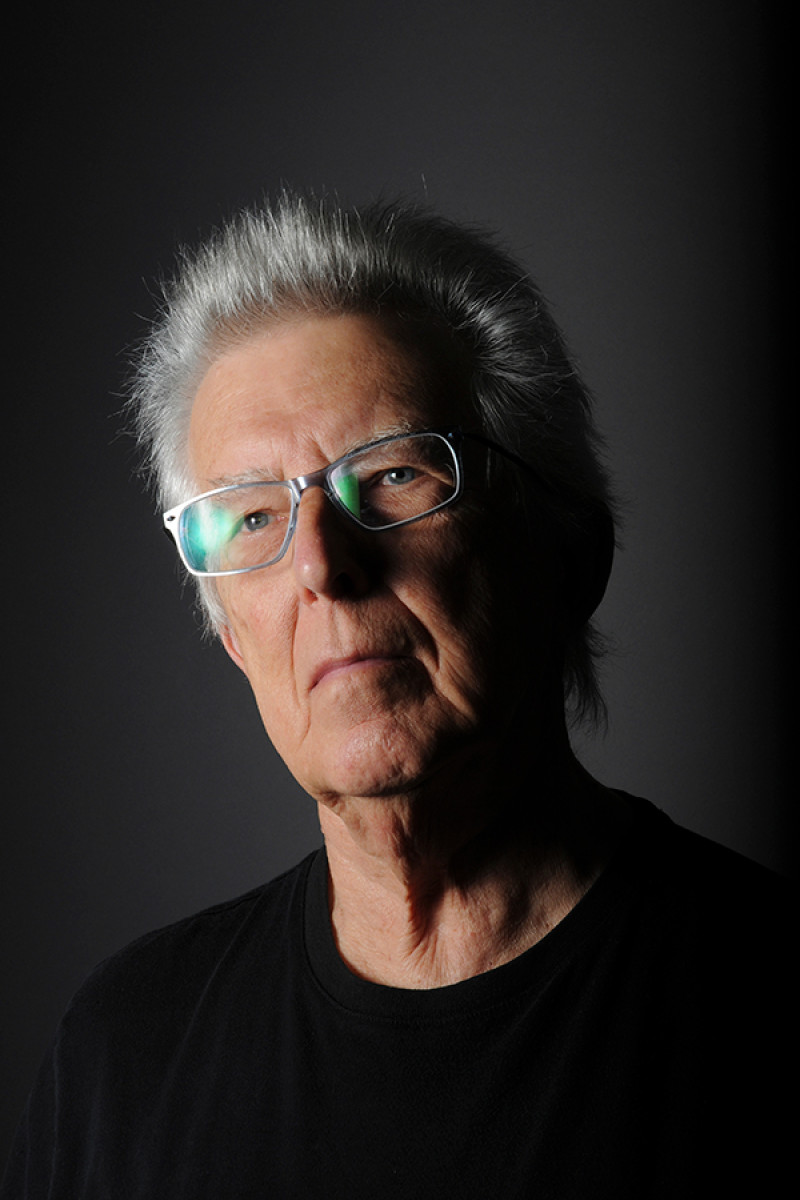

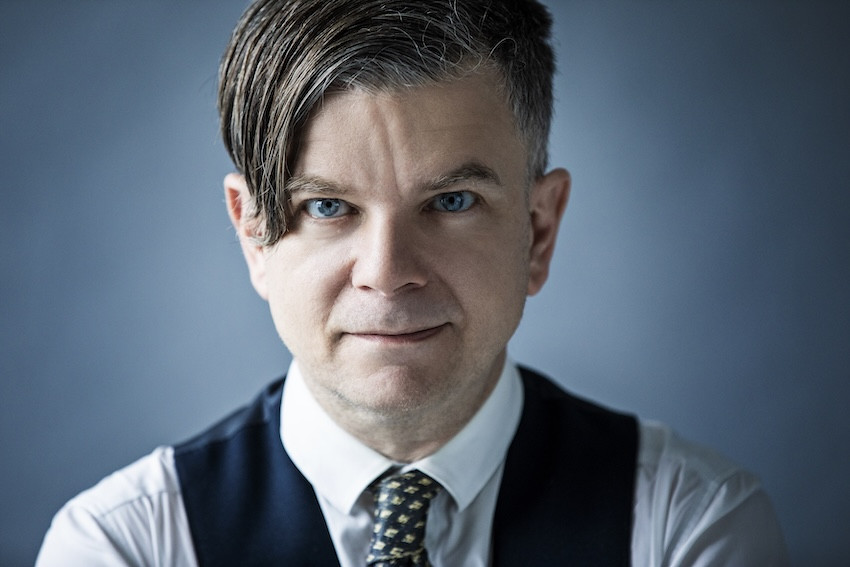
»Who ever said that music is ‘just’ music? To me, it is anything but that: an urge to understand and explain it all. A piece of jewelry I wear every single day. A joy that can, at times, run deep. An ever-changing imprint of millions of stitches in my heart. A longing to disappear.«
Henrik Marstal is a musician, author, and music researcher. He holds a PhD in musicology, is a senior lecturer at the Rhythmic Music Conservatory, and frequently appears in the media as an expert source on music. His areas of interest include contemporary music, such as electronic music. This winter, he will release both a new album with the pop group ibens and a book about Else Marie Pade, published by the British publishing house Bloomsbury.

Roger Reynolds: Still worth its chops?
Nice idea: an entire concert of music by Roger Reynolds, the experimental American who won a Pulitzer in 1989 but whose music doesn’t sound that experimental anymore.
Even his newest music. Nørrebro hosted the world premiere of Reynolds’s new oboe concerto Journey as part of Matthias Reumert’s mini-festival Offbeat. It is an entirely un-rooted piece – a road movie betraying little allegiance to key, material or system as it capers forwards through a series of mystical images. Jacqueline Leclair played it charismatically. Necessary, as there can seem little beyond surface sound in the piece.
Mistral went big on Reynolds’s taxonomical tendencies. It is a score in which instrumental groups stick together before forming fragile coalitions across timbral boundaries – a process that plunges them into mania. The work’s antiphonal qualities and roaring brass cried out for a bigger space than Koncertkirken, or just a different spatial configuration.
Those who stuck around after an hour-long interval caused by a medical emergency were rewarded with the evening’s highlight: Transfigured Wind III. Again, Reynolds sanctifies musical gesture here: a solo flute cries, huffs and puffs (sometimes beguiling, sometimes clichéd) and is answered by a series of delicate ensemble ritornellos that transfigure the same material. Kerstin Thiele played it with an ardour neatly balanced-out by Reumert’s cool conducting.
In its patience, this last piece went deeper – its simpler structure drawing more nuance from Reynolds and giving us a clearer view of his quasi-spectral aesthetic. Is that aesthetic still worth its chops? Reynolds claims nobody can appreciate his music in one hearing. I certainly need more convincing.
»For me, music is at its best when it appeals to both the head and the heart. I love music that plays with language and understands how words create images, while also possessing its own unique sonic quality and mood. It’s an added bonus if the music energizes me during a run, makes me dance in the kitchen, or makes me laugh. Or cry. Music can be like a chocolate-coated marshmallow treat with a surprise inside.«
Lone Hørslev is an author of poetry, novels, and song lyrics, as well as the TV series Den gode stemning. Together with Mads Mouritz, she forms one half of the Mouritz/Hørslev Project, and she recently wrote lyrics for the musical theatre production STOLT in collaboration with Katrine Muff. The songs can be found on the album Jeg ønsker mig.