in brief
01.06.2023

Dystopisk datastorm er en fortryllet lydmaskine

Copenhagen Contemporary: »Yet, It Moves!«
© David Stjernholm
© David Stjernholm

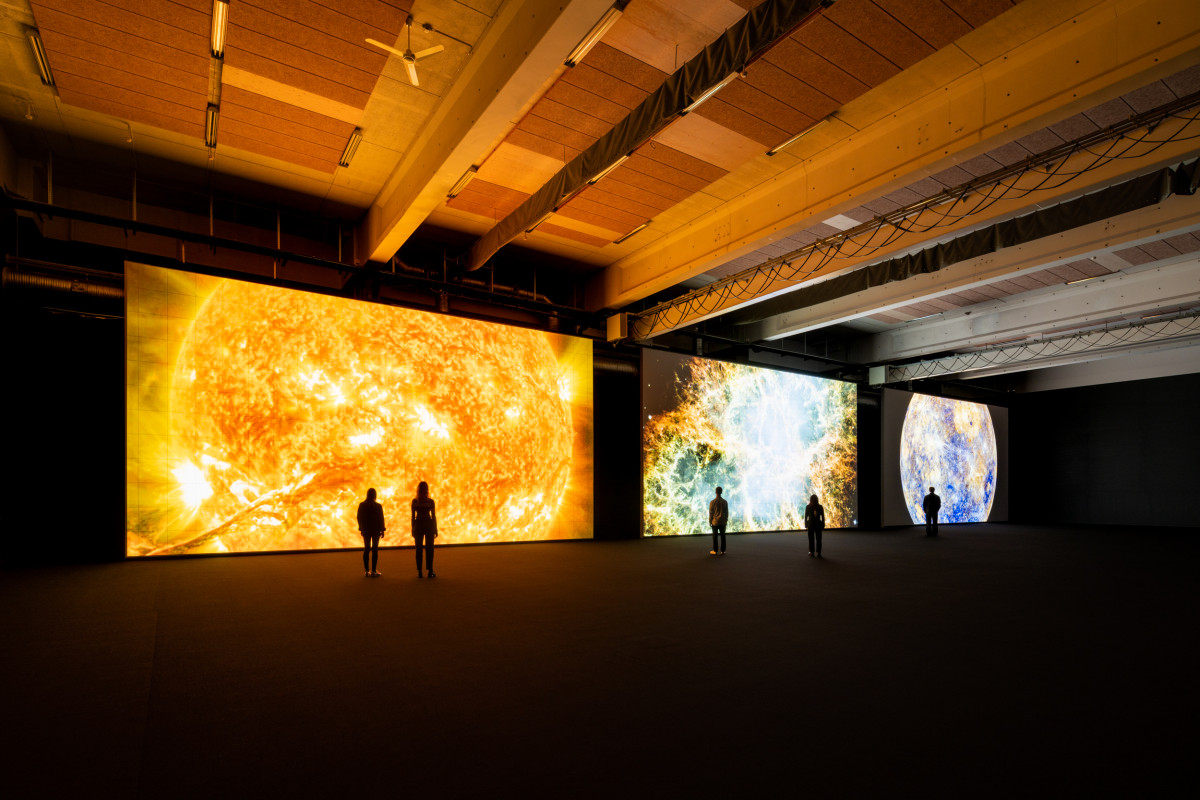
Byens mest luksuriøse lydrum akkurat nu? Nemt: Ryoji Ikedas enorme videotriptykon Data-Verse 1/2/3 gør ikke kun verden til et stramt mønster af ubegribelige datastrømme – fra landkort, solstorme, hjernescanninger, overvågningskameraer – men forvandler også Copenhagen Contemporarys tømte svejsehal til en fortryllet lydmaskine af digital diagnosticeringslyst.

Øverst i det spændte akkompagnement til billedstormen tikker et konstant lykkehjul, i bunden changerer dyb bas som en dystopisk anelse: Flyver vi for tæt på solen? Ubønhørligt faste sinusintervaller nagler den visuelle hast fast i nøgterne grids, men trods klinisk coolness står værket aldrig stille, takket være hule synthdroners actionjagende springmodulationer.

Lyden i det store, tomme rum er eminent. Sinusbølgerne skærer præcist, men fyldigt igennem med deres oplistning og rensning af data. En pige med rottehaler løber grinende forbi i det blinkende mørke; hvis dette portræt af en verden skrevet i binær talkode er en dystopi, er den til at leve med.

Anderledes organisk, men lige så fascinerende, er Tongues of Verglas, Jakob Kudsk Steensens 3D-visualisering af en kollapset gletsjer i rummet ved siden af: erindringen om det tabte bestøvet af isknitren, new age-fragmenter og et ordløst herrekors tomme intervaller. En rørende besyngelse af natur og forgængelighed.

Fortænkt virker til gengæld Jenna Sutelas installation Pond Brain, hvor sammenhængen mellem et antropomorft vandkar med drypmikrofon og den brummende kvadrofoni af AI-behandlet mælkevejsstøj omkring det er til at overse. Heldigvis skal man tilbage til Ikedas megalomane verdensportræt for at komme ud igen.

© PR

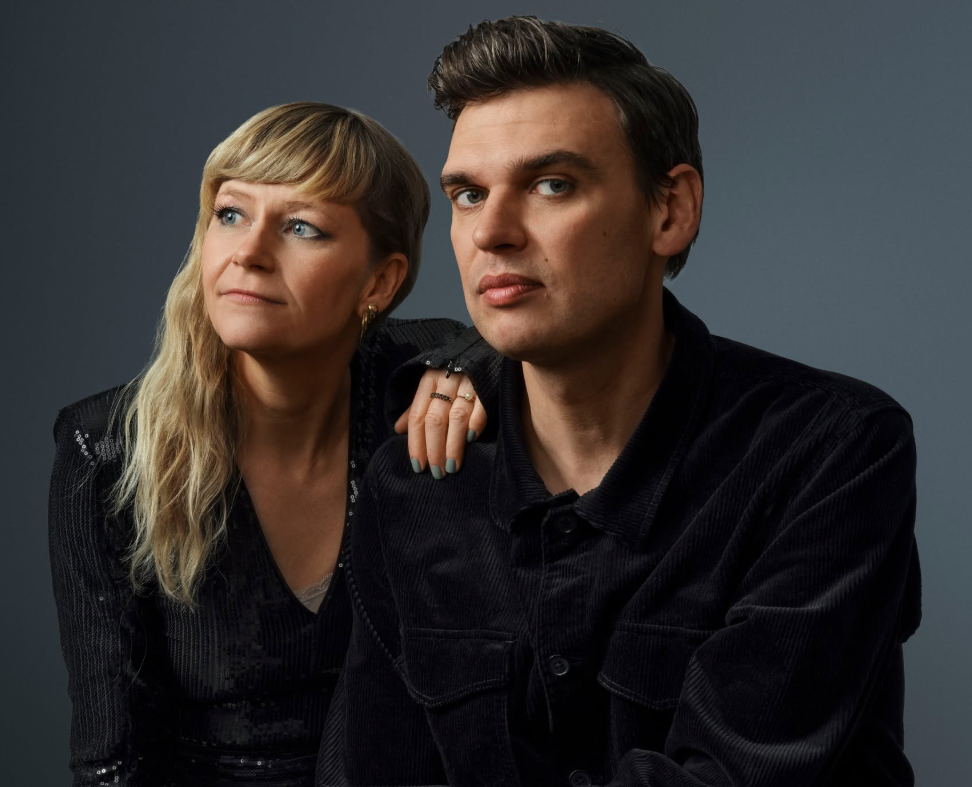
»For us, music is... magic? Aside from the fact that we are huge fans of silence, the closing line of one of our upcoming singles perfectly captures our relationship with music: 

'Music feels like magic to me / A superior art form in a marketplace / Trying to find an empty space'. 

That is what it can feel like as a songwriter and performing musician. We try to hold onto an almost childlike infatuation with music, yet the art form we work in – alternative-leaning pop-rock – was created and has evolved 'in a marketplace' driven by powerful economic forces. As a romantic, that can sometimes be a bit disheartening...«

Late Runner consists of Asger Tarpgaard and Tanja Forsberg Simonsen, both formerly of the bands Superheroes and Private.

© PR
© PR

It was officially confirmed only recently that Icelandic avant-garde star Björk is visiting Bielsko-Biała today. After keeping it under wraps until the last moment, the organizers of the Wędrujący Festiwal (Wandering Festival) have revealed that Björk is the artist closing out the festival's grand finale.

© Kåre Viemose

»Recently, I discovered that when a couple of thousand people clap their thick gloves in minus 30 degrees, it sounds like the softest techno – a freezing space where the cold air turns into a wave of warmth, and we, in a moment of collective devotion, become one with the rhythm, one with the invisible bond that connects us in the warmth of silence. Music is not just sounds, but a vain attempt to capture the infinite, which has always been and always will be.«

Andreo Michaelo Mielczarek has been the editor-in-chief of Seismograf since 2021. He is also a music critic and cultural journalist at Kristeligt Dagblad and Århus Stiftstidende/Avisen Danmark and has over the years written to publications such as Kunsten.nu, Glissando (Poland), Neural (Italy), Raw Vision (UK), Nutida Musik (Sweden), Kunstkritikk (DK/Sweden), Iscene.dk, B.T., and Jazz Special. He is the author (together with Lars Muhl) of the book HVA' SAA! En guidet rutsjebanetur gennem Aarhus – før, nu og i fremtiden (2024) and has also contributed to the anthology on music criticism Man skal høre meget (ed. Thomas Michelsen and Claus Røllum-Larsen, 2024). He is a founder and partner in the Polish-Danish cultural organization Kultur(a), and wherever there is a piano, he will be there, eager to coax a melody from it.

© Aria Leth Schütze

»For me, music is an opportunity for transformation.«

Aria Leth Schütze is based in Copenhagen and is the creative force behind the music projects Alto Aria and Samler På Dig. They are a co-founder of the record label Rhizome and a co-editor of the music magazine Passive/Aggressive. Their practice brings together electronic and acoustic music in an exploration of transformation.
 

© PR

»For me, music is the art form that – if measured in hours and minutes – occupies by far the greatest part of my life. I cannot sing, nor can I play an instrument, but I can listen – as a happy amateur – while cycling, on the dance floor, and, above all, at the office. I almost always work – that is, write – to music.« 

Mikkel Krause Frantzen (b. 1983) is an associate professor at the Department of Arts and Cultural Studies, a literary critic for Politiken, and the author of several books in English and Danish, such as En fremtid uden Fremtid (2018), Klodens Fald (2021), and Slutspil (2024).