in brief
09.07.2023

Konteksten drukner i klang-jazzercise 

Matt Choboter: »Postcards of Nostalgia«
© PR
© PR

Hvorfor pressematerialet til Matt Choboters album Postcards of Nostalgia dvæler så meget ved begrebet jazz, er mig en gåde, selvom Choboter til tider rammer samme toner som Keith Jarrett, når han undersøger genrens ydre rammer. De toner, den København-baserede canadier rammer, er nærmere i familie med kontekstualiseret ambient, klangkunst og især hele skolen omkring John Cages ideer om prepared piano og konkret musik. Tilsæt et skvæt balinesisk gamelan-musik, og det kan knipses jazzet sammen.

Med lovningen på ti værker skabt på baggrund af radikalt nye tuninger og magnetiske manipulationer af klaveret, kunne man forvente helt unikke toner. Og når det er bedst, blandes klaverets maniske gungren med dundrende dommedagsgamelan, susende sinus-toner og hvid støj. Når det er værst, byder Choboter på ligegyldige præparerede stykker, der lyder som hvilken som helst anden rytmekonsstuderende, der spytter tyggegummi ind mellem tangenterne. 

Trumfen er »Fontes-des-gaumes« – grænserne mellem manipulationer, syntese og feltoptagelser er total, og jeg kommer i tvivl om, hvad er virkelighed, og hvad er Choboter. Omvendt lyder næste nummer, »Eleusian Mystery«, hvis titel er lige så generisk som tonerne, som et forsøg på at lave et artsy soundtrack til en dårlig B-film, der moonlighter som psykologisk horror. Ikke synderligt nyt, og man glemmer hurtigt konteksten.

Netop konteksten kan være svær at få en fornemmelse af, når Choboter banker på klaverets karosseri. Postcards of Nostalgia tårner sig aldrig op fra de andre tusindvis at prepared piano-værker, og netop den ærgerlige duft af anonymitet forhindrer lytteren i at relatere og genfortolke værkerne i en tænkt kontekst. En evne som god klangkunst skal have. Det opnår Choboter kun i momenter, og det er måske det, der gør værket jazzet?  

© PR

»For us, music is... magic? Aside from the fact that we are huge fans of silence, the closing line of one of our upcoming singles perfectly captures our relationship with music: 

'Music feels like magic to me / A superior art form in a marketplace / Trying to find an empty space'. 

That is what it can feel like as a songwriter and performing musician. We try to hold onto an almost childlike infatuation with music, yet the art form we work in – alternative-leaning pop-rock – was created and has evolved 'in a marketplace' driven by powerful economic forces. As a romantic, that can sometimes be a bit disheartening...«

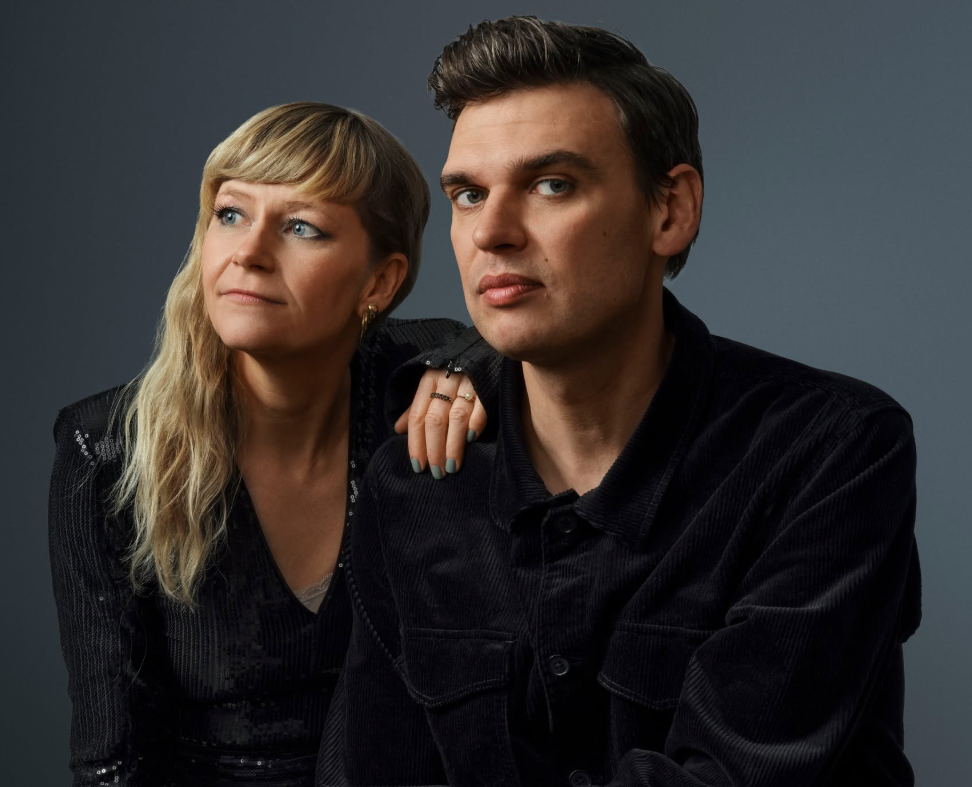
Late Runner consists of Asger Tarpgaard and Tanja Forsberg Simonsen, both formerly of the bands Superheroes and Private.

© PR
© PR

It was officially confirmed only recently that Icelandic avant-garde star Björk is visiting Bielsko-Biała today. After keeping it under wraps until the last moment, the organizers of the Wędrujący Festiwal (Wandering Festival) have revealed that Björk is the artist closing out the festival's grand finale.

© Kåre Viemose

»Recently, I discovered that when a couple of thousand people clap their thick gloves in minus 30 degrees, it sounds like the softest techno – a freezing space where the cold air turns into a wave of warmth, and we, in a moment of collective devotion, become one with the rhythm, one with the invisible bond that connects us in the warmth of silence. Music is not just sounds, but a vain attempt to capture the infinite, which has always been and always will be.«

Andreo Michaelo Mielczarek has been the editor-in-chief of Seismograf since 2021. He is also a music critic and cultural journalist at Kristeligt Dagblad and Århus Stiftstidende/Avisen Danmark and has over the years written to publications such as Kunsten.nu, Glissando (Poland), Neural (Italy), Raw Vision (UK), Nutida Musik (Sweden), Kunstkritikk (DK/Sweden), Iscene.dk, B.T., and Jazz Special. He is the author (together with Lars Muhl) of the book HVA' SAA! En guidet rutsjebanetur gennem Aarhus – før, nu og i fremtiden (2024) and has also contributed to the anthology on music criticism Man skal høre meget (ed. Thomas Michelsen and Claus Røllum-Larsen, 2024). He is a founder and partner in the Polish-Danish cultural organization Kultur(a), and wherever there is a piano, he will be there, eager to coax a melody from it.

© Aria Leth Schütze

»For me, music is an opportunity for transformation.«

Aria Leth Schütze is based in Copenhagen and is the creative force behind the music projects Alto Aria and Samler På Dig. They are a co-founder of the record label Rhizome and a co-editor of the music magazine Passive/Aggressive. Their practice brings together electronic and acoustic music in an exploration of transformation.
 

© PR

»For me, music is the art form that – if measured in hours and minutes – occupies by far the greatest part of my life. I cannot sing, nor can I play an instrument, but I can listen – as a happy amateur – while cycling, on the dance floor, and, above all, at the office. I almost always work – that is, write – to music.« 

Mikkel Krause Frantzen (b. 1983) is an associate professor at the Department of Arts and Cultural Studies, a literary critic for Politiken, and the author of several books in English and Danish, such as En fremtid uden Fremtid (2018), Klodens Fald (2021), and Slutspil (2024).