Heavenly tape loops from the superstar of ambient music
The only thing that might be missing was a yippie ki-yay from William Basinski when he took on the Copenhagen Distillery as part of The Last Symphony tour. »Buckle up bitches«, it sounded so raw that for a moment you thought it was Bruce Willis on stage. Basinski's riveting superstar charisma is the perfect contrast to his crumbling and self-indulgent ambient music.
The concert was refreshingly far from the extended space of contemplation I associate with Basinski's recorded works. His famous series The Disintegration Loops (2002-2003), in which the mortal world of tape loops crumbles in slow motion, was emblematic of the concerns many had around the turn of the millennium: Was the infinity of the brave new digital world actually the beginning of the end? Like no one else, Basinski manages to let the question of technological determinism sound open in his music: The patinated tape recordings contain no answer, but instead a curious state, where repetition and impermanence stop pulling at the sense of time from either side and instead come full circle.
It was fascinating to experience the way Basinski processed his loops. Every time he put a new sound into rotation, it seemed as if it was his first encounter with it. Quickly, a sucking field of reverberation and feedback arose, forming a sphere from the orbits of the tape loops. The analog sound sometimes gnawed at the music with its small clips and grinding compression.
The distance between the ambient terrains was short and the concert, which was followed by two encores, was more collage-like than the wasteland Basinski usually paints. The landscape was particularly captivating as a six-note motif consumed itself in reverberation and gave way to what sounded like Arabic ornamented chant. Basinski found transcendence in the high frequencies, and when at one point he extended a bright vocal sound beyond the murky tape environment, the boundary between heaven and earth disappeared. It was incomprehensibly beautiful to hear how the vocals hovered like a radiant deity over the profane tape-recorded world.
English translation: Andreo Michaelo Mielczarek

Gintė Preisaitė Turns Doubt into Music
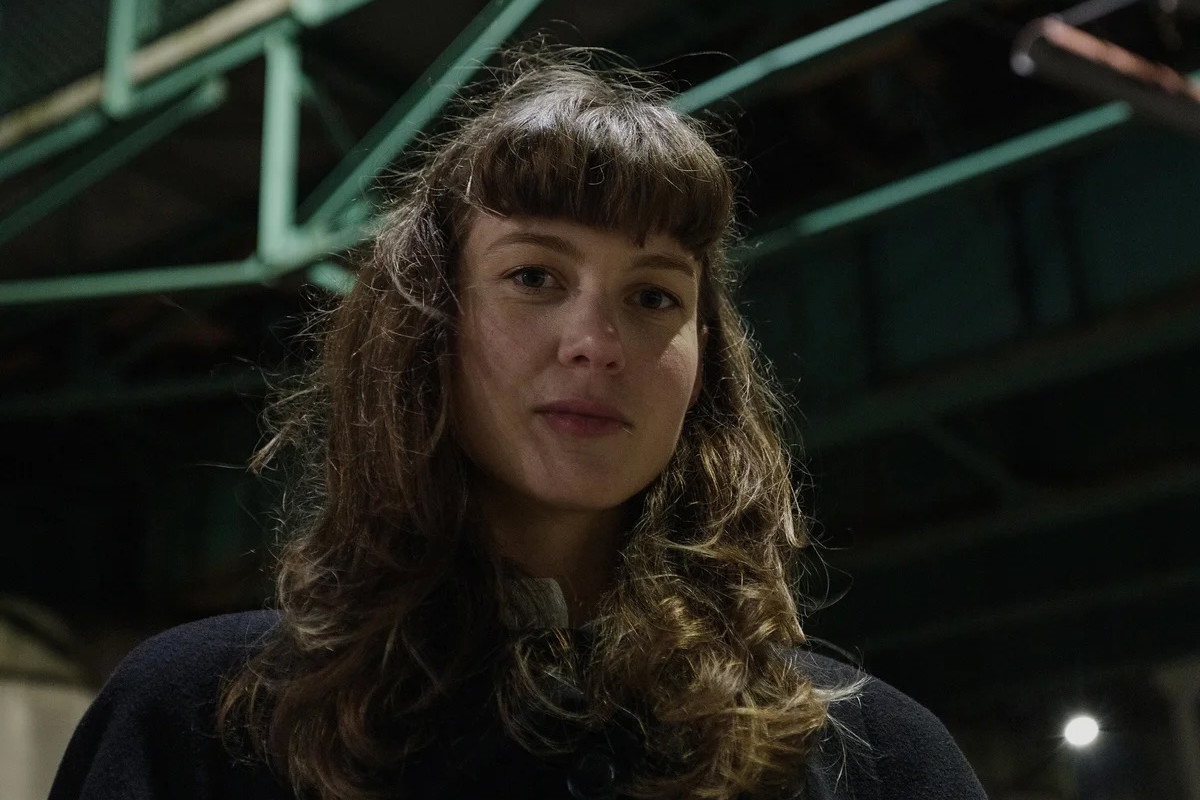
You increasingly encounter Gintė Preisaitė in different contexts and under different names – solo as Baraboro and as part of the trio Treen. With Instruments of Forgetting and the Singing Bone, the Lithuanian-Danish composer releases her first album under her own name, and it certainly feels like her most personal work to date.
Above all, this is because Preisaitė sings on seven of the album’s eight tracks. She treats her voice as an instrument equal to all the others, and although the singing is lyrical, she primarily uses it to create texture, depth, and contrast. On »Summary Saint Mary«, for instance, layers of vocals in different registers intermingle with scraping background noise, rapid pulses, resonant bass, and a multitude of sounds of both digital and analog origin. It feels refreshingly fragmentary – a willingness to play with uncertainty. Not everything coheres, yet it is precisely this lack of cohesion that makes the music feel alive and compelling.
Only on »Nippon Dreams« – a dense collage of percussion, samples, and field recordings of Japanese voices – is Preisaitė’s vocal absent. And it is only then that one realizes how essential it has been as a point of orientation throughout the album. Its absence leaves a void that underscores the duality Preisaitė works with: the music feels both intimate and cool, present and distant.
Instruments of Forgetting and the Singing Bone does not provide many answers. Instead, it becomes yet another fascinating piece in the puzzle of Preisaitė’s singular oeuvre.
A Violinist with Fire in His Bow
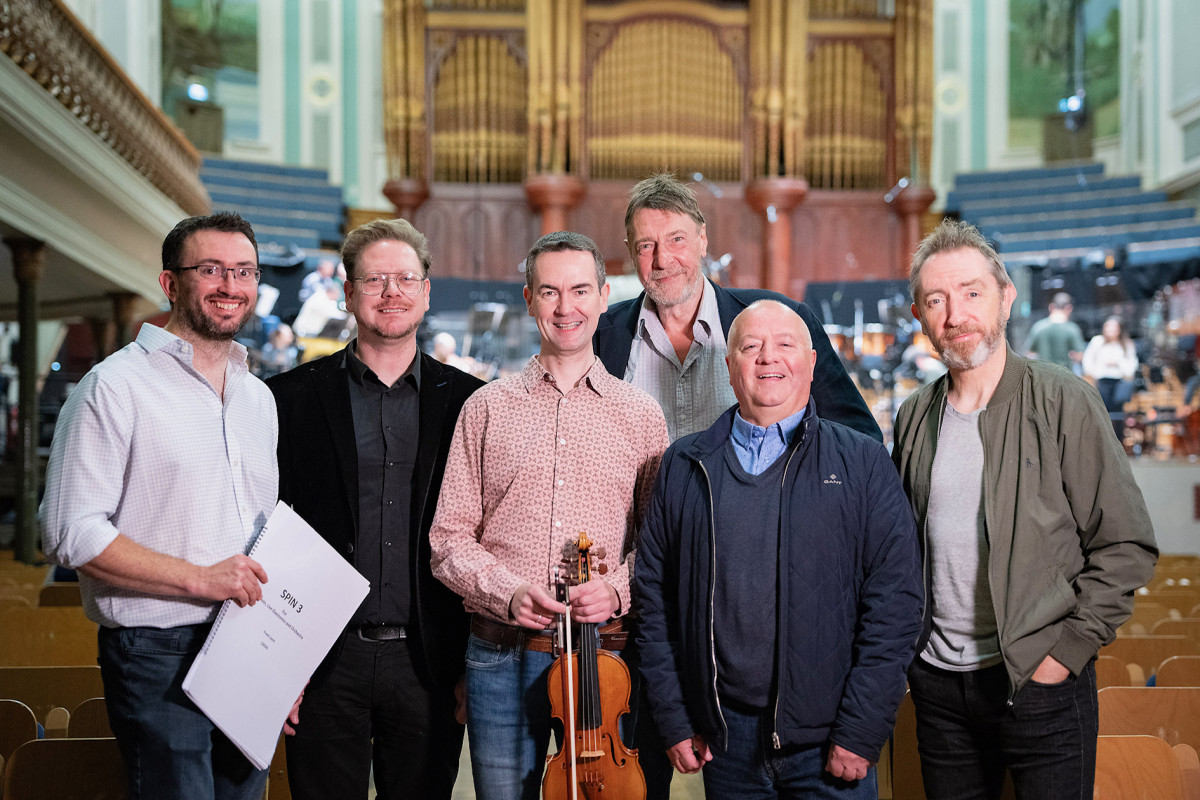
There is nothing quite like true enthusiasts. They champion composers and works that might otherwise have remained dormant. Here we have the exuberant violinist Darragh Morgan, who since the age of fifteen (!) has promoted and performed contemporary music. He knows what works and has a keen instinct for new pieces and composers – especially on this album with the not exactly catchy title Spin – New Music for Violin & Orchestra from Northern Ireland. Four relatively recent violin concertos, all centred around Morgan as soloist. Two of them are dedicated to the musical firebrand himself.
There is fire in Brian Irvine’s violin concerto À mon seul désir from the very beginning, where sparkling motifs and riffs erupt everywhere. Almost too much energy and activity – but it works, and all the fierce gestures are carefully balanced. The movement is titled »With a big life embracing energy«. Concrete and descriptive – the Irish leave the grand spheres of abstraction to the contemporary music scene in Central Europe. I have replayed the dramatic climax of the second movement several times out of sheer enthusiasm, and the entire concerto (which lasts only fifteen minutes) ends with angelic beauty on Morgan’s highest, finest strings.
Ryan Molloy’s three-movement violin concerto, stretching beyond twenty minutes, by contrast tends to drift somewhat aimlessly, although the final movement reaches a strong level. Bill Campbell’s Swim is unmistakably Irish in tone throughout, conjuring images of rolling fields and the proud Irish landscape. Midway through the quarter-hour work, Darragh Morgan delivers a heartfelt and expansive solo cadenza.
Fortunately, Frank Lyons’s Spin 3 is also a small gem, leaving the listener uplifted by this new Northern Irish music performed by the Ulster Orchestra and the fascinating Darragh Morgan, whose deep personal dedication gives so much to the music.
English translation: Andreo Michaelo Mielczarek

Ecstasy After the Party
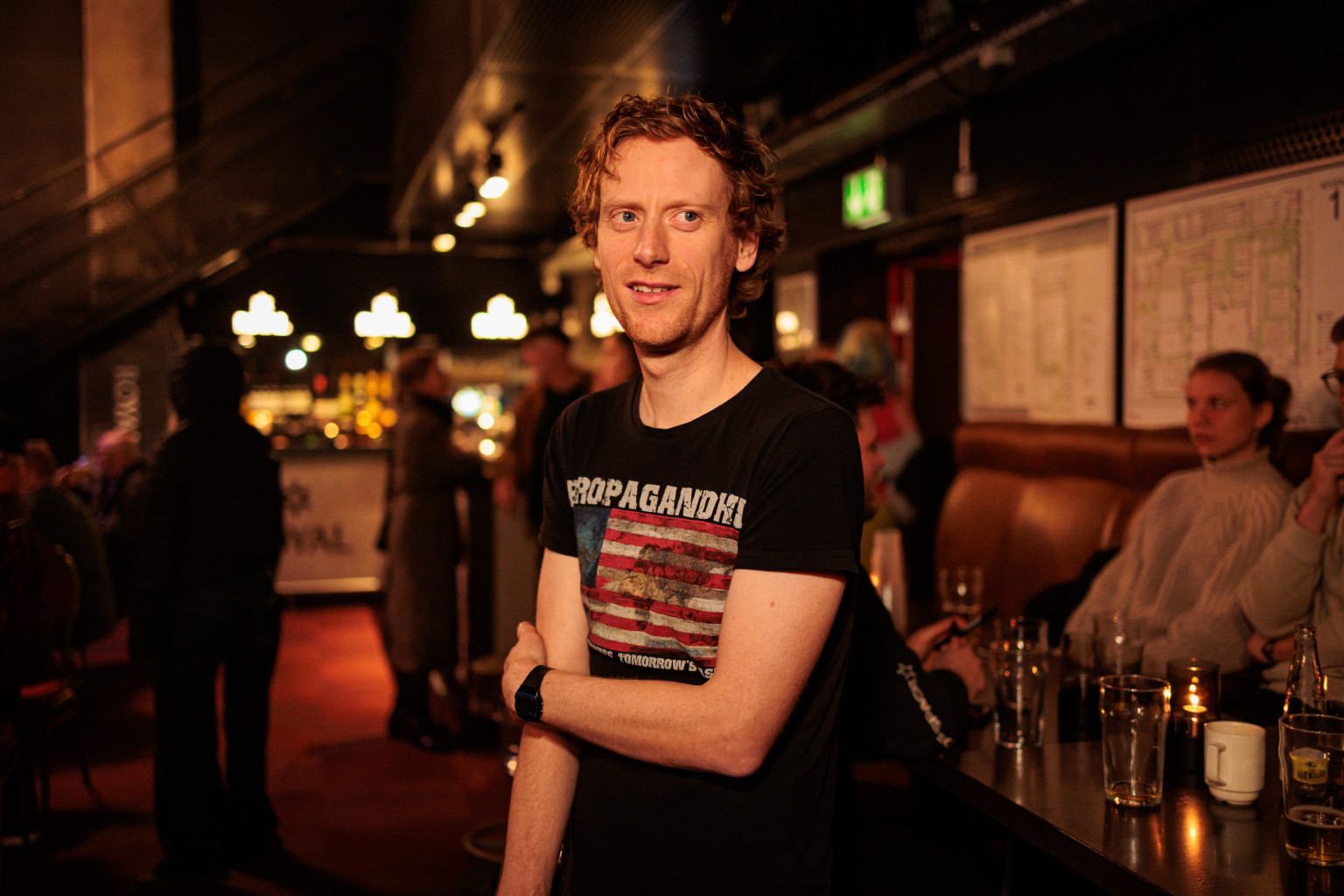
With the debut album Loud Bloom, Olof Dreijer – best known from The Knife – comes across as someone who never quite realised the party was over. Or perhaps realised it before everyone else did.
For years, club music has been absorbed into popular culture and its aesthetic vocabulary – imported into the pop song as energy, irony, and texture through artists like Charli XCX, PC Music, and the entire hyperpop complex. On Loud Bloom, the opposite happens. This is not club music disguised as pop, but pop music subjected to the temporality of the club: circular, lingering, and uninterested in quick release.
Dreijer understands something essential about repetition – the melodies are catchy without being insistent. »Rosa Rugosa«, »Plastic Camelia«, and »Cassia« are instantly memorable, yet the melodies never harden into slogans. The sonic palette is airy and almost devoid of chordal surfaces. Steel drums, gleaming synth figures, pitched tom-toms, and sub-bass drift lyrically through the music, while castanets and cowbells flicker at the edges. Even the vocals function more as texture than as centre.
The album feels constantly in motion, as though its melodies are being refracted through prisms that continuously produce new luminous surfaces. On »Lantana«, tones drift away from their point of departure like blurred watercolours – not quite microtonal, but with a sense of intonation as something fluid. Precisely for that reason, one occasionally misses an element of estrangement. In The Knife, Karin Dreijer’s voice functioned as a disturbing counterforce – androgynous, childlike, threatening. On Loud Bloom, the sonic world is more homogeneous and smoothed out.
Still, the album feels like an heir to the half-clubbed, half-pop kaleidoscopic computer music of the mid-2010s – albums such as Our Love by Caribou and In Colour by Jamie xx – music that dared to be melodic without the safety net of irony. Dreijer’s music believes in ecstasy as a gentle experience. It is music meant for dancing, yet somehow shy at the very thought of celebration.
English translation: Andreo Michaelo Mielczarek