in brieflive
04.03.2024

Til dybet vi skal gå

Anne Zacho Søgaard, Alexandra Moltke Johansen, Nini Julia Bang, Hanne Uldal, Mathias Monrad Møller, Matilde Böcher m.fl.: »Dansedybet«
© Emilia Therese
© Emilia Therese

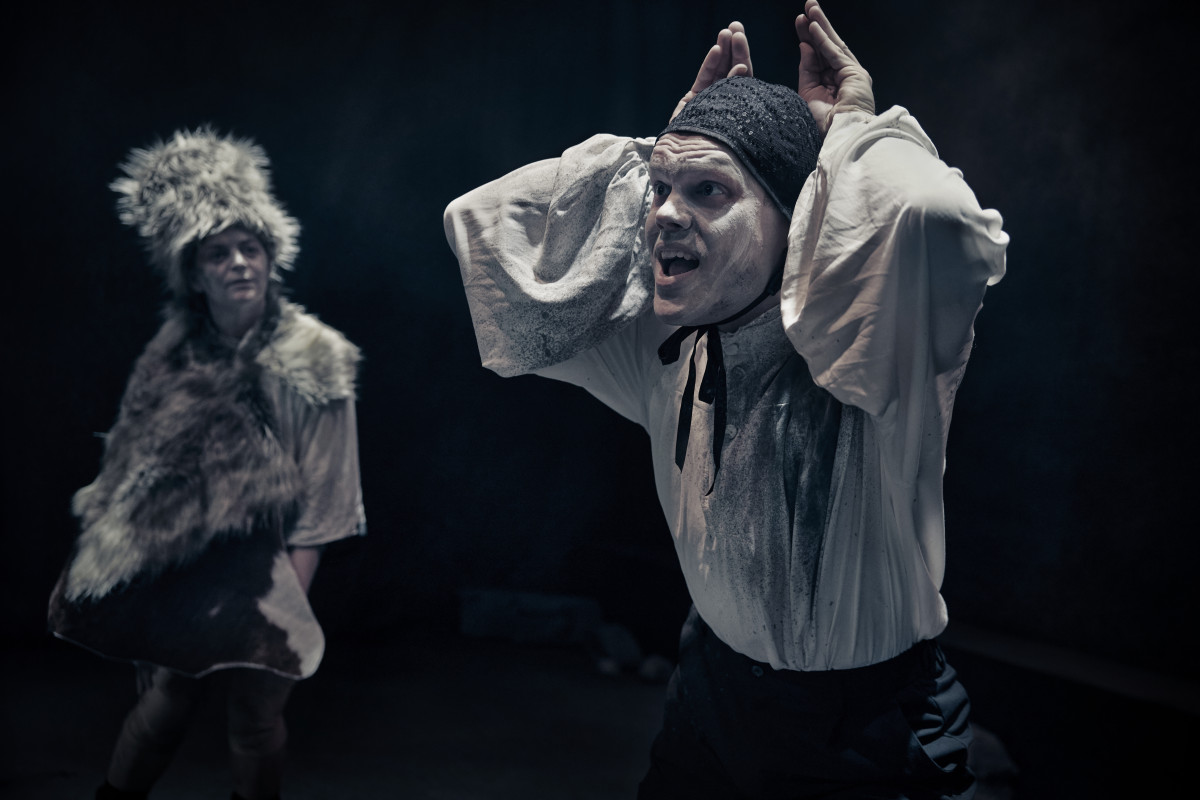
Dansedybet på Sort/Hvid er intet levende. Alt er støv og aske. Performerne er ligblege og viklet ind i gazebind, som om deres kroppe er gået i stykker, eller måske allerede er døde. Sammen fører de publikum igennem en slags grotesk danse macabre mod fællesgraven. Opløftende og forløsende er det ikke, og ritualet befinder sig langt fra den kollektive, transformative heling og forbundethed, værket lægger op til. 

»Tag min hånd, lad benene gå. Træd den dans, til dybet vi skal gå.« Vi inviteres til at bevæge os ned til dybet i en lang kædedans med simple, svingende fodtrin. Musikken har menneskestemmen i fokus og synges hovedsagligt a cappella, hvilket giver et ærligt, ritualistisk udtryk. En operasanger, en verdensmusiksanger og en skuespiller fortæller om dengang, høsten slog fejl og om den dansepest, der rasede i byens gader.

Rustikke folkeviser blander sig med stemmens perkussive potentialer, og historien intensiveres. En mand i præstekrave slikker en svedig pølse, mens han tænker på Satan og bliver mere og mere urolig. En kvinde kollapser i heftige spasmer og ufrivillig latter. Det er vist meningen, at vi også skal grine med. Få noget ud af systemet. Vi står dog efterhånden mest stille og iagttagende. Dansedybet er visuelt smuk og har stærke enkeltperformances, men det sker mest i dryp i en noget fragmenteret oplevelse. Den sporadiske fællesdans forbliver også mild og munter, uden nogen umiddelbar sammenhæng til pestens kropslige ekstase og revolution. Dansesmitten udebliver.


© Ida Sofie Skov Larsen

»Music for us is a way to create a connection and community with other people.« 

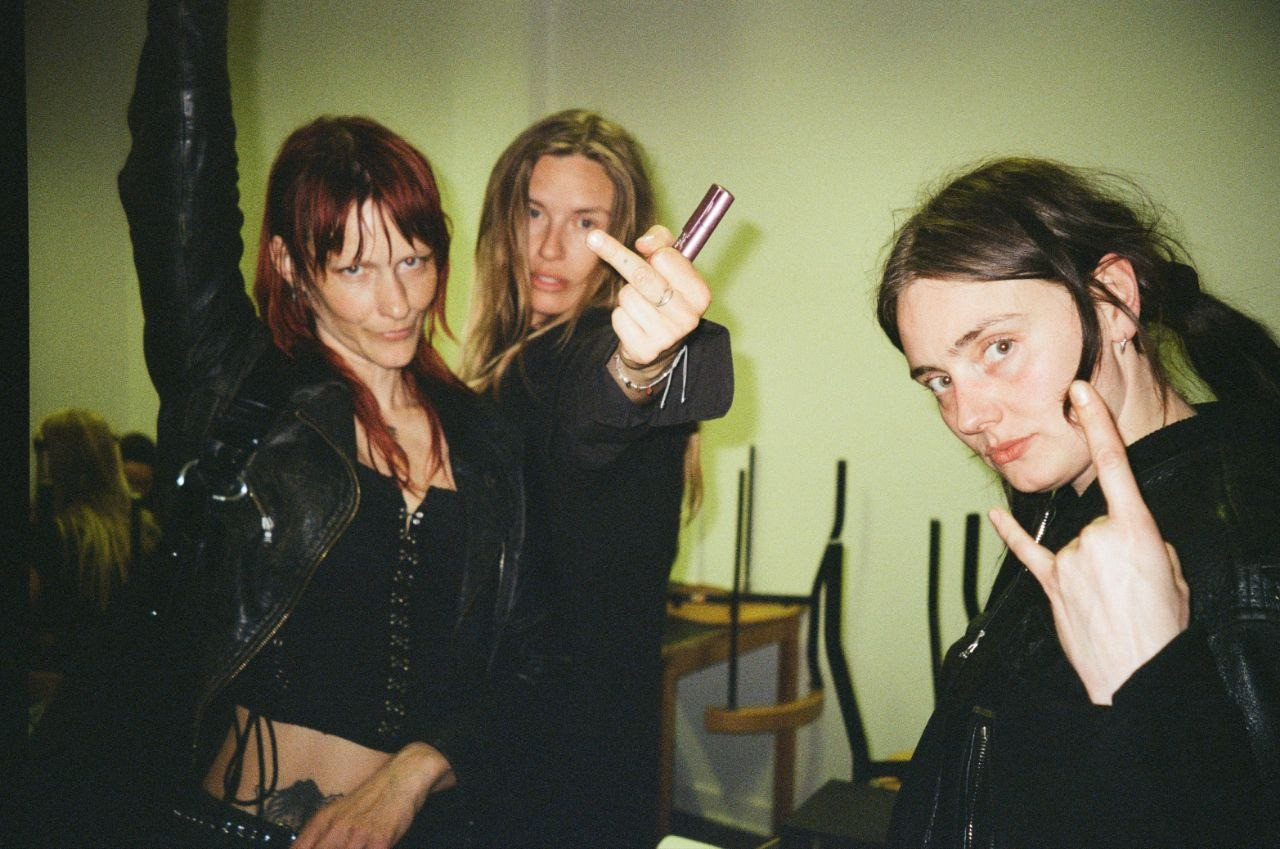
Although Schæfer has only released three singles so far, the band has already made a mark on the Danish music scene. The duo and their friends, Anna Skov (vocals) and Emil Mors (keyboards), write socially relevant, subtle and humorous songs that point fingers at both the outside world and themselves.

© Søren Fiil Vesterbak

»Music for me can do something very special. It brings people together in shared experiences, but it can also be a very personal mental tool. Personally, I use music all the time – to create energy on a run, to create concentration for work tasks, or to find peace in stressful situations, such as in the dentist's chair. And of course to create joy and a good mood. Music is always an essential ingredient in good memories.«

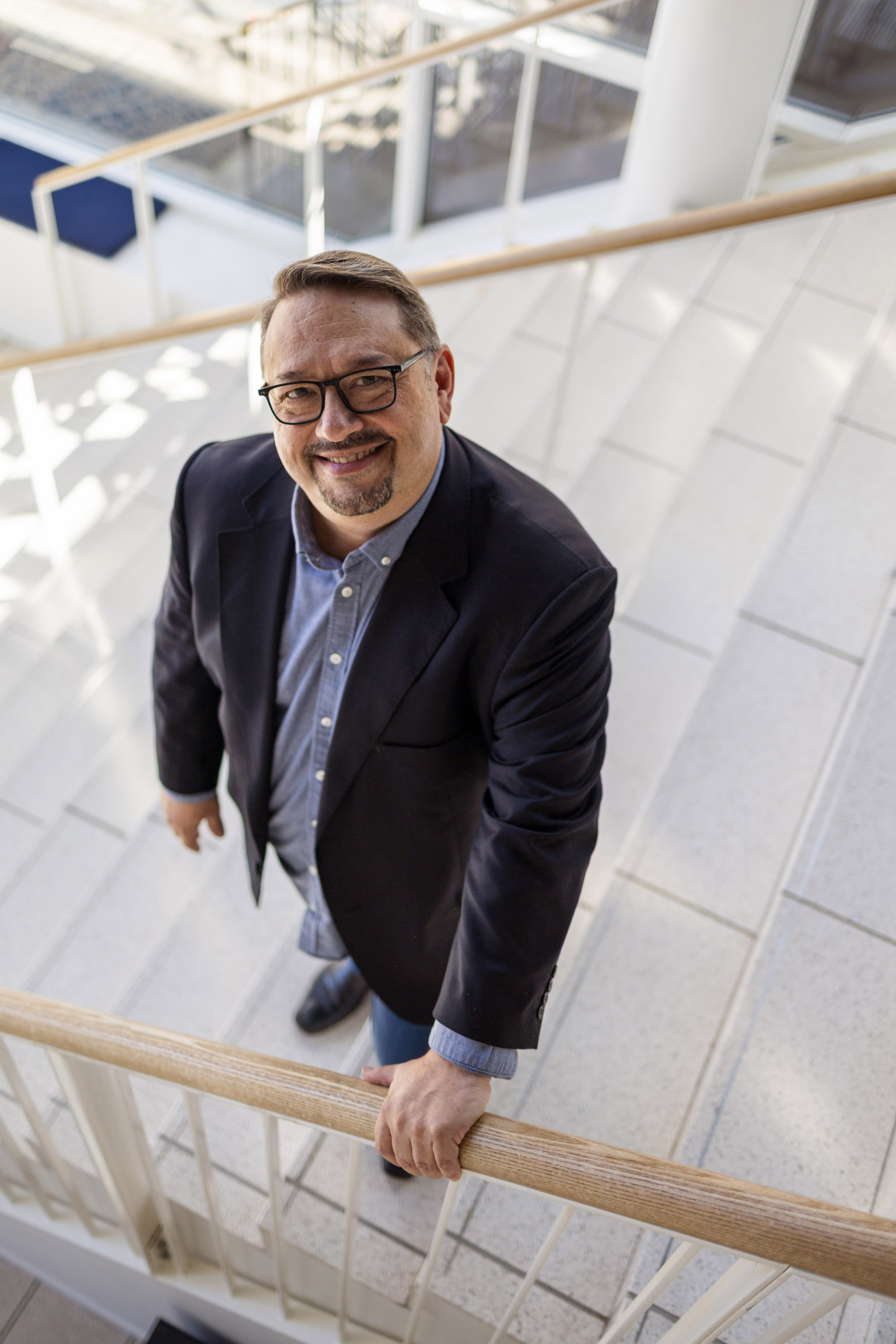
Rikke Andersen has been at the helm of SPOT Festival since January 2024. With a background as a venue manager and booker at Fermaten in Herning, she has solid experience from both the creative and organizational side of the music industry. She has previously worked in the record industry, been deeply involved in marketing and communication, and has had a hand in several cultural projects.

in brieflive
13.03

I Am an Empty High-rise, Where the Pain Sits in Every Wall

Ensemble Lydenskab, Martin Ottosen, Ulla Bendixen, Gerd Laugesen & residents at the social-psychiatric housing facility Sønderparken: »Everyone Leaves Traces«
© Phillip Jørgensen
© Phillip Jørgensen

It is both difficult and unfair to approach the concert Alle sætter spor (»Everyone Leaves Traces«) with a critical mindset. It concerns real people with something at stake and with their hearts invested: residents at the social-psychiatric housing facility Sønderparken. They placed their inner lives in the hands of six artists and thus became co-creators of a total of nine songs, which premiered at Museum Ovartaci.

The project Musikalske alliancer (»Musical Alliances«) is simultaneously art, research, and relief. A co-creative endeavour intended to give a voice to people within psychiatry. The result was songs marked by banjo-tinged gallops, painful violin stabs, empty houses filled with inconsolable crying, torn torsos and deep, lingering bow strokes – but also hope, care, and softened edges. Acting as mediators of these life experiences were the poet Gerd Laugesen, three musicians from the ensemble Lydenskab on cello, violin and guitar, as well as pianist Martin Ottosen and vocalist Ulla Bendixen from the electro-folk band Sorten Muld.

It was a capable group that delivered a high musical standard. Even so, it seemed as if this important project succeeded with its co-creation and its conversations, but perhaps not entirely with its artistic expression. Was it because the lyrics were filled with clichés? Or rather because the entire staging felt somewhat inward-looking – almost like a school concert? Despite Bendixen’s wonderfully airy and expressive vocal, the performance felt strongest in the few segments shaped by poetry readings. Yet I had to learn, by indirect means, that the poems were adaptations, while the song lyrics were the residents’ own words. And those were the voices I was meant to learn to listen to.

in briefrelease
13.03

When Joik Meets Drill

Zak Norman & Charlie Miller: »Takkuuk«
© PR
© PR

The Greenlandic word Takkuuk means »attention«, and it is the slightly ironic title of one of the more chaotic projects at this year’s CPH:DOX. The film is a collaboration between visual artist Zak Norman, film director Charlie Miller, and the Belfast-based electronic duo BICEP, and it also features seven musicians from Kalaallit Nunaat and Sápmi. In other words, a multitude of voices and agendas are at play, and the project clearly bears the marks of that.

The process leading up to the film sounds more interesting than the work itself. Norman and Miller travelled around the Arctic, seeking out musicians and researchers while filming glaciers and ice. The film’s seven young musicians then entered the studio with BICEP to create a shared soundtrack: a kind of club-oriented remix of seven very different practices, ranging from drill and heavy metal to joik, throat singing and drum dance. It might have been fascinating to follow those encounters, but instead the film takes us in another direction.

The editing shifts between a documentary strand of interviews and a surreal music-video aesthetic, where specially built cameras pan across the surface of the ice, bathing it in coloured filters referencing the northern lights and club lighting. In the interview track, the participants are allowed to steer the conversation themselves, which sends it in many directions. We touch on the spiritual undertones of traditional musical expressions, and here one would have liked the film to linger longer. One intriguing sequence explains how drum dance relates to the performer’s heartbeat, and how that rhythm is almost the same as the pulse of drill. More of that, please.

In a subsequent talk, the filmmakers explained that the work was originally produced as an audiovisual installation for five screens. That makes sense and might have worked better. Considered as a documentary film, Takkuuk is fragmentary, chaotic and directionless, which is a shame, because the young musicians seem to have much more to offer.

»Takkuuk«, Zak Norman & Charlie Miller (UK), 2025 (67 min). Screenings: 12, 17 and 19 March

in briefrelease
13.03

Cello Among Cows and a Love of Music

Katrine Philp: »A Classical Life«
© Carsten Snejbjerg
© Carsten Snejbjerg

A farm near Rødvig on the Stevns peninsula, home to both pigs and cows, also houses an elite music school for cellists, the Scandinavian Cello School. The school was founded by the British cellist and professor Jacob Shaw, who is also a farmer and lives here with his family. It is a place where the young people in residence are expected to take part in the work on the farm as in a collective, when they are not working on their musical projects.

According to Shaw, this is very much an innovation. In one of the many scenes featuring the thoughtful, idealistic and selfless mentor, he remarks that the classical music world places great emphasis on competition and perhaps on musical development, but only rarely concerns itself with something as essential as well-being.

It is fascinating to follow not only the teaching and competitions on Stevns and elsewhere, but also to listen to the young musicians’ accounts of playing, alongside the many uncommented sequences in which large amounts of music – especially from the classical cello repertoire – are performed. Among them is an outdoor scene where the musicians have attracted a group of cows, who appear to be listening when they are not mooing.

This is a film about self-realisation through discipline, but also about discipline through self-realisation. The film continually circles around the human effort to become better at something, and it does so in a way that consistently places the participants’ love of music at the centre. This also applies to Shaw himself, whose previous serious illness, briefly referred to, forms a kind of counterpoint to the lightness that otherwise characterises the film.

Katrine Philp’s documentary A Classical Life is therefore warmly recommended – not only to parents of musically inclined children, but to anyone interested in music. Classical music? No. Music.

CPH:DOX, 14, 17 and 21 March