in brief
26.03.2024

Jan-Martin Smørdals akustiske teater knitrer og kvækker

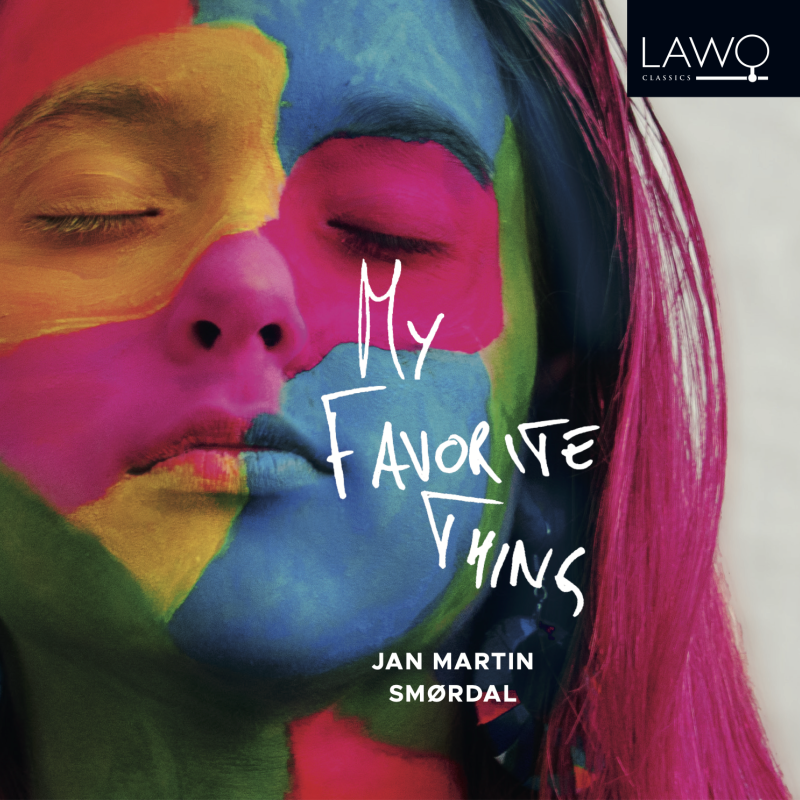
Jan Martin Smørdal: »My Favorite Thing« 
© PR
© PR

Hans musik er diskret, men helt tydeligt både i tanke og udtryk. Den norske komponist Jan Martin Smørdal vil noget med samskabelse og sociale dynamikker. I værket My Favorite Thing, der fylder det meste af udgivelsen, har han spurgt sine musikere om minder og forsøgt at komponere dem bagefter. I stykket »Flock of Me« er det musikere, der imiterer optagelser af sig selv. I »less-sense« er det Smørdal, der hele tiden korrigerer sig selv via en sanger. 

Alt sammen spændende at læse om, men også lidt forkert at sætte i centrum for en samtale om hans album. Musikken er sanselig og interessant – og helt skarpt komponeret. Ofte af skrøbelige perkussive lyde, der interagerer med hinanden i sarte mønstre og holder ørerne på stilke. Så hvorfor som lytter bruge kræfter på at finde rundt i musikkens intellektuelle baggrund undervejs, når man intuitivt kan blive flyttet af lyden selv? 

My Favorite Thing ekspanderer over ni satser. Fra små knitrende, raspende, kvækkende, skramlende, dansende mønstre til store, fejende orkesterbevægelser iscenesat af det norske radioorkester. Måske er det alligevel hans metode til at involvere andre menneskers tanker, der kan noget andet og skaber fornemmelsen af scener og dramatik? I hvert fald befinder man sig ofte som lytter i et grænseland mellem musik og akustisk teater. Mest tydeligt overhovedet i »less-sense«, der nærmest som et søsterværk til Luciano Berios »Sequenza III« fra tresserne, med heftigt åndedræt og smukke, vibrerende lydeffekter, lyder som en udelelig blanding af sang og skuespil.

© PR

»For us, music is the companion that stays with you through life’s highs, lows, benders, and shitty times. There isn’t a single emotion for which we don’t each have an internal soundtrack. It’s a wonderful, universal thing that music triggers moods and reinforces feelings.«

Barcode played a couple of hundred shows across Europe in the 90s and 2000s – touring with acts like Madball, Agnostic Front, and Hatebreed – and released five full-length albums. The Aarhus-based band will play its first concert in 18 years as the headliner at the Support Our Scene festival in Fredericia this August.

in brieflive
09.07

Two Singular Voices in Close Orbit

Lotte Anker & Fred Frith
© PR
© PR

On Wednesday evening at 5e, the audience witnessed a meeting between two musicians who, in terms of stage presence, did not immediately seem to have much in common. Lotte Anker sat upright in her chair with either alto or soprano saxophone resting on her lap, while Fred Frith leaned forward over his guitar, pedals and the many small objects he used to force all manner of sounds out of his instrument. Stoic calm versus frenetic tinkering. Outwardly, they seemed like opposites. Musically, however, they were closely connected.

They hardly looked at each other during the set, yet seemed completely absorbed in the sound they were creating together. At times, the music was knotty and difficult to penetrate: un-guitar-like tones, percussive attacks, almost rock-like passages, rapid saxophone runs, long sustained notes, noise and overtones. Like a riddle that had no desire to be solved. At other moments, Frith created clear drones over which Anker moved with melancholy grace, sensuous and beautiful. It sounded like a wordless tale of darkness, fear and uncertainty, but also of light, hope and togetherness. The essence of life distilled to the meeting point between two of jazz’s great singular voices.

The concert ended with the evening’s most direct gesture between the two. A gentle tone from Frith’s guitar rang out continuously until he suddenly brought his hand down on the fretboard with a resounding thud and sent Anker a mischievous smile. A brief acknowledgement of the intense ride they had just taken the audience through.

English translation: Andreo Michaelo Mielczarek


in brieflive
08.07

Pak Choi and Percussion at Table 12

Søren Kjærgaard & Kresten Osgood Duo + Christian Lillinger
© Kristoffer Møllegaard

Søren Kjærgaard at the piano, Kresten Osgood and Christian Lillinger each at half a drum kit, pak choi with shiitake mushrooms and rice. Free jazz and Chinese cuisine may not be the most obvious combination, but on Wednesday afternoon at CC Taste it proved its worth.

The French composer Erik Satie was reportedly frustrated that Parisian café audiences did not ignore his so-called furniture music to a sufficient degree. Kjærgaard, Osgood and Lillinger seemed unlikely to share such concerns on the second night of their five-day residency at the Chinese restaurant on Amagerbrogade. On the contrary, with pronounced showmanship they played not only drums and piano, but also a ceiling lamp, a radiator and Osgood’s shoes. There was shouting, laughter, and newspaper pages being torn to pieces.

Osgood and Kjærgaard, who are cousins, have played together all their lives, and it showed in the ease with which they threw themselves into the music. Together with Lillinger, they needed only seconds to find a shared level of intensity. It swayed, crashed and creaked in every direction. The music thundered ahead until it suddenly stopped and Kjærgaard’s piano stepped forward in calmer, more indeterminate passages. Then the surroundings reasserted themselves: cutlery against plates, the number 5C bus passing the windows on Amagerbrogade, an egg timer ringing in the kitchen.

Good food and good music have a great deal in common, but fortunately they did not dissolve into some mythical, rather uninteresting higher unity. Instead, the evening thrived on the friction between two separate sensory spaces: the concert and the restaurant, listening and eating, free improvisation and the everyday dinner scene. Satie might well have turned in his grave. I loved it.

© Mads Smidstrup, Aros

»Music for me is medicine, comfort and a kick in the ass. Community, joy, a vent. Poetic political compass. And over the years, music has also become a kind of life chapter, linked to specific places, times and people.«

Marie Arleth Skov is a Danish art historian who has lived in Berlin since 1999. She works at the intersection of art, sexuality and music, with a primary historical focus on surrealism and the punk movement in the 1970s and 1980s. Her book Punk Art History was published by Intellect Books (UK) in 2023. Most recently, she has curated the exhibition UNRULY. The Body in Punk, which can be seen at Aros Kunstmuseum in Aarhus in the autumn of 2026. The catalogue for the exhibition is published by Marrow Press.

© Guannan Kang
© Guannan Kang

自由即兴创作比性爱更好! – »Free improvisation is better than sex.« According to drummer Kresten Osgood, the saying is attributed to Confucius. Whether the ancient Chinese philosopher ever uttered those words is doubtful. But the quote perfectly captures the spirit of one of the most unusual events at this year's Copenhagen Jazz Festival.

From 7–11 July, pianist Søren Kjærgaard and drummer Kresten Osgood will take over CC Taste on Amagerbrogade, performing daily from 2–4 pm among diners, dim sum and steaming hot pots.