
in brief
27.05.2024

Som du spørger, får du svar!

Spor Festival: Current Resonance: »Asking People to Do Things«
© Mateusz Szota
© Mateusz Szota

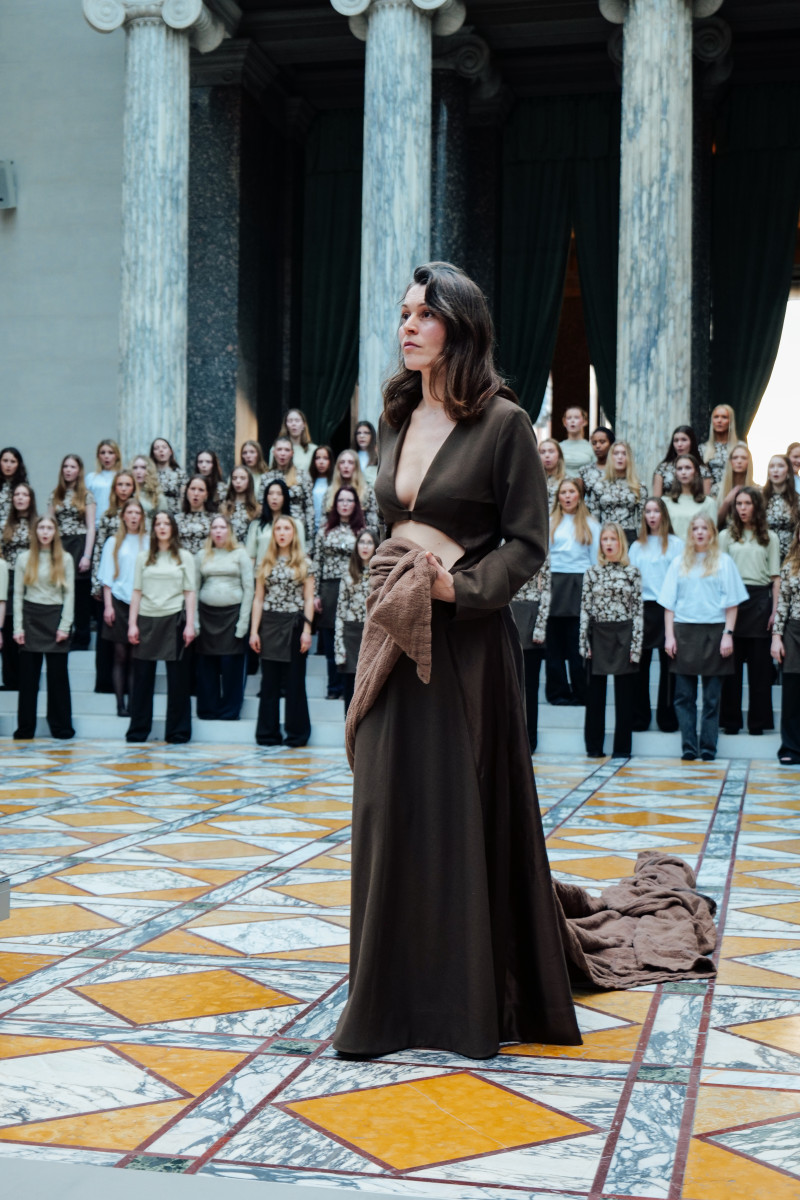
Er det ikke essensen af komponistens arbejde? At få andre til at gøre noget. Jeg sad efter Spor-koncerten Asking People to Do Things med den nykonceptuelle supergruppe Current Resonance og studsede over temaet. Selvfølgelig med mindre man som de fire komponister på scenen gør det meste selv, konkluderede jeg. Med en velkommen sans for de helstøbte koncertoplevelser havde gruppen sammensat et program, der undersøgte ordrens maskering i spørgsmålet. 

Koncerten virkede som en jagt efter en bagvej om selve processen med at komponere og opføre musik, som man kender fra den musikalske konceptualisme hos eksempelvis Johannes Kreidler eller Trond Reinholdtsen. I det æstetiske ærinde var det interessant at opleve spørgsmål og imperativer blive omsat til kompositorisk materiale. Carolyn Chens Introducing Object genoplivede ready-made tanken med fluxus-dessiner i højttalerne, som dikterede performernes overgrundige beskrivelse af en kagedåse. Senere revsede Matthew Grouse dynamikken i koncertrummet og tog publikum som gidsel med det interaktive spørgeværk SPEAK BEFORE YOU THINK. Ud af koncertsalen kom vi også mellem værkerne, hvor flashmobvideoer fra Aarhus fungerede som underholdene pauseskærm. 

Fordi gruppen leverede årets koncert i 2023, blev jeg efterladt med en følelse af, at de denne gang havde sværere ved at få konceptværkerne helt ud over rampen. Jeg savnede de store teatralske effekter. Bedst fungerede Dylan Richards og Michael Hopes bombastiske fællesværk, hvor Richards’ karakteristiske digitale opkast blev sidestillet med Hope, der gav den som gradvist mere uduelig hype man. Hvilket vidunderligt kaos. 

in briefrelease
29.09

Addictive Elegance

Rune Glerup: »Perhaps Thus the End«
© Caroline Bittencourt

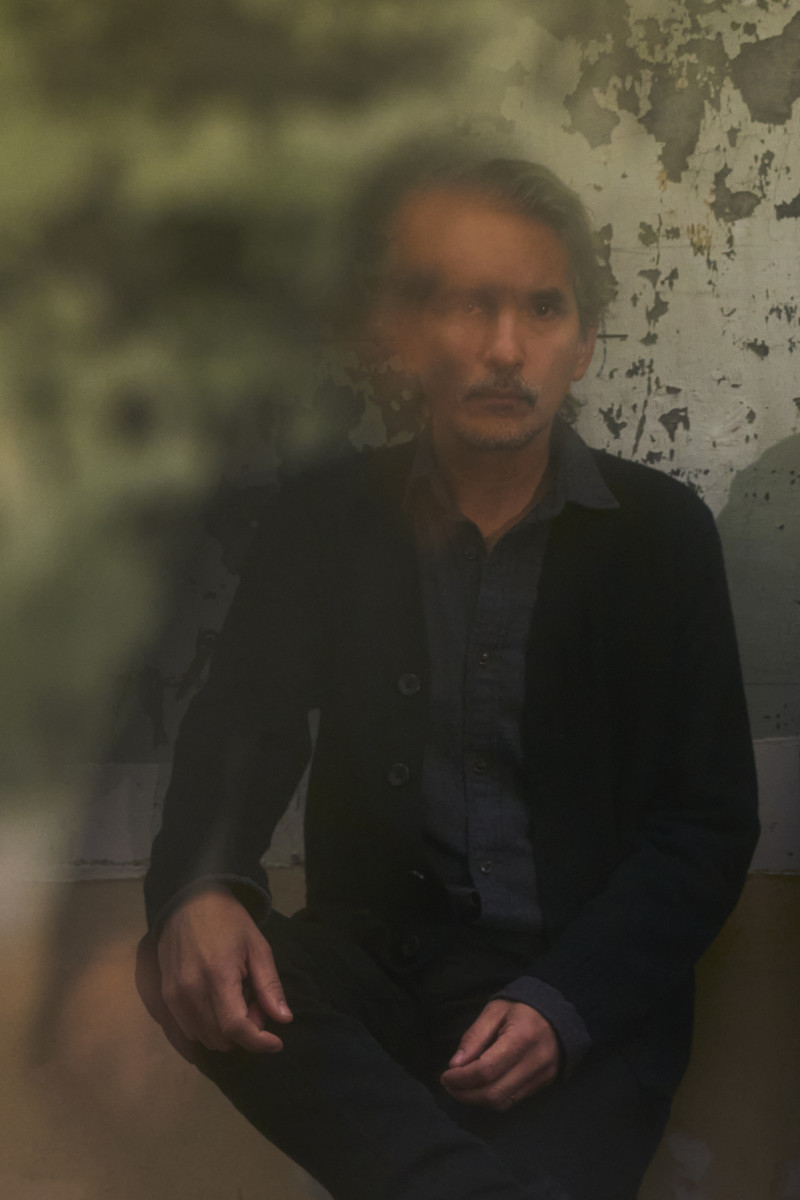
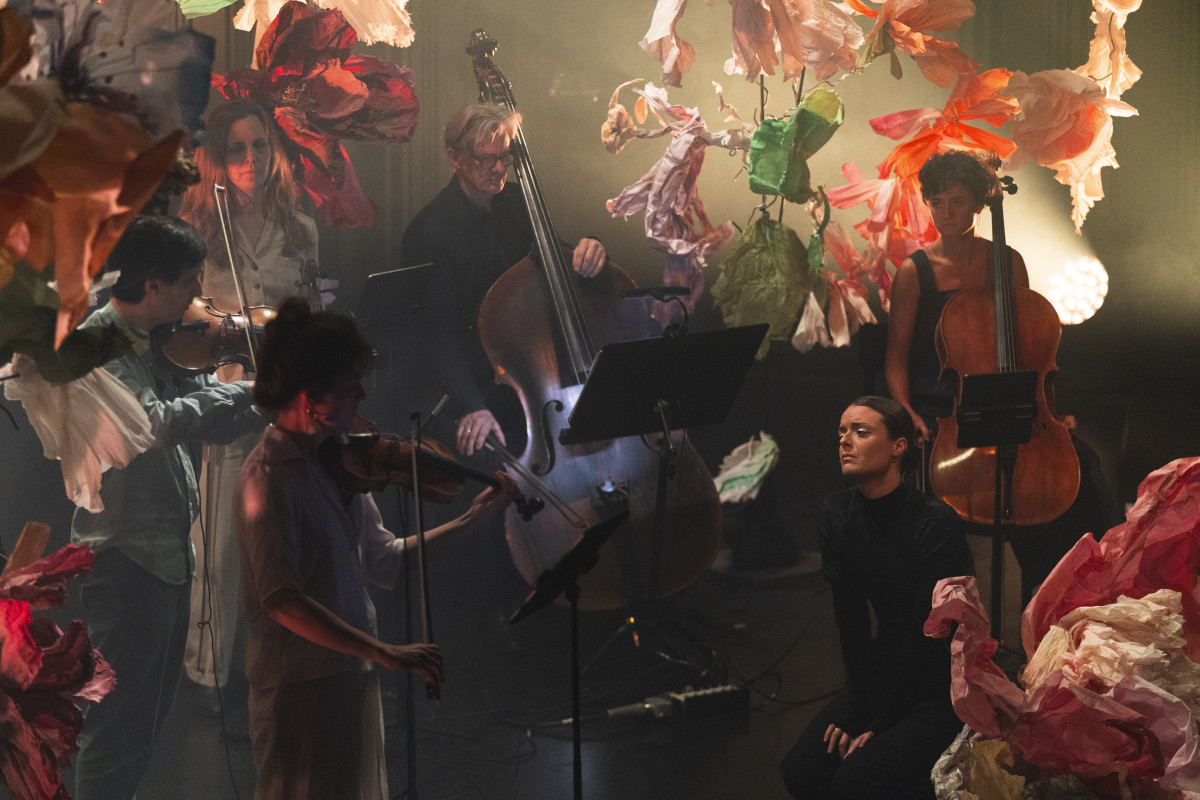
A string quartet consists of four players, and a clarinet quintet five, though the Danish composer Rune Glerup (b. 1981)’s newly recorded works for both ensembles would have you believe their ranks are vastly undercounted. The recipient of last year’s Nordic Council Music Prize for his violin concerto Om lys og lethed (About Light and Lightness), Glerup writes pieces for chamber and orchestra that are often characterized by their multidimensionality: a sonic idea will persistently recur in altered guises, for a sense that one is feeling around different facets of a physical form. Yet the two works on Perhaps Thus the End – brought to life by the impeccable Quatour Diotima and clarinetist Jonas Frølund – are just as potent a demonstration of expansive interiority as they are of surface area.

In the titular string quartet, whose seven movements are named for lines from Beckett’s late prose work Stirrings Still, long tones and galloping motives are seamlessly shuffled amongst the ensemble, generating such a sonority that the group seems to have doubled in size. The language is sometimes mechanical but never automatic, bending rather into balletic shapes. Glerup is a careful manager of texture, finding grace in unintuitive sounds through skillful layering – to speak merely of how, in a later movement, a harmonic pizzicato punctuates the string equivalent of vocal fry before the group pivots suddenly into stillness.

On the unexpectedly addictive »Still Leaning Towards this Machine«, which is surely among the few times a contemporary clarinet quintet has received that distinction, electronics magnify the ensemble through a subtle stuttering resonance. As a result, across three spunky movements, the group is occasionally transmuted into a sort of paranormal accordion. It’s a wonderfully weird effect that, just as weirdly, the score seems to deliver with a straight face – just one more satisfying surprise among many others on this excellent record.

in brief
29.09

High to Fly, Ice-Cold to Crash

Jacob Kirkegaard: »Snowblind«
© Nils Strindberg
© Nils Strindberg

On his new album, Snowblind, Jacob Kirkegaard shifts his focus away from revealing the hidden sounds of our surroundings to instead depict a psychological drama. The inspiration: The Swedish polar explorer Salomon August Andrée, who in 1897 set course for the North Pole in a hot air balloon – a reckless journey that cost him and two others their lives, blinded by snow and the pursuit of fame.

Through 11 icy tableaus, Kirkegaard paints a portrait of the anxiety and doubt Andrée must have felt when the balloon crashed onto the pack ice east of Svalbard. For two months, the three men continued on foot until they reached the desolate island of Kvitøya – where they died a few weeks later, possibly poisoned by undercooked polar bear meat. By then, nature had long since revealed its hostility.

You hear all this on Snowblind. First, the balloon takes off in an air current that elegantly balances on the edge of suffocating dark synths and a heartbeat rhythm, while a metallic screech – reminiscent of a heroic electric guitar – subtly signals doubt: Was Andrée a hero or a villain? Shortly after, we land in a vast nothingness of scraped metal. The shockwave transforms into mischievous, squelchy synth footsteps as desperation and hallucinations grow: Was that a ship's horn I heard? A lifeline?

But no. Silence wins. The icy water rattles like a hungry beast. The hardboiled psychological drama leaves no room for hope, only a chance to stare at your end right in the face. Had Kirkegaard been a truly ruthless portraitist, we might have descended even further into darkness and disorientation, but his weightless ambience still leaves its marks in the snow.

English translation: Andreo Michaelo Mielczarek

in brief
29.09

Welcome to the Afterlife

Julian Charrière: »Solarstalgia«
»An Invitation to Disappear« - Bengkulu, 2018. Copyright The Artist, VG Bild Kunst Bonn Germany

We wander through a garden: it's dark, with palms and ferns everywhere, illuminated by infrared light and equipped with sensors, causing the plants to create crackling noise. Red blinking lights above resemble drones. Welcome to the end of the world. And the beginning of the world. We’re not entirely sure. Perhaps it’s a serious rave party that has come to a halt. Just like the techno in the film An Invitation to Disappear, set in a Southeast Asian oil plantation, blurring night and day – making the senses lulled, vulnerable, and compliant.

In the '90s, Erik Satie’s sad piano music always played in broadcasts about climate disasters. Here – at the beginning of a new chaotic year – you can disappear into the exhibition Solarstalgia created by the French-Swiss artist (and Olafur Eliasson student) Julian Charrière. Experience life in an apocalyptic afterworld with all its ominous sounds, in a fully immersive and enveloping way – as this might be how we can learn a bit about the geological forces and changes in nature around us today.

At the end of Arken's long exhibition space, the eye is drawn to an onyx boulder emitting light (the work Vertigo). When approaching something with light, one becomes greedy. The pig-like sounds you hear come from volcanoes in Ethiopia and Iceland. A devouring sound. Just like the entire exhibition, it elegantly addresses both the eyes and techno-loving ears.

in brieflive
29.09

The Art of Decay

August Rosenbaum: »Opløsninger«
© Flemming Bo Jensen

It's seriously clammy as you step down into the Cisterns beneath Søndermarken – humid, with brick columns dripping with condensation and chalk stalactites hanging down. A piano has been left down here for five months, slowly deteriorating. I was skeptical about Opløsninger: yet another Annea Lockwood-inspired work, simply inflicting violence on a poor instrument? And if not, is a composer like August Rosenbaum, who works with short, vibe-friendly piano pieces, the right person to elevate the idea into something greater? Yes, as it turns out, fortunately.

Together with visual artist Ea Verdoner, Rosenbaum has created an installation piece that spans three chambers, and in the first, you indeed see the decayed piano with centimeter-thick mold patches on the keys. As you shuffle along to the second chamber, Rosenbaum sits in the dark in front of a better-preserved grand piano. His playing is both minimalist and grandiose, but it’s the breaks in the composition that truly captivate me. Half motifs, repeated triplets, tritone-like intervals. Rosenbaum loops a captured sound from the decayed piano on a sequencer, gets up, and walks away briskly. He returns and turns up the industrial rumble of a gong, as if he were Trent Reznor in the studio. Combined with choreography about duality, a voice-over about life and birth, and a video about the body and decay, it becomes an exciting and reasonably new depiction of the raw, cold, and arbitrary nature of decomposition.

in briefrelease
29.09

The Perfect Storm

Yanling: »Cymatic«
© PR
© PR

It is rare for an album to be complimented for lulling someone to sleep. But after a month with the album Cymatic by the Swiss-resident, Hong Kong-born Natalja Romine, I have often found myself slipping into dreamland – something I rarely consider a good thing. In the case of Cymatic, however, it is a clear strength. Yanling comes from the world of art music, and the work has already been presented in that context. Still, it stands strong as a piece of cinematic sci-fi ambient. Names like Jean-Michel Jarre, Brian Eno, and Hans Zimmer haunt the album, as modular noise clouds, female vocals, and mysterious electronic pulses and sine waves blend together to create a harmonious tapestry. It is not groundbreaking, and the tracks can be difficult to distinguish from one another. Nevertheless, the captivating piano riffs on »Transmuted« and the gurgling bass synths on »Nebula« stand out. On »Fallen Tempest«, choirs, chords, and reverb coalesce into a higher unity, and on the album's pinnacle, »Aura Nova«, sudden synth stabs threaten to wake one from the dream.

Cymatic is not a masterpiece and can appear on gray days as disposable ambient for a Hollywood blockbuster no one wants to watch. But over time, it grows into a brilliant piece of contemporary art, only suffering from slightly too perfect production and somewhat grandiose gestures. Why get upset over the storm in your teacup if it storms in the right way?

English translation: Andreo Michaelo Mielczarek