© Tuala Hjarnø

»Mit forhold til musik er dybt passioneret. Ud over at spille og arbejde med mange genrer skriver jeg også om musik – for tiden mest i Gaffa og på min egen blog på www.vaering.com. Jeg anmelder især koncerter, fordi jeg elsker at gå til koncerter og mærke både musikken og dem, der spiller den. Jeg har også en podcast, Værings Musiklytteri, hvor jeg med skiftende musik-nørdede gæster dykker ned i forskellige temaer.

Jeg plejer at sige, at jeg lytter til alt fra post-punk til country. Én rød tråd er dog nogenlunde konstant, nemlig at jeg er mest optaget af de mere håndspillede genrer. Der er undtagelser fra den regel, men som regel gider jeg ikke rigtig musik, der – som jeg kalder det – er undfanget i en petriskål.  Det organiske, det taktile, betyder meget for min oplevelse af musik. Jeg vil have levende mennesker, der river i nogle strenge, slår på noget skind og fortæller mig en historie der ligger dem på sinde. Jeg tager også gerne mine vokaler rørende, inderlige eller ligefrem uregerlige, og så vil jeg gerne have tekster med både vid og bid. Hver gang jeg har sat mig ned for at lave denne liste, er jeg gået i stå, fordi det blev for stort at udvælge fem sange til verden. Nu har jeg bestemt mig for at lægge til føje lige nu til opgaveformuleringen. Her er således fem sange/kunstnere, som jeg har lyttet til i netop denne uge – dvs. sange, der er udkommet inden for de seneste to-tre uger, altså mellem 17. januar og 7. februar 2025. Havde I fanget mig i næste uge, havde det været noget andet.«

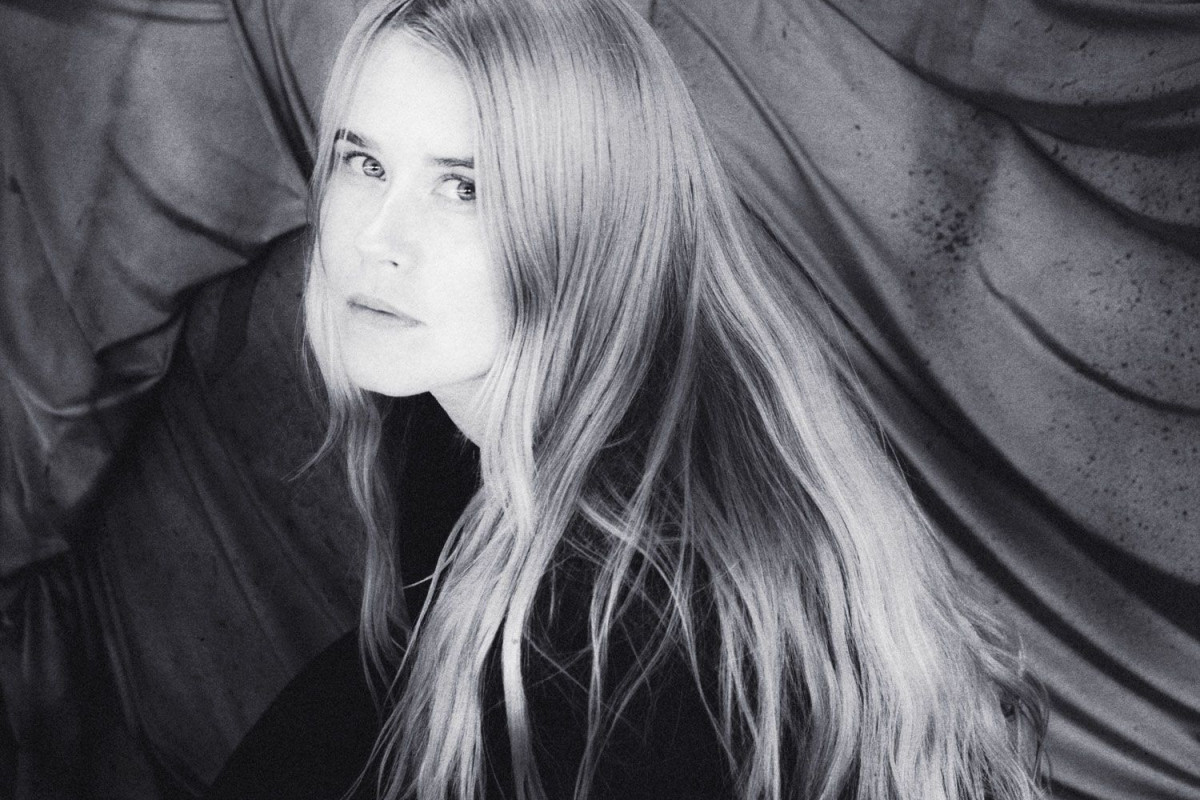
Trinelise Væring (1965) er en dansk singer-songwriter, tekstforfatter, guitarist og bandleder. Væring debuterede på den skandinaviske jazzscene i 1992. I løbet af sin karriere har hun udforsket flere genrer gennem samarbejder, bl.a. med det norske ensemble Barokksolisterne, som bandleder for indie-jazzbandet Offpiste Gurus og senest for folk/roots-fusionsbandet Tone of Voice Orchestra. På album og turnéer har hun spillet med navne som Alex Riel, Carsten Dahl og Bobo Stenson. I januar udgav Væring sit ottende soloalbum med titlen A Songwriter’s Odyssey.
© PR

»A lot is projected onto music and making music – I'm careful, singing doesn't make you more intelligent and certainly doesn't make you a better person. It's like in sexuality. A lot of things go very consciously wrong for some people. Music like sex are means of communication, people come into contact and negotiate with each other and their instruments/tools and meet themselves in it. This is also the case when I listen to music – from every conceivable genre and context, even if I always notice that as a teenager I used to play a lot of jazz guitar.«

Bastian Zimmermann lives in Munich and works freelance in the areas of music and performance. As a dramaturge, he works with artists such as the soloist ensemble Kaleidoskop, Yael Ronen and Neo Hülcker. He is editor of the German speaking magazine Positionen – Texts on Current Music and curates projects such as »Music for Hotel Bars« and the festival Music Installations Nuremberg festival. His focus is on social aspects of making music, experimental music concepts and the questioning of bourgeois structures in contemporary music. In Spring 2025 he will take over the Wolke Verlag publishing house for books on music with Patrick Becker.

© PR

»Music to me is… my work. I've landed in the best job in the world, where a core task is to discover new music, to learn its internal logic and aesthetics, who created it, and why. I'm a music researcher and have just returned from the island of Java in Indonesia with my research partner and husband Nils, where we've been visiting experimental musicians in Yogyakarta – artists we've now followed for seven years.
One recurring theme is the trance/horse dance jathilan (or jaranan), which several of the artists have introduced us to. Jathilan is on one hand an old Javanese ritual, and on the other hand a contemporary (village) culture in full development. There is no single historically 'correct' jathilan. It's a practice that follows an old spiritual ritual, but is also open to current Indonesian influences.

The playlist consists of three tracks by Senyawa, Gabber Modus Operandi, and Raja Kirik, all of whom have incorporated the ritual into their music. The fourth track was supposed to be a 'traditional' jathilan, but as far as I know, no such recording exists on Spotify. Instead, I found a related jaranan piece that includes a dangdut song – an ultra-popular genre that is often performed as part of a jathilan event. The final track is one of the most popular dangdut songs at the moment.«

Sanne Krogh Groth is Associate Professor of Musicology at Lund University, Sweden, where she conducts research on electronic music and sound art, currently with a focus on Indonesia. Sanne was editor-in-chief of Seismograf from 2011–2019. In 2015, she established Seismograf Peer, which she is still the managing editor of.

© Henry Detweiler

»For me, music is work and a way to escape it. Music is the fanciest way of communication and therefore the most delicious food for analysis. It is what prolongs your feeling for longer than you can physically hold. Music is something after which you say: 'I’m glad you didn’t use words'. After all, it’s something that makes your commute or chores shorter, and this time-controlling function is the very first and foremost mystery I love about it.«

Liza Sirenko is a music theorist and music critic from Kharkiv, Ukraine. She is a co-founder and board member of the Ukrainian media about classical music The Claquers. She is a former Fulbright Visiting Scholar at the Graduate Center, CUNY (New York, USA), and a graduate of National Music Academy of Ukraine (Kyiv, Ukraine). Her current interests include processes in the classical music industry, contemporary opera in Ukraine, and a role of postcolonial moves in these. Liza is a former PR Director of the Kyiv Symphony Orchestra, currently working as a Program Officer at the Goethe-Institut Ukraine.

in brieflive
13.04

»Is He Going to Play Three Pianos?«

August Rosenbaum: Klaverkoncert
© Josefine Seifert
© Josefine Seifert

»Is he going to play three pianos?« a boy asks. »Maybe he’s learned to play with his feet?« says an adult man. The audience on their way into the DR Concert Hall’s main auditorium comment on the setup for August Rosenbaum’s piano concert. Three Steinway grand pianos lined up is truly peculiar – actually comical.

When the concert began, I imagined I could hear differences between the instruments, though I would probably fail a blind test. Apart from a bit of playing with staccato on one piano and pedal on another, the setup was, frankly, underused. The piano playing was lacking, dominated by a single approach: pedal pressed all the way down, an active right hand primarily in the middle register, a left hand with a muted accompaniment, and a great deal of repetitive technique.

It felt like a gravity Rosenbaum could not escape. No idea or direction could break free; one always returned to the same place.

When there are two grand pianos for a concert, one of them is usually prepared. Rosenbaum had three (!) without using a single screw, coin, or ping-pong ball. Shouldn’t that be a criminal offense? Nor were any extended techniques employed, such as clusters or playing with the back of the hand.

The light show was charming, at times impressive. Still, it takes more goodwill than I possess to call the evening an audiovisual concert, as the program text told me it was. On the way out, I heard another man say, »It was actually quite exciting to hear him play.« I didn’t think so.

English translation: Andreo Michaelo Mielczarek