© Tuala Hjarnø

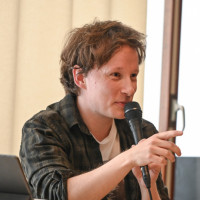
»Mit forhold til musik er dybt passioneret. Ud over at spille og arbejde med mange genrer skriver jeg også om musik – for tiden mest i Gaffa og på min egen blog på www.vaering.com. Jeg anmelder især koncerter, fordi jeg elsker at gå til koncerter og mærke både musikken og dem, der spiller den. Jeg har også en podcast, Værings Musiklytteri, hvor jeg med skiftende musik-nørdede gæster dykker ned i forskellige temaer.

Jeg plejer at sige, at jeg lytter til alt fra post-punk til country. Én rød tråd er dog nogenlunde konstant, nemlig at jeg er mest optaget af de mere håndspillede genrer. Der er undtagelser fra den regel, men som regel gider jeg ikke rigtig musik, der – som jeg kalder det – er undfanget i en petriskål.  Det organiske, det taktile, betyder meget for min oplevelse af musik. Jeg vil have levende mennesker, der river i nogle strenge, slår på noget skind og fortæller mig en historie der ligger dem på sinde. Jeg tager også gerne mine vokaler rørende, inderlige eller ligefrem uregerlige, og så vil jeg gerne have tekster med både vid og bid. Hver gang jeg har sat mig ned for at lave denne liste, er jeg gået i stå, fordi det blev for stort at udvælge fem sange til verden. Nu har jeg bestemt mig for at lægge til føje lige nu til opgaveformuleringen. Her er således fem sange/kunstnere, som jeg har lyttet til i netop denne uge – dvs. sange, der er udkommet inden for de seneste to-tre uger, altså mellem 17. januar og 7. februar 2025. Havde I fanget mig i næste uge, havde det været noget andet.«

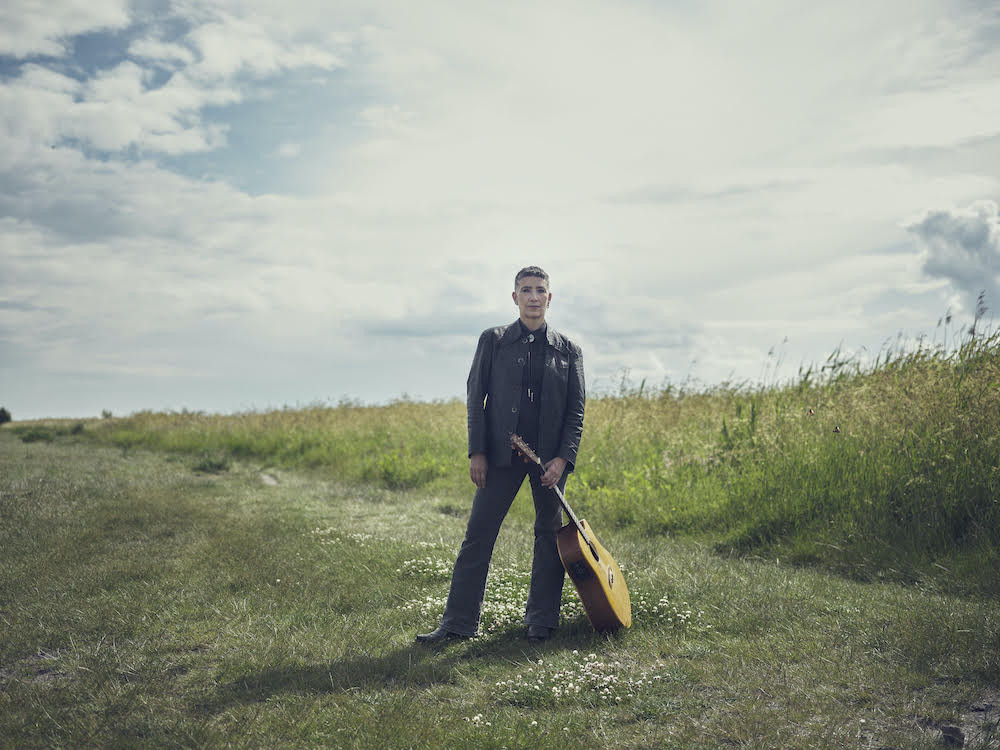
Trinelise Væring (1965) er en dansk singer-songwriter, tekstforfatter, guitarist og bandleder. Væring debuterede på den skandinaviske jazzscene i 1992. I løbet af sin karriere har hun udforsket flere genrer gennem samarbejder, bl.a. med det norske ensemble Barokksolisterne, som bandleder for indie-jazzbandet Offpiste Gurus og senest for folk/roots-fusionsbandet Tone of Voice Orchestra. På album og turnéer har hun spillet med navne som Alex Riel, Carsten Dahl og Bobo Stenson. I januar udgav Væring sit ottende soloalbum med titlen A Songwriter’s Odyssey.

in briefrelease
07.02.2025

The Sinister Mastery of Shame

Ethel Cain: »Perverts«
© Silken Weinberg
© Silken Weinberg

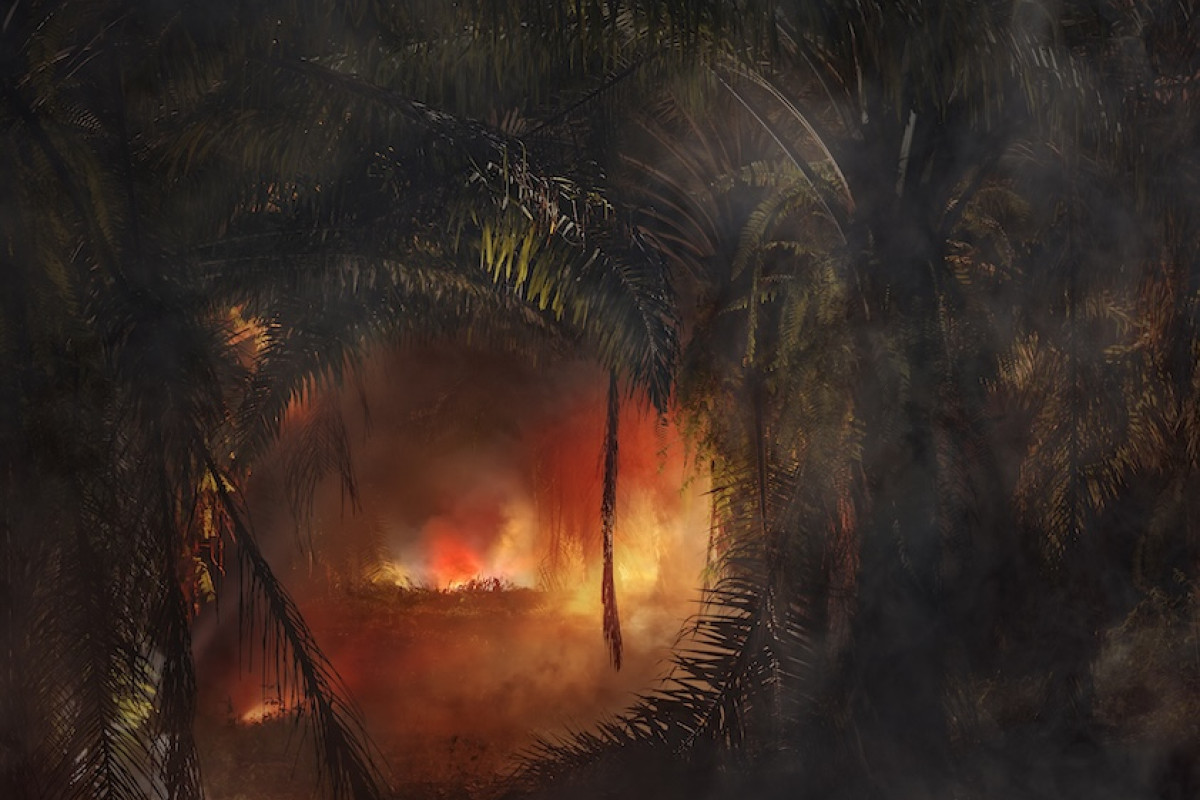
To describe American Ethel Cain’s (Hayden Silas Anhedönia) stylistic shift from her debut Preacher’s Daughter (2022) to Perverts as an extreme U-turn would almost be an understatement. The distance from the debut’s gothic lo-fi pop to this monstrous work – combining dark ambient, noise, and dystopian ballads – is vast, all the while continuing Cain’s familiar reckoning with her religious upbringing and her struggle for sexual liberation.

On paper, Perverts is an EP running 89 minutes, but it feels like far more than that. Crushing noise drones, dusty piano strikes, and distant preacher voices from crackling radios are woven together with acoustic spaces. And although the record also contains more conventional ballads such as »Punish« and the beautiful »Vacillator« – which even features a clearly defined rhythmic progression – it is the long, epic ambient tracks that draw the listener into the often harrowing darkness.

One thing is that Cain suddenly makes dark ambient; another is just how good she is at it. Perverts is not only a profoundly unsettling insight into the friction between sexuality and religious fanaticism, but also an immediate, creative, and fully realized homage to a fascinating niche genre. A necessary album for anyone unafraid of the dark.

in briefrelease
04.02.2025

The Deep Breath

Blaume: »excess air«

The Copenhagen-based duo Blaume’s EP excess air is a field study in the shared pulse of breathing, calmly taking a deep breath. The EP’s airy sound unfolds cyclically from the physical conditions of respiration, and with hoarse choral voices and chirping flute, the two artists – Laura Zöschg (IT) and Mette Hommel (DK) – wind their way around the healing and artistic qualities of breath.

Perhaps it is the strangely warm winter or the blooming figures on the cover, but excess air seems to carry a fragile sense of spring. The sparse instrumentation gropes its way forward improvisationally across the three tracks, and the many choral voices add a tangible physical sense of musicians at work, underscoring a feeling of tentative sprouting.

The electronic element, in the form of vocal effects and the music software Ableton, is an important part of Blaume’s expression. Vocal effects often come across as quite prominent, but when the processed voice on the track »vivus tremus« drifts into a hoarse rasp, the artificial divide between voice and effect dissolves, and the electronic becomes an obvious extension of Blaume’s shared breath.

Blaume’s excess air is a delightfully vital EP. It is music with the surplus energy to stretch far from a simple and immediate point of departure, and with a few simple means, Blaume’s debut emerges as a welcome harbinger of spring.

© Ellie Brown

»Music for me is: inevitable.« 

Ryong is a composer, artist & DJ that explores: Danish and Korean heritage, spirituality, embodiment, family and love, Ryong is also a member of the experimental pop band haloplus+. Across her releases, she draws on both ambient, noise and pop music, incorporating the sound of field recordings and spoken word. Having previously released on Why Be’s label Yegorka, and debuting on Posh Isolation with Isa Ryong, an 11 part work that explores transition and the anguish of complexity, Ryong has established herself as a unique artist in the experimental electronic music scene in Copenhagen.
 

in briefrelease
26.01.2025

She Makes the Music Vibrate Like a Living Organism

Astrid Sonne: »Great Doubt« 
© PR
© PR

When I first listened to the Danish violist, singer, and producer Astrid Sonne’s new album, Great Doubt, I honestly wasn’t quite sure what to make of it. I immediately noticed how extraordinary Sonne’s viola sounds on the album – such a powerful presence that it almost feels like a deeply complex living organism, breathing, feeling, and moving dramatically through the album’s nine songs.

My favourite track was without a doubt »Almost«, where Sonne’s fragile, subtly intense voice is accompanied solely by the viola’s minimalist pizzicato melody, which reminds me of a forgotten composition from Japanese new age pioneer Hiroshi Yoshimura’s masterpiece Green.

On most of the tracks, however, voice and viola are also joined by electronic rhythms, piano chords, and synth figures which, in contrast to the viola’s organic, vibrating sound, initially struck me as almost plastically artificial. To me, it sounded as if the viola and the electronics were being transmitted from two very different universes, unable to fully coexist. There was something about the contrast that felt slightly… uncanny.

Yet with repeated listens, everything begins to make sense. Sonne’s coolly understated voice is the glue that binds the entire soundscape together, as if it itself exists in the porous space between the viola’s raw natural force and the electronics’ tamed purity. I like it more and more – and perhaps I may even come to love it. Great Doubt is an album that, despite its modest running time of just 26 minutes, demands immersion and reflection – and ultimately rewards the listener for it.

in brief
08.01.2025

Love and Poetry under Black Streetlights

Jørgensen/Botes: »Dråberne 5, 7, 8 og 11«
Marina Botes og Steen Jørgensen. © Isak Hoffmeyer

While many still sigh at the thought of seeing a full Sort Sol once again illuminate the dark grey Danish sky, the band’s eternal crooner Steen Jørgensen, together with his equally strong other half, pianist Marina Botes, has created music that is something entirely different – something deeper. And yes, I have seen words like »pretentious« and »boring« hurled at the duo, but none of that sticks to their new release, which consists of a series of intimate suites where Jørgensen’s spoken word is woven together with Botes’ magnificent piano playing. If the ambition is to build a bridge between the classical and the electronic, it succeeds convincingly.

As a lyricist who moves through the same pitch-black landscape as Jørgensen, I tip my hat to the strong poetic imagery that characterizes Dråberne 5, 7, 8, and 11 – especially on the album’s longest track, the dramatic »Hul – Dråberne 7«. As Jørgensen muses on the luminous melancholy of the inner city, the music becomes a transformation, a sphere of change made of ambient surfaces, muted strings, and a female vocal that slips in like a shadow—until the song rises in dramatic momentum, centering on the line »En nat i indre kvarter«.

The music is primarily grounded in piano-heavy terrain, where Botes’ keys find repose in muted pedal strikes and light strings. Only in rare moments do the compositions break free, as on the opener »Glemsel – Dråberne 5«, where chamber orchestra and jazzy breakbeats create a compelling and almost cinematic atmosphere.

Dråberne 5, 7, 8, and 11 is a seductive, inspiring, and downright sumptuous experiment in which the love between the two artists can be felt in every tone. If this is Jørgensen’s career winter, I will gladly accept more dark, warm moments.