


When Music Stopped Explaining Itself
Klang Festival opened at Teatret Zeppelin with Dreaming Turtles, performed by the Finnish ensemble Oblivia and Germany's KlangLab. As the audience entered, a line of performers stood silently along the curtain, dressed in sportswear transformed into peculiar sleeve-like garments. The music shifted between dystopian atonality and kawaii-inspired melodic passages, giving the ears occasional moments of gentle respite. Right from the outset, the festival's greatest strength became apparent: its best works required no explanation. They simply worked.
»Scary«. Yes. But there was also something gentle within the darkness
The first performer we heard, Annika Tudeer, was captivating in her grounded, assured stage presence. Her voice drifted through repeated words – »Drifting, swifting, screaming, dreaming« – unfolding in a wave-like, ominous pattern. The opening was so compelling that the rest of the performance struggled to live up to it. It almost did, and whenever Tudeer returned to the stage, the work regained its focus.
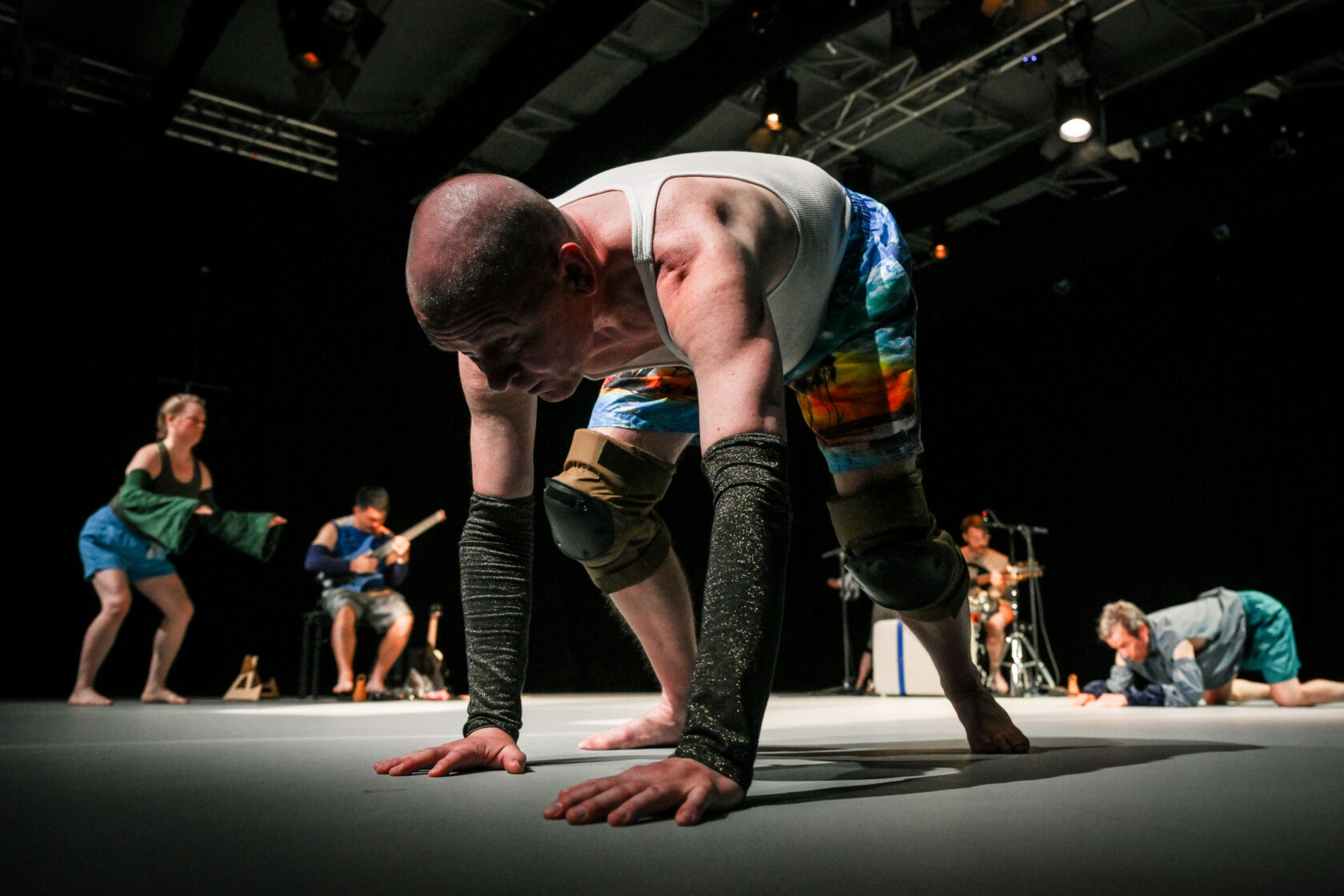
Dreaming Turtles traced a kind of posthuman evolution in which humanity's era seemed to have come to an end. By the final scenes, the performers appeared to inhabit the world beneath the sea, surfacing only to gasp for air. They resembled tadpoles or, as the title suggested, dreaming turtles – an image of a world after humankind. When the applause faded and the lights came up, someone behind me simply said, »Scary«. Yes. But there was also something gentle within the darkness, as if the only things left to trust were turtles and ferns. As an opening to this year's Klang Festival, Dreaming Turtles struck exactly the right balance: experimental, unsettling and quietly tender.
The violist could have had it worse
On the festival's second day, composer S. Gerup's solo performance How to Ruin Someone's Career as a Violist was presented beneath the escalators of the Den Sorte Diament library. The work took its point of departure from Hannah Arendt's reflections on what we choose to conceal and what we expose publicly when it comes to private suffering.
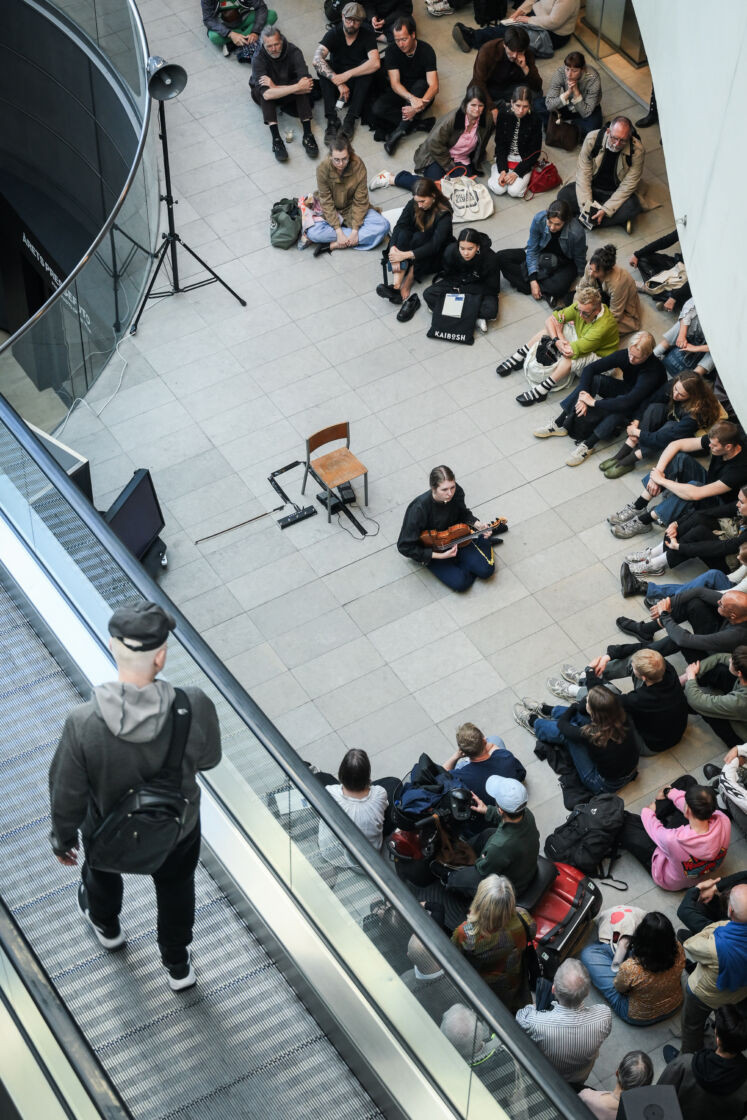
Yet its promising premise remained strangely unresolved. The viola was lifted, discarded, played pizzicato and treated as something both indispensable and impossible to relate to, while the performer writhed across the floor in convulsive movements. I understood the image of a musician trapped in an unhappy relationship with their instrument, but I never truly felt what, precisely, was hurting. I wanted the suffering to become more undeniable. The work remained too cautious in relation to the serious questions it set out to explore.
A beautiful and courageous debut at the Glyptotek
On Thursday, Greek-Swedish composer Athanasia Kotronias presented her debut concert as part of the soloist programme, leading the audience into an ancient world inspired by the surviving fragments of the poet Sappho – poems of love, longing and heartbreak. Divided into two parts, Dionysos and Apollon, the concert placed the audience in a horseshoe around four small stages in the Glyptotek's grand hall. It could easily have become ponderous. It never did. Instead, it became one of the festival's highlights.
As rain began softly drumming against the glass roof, it felt as though the museum itself had joined the performance
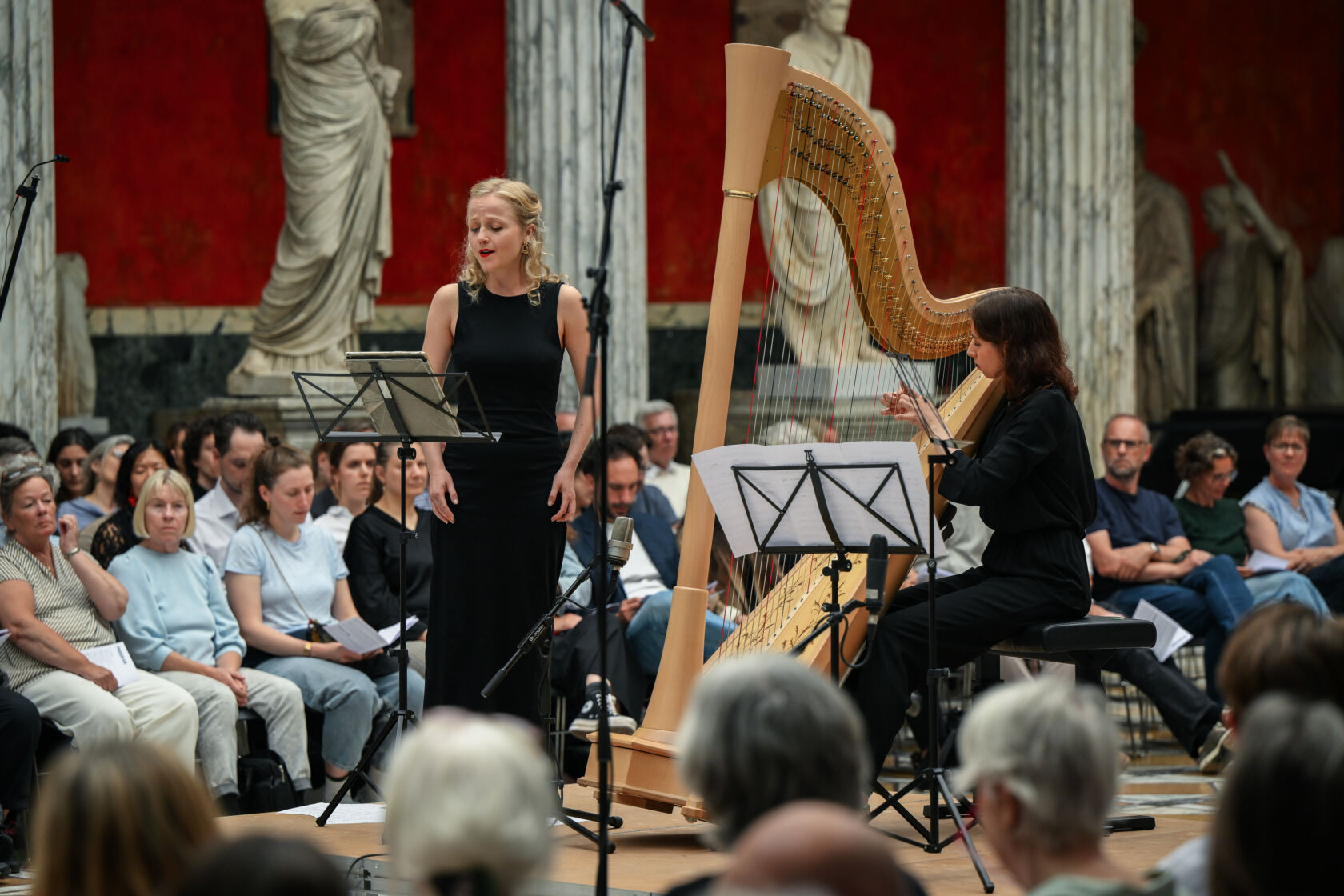
Accordionist Bjarke Mogensen opened Hydraulis with a dazzling introduction – dark, playful and virtuosic. Later, mezzo-soprano Hanne Marie Le Fevre completely commanded the room in Men mig har du glemt, and as rain began softly drumming against the glass roof, it felt as though the museum itself had joined the performance.
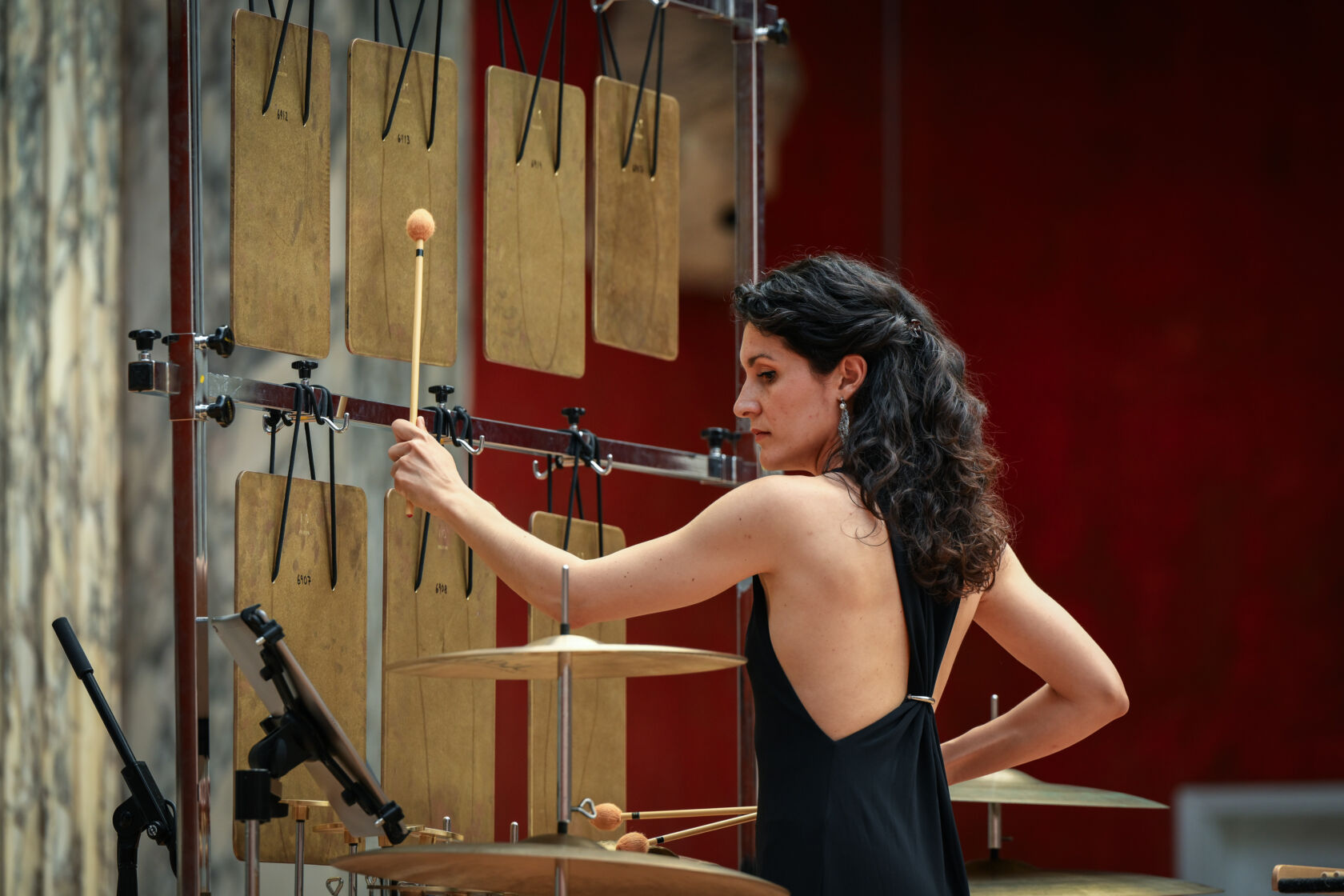
Most impressive was the ritual calm that united the musicians, students, architecture and audience. The costumes remained conventionally black but incorporated sculptural details, everything seemingly conceived specifically for the space. Only the wind ensemble V Coloris, positioned out in one of the surrounding corridors, felt slightly detached from the whole. Percussionist Katerina Anagnostidou concluded the sequence with the minimalist solo work Syrinx, named after the nymph who, according to Greek mythology, transformed herself into reeds to escape Pan. Kotronias' debut emerged as beautiful, courageous and marked by a rare confidence in slowness, concentration and contemplation.
One or two stars for trying
On Saturday, Anton Rune Lindström and the ensemble CRAS had intended to perform Squirrel Band in the natural surroundings of Sydhavnstippen. Heavy rain forced the six guitarists indoors beneath the roof of Den Sidste Mole's DIY-like venue instead.
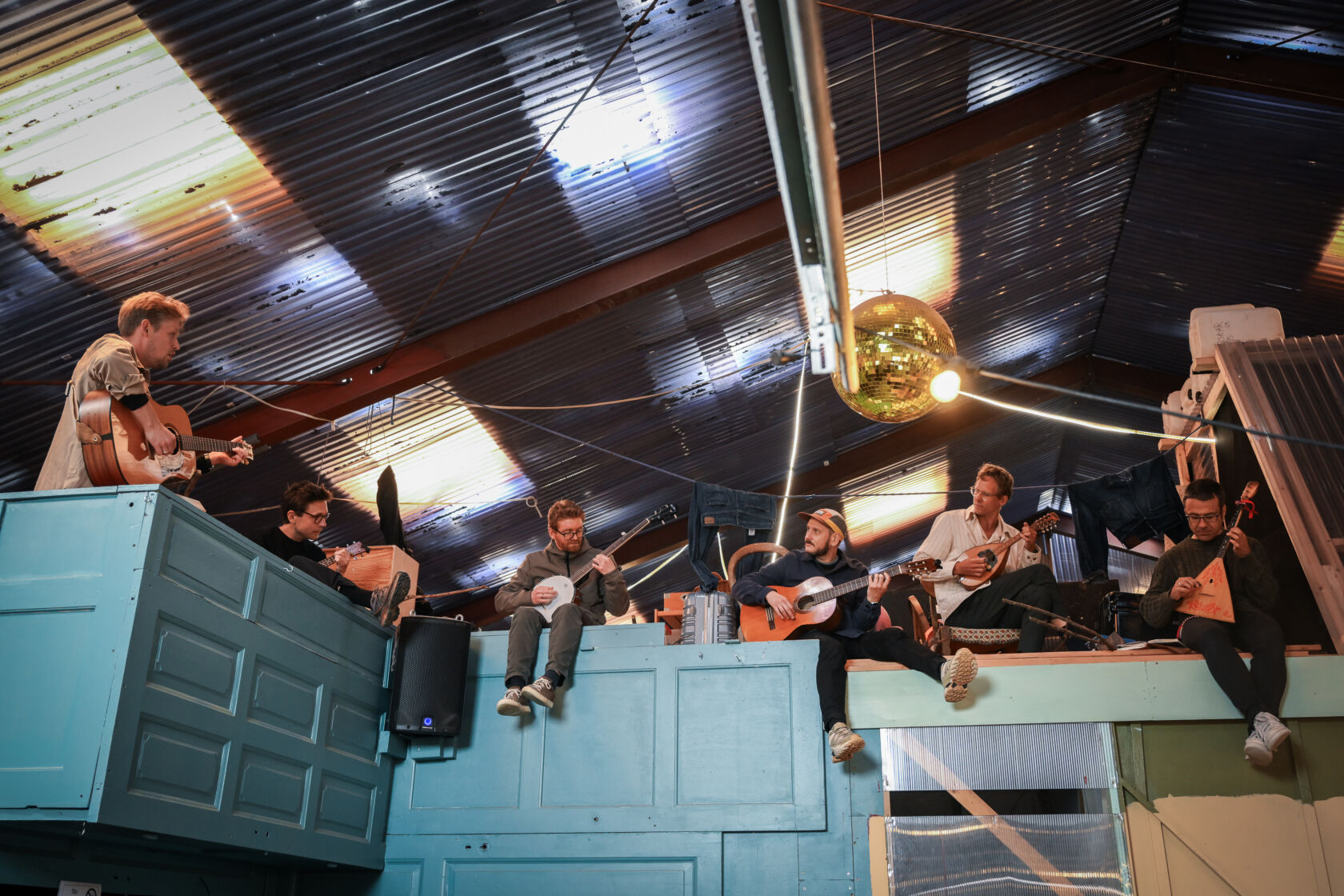
The concept initially seemed promising: battery-powered string instruments built from fallen branches. But without the surrounding landscape, the idea never quite came alive. Only towards the end, when conventional guitars met the homemade instruments in a version of »Oh Susanna«, did the performance begin to cohere.
I had brought along three children aged between seven and ten, and they delivered the festival's sharpest review:
»If children had played that, no adults would have listened. It was obvious people only paid attention because grown-ups were performing it,« one ten-year-old concluded.
New music with club potential
The closing concert by Copenhagen Contemporary String Quartet at Alice became the festival's most convincing demonstration that contemporary music can possess genuine club potential without sacrificing complexity.
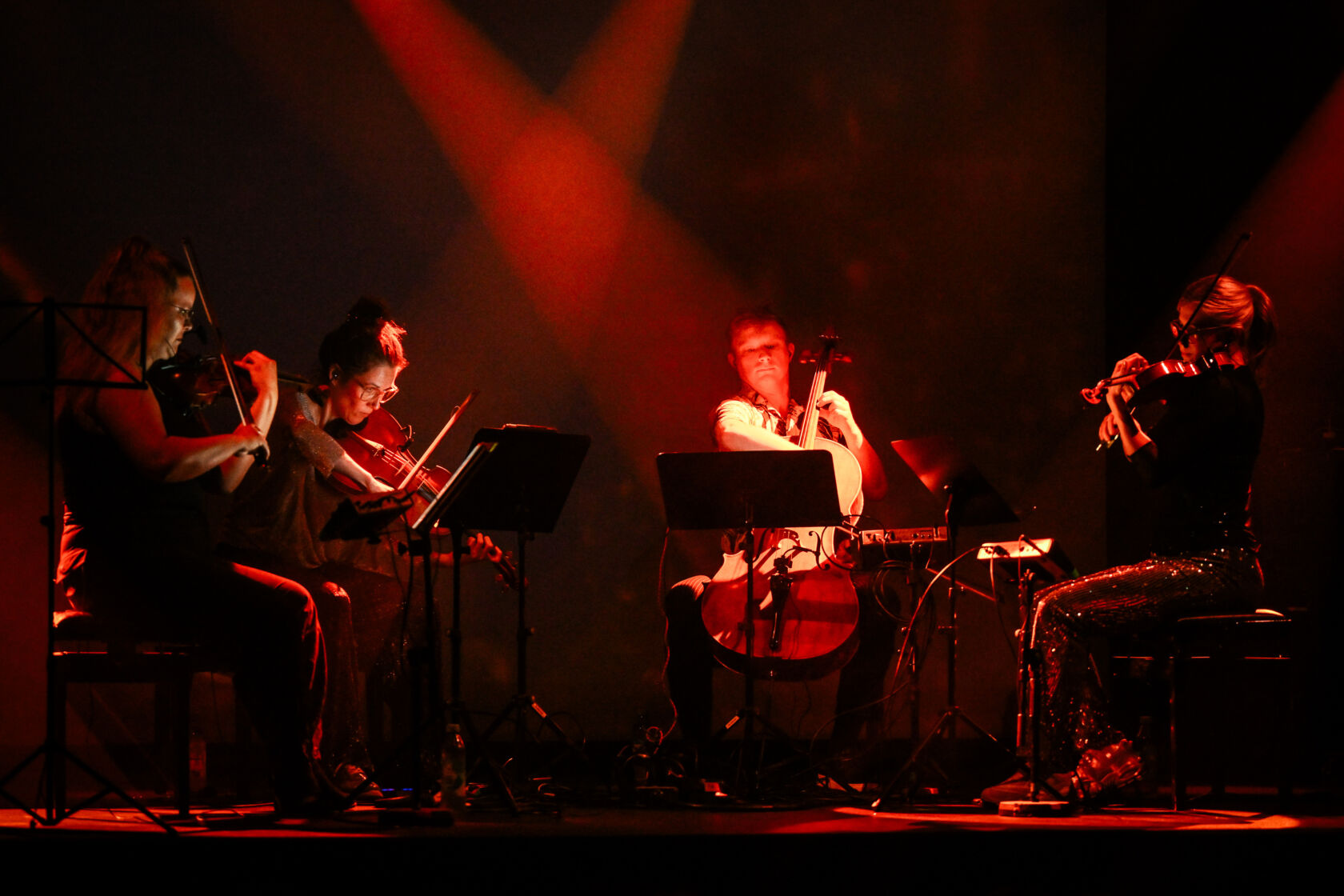
It was the festival's strongest concert: pounding bass, synthesisers, humour, darkness and astonishingly accomplished musicians playing with such intensity that horsehair flew from their bows and the music became something physical. At one moment, Lu Yun's beautiful Temple in Taiwan: Religious Parade opened a sonic gateway to Taiwan. In Jexper Holmen's work, the string quartet itself became the object of examination: tuning, scraping, insisting, almost unbearably so, and therefore genuinely funny.
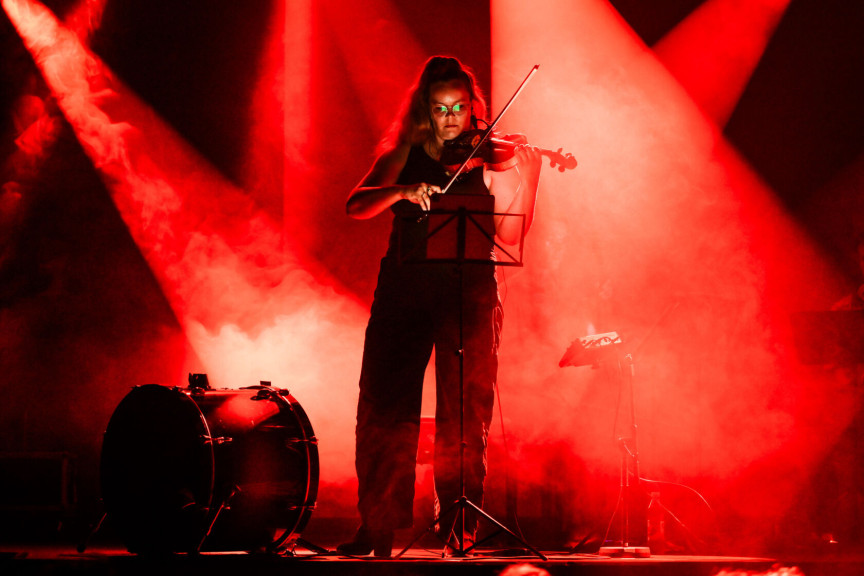
Later the concert turned darker, interrupted by voiceovers about TikTok and everything that steals our attention, punctuated by satirical, almost Baroque string figures. This was an excerpt from Ben Nobuto's Clickbait (2019) for string quartet and sampler. When violinist Amalie Kjældgaard planted one foot on the bass drum beneath a wash of red light, apocalypse was no longer an abstract idea. It stood directly before us.
Later the concert turned darker, interrupted by voiceovers about TikTok and everything that steals our attention
Thankfully, hope returned in the closing work, when the lighting shifted to yellow and Anna Merediths Blackfriars rescued us from the apocalypse through its exhilarating fusion of string quartet and electronics. Each piece appeared on a screen behind the ensemble as titles changed seamlessly, while the players' bows seemed to run a marathon. It was an astonishing feat of musicianship, almost athletic in its endurance. I had brought a guest with no prior interest in contemporary music, who left overwhelmed, impressed and eager to return to Klang next year.
Better too adventurous than too safe
If Klang wants to reach beyond those who already know contemporary music, there was plenty here to build on. Probably also on the party bus that transported audiences from Den Sidste Mole to Nørrebro (without me, unfortunately).
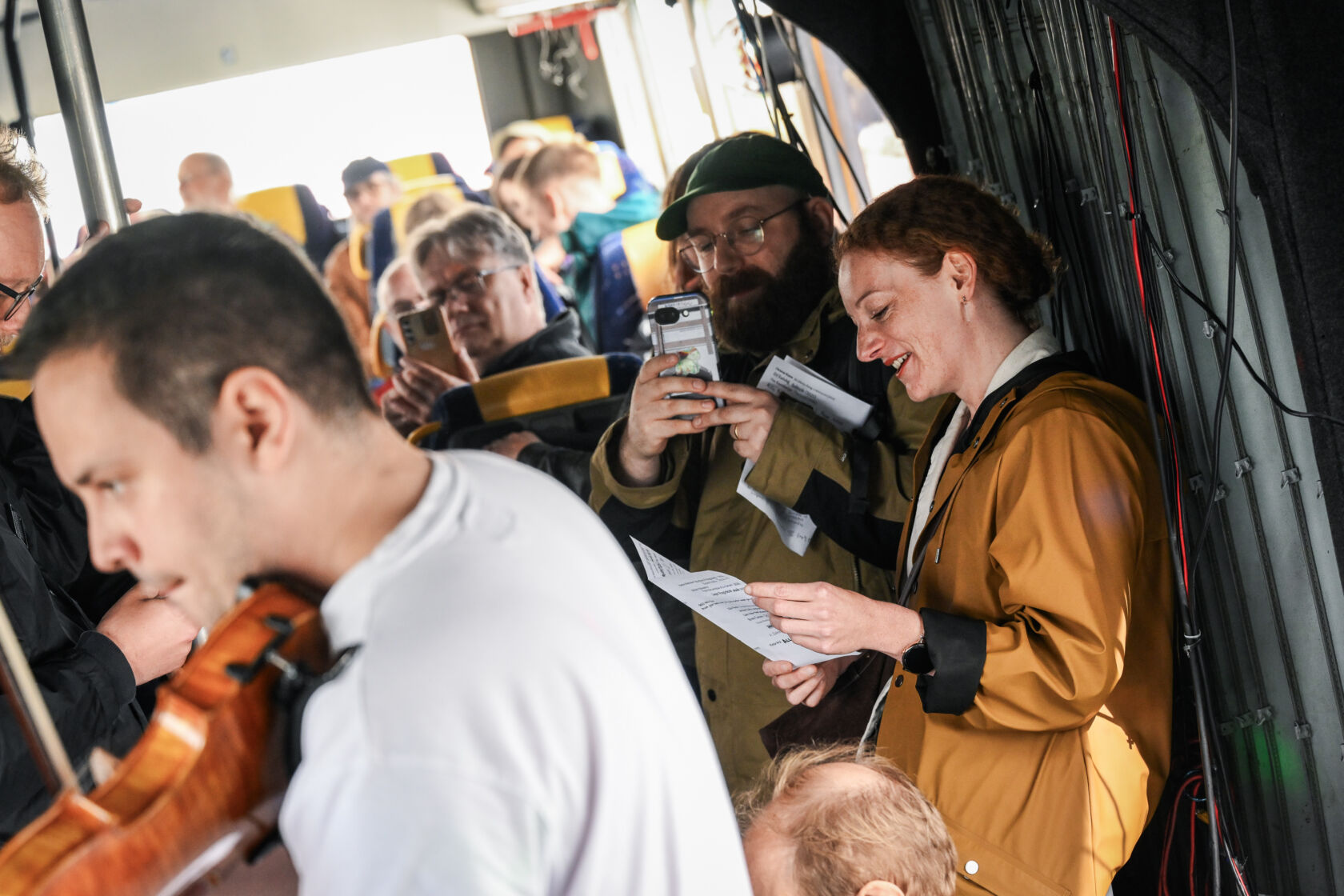
Under its still relatively new artistic leadership, Klang presented a festival whose curatorial approach felt more adventurous and outward-looking than in previous years. Works occupied the city rather than remaining confined to concert halls, and audiences encountered contemporary composition and sound art in many different forms.
Oh yeah: more string quartets in nightclubs. More composers on party buses
Naturally, that involved risks. Rain could uproot a site-specific work from the place that gave it meaning, and not everything landed successfully. Yet the festival ultimately emerged as an event that would rather be slightly too experimental than slightly too safe. It also demonstrated that contemporary music does not become more accessible through more explanation. It becomes accessible when it no longer has to be understood before it can be felt. Oh yeah: more string quartets in nightclubs. More composers on party buses.
Klang Festival, Copenhagen, 8–13 June 2026
English translation: Andreo Michaelo Mielczarek