Rune Glerup
15






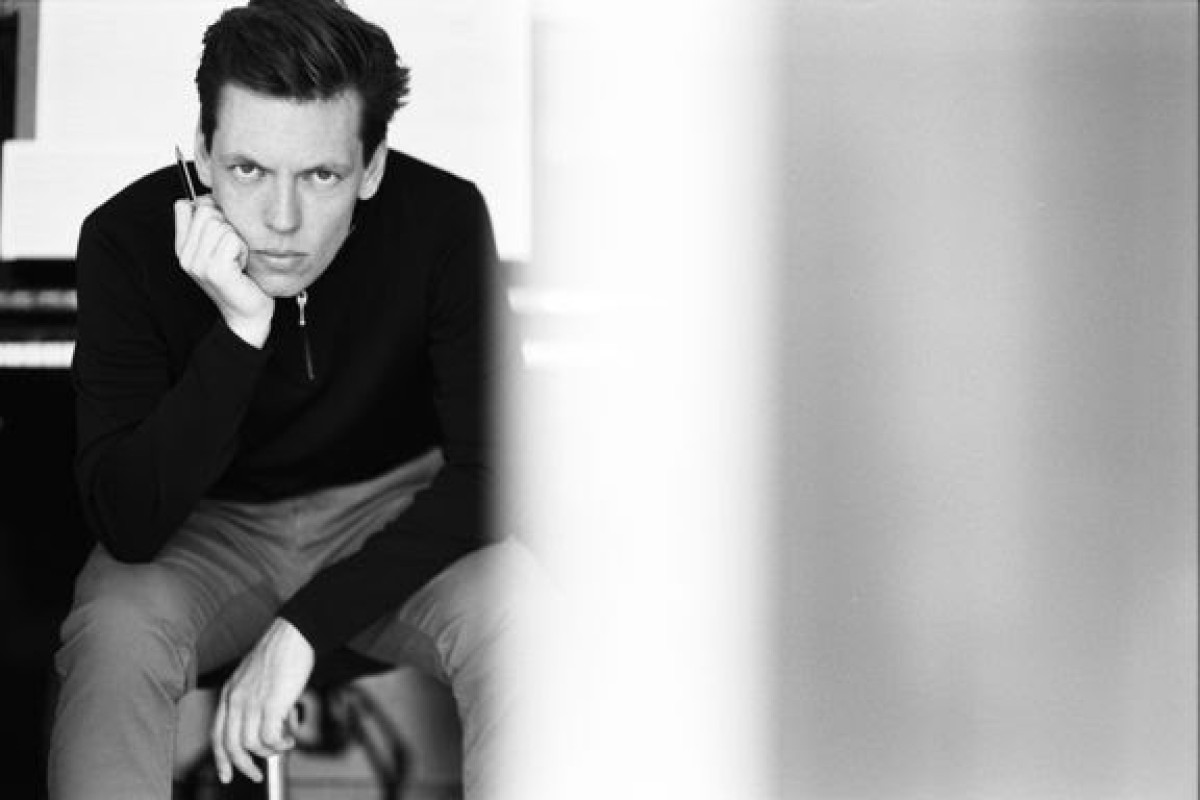
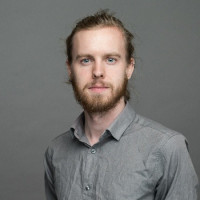
A string quartet consists of four players, and a clarinet quintet five, though the Danish composer Rune Glerup (b. 1981)’s newly recorded works for both ensembles would have you believe their ranks are vastly undercounted. The recipient of last year’s Nordic Council Music Prize for his violin concerto Om lys og lethed (About Light and Lightness), Glerup writes pieces for chamber and orchestra that are often characterized by their multidimensionality: a sonic idea will persistently recur in altered guises, for a sense that one is feeling around different facets of a physical form. Yet the two works on Perhaps Thus the End – brought to life by the impeccable Quatour Diotima and clarinetist Jonas Frølund – are just as potent a demonstration of expansive interiority as they are of surface area.
In the titular string quartet, whose seven movements are named for lines from Beckett’s late prose work Stirrings Still, long tones and galloping motives are seamlessly shuffled amongst the ensemble, generating such a sonority that the group seems to have doubled in size. The language is sometimes mechanical but never automatic, bending rather into balletic shapes. Glerup is a careful manager of texture, finding grace in unintuitive sounds through skillful layering – to speak merely of how, in a later movement, a harmonic pizzicato punctuates the string equivalent of vocal fry before the group pivots suddenly into stillness.
On the unexpectedly addictive »Still Leaning Towards this Machine«, which is surely among the few times a contemporary clarinet quintet has received that distinction, electronics magnify the ensemble through a subtle stuttering resonance. As a result, across three spunky movements, the group is occasionally transmuted into a sort of paranormal accordion. It’s a wonderfully weird effect that, just as weirdly, the score seems to deliver with a straight face – just one more satisfying surprise among many others on this excellent record.

»Music, to me, is the key to – and an extension of – my vocabulary. If I struggle to put ‘spoken words’ to something inside, or if I need release in the form of a proper cry, the right song can put me in the right gear immediately. It can be the lyrics, the melody, or both that give direct access to my emotions, where the brain can simply be put into neutral and carried away.«
Katrine Muff, born in 1985, is a composer and singer. She has set music to texts by, among others, Stine Pilgaard and Suzanne Brøgger, and in 2021 she received the Folk Song Prize (Den Folkelige Sangs Pris). Together with Lone Hørslev, she is currently releasing the album Jeg ønsker mig and working as a songwriter on the theatre concert STOLT (Folketeateret).
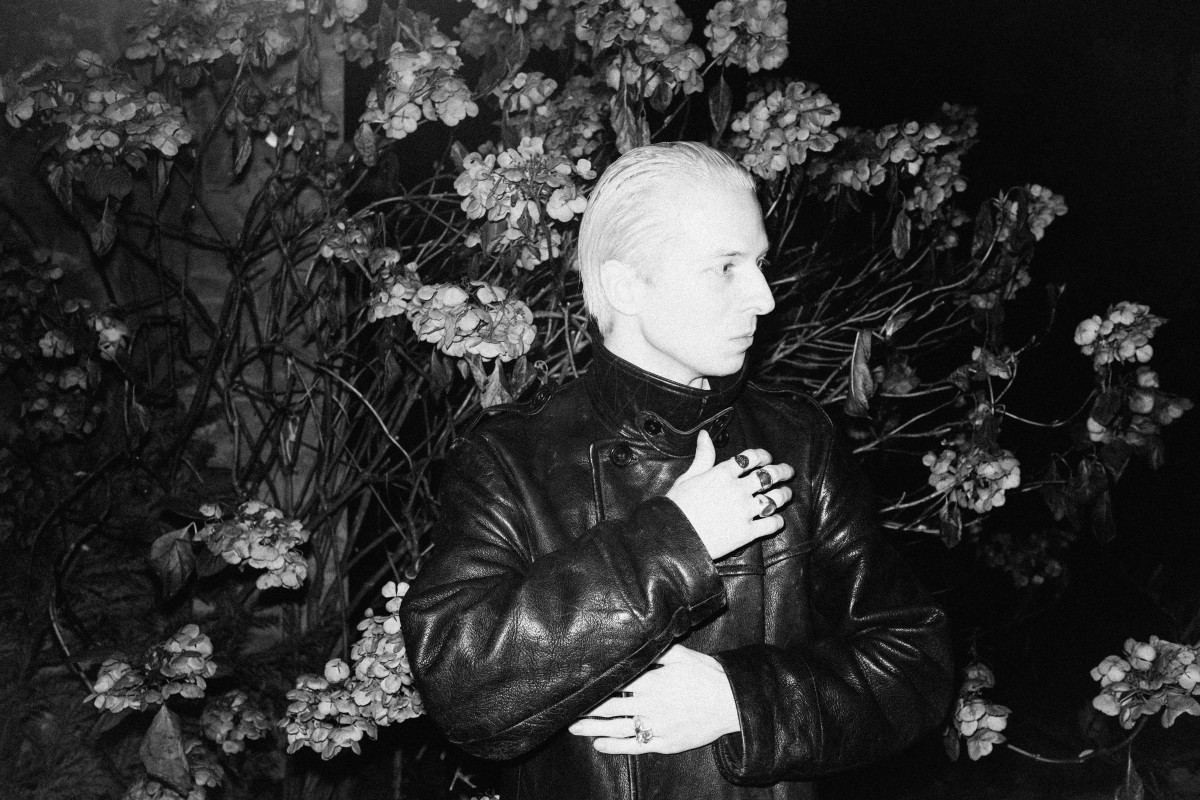
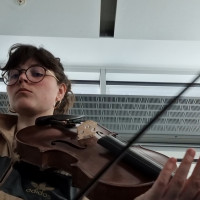
K Bech – known from the rock band Shiny Darkly – opened Saturday night’s concert at Alice with a raw, unpolished melancholy. A sense of Copenhagen-style urban gloom was palpable, yet the slightly nervous set never really took off. Despite a promising setup of violin, guitar, and electronic tracks, the sensitive lyrics remained more hints than breakthroughs.
Soap Horse then took the stage and truly ignited the evening with an authentic chicken-picking riff. The country-rooted guitar technique was just one example of the musical abundance running through the band, which has just released its debut EP Tooth Inside a Tooth.
Nothing seemed accidental. From the rust-red gothic tapestry to the carefully chosen instrumentation – violin, saxophone, and pedal steel alongside guitar, bass, and drums – every detail added to a deliberate aesthetic. The sound was dark and alluring, in sharp contrast to frontman Hans Gustav Björklund Moulvad’s shock of white hair and intense stage presence.
The songs were crafted with a refined sense of balance. Simple, repetitive motifs were passed between the instruments, and when massive noise walls and shimmering colors broke through, the already blurred borders of indie rock stretched even further. Moulvad commanded the whole with ease, moving charismatically between the music’s many layers. And yet, I found myself wishing Soap Horse would let go completely. The weightless intermezzos – where the unusual lineup could have truly unfolded – were too often pulled back by a steady drumbeat, returning the music to a safe ground. Soap Horse displayed remarkable control and a firm grasp of both their sonic universe and their audience. Perhaps all that’s left is to prove they dare to loosen their grip.
English translation: Andreo Michaelo Mielczarek

Illiyeen is visual artist Eliyah Mesayer’s fictional state for the stateless, a group to which the artist herself belonged until just a few years ago. Since 2019, she has continuously added national symbols in Illiyeen’s characteristic black color, and today the state has its own postal service, national anthem, uniform, navy – and a steadily expanding list of collaborators.
It’s a clever concept, at once tightly defined and completely open. Because the state is nomadic and collective, it can arise anywhere and include a wider circle of like-minded artists, such as Angel Wei from Haloplus+ and the poet Zahna Siham Benamour. It is a state of mind.
At Den Frie, it was the drum duo Thicket – Adam »CCsquele« Nielsen and Dan Kjær Nielsen – who performed from opposite sides of a split drum kit. Through an improvised drum solo so energetic that drumsticks flew through the air, they explored the shared rhythm that emerged, broke apart, and shifted character along the way. A fitting symbol of Illiyeen’s community: a constant negotiation and coordination of tempo and movement.
Along the way, the toms gave way to a recorded sound piece, a spherical electronic composition with subdued spoken word woven into the soundscape. The work originated from an earlier installation but was extended for the occasion, with added acoustic elements recorded by Cæcilie Trier and Xenia Xamanek. It carried a mournful, sensitive vibe that stood in sharp contrast to the thundering intensity of the drums. Mesayer’s poetic, black-clad universe and Thicket’s simultaneously tight and improvisational energy bursts blended perfectly into a community one longed to be part of.
English translation: Andreo Michaelo Mielzcarek
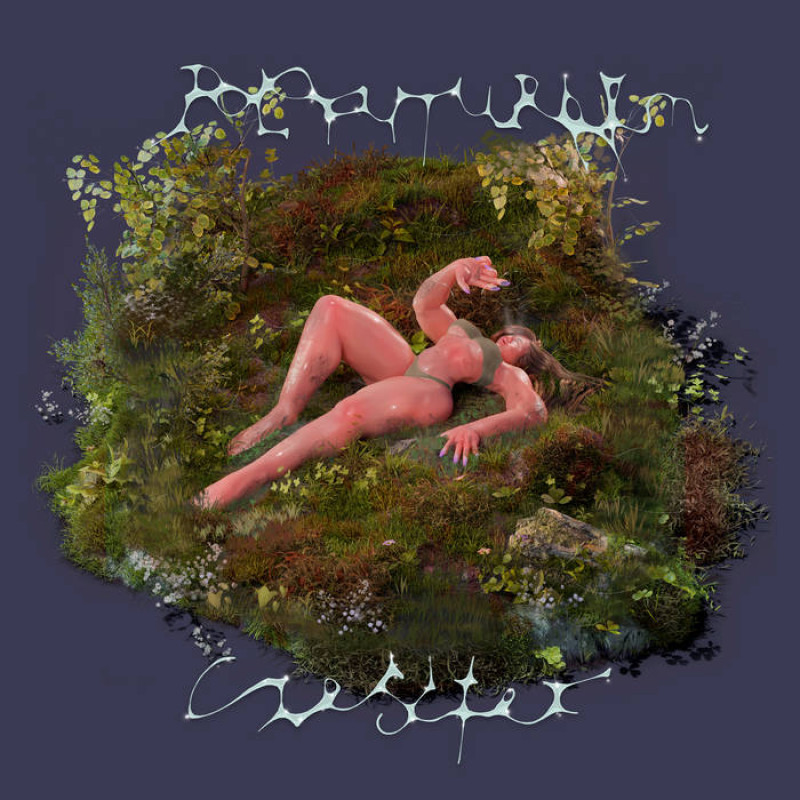
Polish-born Szymon Gąsiorek has done it again – created a cornucopia of an album that both overwhelms and delights with its endless wealth of eclectic ideas, styles, and sound sources. As is often the case with this kind of release, where each track has its own distinct identity, personal favorites quickly emerge.
One clear favorite announces itself right away. The opening track, »TAK TAK NIE NIE«, explodes with an energy reminiscent of early Boredoms – a heavy dose of noise rock with shouted vocals, electric guitar, saxophone, gunshots, screams, synths, piano, and more. The third track, »STRACH LĘK NIEPOKÓJ«, also shines with a zeuhl-like momentum driven by militaristic vocals, insistent drums, jagged guitar, and saxophone. And even beyond the most immediately impressive tracks, Polofuturyzm is so packed with highlights and playful surprises that even half of it would have sufficed. Take, for example, »90s [NADZIEJA]«, featuring a trancey synth quickly and effectively sabotaged by free jazz-style drums and saxophone, or »JEDNOKIERUNKOWY«, which sounds like classic disco polo thrown in a blender and mixed with pitch-shifted vocals and clubby keyboards. Not to forget the eight-second slapstick piano flourish on »RĘCE«.
Polofuturyzm is driven by a manic refusal to ever look back. The only constant is the absence of consistency. Gąsiorek has been here before, but it still feels just as radical and refreshing.
English translation: Andreo Michaelo Mielczarek
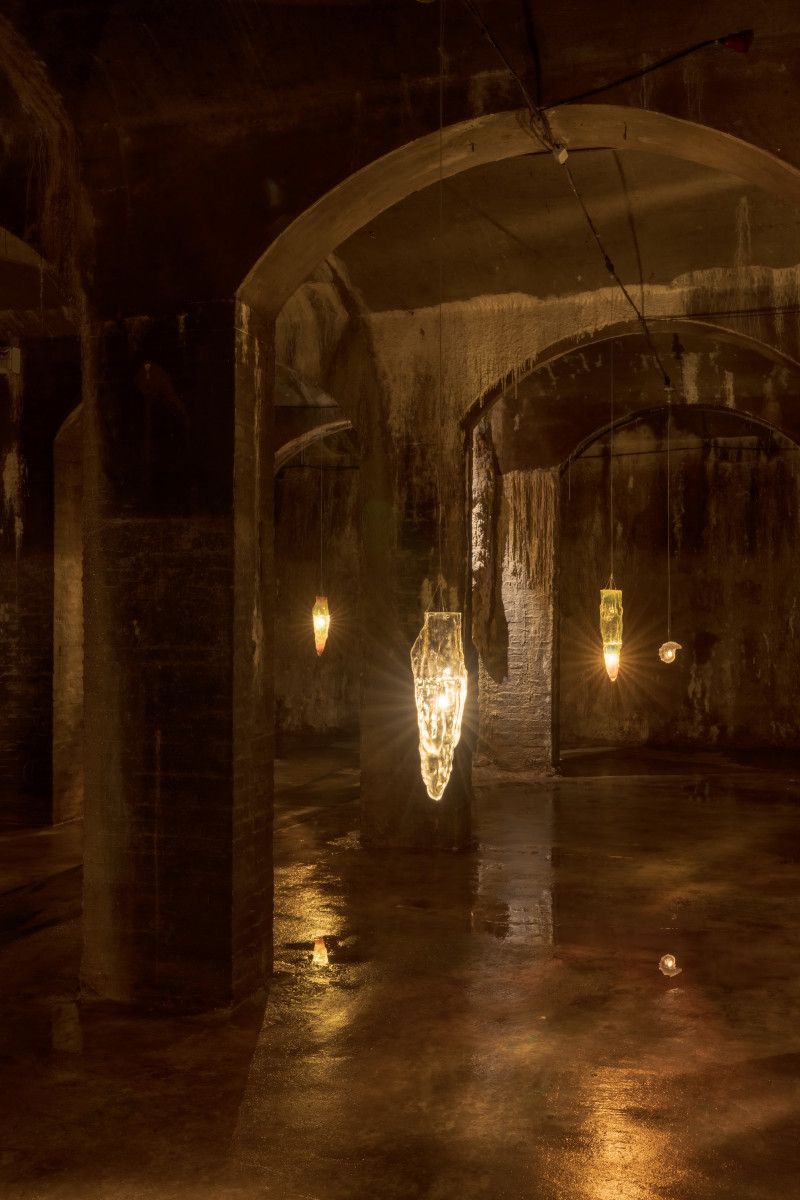
The contrast is striking when, on the hottest day of the year, you step down from the green lawns of Søndermarken into the underground world of the Cisterns, Copenhagen’s old water reservoir. The humidity is high, the light sparse, and stalactites hang from the vaulted ceilings, casting shadows in the puddles on the floor. And then there is the sound: in the empty columned halls, the reverberation can last up to 17 seconds. Even the slightest scrape echoes down here.
Since 2016, the Cisterns have functioned as an exhibition space, and this year Jakob Kudsk Steensen has transformed the halls into an underwater landscape of video projections, sculptural objects, and a soundscape created by Lugh O’Neill featuring Bjarke Mogensen on accordion. Mogensen, who is performing this evening, has a versatile taste. Perhaps a bit too versatile, I think to myself as I read the evening’s program, which spans from Bach to folk melodies from Bornholm. It turns out to hold together better than one might expect. These are compositions that seem to stretch time itself, where long tones – amplified and extended by the reverberation – form a murky foundation for short, pearling attacks, like marble balls ricocheting off a stone wall.
A shimmering, sorrowful composition by Nick Martin, inspired by Michelangelo’s Pietà – marble again – is followed by a meditation on echo among the cliffs of Bornholm by Frederiksberg-based composer Martin Lohse. Another piece rises slender and sacred like high vaults, while Mogensen’s own Passage crackles, snaps, and crunches like stones being broken. Mogensen’s accordion is in constant dialogue with the space; he calls, and the dark colonnades answer back – or is it the other way around?
The audience sits petrified, completely absorbed in the sound, as Mogensen masterfully makes his instrument sound like everything from a rapid breath to a thunderclap. When we finally emerge, heavy clouds hang over Søndermarken, and the heat is gone. The park feels transformed. The contrast is tangible.
English translation: Andreo Michaelo Mielczarek