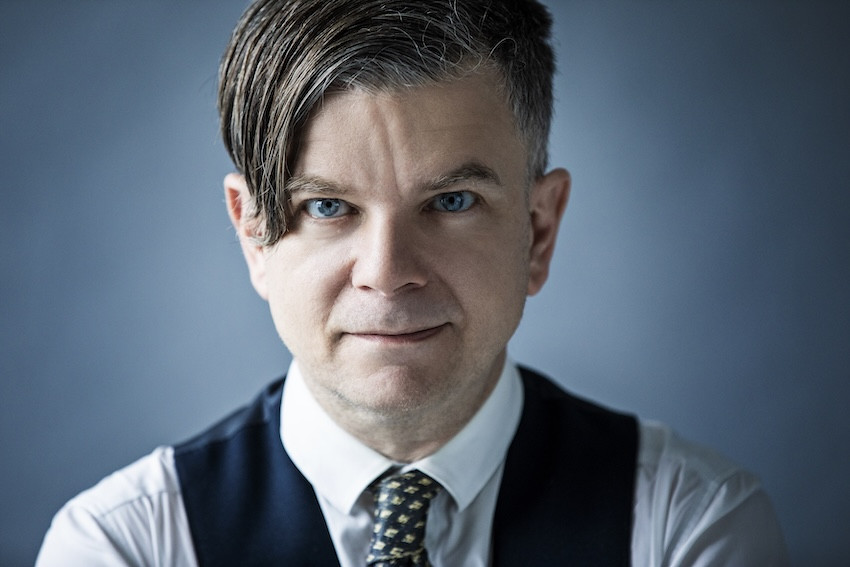
»Who ever said that music is ‘just’ music? To me, it is anything but that: an urge to understand and explain it all. A piece of jewelry I wear every single day. A joy that can, at times, run deep. An ever-changing imprint of millions of stitches in my heart. A longing to disappear.«
Henrik Marstal is a musician, author, and music researcher. He holds a PhD in musicology, is a senior lecturer at the Rhythmic Music Conservatory, and frequently appears in the media as an expert source on music. His areas of interest include contemporary music, such as electronic music. This winter, he will release both a new album with the pop group ibens and a book about Else Marie Pade, published by the British publishing house Bloomsbury.

Composition for Stone Walls
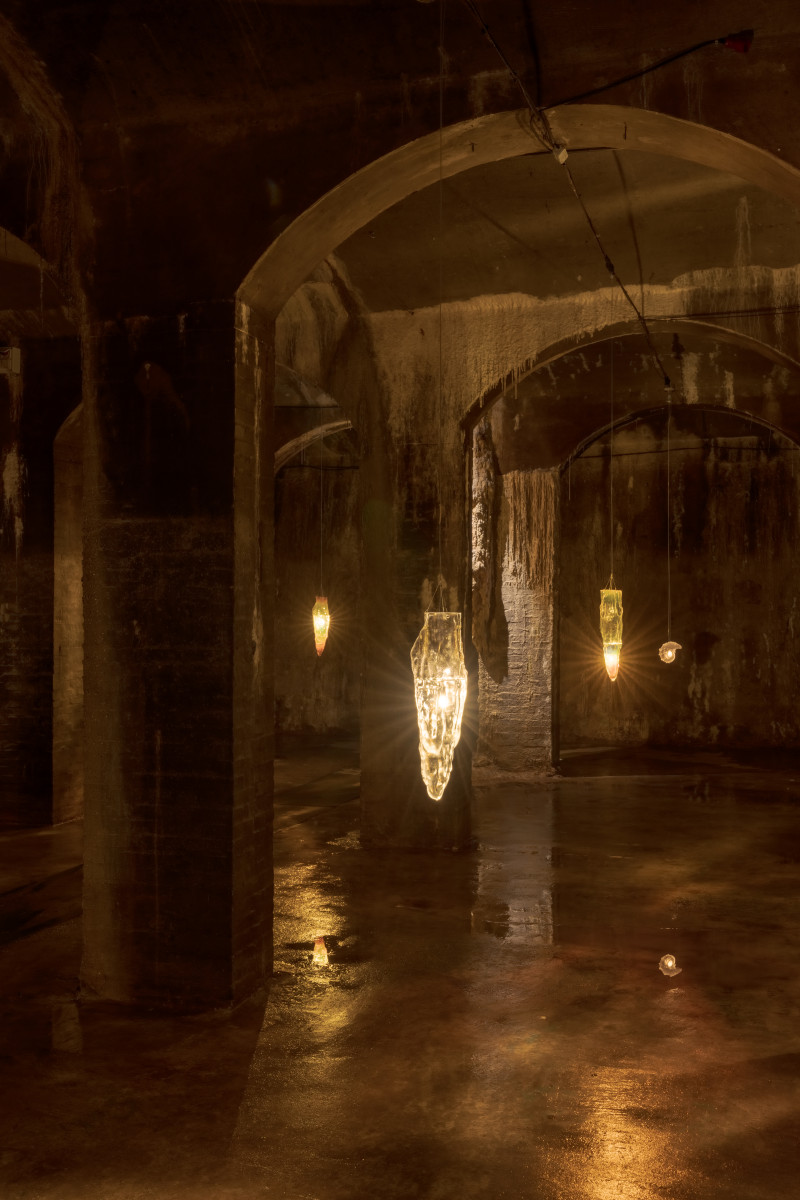
The contrast is striking when, on the hottest day of the year, you step down from the green lawns of Søndermarken into the underground world of the Cisterns, Copenhagen’s old water reservoir. The humidity is high, the light sparse, and stalactites hang from the vaulted ceilings, casting shadows in the puddles on the floor. And then there is the sound: in the empty columned halls, the reverberation can last up to 17 seconds. Even the slightest scrape echoes down here.
Since 2016, the Cisterns have functioned as an exhibition space, and this year Jakob Kudsk Steensen has transformed the halls into an underwater landscape of video projections, sculptural objects, and a soundscape created by Lugh O’Neill featuring Bjarke Mogensen on accordion. Mogensen, who is performing this evening, has a versatile taste. Perhaps a bit too versatile, I think to myself as I read the evening’s program, which spans from Bach to folk melodies from Bornholm. It turns out to hold together better than one might expect. These are compositions that seem to stretch time itself, where long tones – amplified and extended by the reverberation – form a murky foundation for short, pearling attacks, like marble balls ricocheting off a stone wall.
A shimmering, sorrowful composition by Nick Martin, inspired by Michelangelo’s Pietà – marble again – is followed by a meditation on echo among the cliffs of Bornholm by Frederiksberg-based composer Martin Lohse. Another piece rises slender and sacred like high vaults, while Mogensen’s own Passage crackles, snaps, and crunches like stones being broken. Mogensen’s accordion is in constant dialogue with the space; he calls, and the dark colonnades answer back – or is it the other way around?
The audience sits petrified, completely absorbed in the sound, as Mogensen masterfully makes his instrument sound like everything from a rapid breath to a thunderclap. When we finally emerge, heavy clouds hang over Søndermarken, and the heat is gone. The park feels transformed. The contrast is tangible.
English translation: Andreo Michaelo Mielczarek
»For me, music is at its best when it appeals to both the head and the heart. I love music that plays with language and understands how words create images, while also possessing its own unique sonic quality and mood. It’s an added bonus if the music energizes me during a run, makes me dance in the kitchen, or makes me laugh. Or cry. Music can be like a chocolate-coated marshmallow treat with a surprise inside.«
Lone Hørslev is an author of poetry, novels, and song lyrics, as well as the TV series Den gode stemning. Together with Mads Mouritz, she forms one half of the Mouritz/Hørslev Project, and she recently wrote lyrics for the musical theatre production STOLT in collaboration with Katrine Muff. The songs can be found on the album Jeg ønsker mig.