








Do Whales Actually Want to Listen to Us?

The French electronic musician Rone finds it difficult to express emotions verbally. In Valentin Paoli’s rather touching documentary The Musician and The Whale, he reflects on music’s ability to create connections and convey moods to an audience – whether human or interspecies.
One day, Rone receives a video from a sailor who is playing his music at sea. Whales gather around the boat, seemingly drawn to the sounds, and this becomes the starting point for an exploration of whether the musician might be able to communicate with the animals through sound. Rone seeks out an expert in whale vocalizations, who points to certain high-pitched synth elements in his EDM compositions that resemble whale song. He then has a girls’ choir record the whale sounds with human voices and travels to Réunion to play the sounds back to the whales.
At first, the attempt proves futile: the whales appear indifferent to the girls’ choir. Quoting Johann Wolfgang von Goethe, Rone realizes that if one wishes to move others, one must begin with what moves oneself. It is a Disney-like insight in a slightly sentimental film that speaks to the human desire to communicate with animals.
But are we actually sure that animals want to communicate with us? As the film’s central figure, Rone briefly reflects on a few ethical questions concerning animals, yet his infectious enthusiasm for the sounds of whales prevents him from asking the most fundamental questions about the relationship between humans and animals. Instead, we get a portrait of the musician that is almost as polished and warm-hearted as his music. The whale, wisely, remains beneath the surface of the sea.
»The Musician and The Whale« / »La Baleine et le Musicien« (83 min.)
Valentin Paoli (FR), 2026. Screening at CPH:DOX, March 11, 12 and 20
The Excess of Attention


A steady stream of musicians enters the Xenon stage on Wednesday night at Vinterjazz. No fewer than 33 musicians take part in the mosaic of instruments assembled by the label Aar & Dag to celebrate the release of their cassette A MAJOR CELEBRATION. A release consisting of no less than three concerts, performed according to special composition cards, then mixed on top of one another and now issued on cassette. A major release calls for a major celebration, and rarely have I seen a more ambitious and idiosyncratic release concert.
The concert unfolded at a calm, unhurried pace – patient and attentive, the many musicians gave one another space to open up the broad soundscape. Double bass and electric bass, guitars, saxophones, synthesizers, percussion, cassette tapes, piano, and cello are just a selection of the orchestra’s many voices. Like a kaleidoscope, the ensemble shifted again and again, drifting between crooked, meandering passages and bubbling harmonies that only just brushed against a peculiar sense of tempo.
The word »soundscape« truly comes into its own in this context. For much like Hieronymus Bosch’s surreal monumental paintings or Sven Nordqvist’s Pettson and Findus illustrations, the concert – with its many people on stage – was filled with an impressive level of detail and a multitude of small scenes unfolding across one another. Each time my attention settled on a particular point in the music, I missed a new development elsewhere in the orchestra. An excess of attention, and a fine demonstration of a boundary-disrupting musical expression that one can only hope to encounter more of.
All Life Has the Right to Live

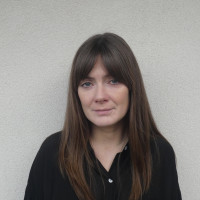
It is this violent and feral line of text that hangs like a monolith in the austere stage space at Sort/Hvid after 80 minutes of a furious, raging monologue in the performance Animal. Actress Signe Egholm Olsen is left standing like an animalistic goddess who has carried out her own ritual of purification. A ritual about motherhood and about morality for animals and humans alike – flanked by the three wordless classical singers Katinka Fogh Vindelev, Nina Smidth-Brewer, and Hávard Magnussen, who function as a chorus in a Greek tragedy. They illustrate and stage the text through precise sonorities.
Animal is based on Alexandra Moltke Johansen’s debut novel from 2022 of the same name and overflows with meaning, hurled into the audience’s face from beginning to end. Worries, anxiety, angry activism, grief, and doubt – tied to being pregnant and becoming a mother to a »useless« child with Down syndrome in a world marked by climate catastrophes, war, inhumane political cynicism, and greed. All of this flows from the mother’s inner dialogue as a long moral reckoning and outpouring, unfolding in a scenic tour de force – from the clinically clean and artificial atmosphere of a wellness spa to a material chaos of soil, branches, and sweat.
Kirstine Fogh Vindelev has composed a soundscape that makes it possible for us to breathe at all. Discreet choral tones, small electronic passages, a touch of barbershop, screams, and a pop song are wedged in between the words. It is simple and straightforward. The music is allowed to comment and converse like a shadow presence alongside the many words, but at no point is it allowed to become the protagonist or truly carve out its own space within the performance. One could easily wish for another form of sensory reflection than that which words and speech alone can provide.
14 Meters of Wave Swells from History’s Anonymous Depths
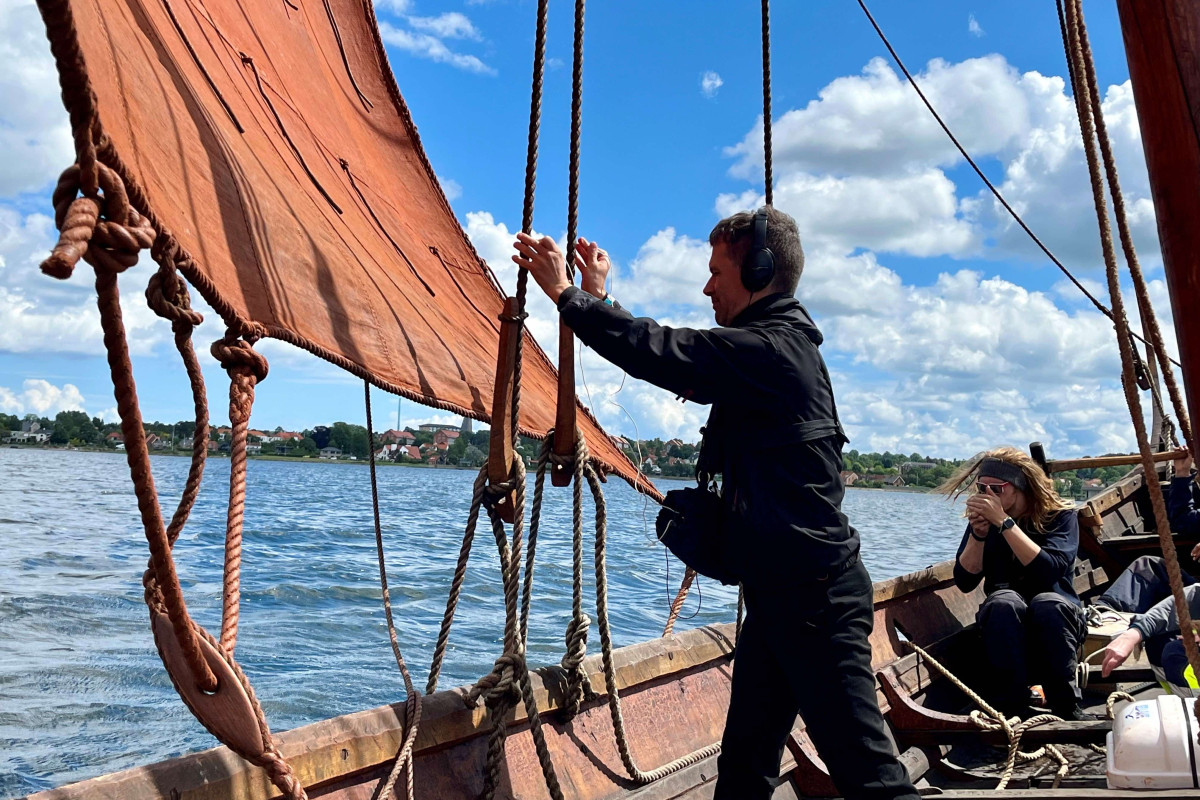
Sound artist Jacob Kirkegaard records sounds to connect with the world – to endure what is happening. This time, it's a commissioned work for the Museum of Copenhagen, created to accompany the exhibition of an excavated shipwreck from the harbor. The result is Naufragium (Latin for shipwreck) – gently lapping, quiveringly simple, and almost self-effacingly discreet. And in this way, everything aligns: the story of life in the harbor during the late Middle Ages is only known through rare, major events, while the bustling everyday life, connecting it to the larger world, has drowned in anonymous oblivion.
The shipwreck itself is barely recognizable. A series of ship planks – up to 14 meters in length – suspended on mirrors and supplemented by 11 crossbeams. That’s it. The light in the museum’s narrow room is dimmed, and the windows are covered with film. We are submerged into the depths of the water.
The sound loop lasts 39 minutes if one wishes to listen to it in full. Small sounds are distributed across seven speakers – four in the ceiling, three beneath the wreck. Carefully placed, the gentle lapping, dripping inserts, a trembling rustling like a nerve pathway above, and muffled sounds of wood shifting in water are heard. A kind of foghorn also makes an appearance. All of it is subtly arranged as a soundscape for a silent protagonist, staged through sound. There were likely very few storms, cannons, or other forms of grand drama in the ship’s perhaps 300 years as a cargo vessel in the Copenhagen Harbor before it sank in the 18th century. But if one looks closely – and opens their ears – it bears tangible and truthful witness to the kind of history most of us inherit: the ordinary one.
Echoes from a Forgotten Time
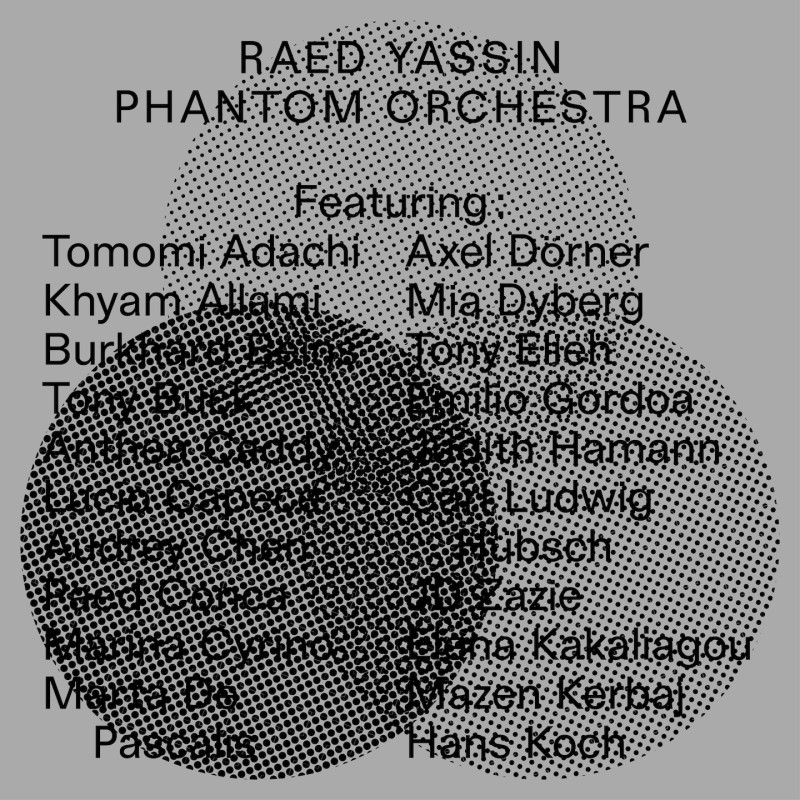
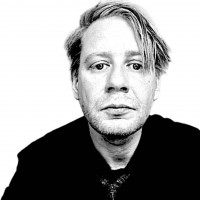
The abstract, collage-like »Movements« on Lebanese artist Raed Yassin's Phantom Orchestra are yet another piece of contemporary art born out of the COVID-19 crisis. Like a distant echo from a time most have already repressed, the experimental artist has assembled a series of recordings performed by a motley group of Berlin musicians – all united by a single premise: improvisation.
Over nearly an hour, Yassin weaves these recordings into seven progressive suites, ranging from approximately nine to twenty minutes. And while the sonic chaos at times reaches such heights that one struggles to find a common auditory anchor, the result is a creatively stimulating listening experience, as hand-played percussion, Baltic folk singing, and the Japanese koto (harp) seamlessly merge – despite the musicians never having been in the same room together.
At its core lies an immensely inspiring concept, one that draws equally from sampling aesthetics and contemporary art. This is particularly evident considering that the pieces were reportedly created using no fewer than twelve turntables, introducing an element of chance. One can only assume that this required a remarkable degree of planning – which makes it all the more astonishing when, for instance, the interplay between modular synths and drums on »Movement III« unfolds, or when the almost horror-like contrast between happy jazz trumpet, frantic vocals, and demonically prepared piano emerges on »Movement IV«.
At times, the idea behind the work is more fascinating than the sound itself, but all in all, Phantom Orchestra is a dazzling, slightly mad experiment, driven by a will to create harmony in chaos. A final echo of the pandemic – of standing together while apart.
English translation: Andreo Michaelo Mielczarek
From Pain to Paralysis: a Stabat Mater Without Wounds

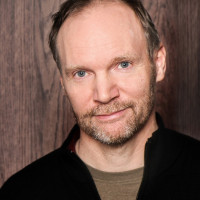
The theme has been revisited countless times in music history, but ELECTRIO (Francesco Rista, Simone Giordano and Sandra Lind Þorsteinsdóttir) attempt to give Stabat Mater a new expression, combining guitar, vocals and electronics with Latin texts, Monteverdi fragments and songs by Dowland. The ambition is clear, yet the result is uneven.
There are, however, two striking exceptions. The opening of Stabat Mater – recorded at the Royal Danish Academy of Music – is captivating in itself: a four-minute build-up that establishes a muted, hovering sense of expectation. But it lies so close to Pink Floyd’s »Shine On You Crazy Diamond« that one can almost hear the quotation shimmering underneath. The characteristic three guitar notes fall at exactly the same place, just before Sandra Þorsteinsdóttir’s voice enters. »Fac me Cruce« is shaped with attractive energy and dynamic form, making strong use of electronics, but ends abruptly before the music has truly begun to unfold. If only ELECTRIO had continued in this direction.
The harmonic foundations of the eight pieces are often predictable, as in »Sancta Mater«, in which the Holy Mother prays that the wounds of the crucified be imprinted upon her heart. The harshness of the text is entirely absent from the underlying feel-good guitar fingerpicking, which moves shamelessly through familiar chord progressions. No wounds. No suffering.
More generally, Þorsteinsdóttir rarely strays from conventional baroque phrasing or genuinely experiments with the genre. The result resembles a mirror version of Sting’s Dowland project from 2006: only inverted – here a classically oriented singer who keeps too respectful a distance to let the songs truly enter an experimental universe.
Why did the trio not instead draw inspiration from Pergolesi’s music for the same text and theme? His score brims with wild dissonances that a new interpretation could have explored to powerful effect – revealing more anguish and outward-turning sorrow.
English translation: Andreo Michaelo Mielczarek