In brieflive
26.08.2024

Hooray! The Big Questions Are Still Alive in Opera

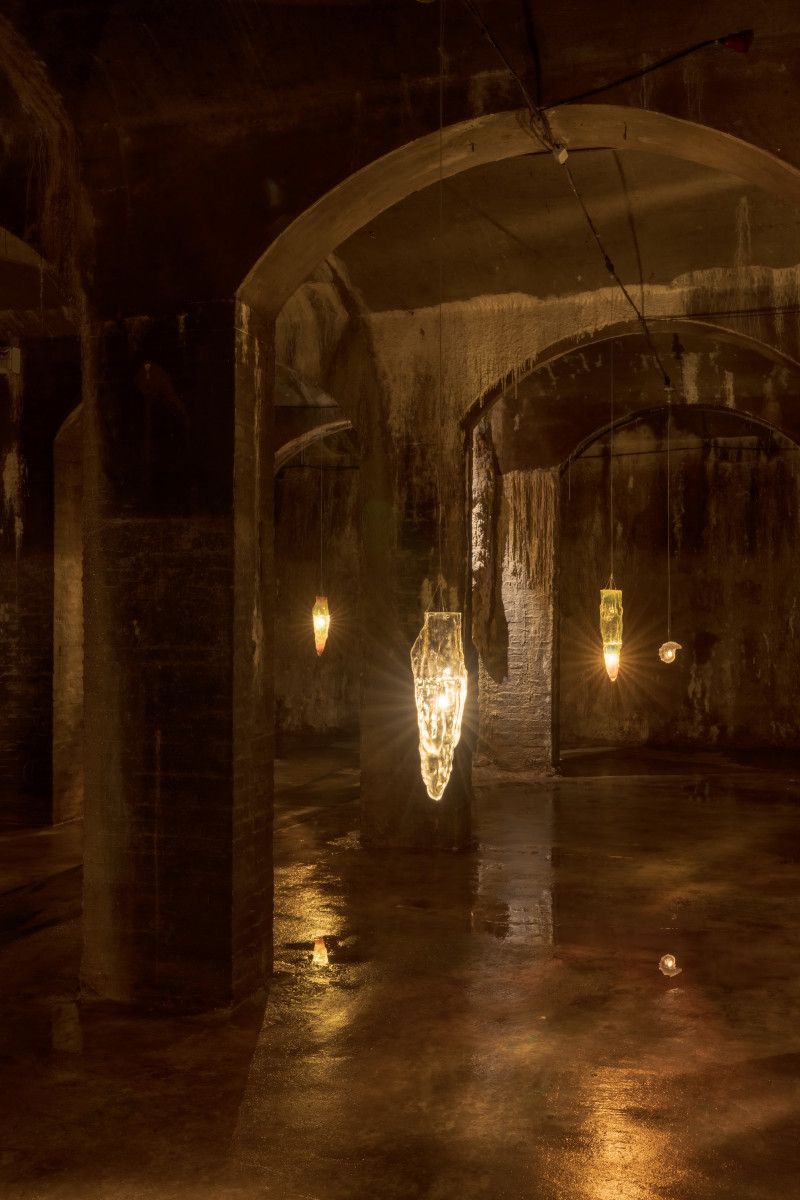
Copenhagen Opera Festival: Rolf Hind, Dante Micheaux and Jalal al-Din Rumi, Frederic Wake-Walker, Elaine Mitchener, James Hall, Yannis François, Loré Lixenberg a.o.: »Sky in a Small Cage«
© Ida Guldbæk Arentsen

If one had come to believe that new opera could only be starkly realistic portrayals of the world’s decay, Sky in a Small Cage at the Copenhagen Opera Festival would quickly prompt a rethink. The festival’s final work pointed in a completely different direction: mysticism, hope, love. All clichés, perhaps – but absolutely not in the hands of composer Rolf Hind and librettist Dante Micheaux. Together they have spun a truly astonishing opera about the Sufi poet Jalal al-Din Rumi.

It was as much the enchantment of Rumi’s poetry as the myth of the poet himself that drove the work. In fact, it was exhilaratingly difficult to distinguish between poetry and reality: the character Rumi became the object of his own grand poetic art. »It might as well be called a death: the gate you must go through to enter yourself or beloved,« sang a narrator-like figure at the outset. Love, one understood, is a self-annihilating transgression – a threshold phenomenon that at times demands its sacrifices.

This dreamlike doubleness served as a guiding principle throughout the performance. It was a pleasure to hear mysticism unfold in the music, which was phenomenally orchestrated with dripping gamelan bells and singing bowls, double harps, celebratory piano, and more pounding toms than Lars Ulrich would dare to dream of.

And what about the bird, the cage, and the idea of freedom? In Sky in a Small Cage, freedom was not a matter of opening the cage and setting the bird free. It was located in the very act of calling – in song, music, and poetry – as a reaching out toward the other in a kind of intoxication of love. Oh yes, the big questions are still alive in opera. Thank God.

English translation: Andreo Michaelo Mielczarek

In briefrelease
07.02

The Sinister Mastery of Shame

Ethel Cain: »Perverts«
© Silken Weinberg
© Silken Weinberg

To describe American Ethel Cain’s (Hayden Silas Anhedönia) stylistic shift from her debut Preacher’s Daughter (2022) to Perverts as an extreme U-turn would almost be an understatement. The distance from the debut’s gothic lo-fi pop to this monstrous work – combining dark ambient, noise, and dystopian ballads – is vast, all the while continuing Cain’s familiar reckoning with her religious upbringing and her struggle for sexual liberation.

On paper, Perverts is an EP running 89 minutes, but it feels like far more than that. Crushing noise drones, dusty piano strikes, and distant preacher voices from crackling radios are woven together with acoustic spaces. And although the record also contains more conventional ballads such as »Punish« and the beautiful »Vacillator« – which even features a clearly defined rhythmic progression – it is the long, epic ambient tracks that draw the listener into the often harrowing darkness.

One thing is that Cain suddenly makes dark ambient; another is just how good she is at it. Perverts is not only a profoundly unsettling insight into the friction between sexuality and religious fanaticism, but also an immediate, creative, and fully realized homage to a fascinating niche genre. A necessary album for anyone unafraid of the dark.

In briefrelease
04.02

The Deep Breath

Blaume: »excess air«

The Copenhagen-based duo Blaume’s EP excess air is a field study in the shared pulse of breathing, calmly taking a deep breath. The EP’s airy sound unfolds cyclically from the physical conditions of respiration, and with hoarse choral voices and chirping flute, the two artists – Laura Zöschg (IT) and Mette Hommel (DK) – wind their way around the healing and artistic qualities of breath.

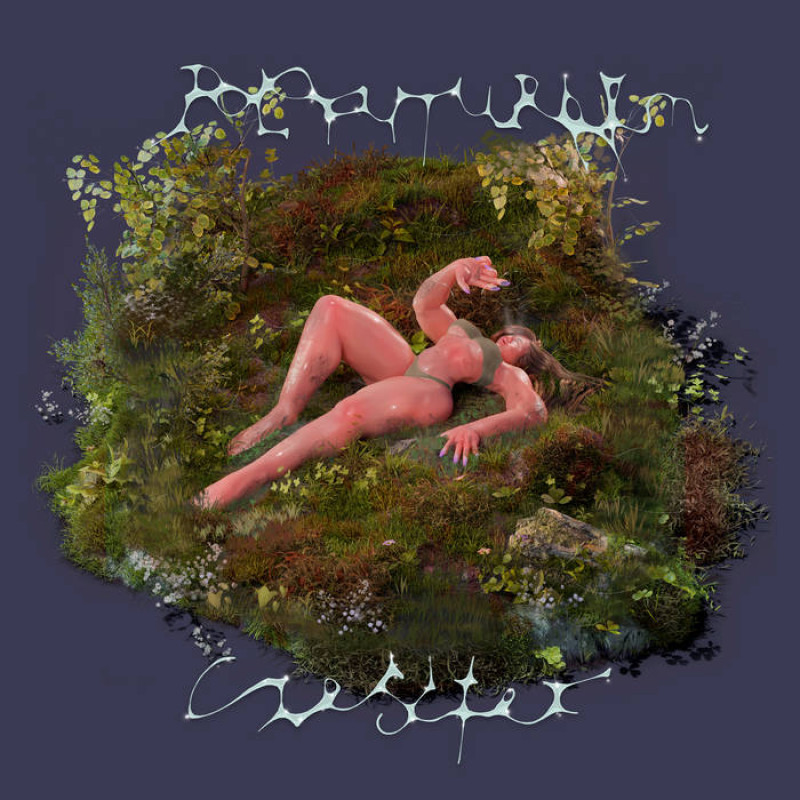
Perhaps it is the strangely warm winter or the blooming figures on the cover, but excess air seems to carry a fragile sense of spring. The sparse instrumentation gropes its way forward improvisationally across the three tracks, and the many choral voices add a tangible physical sense of musicians at work, underscoring a feeling of tentative sprouting.

The electronic element, in the form of vocal effects and the music software Ableton, is an important part of Blaume’s expression. Vocal effects often come across as quite prominent, but when the processed voice on the track »vivus tremus« drifts into a hoarse rasp, the artificial divide between voice and effect dissolves, and the electronic becomes an obvious extension of Blaume’s shared breath.

Blaume’s excess air is a delightfully vital EP. It is music with the surplus energy to stretch far from a simple and immediate point of departure, and with a few simple means, Blaume’s debut emerges as a welcome harbinger of spring.

© Ellie Brown

»Music for me is: inevitable.« 

Ryong is a composer, artist & DJ that explores: Danish and Korean heritage, spirituality, embodiment, family and love, Ryong is also a member of the experimental pop band haloplus+. Across her releases, she draws on both ambient, noise and pop music, incorporating the sound of field recordings and spoken word. Having previously released on Why Be’s label Yegorka, and debuting on Posh Isolation with Isa Ryong, an 11 part work that explores transition and the anguish of complexity, Ryong has established herself as a unique artist in the experimental electronic music scene in Copenhagen.
 

In brief
08.01.2025

Love and Poetry under Black Streetlights

Jørgensen/Botes: »Dråberne 5, 7, 8 og 11«
Marina Botes og Steen Jørgensen. © Isak Hoffmeyer

While many still sigh at the thought of seeing a full Sort Sol once again illuminate the dark grey Danish sky, the band’s eternal crooner Steen Jørgensen, together with his equally strong other half, pianist Marina Botes, has created music that is something entirely different – something deeper. And yes, I have seen words like »pretentious« and »boring« hurled at the duo, but none of that sticks to their new release, which consists of a series of intimate suites where Jørgensen’s spoken word is woven together with Botes’ magnificent piano playing. If the ambition is to build a bridge between the classical and the electronic, it succeeds convincingly.

As a lyricist who moves through the same pitch-black landscape as Jørgensen, I tip my hat to the strong poetic imagery that characterizes Dråberne 5, 7, 8, and 11 – especially on the album’s longest track, the dramatic »Hul – Dråberne 7«. As Jørgensen muses on the luminous melancholy of the inner city, the music becomes a transformation, a sphere of change made of ambient surfaces, muted strings, and a female vocal that slips in like a shadow—until the song rises in dramatic momentum, centering on the line »En nat i indre kvarter«.

The music is primarily grounded in piano-heavy terrain, where Botes’ keys find repose in muted pedal strikes and light strings. Only in rare moments do the compositions break free, as on the opener »Glemsel – Dråberne 5«, where chamber orchestra and jazzy breakbeats create a compelling and almost cinematic atmosphere.

Dråberne 5, 7, 8, and 11 is a seductive, inspiring, and downright sumptuous experiment in which the love between the two artists can be felt in every tone. If this is Jørgensen’s career winter, I will gladly accept more dark, warm moments.

In briefrelease
16.12.2024

A Riddle I Am Not the Right One to Solve

Abdullah Miniawy: »Nigma Enigma«
© PR
© PR

I believe I am not the right person to grapple with all the existential questions of faith and culture that the multidisciplinary artist and political experimentalist Abdullah Miniawy grapples with on his latest album, Nigma Enigma. The record is equal parts Arabic chant, folk music, and sound art, based on modular synths and field recordings. The Egyptian composer uses the album’s eleven abstractions as the soundtrack to what he himself calls »an Arabic opera of doubt and faith«. But as a non-Arab, lifelong atheist, it is difficult for this reviewer to fully engage with the big questions Miniawy poses in his mother tongue, while samples of crackling fires and layers of filtering create an otherwise enigmatic atmosphere that resonates well with the album’s title. As the music also functions as the soundtrack to an immersive video game, we are taken even further from familiar territory, given that the reviewer has not touched such things since Quakein 1992.

If one sets aside the search for meaning and allows oneself to be colored by the music’s immediacy, what emerges is a strongly conceptual, sonically accomplished work, in which Miniawy’s voice – most often chanting Arabic phrases from old folk songs – is interwoven with electronic noise. In particular, the transition from the beautiful two-part chanting on »Jayhano Al Kawahi« – with strong religious undertones – to the deeply anarchic noise vignette »Half a Year II«, featuring filtered sine tones and pounding bursts of bass noise, serves as an apt characterization of a minimalist piece of sound art.

Yet without being able to share Miniawy’s cultural and spiritual context, the album feels like a riddle I cannot solve. Like drinking an Irish coffee without the whiskey: the real praise is withheld. Nigma Enigma will speak to those who can relate to the spiritual and philosophical questions Miniawy raises, while others may experience it as a musical journey without fully understanding its destination.

English translation: Andreo Michaelo Mielczarek