


in brieflive
13.03

I Am an Empty High-rise, Where the Pain Sits in Every Wall

Ensemble Lydenskab, Martin Ottosen, Ulla Bendixen, Gerd Laugesen & residents at the social-psychiatric housing facility Sønderparken: »Everyone Leaves Traces«
© Phillip Jørgensen
© Phillip Jørgensen

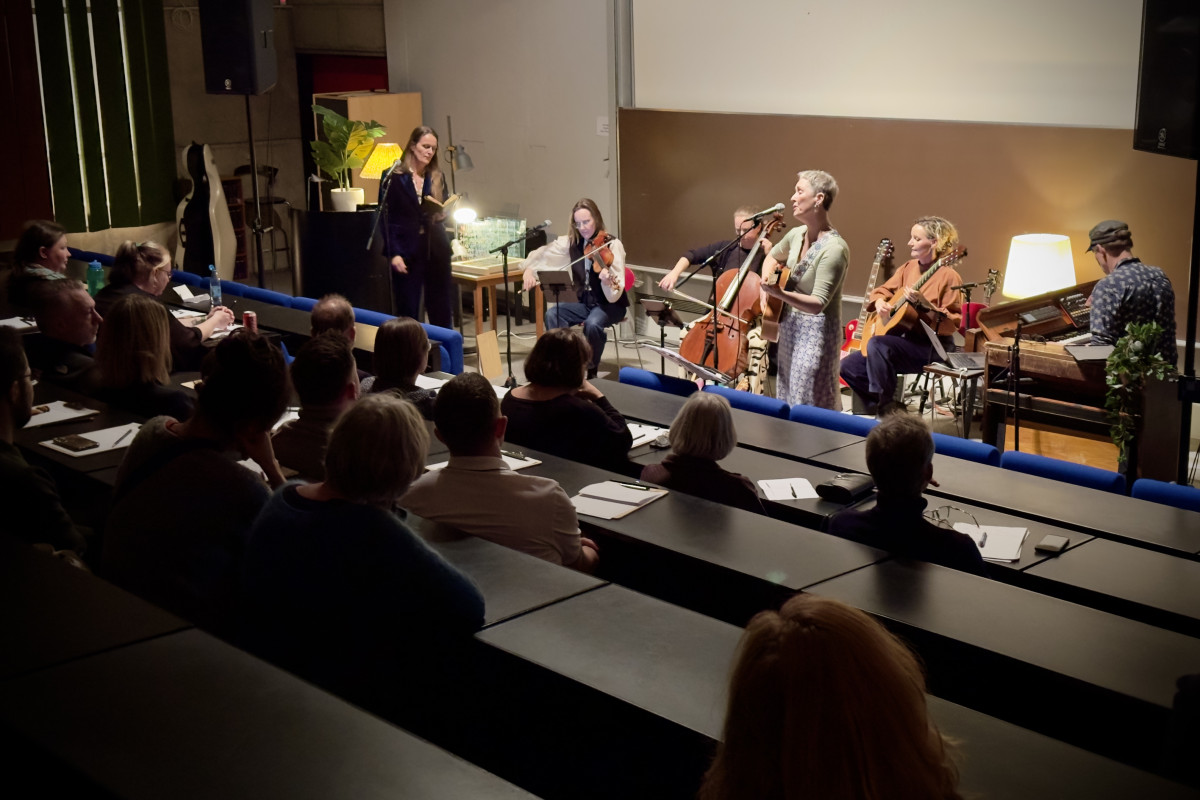
It is both difficult and unfair to approach the concert Alle sætter spor (»Everyone Leaves Traces«) with a critical mindset. It concerns real people with something at stake and with their hearts invested: residents at the social-psychiatric housing facility Sønderparken. They placed their inner lives in the hands of six artists and thus became co-creators of a total of nine songs, which premiered at Museum Ovartaci.

The project Musikalske alliancer (»Musical Alliances«) is simultaneously art, research, and relief. A co-creative endeavour intended to give a voice to people within psychiatry. The result was songs marked by banjo-tinged gallops, painful violin stabs, empty houses filled with inconsolable crying, torn torsos and deep, lingering bow strokes – but also hope, care, and softened edges. Acting as mediators of these life experiences were the poet Gerd Laugesen, three musicians from the ensemble Lydenskab on cello, violin and guitar, as well as pianist Martin Ottosen and vocalist Ulla Bendixen from the electro-folk band Sorten Muld.

It was a capable group that delivered a high musical standard. Even so, it seemed as if this important project succeeded with its co-creation and its conversations, but perhaps not entirely with its artistic expression. Was it because the lyrics were filled with clichés? Or rather because the entire staging felt somewhat inward-looking – almost like a school concert? Despite Bendixen’s wonderfully airy and expressive vocal, the performance felt strongest in the few segments shaped by poetry readings. Yet I had to learn, by indirect means, that the poems were adaptations, while the song lyrics were the residents’ own words. And those were the voices I was meant to learn to listen to.

© Ana Alexandrino

»Music to me is movement, trance, transformation. The rest I won't tell you.«

Marcela Lucatelli is a vocalist and composer. Born in Brazil and based in Denmark, she has gained international recognition for her boundary-pushing performances — sensuous, politically charged, and uncompromisingly original. Described by The Wire as a composer of »scores for the limits of bodies and voice,« Lucatelli challenges conventions with her fearless vocal experimentation and bold compositions. Her works have been performed by Danish National Symphony Orchestra, Danish National Vocal Ensemble, and Neue Vocalsolisten Stuttgart. She has appeared at major festivals and venues, including Theatro Municipal de São Paulo, DR Koncerthuset, Donaueschinger Musiktage, Darmstadt Ferienkurse, IRCAM, Copenhagen Opera Festival, Ultima Festival, Borealis Festival, Copenhagen Jazz Festival, Jazzfestival Saalfelden, Cafe Oto, A L’ARME!, DMA Jazz – Danish Music Awards, WOMEX, and many more. Lucatelli's work has earned her several prestigious awards, including the Carl Nielsen and Anne Marie Carl-Nielsen Talent Prize (2019), Pelle Prize (2021), and the Danish Music Awards' 2023 Vocal Jazz Release of the Year, which shows that vocal jazz has many faces – and does not necessarily belong only to the soft end of the spectrum.

© PR

»What is music to me? Here’s a quote from Nietzsche: ‘The people dancing all seemed crazy to the people who couldn’t hear the music.’«

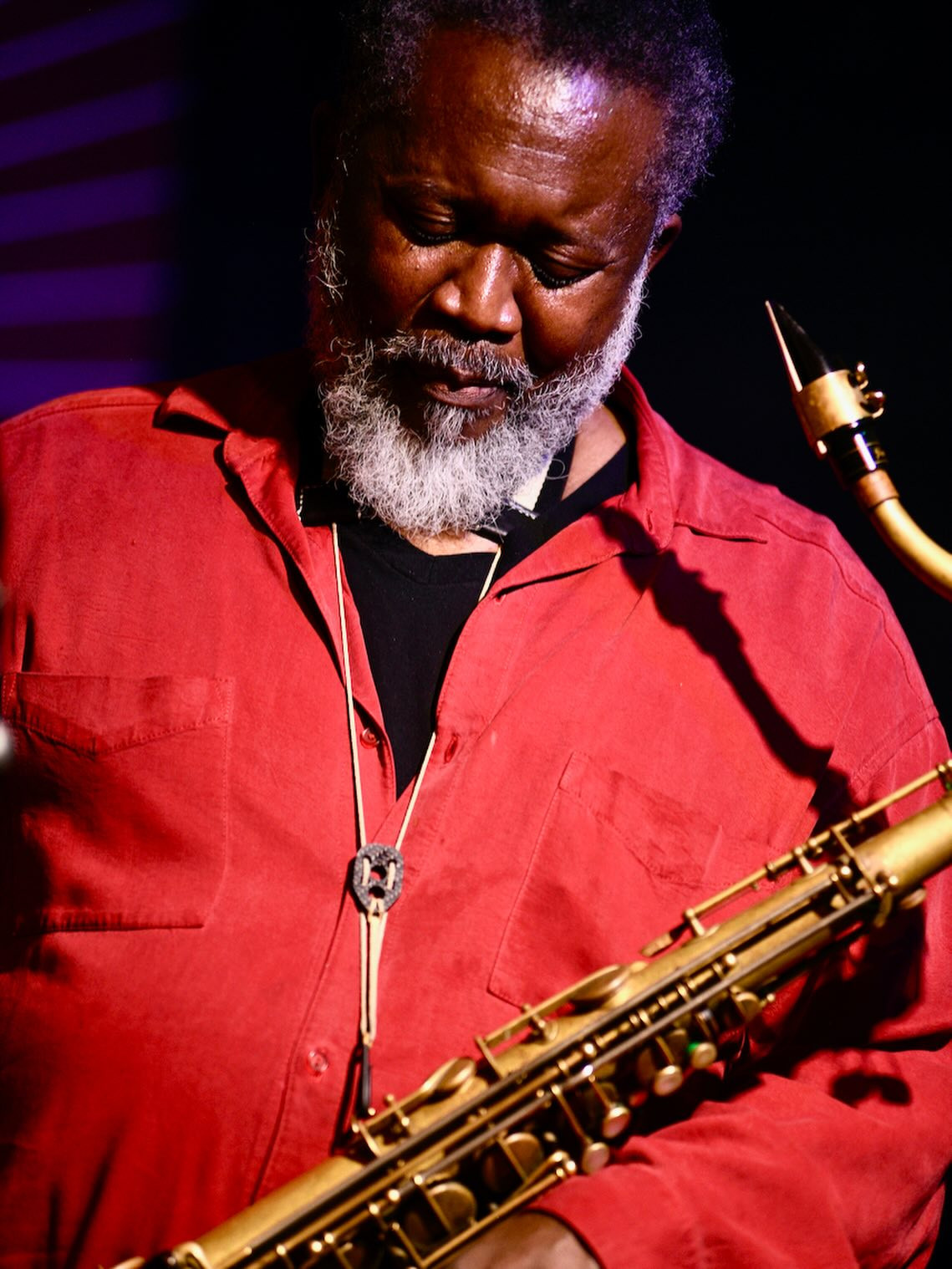
Salim Washington is a saxophonist, multi-instrumentalist, composer, academic, and activist from Detroit who has been highly active on the American jazz scene since the 1970s, and also in South Africa, where he became a central figure. The spirit of John Coltrane hovers over his music, which carries both spiritual and social dimensions.

© Aske Jørgensen

»Music for us is the perfect language that we love to speak. A language where it is the individual's feelings and imagination that determine what is right and wrong. Everyone can speak the language. You don't have to be able to write or understand, but just listen. Some music requires that you listen carefully and maybe hear it several times. A bit like when you talk to someone from Norway or Sweden, you also have to listen a little extra.«

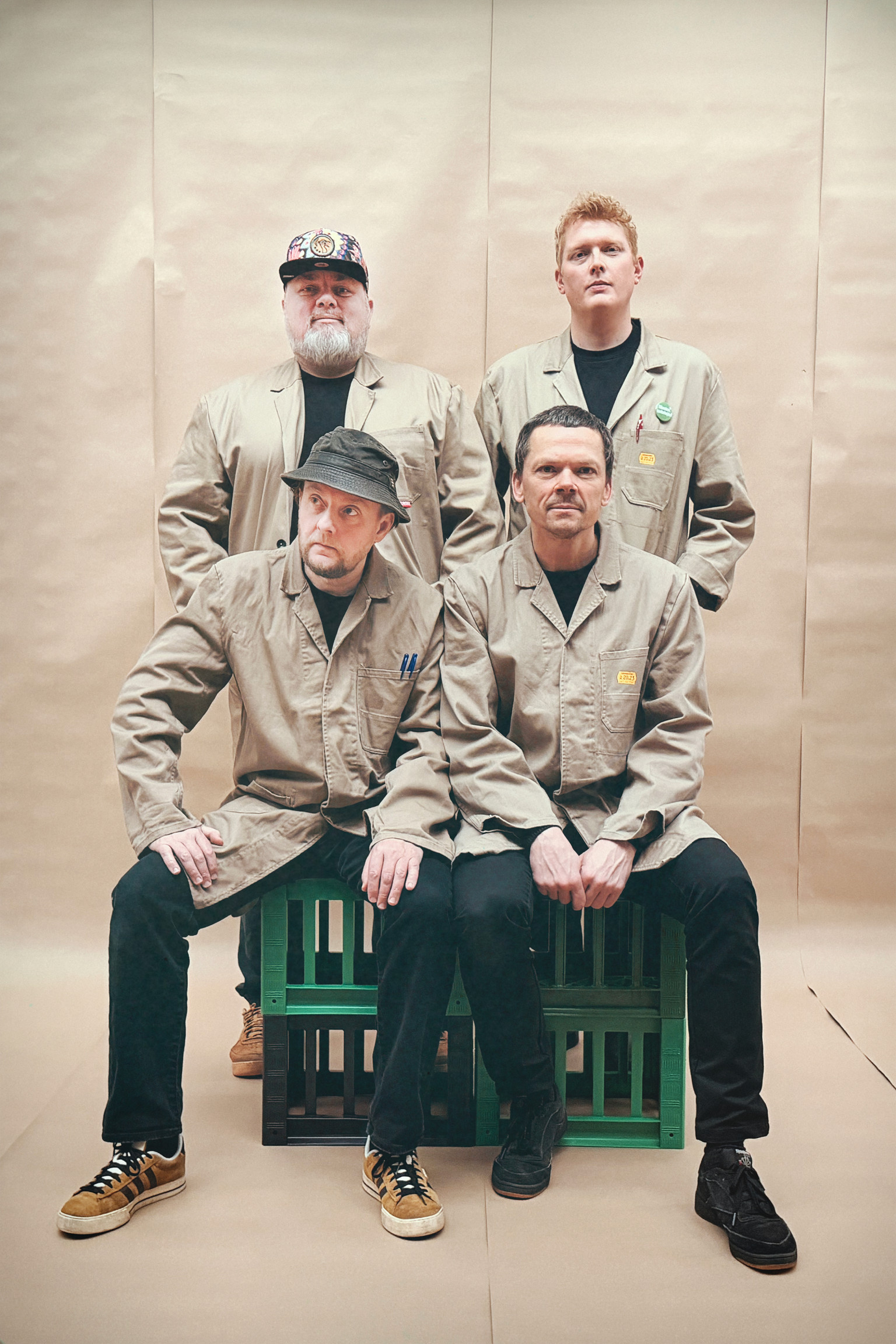
DØGNKIOSK is a Danish punk rock band with roots in Silkeborg. The band consists of bassist and singer Anders Ejner, who has been active on the Danish underground scene for several decades. Musically, DØGNKIOSK moves in a field between classic Danish punk and alternative rock. In the spring of 2026, the band will release their second album, Tæt på kanten.

© Bastian Zimmermann

It is difficult to comprehend that Andreas Engström is no longer with us. Just a couple of months ago, he wrote – as he had done so many times before – with an ambitious proposal: he wanted to review a box set of twenty releases by Dror Feiler. In the same message, he mentioned plans to come to Aarhus for the recently concluded Spor Festival.

in briefrelease
04.05

The Escape From a Hotel That May Not Exist

RÖM: »Whispering Dub«

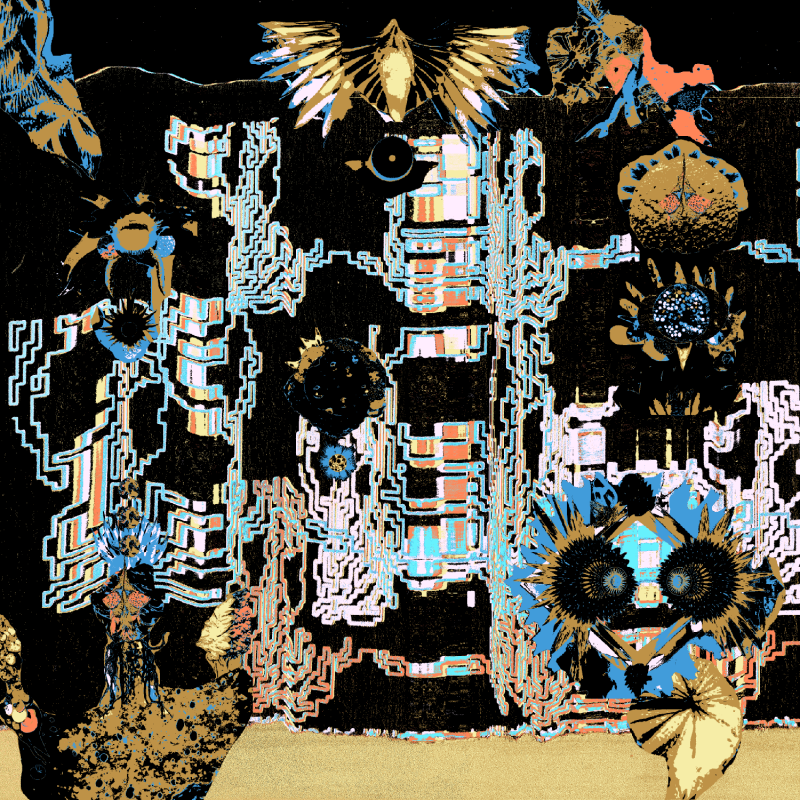
Ladies and gentlemen, we’re deep underground – indeed, all the way to France. This EP is the latest conceptual release from French electronic producer Romain Martin, who works under the name RÖM in the borderland between ambient and techno. Whispering Dub unfolds across five tracks, drawing heavily on dub while telling a story about an escape from a fictional hotel. Escomel’s background in African percussion studies and his fondness for analog gear surface in the mysterious sonic textures and the stark contrast between arranged percussion and dubbed-out echoes, underscoring the concept’s tension between mysticism and reality.

»Oilbird« opens in dystopian ambient before sliding into the rhythmic »Eastern Temple«, which constantly shifts between filtered synths, frantic percussion, and sudden breakbeats. Things cohere more fully on the title track, which blends minimal techno into the mix and stands out by maintaining a steady pulse, while echo-laden drums cast an unsettling atmosphere within the dance framework. On the closing »Hotel Amnesia«, the narrator awakens again in a collage of the record’s electronic tendencies, questioning their own existence in the album’s only use of vocals.

Whispering Dub isn’t wildly groundbreaking or bizarre enough to push the senses into extreme reactions. But as a well-produced and effective piece of electronic music, it invites the listener into a compelling game of whispers.

English translation: Andreo Michaelo Mielczarek