
»Music is hope, confusion, and memory talking with each other, leading us toward futures we haven't yet imagined.«
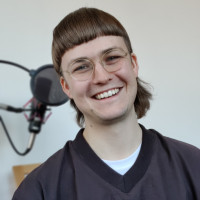
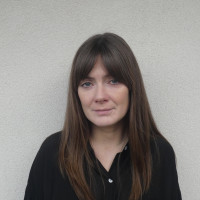
Patrick Becker is co-director of the Wolke Verlag publishing house and co-editor of the contemporary music magazine Positionen.



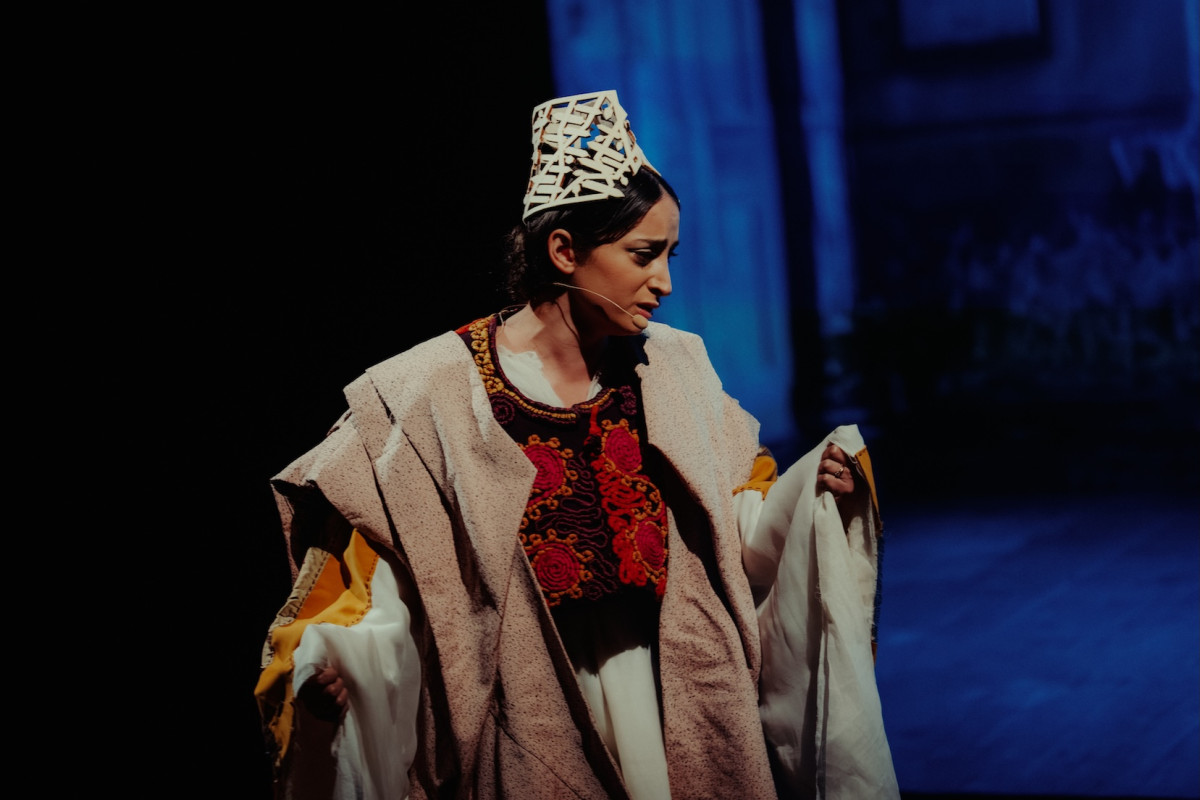
One of my most powerful art experiences of 2025 was British-Palestinian video artist Larissa Sansour’s intense work As If No Misfortune Had Occurred In The Night at Kunsthal Charlottenborg. The piece forms the basis of Thursday’s so-called »opera performance«, in which Palestinian soprano Nour Darwish performs in dialogue with Sansour’s visuals.
When Darwish steps onto the stage, it is before a vast screen where black-and-white scenes from an abandoned chapel establish a solemn atmosphere. It feels as though the entire hall is holding its breath as she begins to sing – tentatively, mournfully at first, then with spine-tingling force.
The composition draws on Kindertotenlieder (1905), in which Gustav Mahler sets to music Friedrich Rückert’s poems on the loss of two daughters. Composer Anthony Sahyoun allows Mahler’s music to merge with the Palestinian folk song »Al Ouf Mash’al«, a lament for a man who fell while serving in the Ottoman army during the First World War. Over time, the song has expanded into an oral account of Palestinian suffering. In its encounter with Mahler, it becomes a lament for centuries of grief – addressed to European ears that, through the colonisation of the region, bear part of the responsibility. Quite simply, it is a very good idea. At first, Darwish alternates between the two musical works, but gradually they fuse into a single narrative of sorrow, loss, and inherited trauma. She briefly leaves the stage, giving way to a filmed sequence in which she descends into a basin and is enveloped by indigo-blue water. In Palestinian tradition, indigo is the colour of mourning, because once it has stained skin and fabric, it cannot be washed away. It must be worn away – just as grief can leave us flayed.
Darwish returns in an indigo dress. At the climax, she falls to her knees as the screen behind her turns black, and I realise I have barely breathed for several minutes. The composition was created in 2022 – before the current war in Gaza – but on this evening, with her immense voice and intense presence, she adds yet another verse to the endless song. At times, art can feel brutally prophetic.
English translation: Andreo Michaelo Mielczarek
»Music is hope, confusion, and memory talking with each other, leading us toward futures we haven't yet imagined.«
Patrick Becker is co-director of the Wolke Verlag publishing house and co-editor of the contemporary music magazine Positionen.
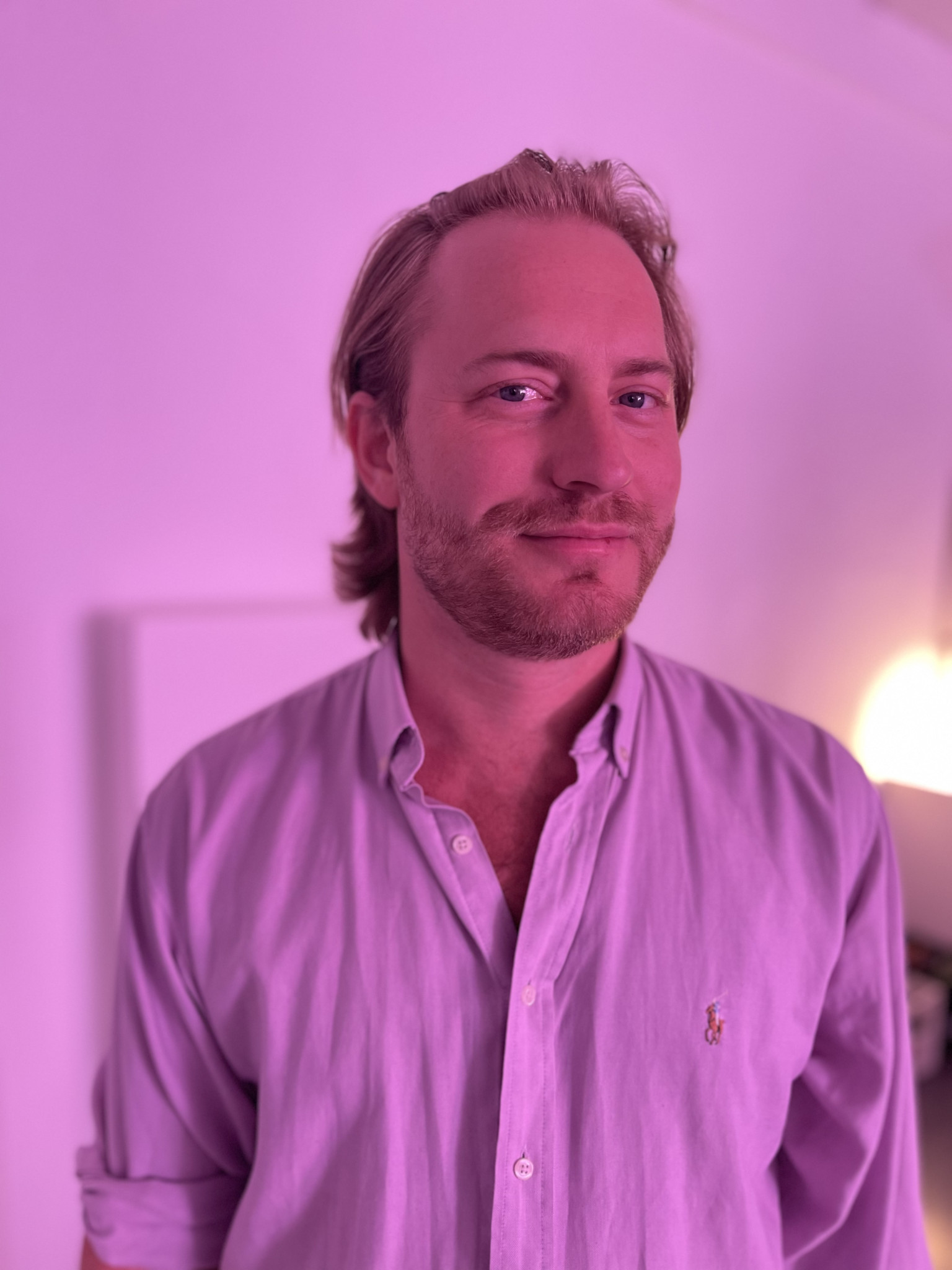
»A lot is projected onto music and making music – I'm careful, singing doesn't make you more intelligent and certainly doesn't make you a better person. It's like in sexuality. A lot of things go very consciously wrong for some people. Music like sex are means of communication, people come into contact and negotiate with each other and their instruments/tools and meet themselves in it. This is also the case when I listen to music – from every conceivable genre and context, even if I always notice that as a teenager I used to play a lot of jazz guitar.«
Bastian Zimmermann lives in Munich and works freelance in the areas of music and performance. As a dramaturge, he works with artists such as the soloist ensemble Kaleidoskop, Yael Ronen and Neo Hülcker. He is editor of the German speaking magazine Positionen – Texts on Current Music and curates projects such as »Music for Hotel Bars« and the festival Music Installations Nuremberg festival. His focus is on social aspects of making music, experimental music concepts and the questioning of bourgeois structures in contemporary music. In Spring 2025 he will take over the Wolke Verlag publishing house for books on music with Patrick Becker.
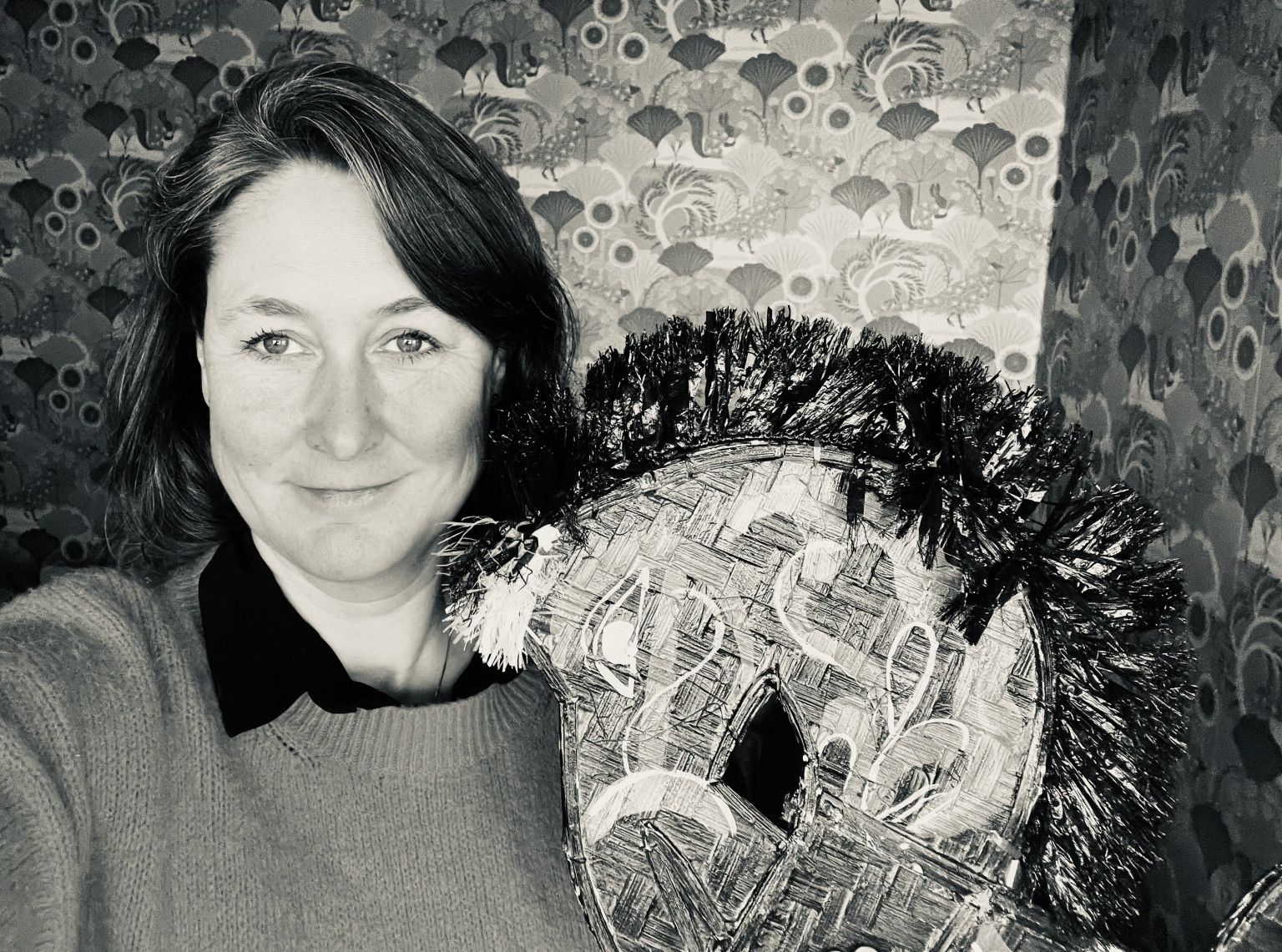
»Music to me is… my work. I've landed in the best job in the world, where a core task is to discover new music, to learn its internal logic and aesthetics, who created it, and why. I'm a music researcher and have just returned from the island of Java in Indonesia with my research partner and husband Nils, where we've been visiting experimental musicians in Yogyakarta – artists we've now followed for seven years.
One recurring theme is the trance/horse dance jathilan (or jaranan), which several of the artists have introduced us to. Jathilan is on one hand an old Javanese ritual, and on the other hand a contemporary (village) culture in full development. There is no single historically 'correct' jathilan. It's a practice that follows an old spiritual ritual, but is also open to current Indonesian influences.
The playlist consists of three tracks by Senyawa, Gabber Modus Operandi, and Raja Kirik, all of whom have incorporated the ritual into their music. The fourth track was supposed to be a 'traditional' jathilan, but as far as I know, no such recording exists on Spotify. Instead, I found a related jaranan piece that includes a dangdut song – an ultra-popular genre that is often performed as part of a jathilan event. The final track is one of the most popular dangdut songs at the moment.«
Sanne Krogh Groth is Associate Professor of Musicology at Lund University, Sweden, where she conducts research on electronic music and sound art, currently with a focus on Indonesia. Sanne was editor-in-chief of Seismograf from 2011–2019. In 2015, she established Seismograf Peer, which she is still the managing editor of.
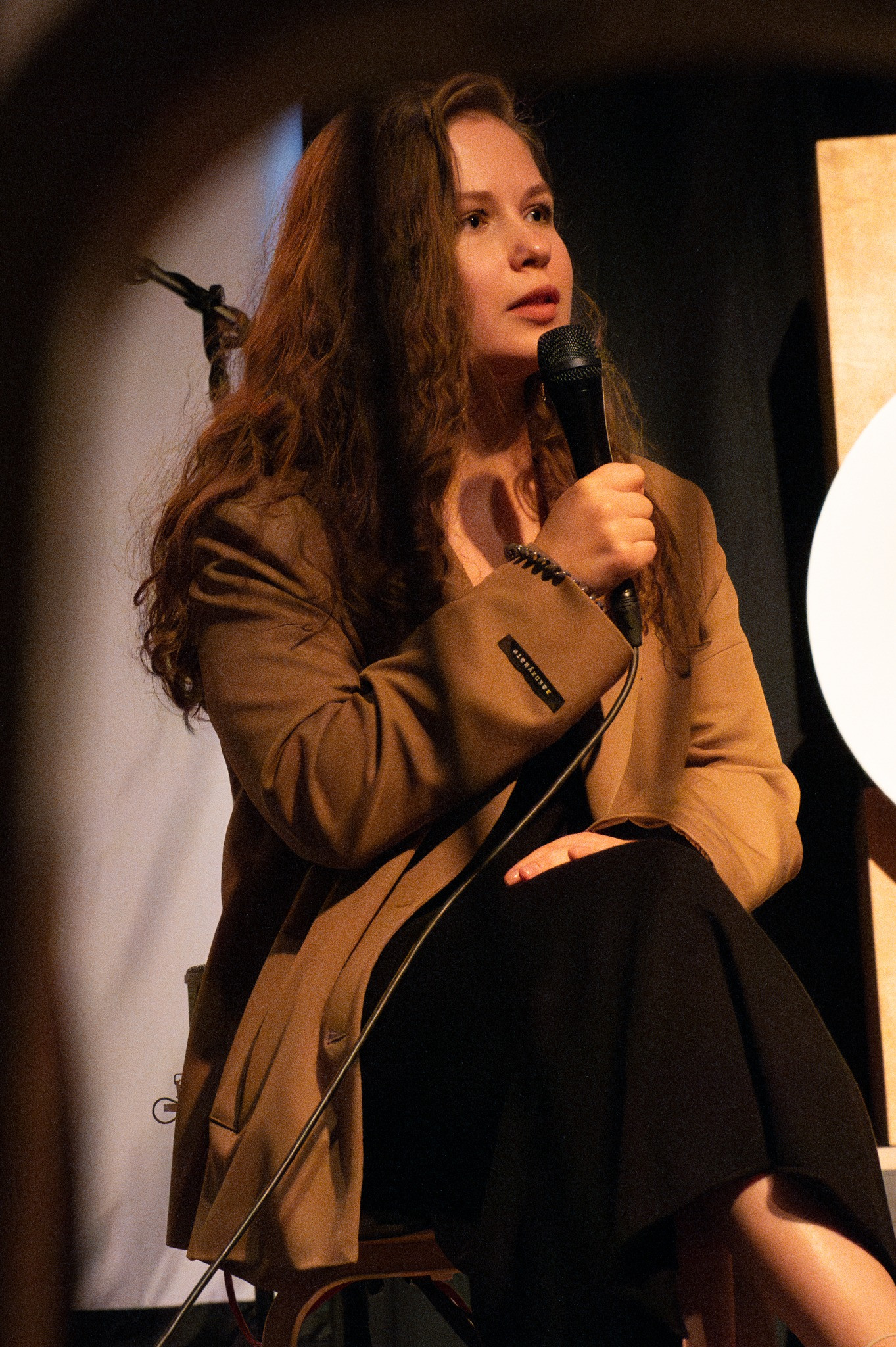
»For me, music is work and a way to escape it. Music is the fanciest way of communication and therefore the most delicious food for analysis. It is what prolongs your feeling for longer than you can physically hold. Music is something after which you say: 'I’m glad you didn’t use words'. After all, it’s something that makes your commute or chores shorter, and this time-controlling function is the very first and foremost mystery I love about it.«
Liza Sirenko is a music theorist and music critic from Kharkiv, Ukraine. She is a co-founder and board member of the Ukrainian media about classical music The Claquers. She is a former Fulbright Visiting Scholar at the Graduate Center, CUNY (New York, USA), and a graduate of National Music Academy of Ukraine (Kyiv, Ukraine). Her current interests include processes in the classical music industry, contemporary opera in Ukraine, and a role of postcolonial moves in these. Liza is a former PR Director of the Kyiv Symphony Orchestra, currently working as a Program Officer at the Goethe-Institut Ukraine.
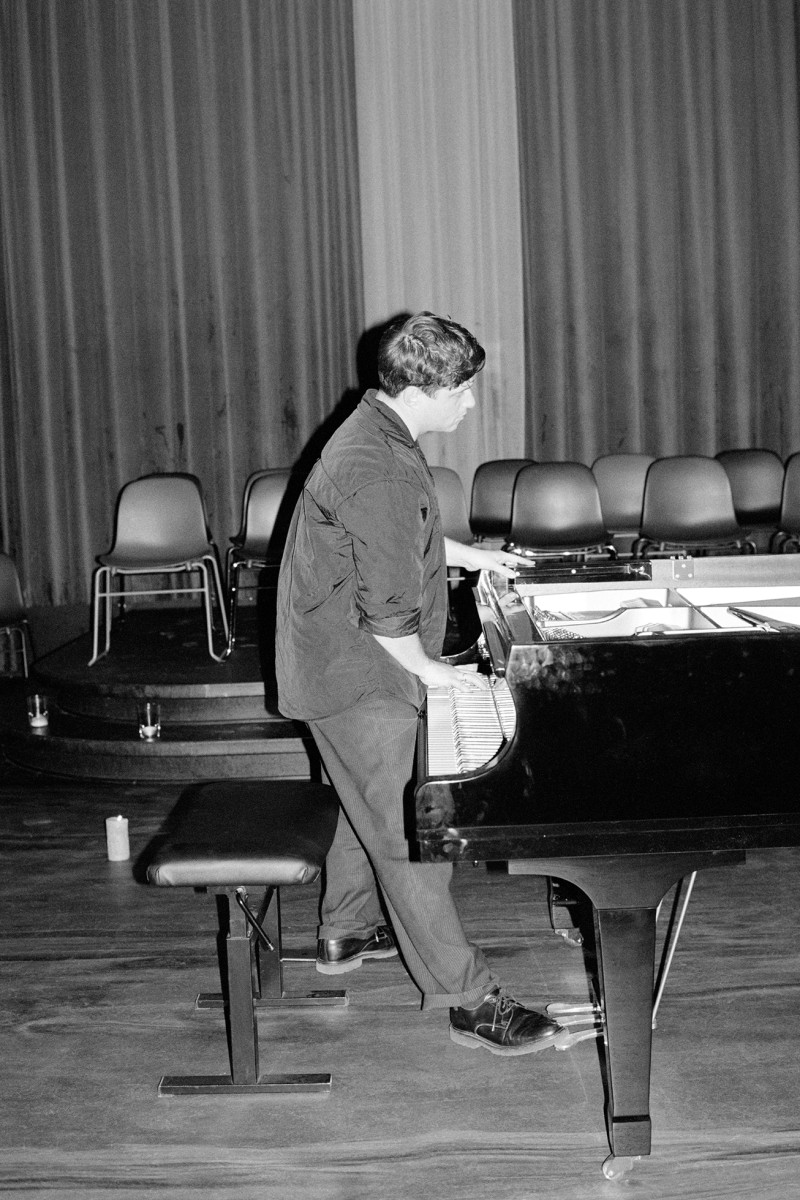
»Is he going to play three pianos?« a boy asks. »Maybe he’s learned to play with his feet?« says an adult man. The audience on their way into the DR Concert Hall’s main auditorium comment on the setup for August Rosenbaum’s piano concert. Three Steinway grand pianos lined up is truly peculiar – actually comical.
When the concert began, I imagined I could hear differences between the instruments, though I would probably fail a blind test. Apart from a bit of playing with staccato on one piano and pedal on another, the setup was, frankly, underused. The piano playing was lacking, dominated by a single approach: pedal pressed all the way down, an active right hand primarily in the middle register, a left hand with a muted accompaniment, and a great deal of repetitive technique.
It felt like a gravity Rosenbaum could not escape. No idea or direction could break free; one always returned to the same place.
When there are two grand pianos for a concert, one of them is usually prepared. Rosenbaum had three (!) without using a single screw, coin, or ping-pong ball. Shouldn’t that be a criminal offense? Nor were any extended techniques employed, such as clusters or playing with the back of the hand.
The light show was charming, at times impressive. Still, it takes more goodwill than I possess to call the evening an audiovisual concert, as the program text told me it was. On the way out, I heard another man say, »It was actually quite exciting to hear him play.« I didn’t think so.
English translation: Andreo Michaelo Mielczarek